TL;DR:
- Care needs assessments are free and help determine eligibility, support plans, and necessary home adaptations.
- A personalized care plan, involving the elderly person, enhances emotional wellbeing and maintains independence.
- Families should plan step-by-step, regularly review arrangements, and consider professional support to prevent burnout.
Caring for an elderly loved one at home is one of the most meaningful things a family can do, yet it can also feel overwhelming without a clear plan. Many London families struggle to know where to begin, which services are available, how to fund them, and how to protect their loved one’s independence and dignity. This guide walks you through each stage of arranging elderly home care, from the very first assessment right through to maintaining wellbeing and safety over time. Whether you are just starting out or reviewing existing arrangements, you will find practical, evidence-backed steps to help you move forward with confidence.
Table of Contents
- Assessing needs and preparing for home care
- Designing a personalised elderly care plan
- Selecting and arranging the right home care services
- Promoting wellbeing, safety, and independence at home
- Our perspective: Why step-by-step planning empowers families
- How Kells Domiciliary Care supports your step-by-step journey
- Frequently asked questions
Key Takeaways
| Point | Details |
|---|---|
| Start with assessment | Getting a care needs assessment is the essential first step for elderly home care in London. |
| Personalised care planning | A tailored care plan ensures safety, comfort, and independence for your loved one. |
| Know your options | Explore council, agency, and direct payment arrangements to find the best-fit care solution. |
| Support for carers | Family carers are entitled to their own assessment and support to manage stress and avoid burnout. |
| Legal safeguards matter | Setting up a Health or Welfare Lasting Power of Attorney protects your relative’s home care wishes. |
Assessing needs and preparing for home care
The first step in arranging care for an elderly relative is understanding exactly what support they need. Without this clarity, it is easy to over-arrange or under-arrange, both of which carry real costs, financial and emotional.
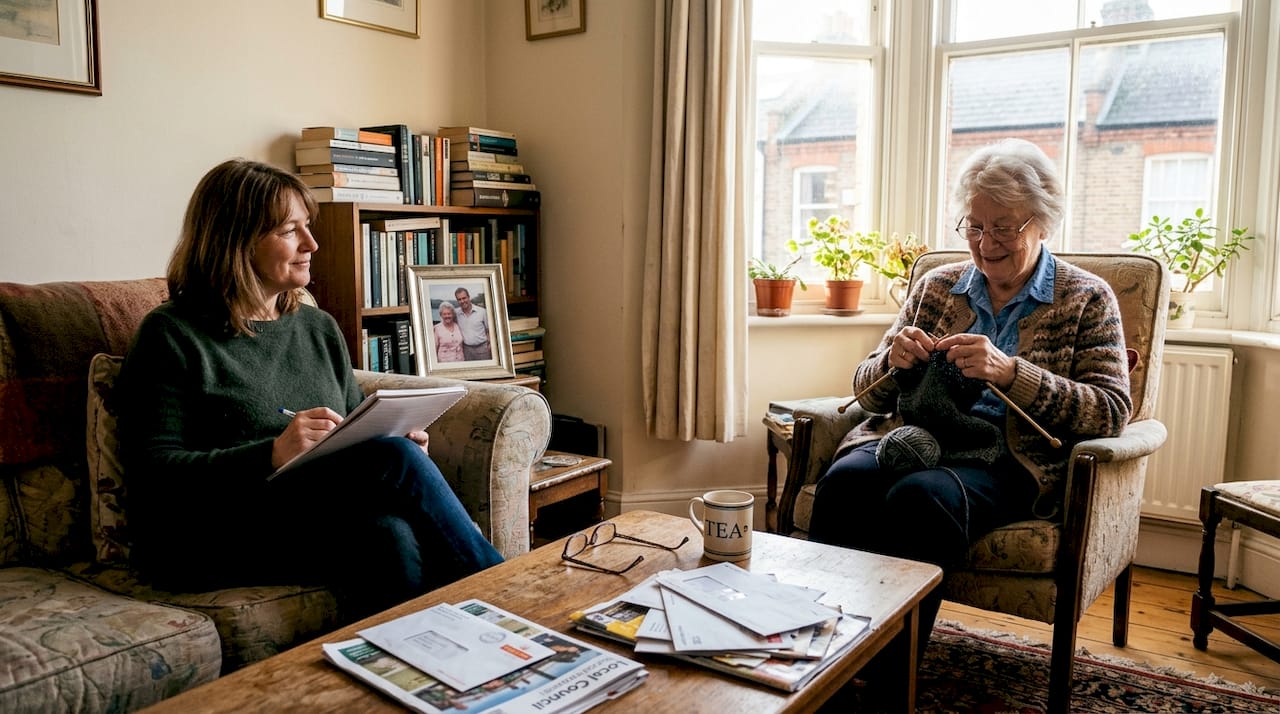
You should request a care needs assessment from your local London council’s adult social services department. This is free and available to anyone who appears to need care, regardless of their income. The assessment looks at your loved one’s ability to manage daily tasks such as washing, dressing, preparing meals, and moving around safely. It also considers their mental wellbeing and any risks in their current environment.
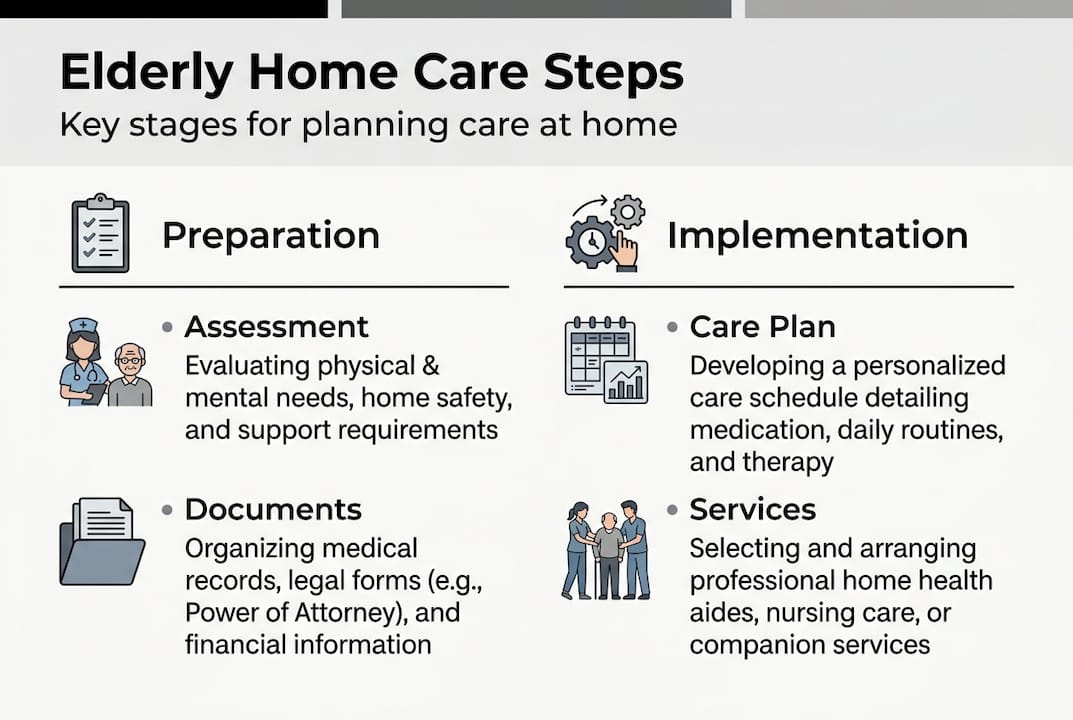
Before the assessment, it helps to gather key documents and information. Here is an overview of what is typically required:
| Document or detail | Why it is needed |
|---|---|
| NHS number and GP details | To confirm medical history and current conditions |
| List of current medications | To understand health management needs |
| Details of existing informal care | To avoid duplicating support already in place |
| Home ownership or tenancy status | Relevant to financial assessments |
| Details of income and savings | Used for means testing if council funding is sought |
Once the assessment is complete, the council will determine eligibility under the Care Act 2014 and recommend a support plan. Not everyone qualifies for council-funded care, but the assessment itself is still a useful baseline even if you plan to arrange care privately.
At the same time, preparing the home is essential. Common adaptations that improve safety and comfort include:
- Installing grab rails in bathrooms, hallways, and near stairs
- Fitting non-slip mats in wet areas
- Improving lighting throughout the home, particularly on staircases
- Adding a personal alarm or falls detector
- Rearranging furniture to create clear, safe walkways
- Raising toilet and chair heights to make standing easier
If you are unsure where to start with this, our elderly home care guide and complete home care services guide offer further detail on the full range of practical steps. You can also look for signs you need home care if you are still uncertain whether formal support is needed.
Pro Tip: Family carers are entitled to their own separate carer’s assessment from the council. This is distinct from the care needs assessment and can open access to additional support, including respite care and financial assistance for the carer.
Designing a personalised elderly care plan
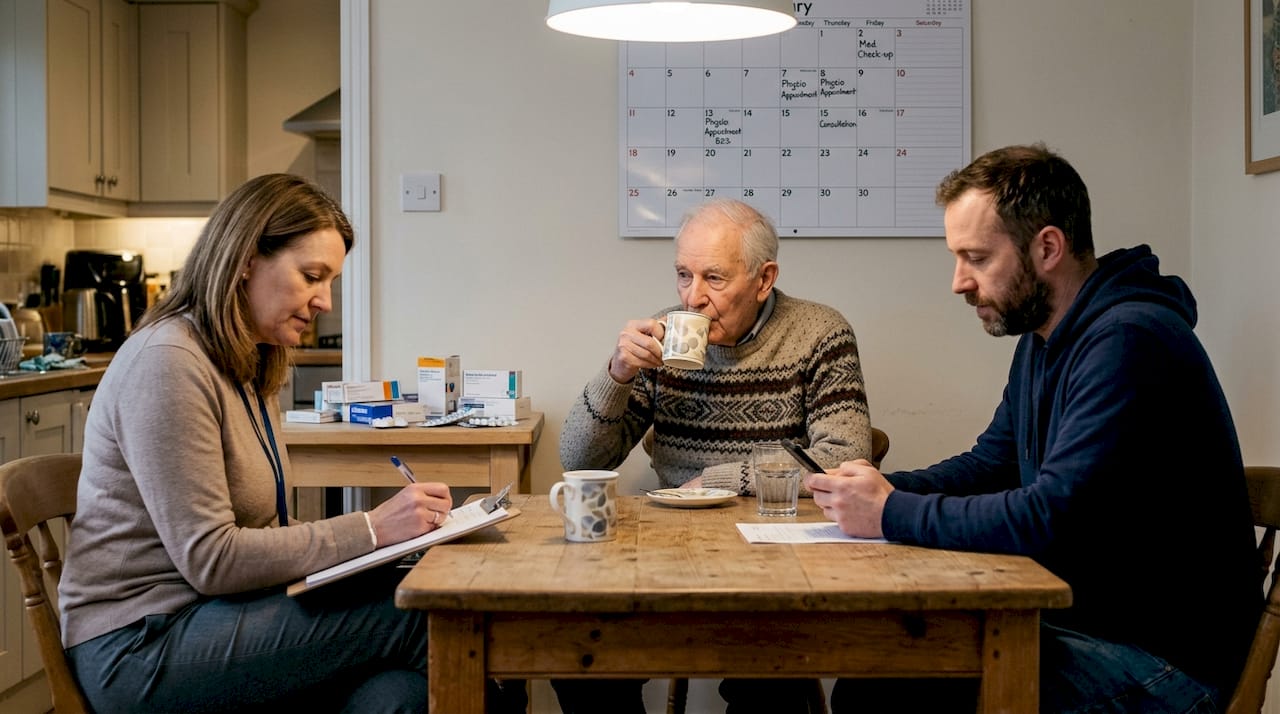
With the initial assessment in place, the next step is building a care plan that genuinely reflects your loved one’s preferences, routines, and goals. A good care plan is not just a list of tasks. It is a living document that puts the person at its centre.
To develop a personalised care plan that promotes independence, consider the following steps:
- List daily tasks your loved one needs help with, separating those they can still do independently from those requiring assistance.
- Map out their daily routine, including preferred wake times, mealtimes, and social activities they value.
- Identify adaptations that would allow them to do more for themselves, such as grab bars, better lighting, or specialised kitchen equipment.
- Agree on care preferences, including who provides personal care, how much privacy they want, and any cultural or religious considerations.
- Set short and long-term goals, for example, maintaining the ability to walk to the garden or prepare a simple meal independently.
- Review the plan regularly, at least every three months or whenever circumstances change significantly.
Person-centred planning has a measurable impact on emotional wellbeing. When elderly people feel heard and involved in their own care, they report greater satisfaction, less anxiety, and a stronger sense of purpose. Encouraging your loved one to take part in every stage of this process is not just good practice. It is genuinely transformative.
For practical ideas on personalising home care services and understanding the advantages of home care over residential settings, both resources offer clear guidance.
“Person-centred care means treating people as individuals, with their own histories, values, and goals. When a care plan reflects this, the benefits extend well beyond physical health into emotional resilience and a sense of control over daily life.”
Pro Tip: Always include your loved one directly in care plan meetings, not just family members or professionals. Even where cognition is affected, their preferences and reactions are meaningful data that shape better care.
Selecting and arranging the right home care services
Once you have a care plan, you need to decide how to arrange and fund the care itself. In London, there are three main routes, each with different implications for cost, flexibility, and quality assurance.
| Option | How it works | Key considerations |
|---|---|---|
| Council-arranged care | Council contracts with approved providers | Subject to eligibility and means testing |
| Private agency (CQC-registered) | Family arranges directly with a regulated agency | More flexibility; you cover costs |
| Direct payments | Council funds paid directly to the individual | Greater control; administrative responsibility |
You can arrange homecare via the council, CQC-registered agencies, or direct payments. Home care in London typically costs between £15 and £30 per hour, and means-tested financial help may be available if your loved one has savings below the relevant threshold.
When choosing a home care agency, ask the right questions before committing:
- Is the agency registered and inspected by the CQC?
- Are all carers DBS (Disclosure and Barring Service) checked?
- How does the agency match carers to clients?
- What happens if a regular carer is unwell or unavailable?
- How is the care plan reviewed and updated?
- What is the complaints procedure?
For a fuller list of questions for care agencies, we have put together a dedicated resource to help you compare providers with confidence.
Research also shows that home care can reduce hospital admissions by enabling earlier identification of health changes, supporting medication adherence, and preventing accidents at home. If you are evaluating the full range of London home care services, weighing costs against these broader health benefits is worthwhile.
Promoting wellbeing, safety, and independence at home
Putting care in place is a significant achievement, but the ongoing work is equally important. Supporting your loved one’s independence, emotional health, and physical safety requires consistent attention and a proactive approach.
Here are practical strategies to build into everyday care:
- Encourage your loved one to remain involved in household tasks they can still manage safely, such as folding laundry or preparing simple snacks
- Schedule regular social contact, whether in person, by phone, or online, to reduce isolation
- Use a home care safety checklist to review the home environment at least every six months
- Monitor changes in mood, appetite, sleep, or mobility, as these can signal shifts in health that need attention
- Ensure all emergency contact details and medical information are clearly accessible in the home
Research confirms that predictors of independence at home include lower levels of frailty, the absence of depression, and higher cognitive function. This means that mental health support is just as critical as physical care. If you are comparing options, our guide on home care vs nursing explores the differences in detail.
For families supporting a loved one with dementia, the approach needs additional thought. Empathic engagement and relational skills are central to quality dementia care at home. This means carers who take time to understand the person’s history, communicate with patience, and adapt their approach to the individual’s emotional state. When selecting a carer or agency for someone with dementia, prioritise these qualities alongside practical skills.
One legal safeguard that families frequently overlook is the Lasting Power of Attorney (LPA). A Health and Welfare LPA gives a trusted person the legal authority to make care decisions if your loved one loses capacity.
“Thousands of families risk being overruled on care decisions without a valid Health and Welfare LPA in place. Setting this up early, while your loved one still has capacity, is one of the most protective steps a family can take.”
Finally, do not underestimate the risk of carer burnout in family members. Regular breaks, access to respite care, and honest conversations about limits are essential to sustaining good care long term.
Our perspective: Why step-by-step planning empowers families
After more than 30 years working with London families, we have seen the difference that a structured approach makes. Families who plan carefully, and who revisit their plan regularly, navigate the harder moments with far more confidence than those who act only in a crisis.
Here is something worth saying plainly: no care plan survives contact with reality completely unchanged. Needs shift. Conditions progress. Relationships between carers and clients evolve. What matters is not having a perfect plan from day one, but building the habit of review and adjustment.
Small, consistent steps genuinely do add up to significant quality of life improvements. You do not need to solve every challenge at once. A transitioning to home care approach, taken one stage at a time, is more sustainable and more effective than trying to arrange everything simultaneously.
We would also encourage you to be honest about your own limits as a family. Seeking professional support is not a failure. It is often the most caring thing you can do.
How Kells Domiciliary Care supports your step-by-step journey
At Kells Domiciliary Care, we have been helping London families arrange high-quality home care for over 30 years. Whether you are at the very start of this process or looking to improve existing arrangements, we are here to help at every stage. You can download our free home care guide for a practical overview of your options, or explore our personalised support options to understand how care can be shaped around your loved one’s unique needs. Our fully qualified, DBS-checked carers are regulated by the CQC and ready to provide everything from brief check-in visits to round-the-clock support. Get in touch with us today to discuss how we can help your family.
Frequently asked questions
How do I start arranging elderly home care in London?
Begin by requesting a care needs assessment from your local London council’s adult social services. This free assessment determines eligibility and identifies what support your loved one requires.
What funding is available for home care, and who is eligible?
Council funding depends on a means test carried out after the care needs assessment. You may also qualify for direct payments to arrange services yourself, giving you greater control over who provides care.
Can family carers get support or a break from caring duties?
Yes. Family carers are entitled to a separate carer’s assessment and can access respite care and other support. Requesting this assessment is important because burnout risk is high without regular breaks and proper backing.
What adaptations can make home care safer and easier?
Simple changes such as installing grab bars, improving lighting, and fitting emergency alarms significantly increase safety. A personalised care plan will identify which adaptations are most relevant to your loved one’s specific situation.
Why is having a Health or Welfare Lasting Power of Attorney important?
A Health or Welfare LPA ensures that your family’s care preferences are legally protected. Without one, thousands of families risk being overruled when critical decisions about home care need to be made.
Recommended
- Elderly home care in London: A guide for families – Kells Domiciliary Care
- How to transition to home care in London: a step-by-step guide – Kells Domiciliary Care
- Home care services: a complete guide for London families – Kells Domiciliary Care
- Home care vs nursing: guide for London elderly families – Kells Domiciliary Care