

TL;DR:
- Families should actively participate in discharge planning to ensure a smooth transition home.
- Funding for home care is limited and varies, requiring early understanding of options.
- Continuous monitoring and prompt action are essential for maintaining care quality at home.
Your loved one is about to be discharged from a London hospital, and suddenly you are expected to make urgent decisions about their care at home. The paperwork is unfamiliar, the timelines feel impossible, and the system can seem designed for professionals rather than families. You are not alone in feeling this way. Thousands of London families face the same challenge every year. This guide walks you through every critical stage, from the first assessment to monitoring care at home, so you can make confident, informed decisions and help your loved one settle safely and comfortably.
Table of Contents
- Understanding assessments and discharge planning
- Key steps for transitioning to home care in London
- Overcoming funding barriers and support gaps
- Ensuring quality, monitoring, and adjusting care at home
- Why the home care transition process often falls short and what London families can do differently
- How Kells Care can support your family’s transition
- Frequently asked questions
Key Takeaways
| Point | Details |
|---|---|
| Start with proper assessment | Every transition begins with a needs assessment from your local council or NHS team. |
| Involve the whole family | Active participation in planning ensures the transition meets everyone’s expectations. |
| Be proactive with funding | Don’t wait for funding decisions; consider alternative or temporary solutions if needed. |
| Monitor and adapt | Check care quality regularly and adjust the plan if your loved one’s needs change. |
Understanding assessments and discharge planning
Before any care begins, a formal process must take place. Care needs assessments are the starting point, and understanding them early saves a great deal of stress later.
The process in London typically begins with a care needs assessment by the local council’s adult social services, often triggered during hospital discharge via Discharge to Assess (D2A) pathways. D2A means your loved one may be discharged before a full assessment is completed, with the assessment happening at home rather than in hospital. This approach reduces bed pressure but can feel unsettling for families who want everything confirmed before leaving the ward.
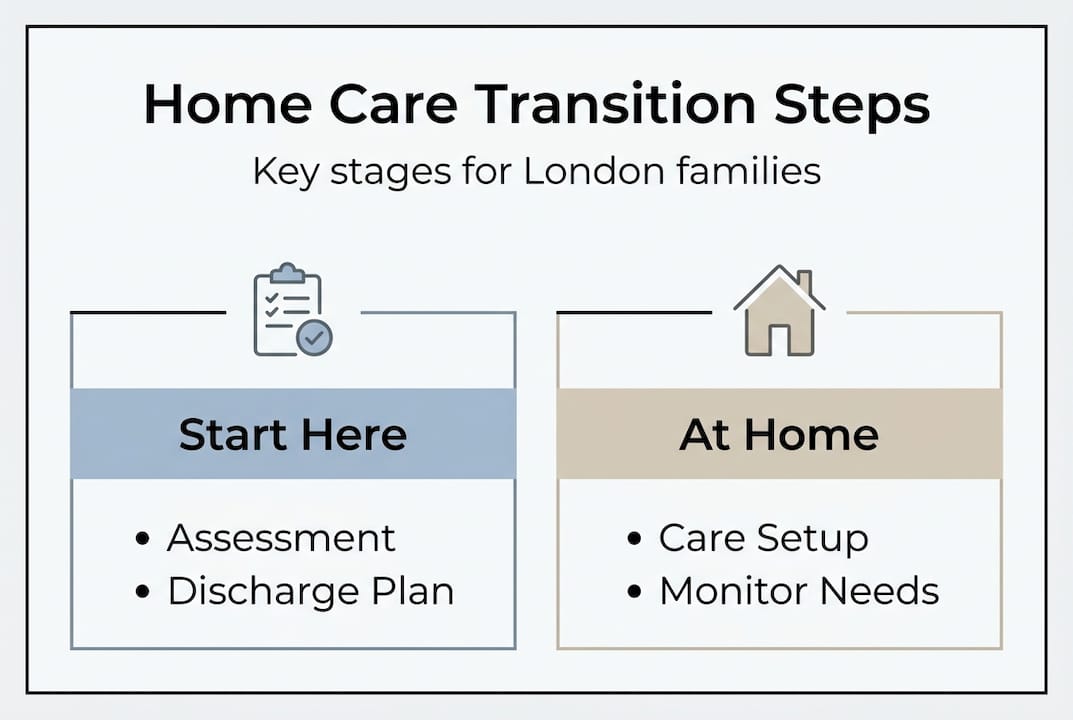
Hospital discharge planning involves a multidisciplinary team, a written discharge plan, and family involvement. The team typically includes doctors, nurses, social workers, occupational therapists, and physiotherapists. Each professional contributes to a picture of what your loved one will need at home.
As a family member, you have the right to be involved in these conversations. You can also request a separate carer needs assessment for yourself, which may open access to additional support and respite services.
Here is what you should expect to receive during discharge planning:
- A written discharge summary with diagnosis and medication details
- A care plan outlining daily support needs
- Contact details for the assigned social worker or care coordinator
- Information about any equipment being arranged for the home
- Details of follow-up appointments
| Document | Purpose |
|---|---|
| Discharge summary | Medical overview and medication list |
| Care plan | Daily support and personal care needs |
| Equipment referral | Aids such as grab rails or hospital beds |
| Follow-up schedule | GP and specialist appointments |
| Social worker contact | Point of contact for ongoing support |
For a fuller picture of what comes next, our post-hospital home care guide covers the journey from ward to home in practical detail. You can also read our needs assessment overview to understand exactly what councils look at during the process.
Pro Tip: Get involved in discharge planning as early as possible. Ask the ward staff when the first planning meeting will take place and request to attend. Keep every document you receive in a single folder, physical or digital, so nothing gets lost.
“Families who engage early in discharge planning consistently report smoother transitions and fewer crises in the first weeks at home.”
Key steps for transitioning to home care in London
With assessments underway, you need a clear roadmap. The following steps reflect the typical journey for London families, though timelines can vary depending on your borough. The care needs assessment process can differ between councils, for example between Tower Hamlets and Kingston, so always check with your local authority directly.
- Referral: A GP, hospital team, or family member contacts adult social services to request a needs assessment.
- Needs assessment: The council assesses your loved one’s care requirements and eligibility for funded support.
- Discharge planning meeting: The multidisciplinary team, family, and social worker agree on a care plan and discharge date. Discharge planning starts from admission, and reablement may be free for up to six weeks.
- Equipment setup: Occupational therapists arrange any home adaptations or equipment before discharge.
- Agency selection: You choose a home care agency, either council-arranged or privately selected, based on your loved one’s needs.
- Care begins: The carer visits begin, ideally on the day of discharge or within 24 hours.
| Feature | D2A pathway | Standard discharge |
|---|---|---|
| Assessment timing | After discharge, at home | Before discharge, in hospital |
| Speed of discharge | Faster | Slower |
| Risk of care gaps | Slightly higher | Lower |
| Family preparation time | Less | More |
| Reablement eligibility | Often included | Varies |
For practical preparation before your loved one returns home, our home care safety checklist is a useful starting point. You can also revisit our post-hospital transition steps for borough-specific guidance.
“Keep a copy of all discharge paperwork, medication lists, and care plans. These documents are essential if care needs to be adjusted or if a dispute arises with the council.”
Pro Tip: Arrange a family meeting with the care team before discharge day. Use it to clarify who is responsible for what, including medication management, transport to appointments, and emergency contacts.
Overcoming funding barriers and support gaps
Funding is where many families hit their first serious obstacle. Public funding in London is means-tested and often limited, leading to unmet needs, and NHS Continuing Healthcare may apply for complex cases. Understanding your options before you need them is essential.
There are three main funding routes:
- Local authority funding: Available to those who meet financial and care eligibility thresholds. The council contributes to or fully funds care costs.
- NHS Continuing Healthcare (CHC): For people with a primary health need. Fully funded by the NHS, but eligibility assessments can be lengthy and are sometimes refused on first application.
- Private or self-funding: Families pay directly for home care, either as a long-term arrangement or to bridge gaps while funding decisions are made.
The scale of the problem is significant. In 2022, 13,440 patients per day were unfit for discharge due to care issues, contributing to high readmission rates without effective transitional care. Readmission risk is particularly elevated for new residents and those with multiple conditions, making timely and appropriate home care genuinely critical.
Before committing to a funding route, ask these questions:
- Does my loved one meet the financial threshold for local authority support?
- Has a CHC checklist been completed by the hospital team?
- What happens to care if the funding decision is delayed?
- Does the home care agency accept direct payments from the council?
- Are there any short-term reablement services available at no cost?
Our guide on understanding the role of home carers explains what funded and private carers can and cannot do, which helps when comparing options. You can also find a list of questions to ask home care agencies before making a final decision.
Pro Tip: Apply for a carer needs assessment for yourself at the same time as your loved one’s care needs assessment. Even if you are not the primary carer, this assessment can unlock respite services, training, and financial support that many families do not realise they are entitled to.
Ensuring quality, monitoring, and adjusting care at home
Once care is in place, the work does not stop. Monitoring is essential, particularly in the first weeks when routines are being established and your loved one is adjusting to a new way of receiving support.
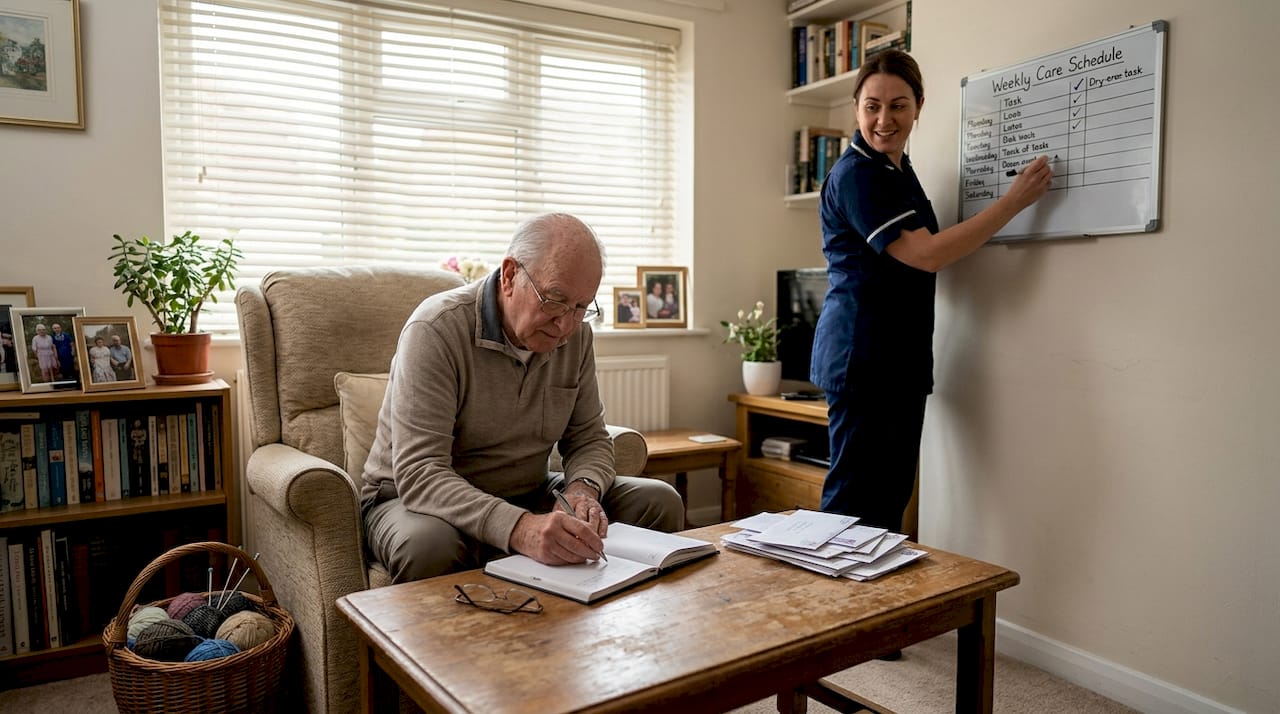
Multicomponent transitional care, including planning, early follow-up, and family involvement, reduces short-term readmissions and improves outcomes, but effects fade after six months. This is a critical finding. It means the positive impact of a well-managed transition can diminish if families step back too soon.
Here is what to monitor regularly:
- Is your loved one clean, comfortable, and well-nourished?
- Are medications being administered correctly and on time?
- Is the carer arriving punctually and staying for the agreed duration?
- Does your loved one feel safe and respected?
- Are there any new signs of confusion, falls, or physical decline?
“Research shows that the benefits of family involvement in transitional care can fade after six months. Plan for a formal review at this point rather than assuming care is running smoothly.”
If something feels wrong, act quickly. You can request a reassessment from the local council at any time if your loved one’s needs have changed. If you are unhappy with the agency, raise concerns directly with the care manager first. If that does not resolve the issue, escalate to the CQC (Care Quality Commission), which regulates all home care providers in England.
Our home care safety checklist gives you a practical framework for weekly monitoring. For longer-term planning, our elderly home care guide covers how to adapt care as needs change over time.
Pro Tip: Keep a simple monitoring diary. Note any concerns, changes in behaviour, or missed visits. Schedule formal reviews at one month, three months, and six months after care begins.
Why the home care transition process often falls short and what London families can do differently
Official guidance assumes the system works as intended. In reality, families often encounter delays, miscommunications, and gaps that no leaflet prepares you for. The most successful transitions we have seen at Kells are not the ones with the smoothest paperwork. They are the ones where a family member refused to accept vague answers and kept asking until they got clear ones.
Here is what genuinely makes a difference. First, document everything. Every phone call, every verbal agreement, every care plan change should be confirmed in writing. This protects you if a dispute arises later. Second, do not wait for funding to be resolved before arranging care. Short-term private support can bridge the gap and prevent a crisis readmission that sets everything back. Third, if you feel ignored by the system, escalate rapidly. Waiting politely for a response that never comes is the most common mistake families make.
The benefits of good home care are well established, but accessing them requires persistence. You are your loved one’s best advocate.
How Kells Care can support your family’s transition
At Kells Care, we have been supporting London families through exactly these challenges for over 30 years. We understand the pressure of a hospital discharge, the confusion of the assessment process, and the urgency of getting the right care in place quickly. Our experienced team can step in at any stage, whether you need temporary support while funding is arranged or a long-term care package tailored to your loved one’s needs.
If you are weighing your options, our guide on home care vs nursing helps clarify which setting suits different care needs. For a broader introduction to what home care involves, our domiciliary care explained guide is a helpful starting point. Get in touch with our team today to discuss how we can support your family.
Frequently asked questions
How long does the transition to home care in London usually take?
If all assessments proceed without delay, a transition can happen within a few days of discharge, but system bottlenecks and assessment backlogs often extend this timeline significantly.
Are family members involved in discharge planning?
Yes, families should be included from the point of admission and are actively encouraged to attend planning meetings, as family involvement is known to improve outcomes during the move home.
What if my loved one does not qualify for local authority funding?
You can apply for NHS Continuing Healthcare if your loved one has complex health needs, or consider private home care as a bridge while you reapply, since means-tested support is limited but alternative options do exist.
How can I check if the home care is meeting my loved one’s needs?
Use a structured home care safety checklist, schedule regular reviews with the care team, and monitor for any changes in health or wellbeing, as regular follow-ups are shown to improve care outcomes over time.
Recommended
- Elderly home care in London: A guide for families – Kells Domiciliary Care
- Post-hospital home care: a London family guide 2026 – Kells Domiciliary Care
- Recognising signs you need home care: London family guide – Kells Domiciliary Care
- Home care safety checklist: Key steps for London families – Kells Domiciliary Care