TL;DR:
- Home carers support independence through emotional connection, respecting identity, and adaptive assistance.
- Duties include personal care, medication management, meal prep, mobility help, and emotional companionship.
- Quality is regulated by the CQC, but true care relies on relationships, trust, and responsive, personalized support.
Many families assume a home carer’s job begins and ends with helping someone get dressed or preparing a meal. In reality, the role is far broader. Home carers offer emotional support, help manage medications, liaise with healthcare professionals, and work to preserve your loved one’s sense of identity and independence. For London families navigating this decision, understanding what a home carer truly does makes all the difference. This guide breaks down every dimension of the role, from day-to-day duties to specialist dementia support, so you can make informed, confident choices for the people you care about most.
Table of Contents
- How home carers support independence and dignity
- Duties of home carers: More than daily tasks
- Supporting complex needs: Dementia and special requirements
- Quality and oversight: Regulation, ratings and funding
- Why genuine quality in home care means more than ticking boxes
- Find the right home carer for your family in London
- Frequently asked questions
Key Takeaways
| Point | Details |
|---|---|
| Home carers enable independence | They deliver personalised support that lets individuals stay safe and comfortable at home. |
| Expertise for complex needs | Specialist training means carers can manage dementia and challenging behaviours effectively. |
| Quality is more than ratings | True care depends on adaptability, regular reviews, and genuine empathy, not just formal grades. |
| Family involvement is key | Ongoing communication with agencies ensures care adapts to changing circumstances and needs. |
How home carers support independence and dignity
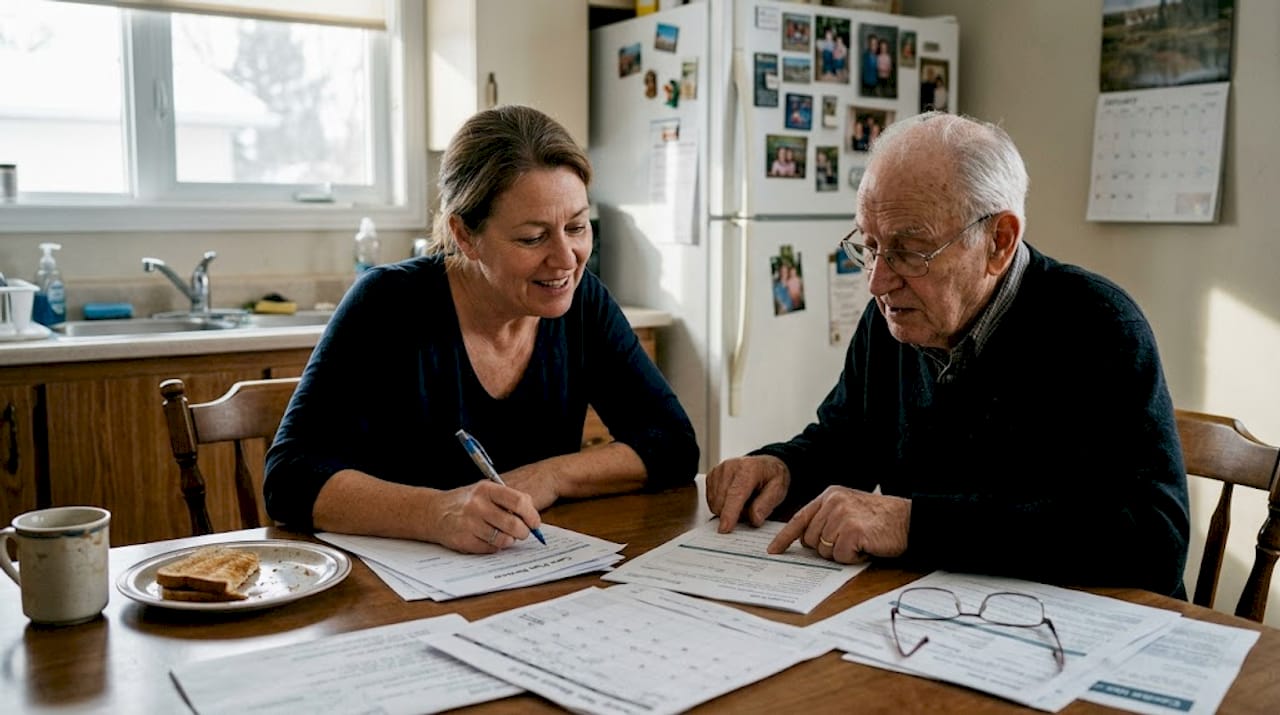
The word “carer” can mislead. It implies someone who does things for a person, when the best carers actually do things with them. The goal is never to take over. It is to support your loved one in living as independently as possible, on their own terms, in their own home.
Research confirms this distinction matters enormously. Quality in home care hinges on training, oversight, and empathic skills rather than task completion alone. A carer who completes every item on a checklist but fails to connect with the person they support is not delivering quality care. Genuine quality looks different.
Here is what skilled home carers bring beyond the practical:
- Emotional companionship: Regular, warm conversation reduces isolation and supports mental wellbeing.
- Respect for identity: Carers learn personal preferences, routines, and histories, treating each person as an individual.
- Adaptive support: As needs change, good carers adjust their approach without disrupting the person’s sense of control.
- Family reassurance: Consistent updates and open communication give families confidence that their loved one is safe and well.
The home care benefits for families extend well beyond convenience. Knowing your parent or relative is supported by someone who genuinely understands them reduces anxiety significantly. It also reduces the pressure on family members who may be juggling work, children, and their own health.
“The quality of home care is shaped as much by the relationship between carer and client as it is by clinical competence. Empathy is not a soft skill. It is a core professional requirement.”
The advantages of home care over residential settings are well documented, but they depend entirely on the quality of the carer involved. This is why choosing the right agency matters so much.
Pro Tip: Consistency in care staff strengthens trust and communication. Where possible, request that your loved one sees the same carer regularly rather than rotating through different faces.
Duties of home carers: More than daily tasks
To understand their impact, let’s unpack the real day-to-day and strategic responsibilities assigned to home carers.
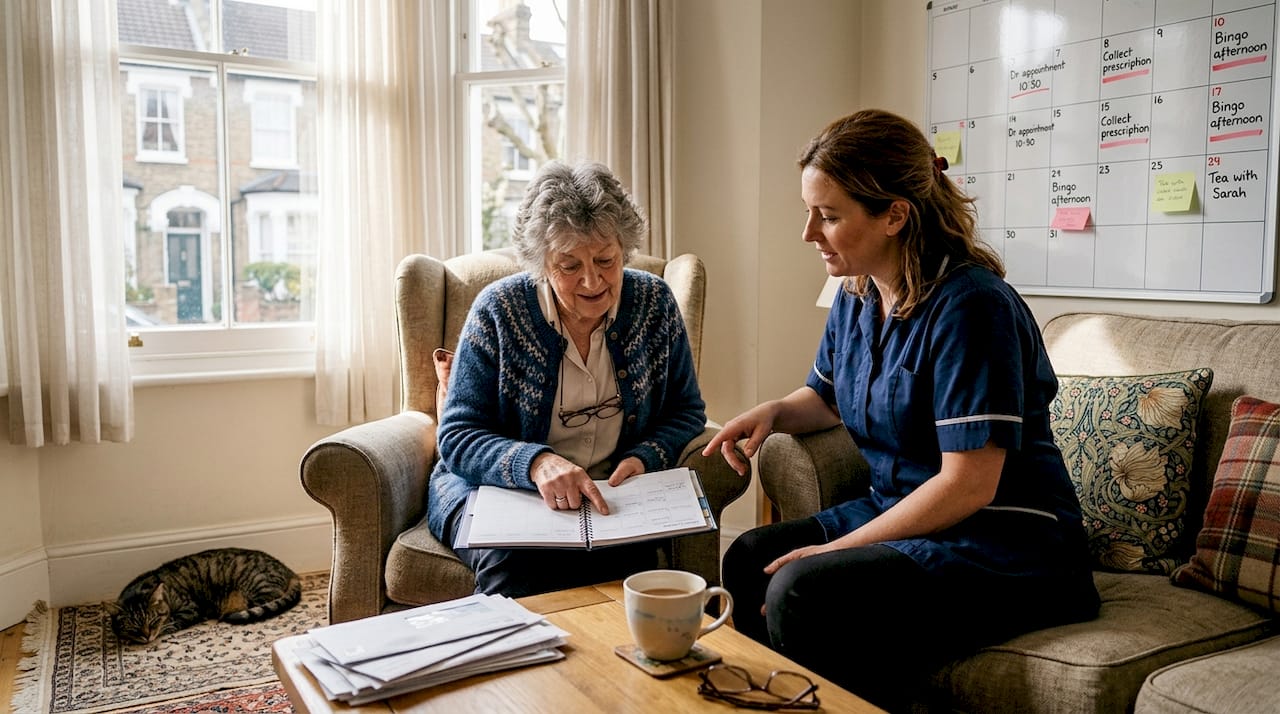
Under the Care Act 2014, care begins with a local council needs assessment, leading to a personalised care plan that is reviewed regularly. This means a home carer’s duties are not fixed. They are shaped by an individual’s specific needs, preferences, and changing health.
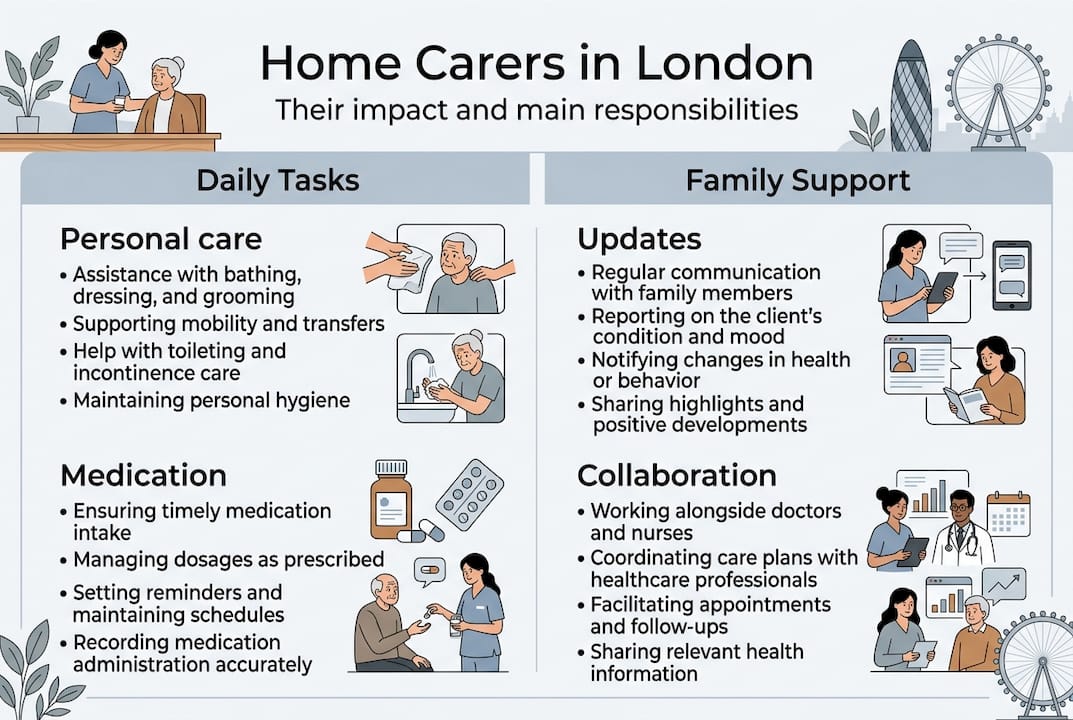
Typical responsibilities include:
- Personal care: Assisting with bathing, dressing, grooming, and toileting with dignity and sensitivity.
- Medication support: Prompting or administering medications as prescribed, and recording this accurately.
- Meal preparation: Planning and preparing nutritious meals that reflect personal tastes and dietary requirements.
- Mobility assistance: Supporting safe movement around the home, including transfers and use of mobility aids.
- Record-keeping: Documenting observations, changes in condition, and daily activities for family and clinical review.
- Emotional support: Providing companionship, conversation, and encouragement throughout each visit.
Collaboration with families is a core part of the role. A good carer does not work in isolation. They share updates, flag concerns early, and participate in care plan reviews to ensure support remains the right fit.

It helps to understand where a home carer’s role ends and other professionals begin. The table below clarifies the distinction:
| Responsibility | Home carer | District nurse |
|---|---|---|
| Personal care and hygiene | Yes | No |
| Medication prompting | Yes | Shared |
| Wound dressing and clinical procedures | No | Yes |
| Emotional support and companionship | Yes | Limited |
| Care plan input and family liaison | Yes | Yes |
| Health monitoring and reporting | Yes (observational) | Yes (clinical) |
Understanding the needs assessment process is a useful first step for families. It shapes everything that follows, including which duties a carer will take on and how frequently they visit.
For a fuller comparison of professional support options, the home care vs nursing guide covers the key differences clearly.
Pro Tip: Ask your agency for a care plan review every three to six months, or sooner if your loved one’s condition changes. Plans that go unreviewed quickly fall out of step with real needs.
Supporting complex needs: Dementia and special requirements
But what happens when your loved one has extra needs? Let’s look at specialist approaches.
Dementia care is one of the most demanding areas of home support. It requires more than patience. It requires specific techniques, emotional intelligence, and the ability to adapt in real time. Skilled carers use empathic engagement to anticipate needs, reinforce identity, validate emotions, and seek approval before acting. This approach reduces distress and builds trust over time.
Carers working with people who have dementia are trained to recognise behavioural triggers, such as unfamiliar environments, disrupted routines, or sensory overload, and to respond calmly and constructively.
| Training topic | What it covers |
|---|---|
| Behaviour management | Identifying triggers and de-escalating distress |
| Communication techniques | Using clear language, visual cues, and validation |
| Safety awareness | Preventing falls, wandering, and medication errors |
| Identity reinforcement | Connecting with personal history and preferences |
| Family collaboration | Keeping relatives informed and involved |
Home adaptations also play a vital role in keeping people safe. Carers often advise on or help implement the following:
- Removing trip hazards such as loose rugs and trailing cables
- Installing grab rails in bathrooms and along staircases
- Improving lighting in hallways and bedrooms
- Using labelled storage to support orientation and routine
- Setting up medication dispensers with reminders
For families navigating this, communicating with carers openly and regularly is essential. Carers who understand the full picture, including family dynamics and the individual’s history, deliver far better support. The assessment for complex needs ensures that specialist requirements are identified early and planned for properly. You can also review practical guidance on home care safety to prepare the home environment effectively.
Quality and oversight: Regulation, ratings and funding
Safeguarding loved ones is not just about trust. Regulation has a significant say too.
The Care Quality Commission, known as the CQC, inspects and rates all home care providers in England. Ratings fall into four categories: Outstanding, Good, Requires Improvement, and Inadequate. These ratings are publicly available and give families a useful starting point when comparing agencies.
However, the numbers reveal something important. Of 1,052 homecare inspections carried out between July 2024 and August 2025, only 29 received Outstanding ratings. That is just 2.7%. A further 758 were rated Good, 230 Requires Improvement, and 35 Inadequate. Common issues identified included medicines recording, audit processes, and staff supervision.
“A CQC rating tells you whether a provider meets the baseline. It does not tell you whether their carers will connect with your loved one. Both matter.”
When speaking with a potential provider, ask these questions:
- What is your current CQC rating, and when were you last inspected?
- How do you supervise and support your care staff?
- What is your process for reporting and resolving concerns?
- How do you handle medication recording and audits?
- How do you involve families in care planning and reviews?
Families play an active role in quality oversight too. If something does not feel right, you can report concerns directly to the CQC. You can also request to see inspection reports before committing to any provider.
Exploring personalised support options alongside the London elderly care guide will help you ask the right questions and identify providers who genuinely meet your standards.
Why genuine quality in home care means more than ticking boxes
Regulatory ratings are a helpful starting point, but they can miss what matters most to families day to day. A provider rated Good might have a carer who is exceptional at connecting with your loved one’s cultural background, sense of humour, and daily rhythm. Another rated the same might feel impersonal and rigid.
After more than 30 years supporting London families, we know that long-term satisfaction comes from skilled listeners, flexible approaches, and relationships built on genuine trust. The families who feel most at ease are those whose carers adapt quickly to change, welcome honest feedback, and treat every visit as an opportunity to do better.
Generic ratings do not capture whether a carer notices that someone seems quieter than usual, or whether they take the time to ask why. Those details matter enormously.
Pro Tip: Prioritise agencies that actively invite feedback and demonstrate they act on it. Ask directly how they handle complaints and how quickly they respond to changes in a client’s condition.
For families still finding their footing, starting with open home care conversations can make the whole process feel far less daunting.
Find the right home carer for your family in London
At Kells Domiciliary Care, we have been supporting London families for over 30 years. Our carers are fully qualified, DBS checked, and regulated by the CQC. Whether your loved one needs occasional check-in visits or round-the-clock support, we build care around the individual, not the other way around.
Our London elderly care guide is a practical resource for families at every stage of this journey. If you are weighing up options, the home care vs nursing comparison will help clarify which route suits your loved one best. And if you are not sure how to start the conversation at home, our guide to talking about home care offers gentle, practical advice. Get in touch with our team today to discuss your family’s needs and find the right level of support.
Frequently asked questions
What is the main role of a home carer?
A home carer provides practical help, companionship, and emotional support, helping individuals live safely and independently at home. Quality care prioritises empathic skills and meaningful relationships alongside task completion.
How do I know if a carer is qualified?
Look for agencies regulated by the CQC and ask specifically about staff training, supervision frequency, and ongoing development. Statutory guidance requires providers to meet clear standards for staff competence and oversight.
Are home carers trained to handle dementia or complex needs?
Yes. Specialist carers receive training in dementia behaviour management, safety adaptation, and communication techniques. The approach centres on empathic engagement, which involves anticipating needs, reinforcing identity, and validating emotions.
How is home care regulated in London?
The Care Quality Commission inspects and rates all home care agencies against a Single Assessment Framework, as outlined in care and support guidance, ensuring providers meet legal requirements for safety and quality.
What if needs change over time?
Personalised care plans are reviewed and updated regularly to reflect changes in health, preferences, and family input, as required under the Care Act 2014.
Recommended
- What is home care? Personalised support options explained – Kells Domiciliary Care
- Elderly home care in London: A guide for families – Kells Domiciliary Care
- Recognising signs you need home care: London family guide – Kells Domiciliary Care
- Why home care matters: Key benefits for independence – Kells Domiciliary Care