Choosing between home care and nursing for an elderly relative can feel overwhelming. Many families in London face confusion about which option truly fits their loved one’s needs, comfort, and health situation. The decision impacts not only the quality of care but also the elder’s independence, dignity, and daily happiness. This guide breaks down the core differences between home care and nursing, helping you make an informed choice that honors your family member’s wellbeing and your family’s capacity to support them.
Table of Contents
-
Understanding nursing care: skilled medical attention and supervision
-
How to decide between home care and nursing for your elderly relative
Key Takeaways
| Point | Details |
|---|---|
| Home care focus | Home care provides personal non medical assistance at the elder’s home to support daily tasks and preserve independence. |
| Skilled nursing care | Nursing care delivers skilled medical services, often in facilities, with licensed nurses managing medications, health monitoring, and complex conditions. |
| Needs assessment crucial | Assessing the elder’s needs early helps determine whether home care or nursing care best fits health requirements, independence, and family capacity. |
| Cost and setting differences | Costs, care level, and family involvement vary between options, making financial planning and setting expectations essential. |
| Balance independence and health | Choosing between options should aim to balance comfort, autonomy, safety, and access to medical support. |
What is home care? Defining personalized support at home
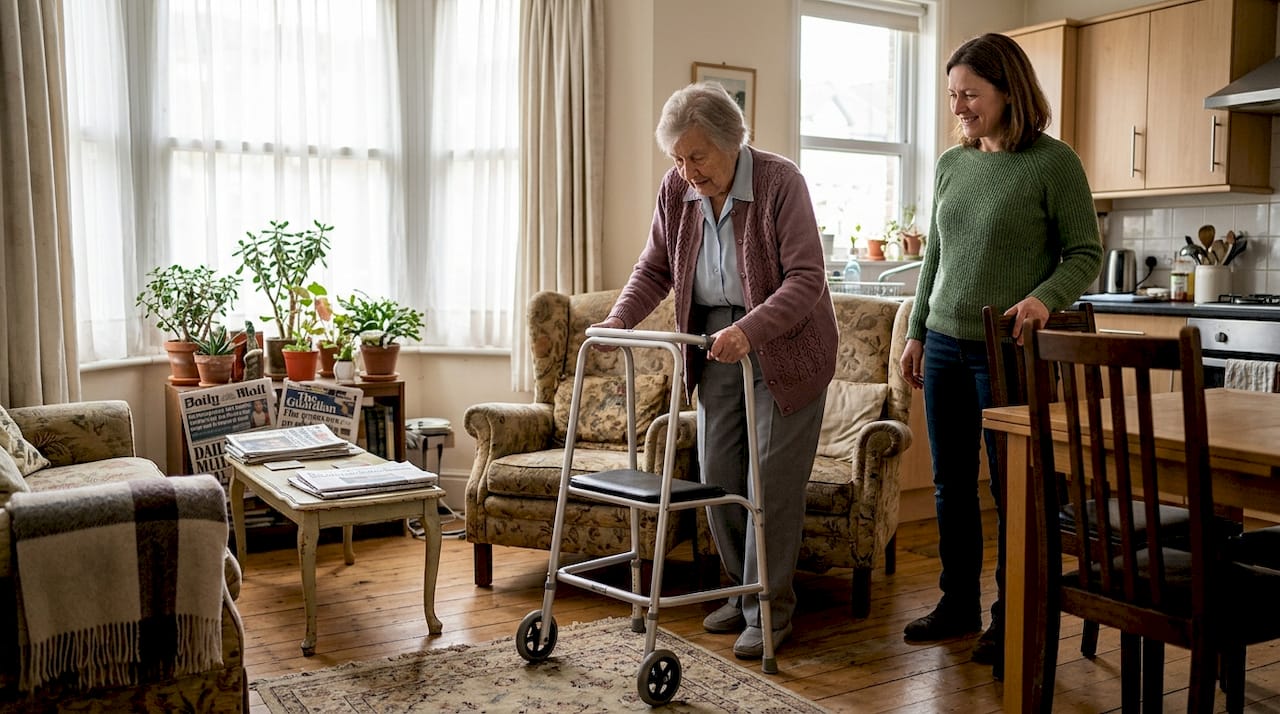
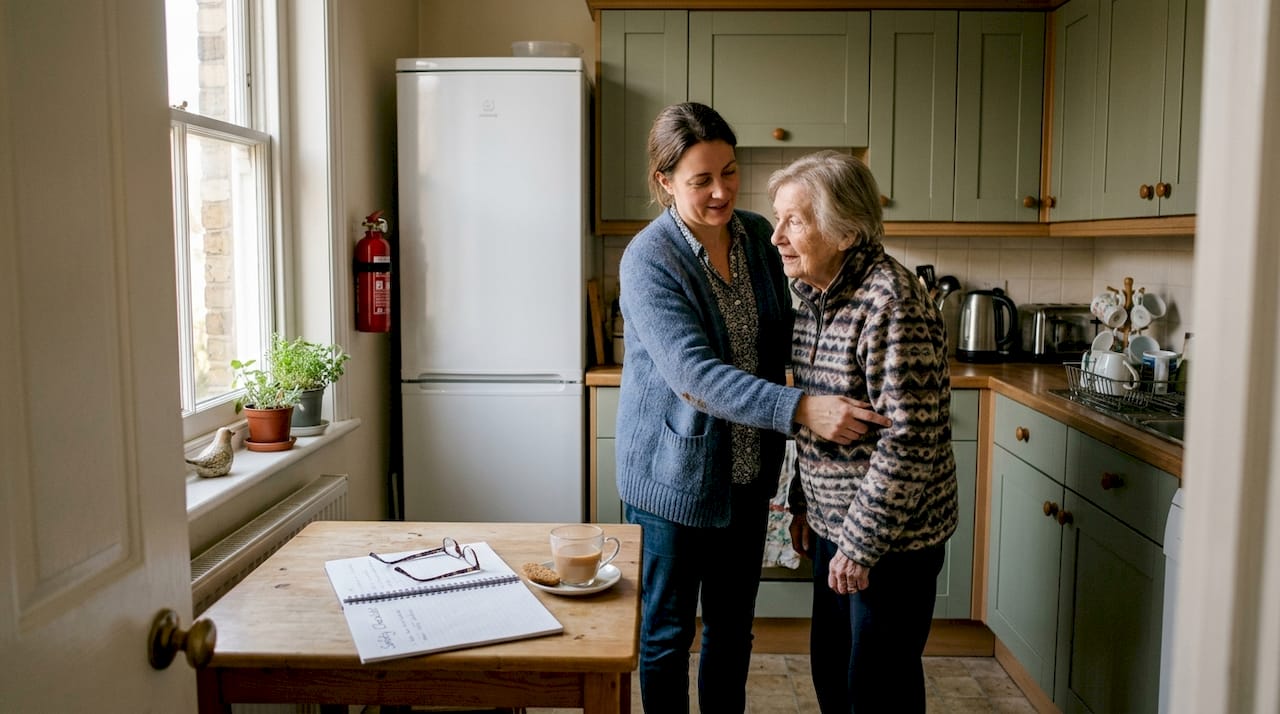
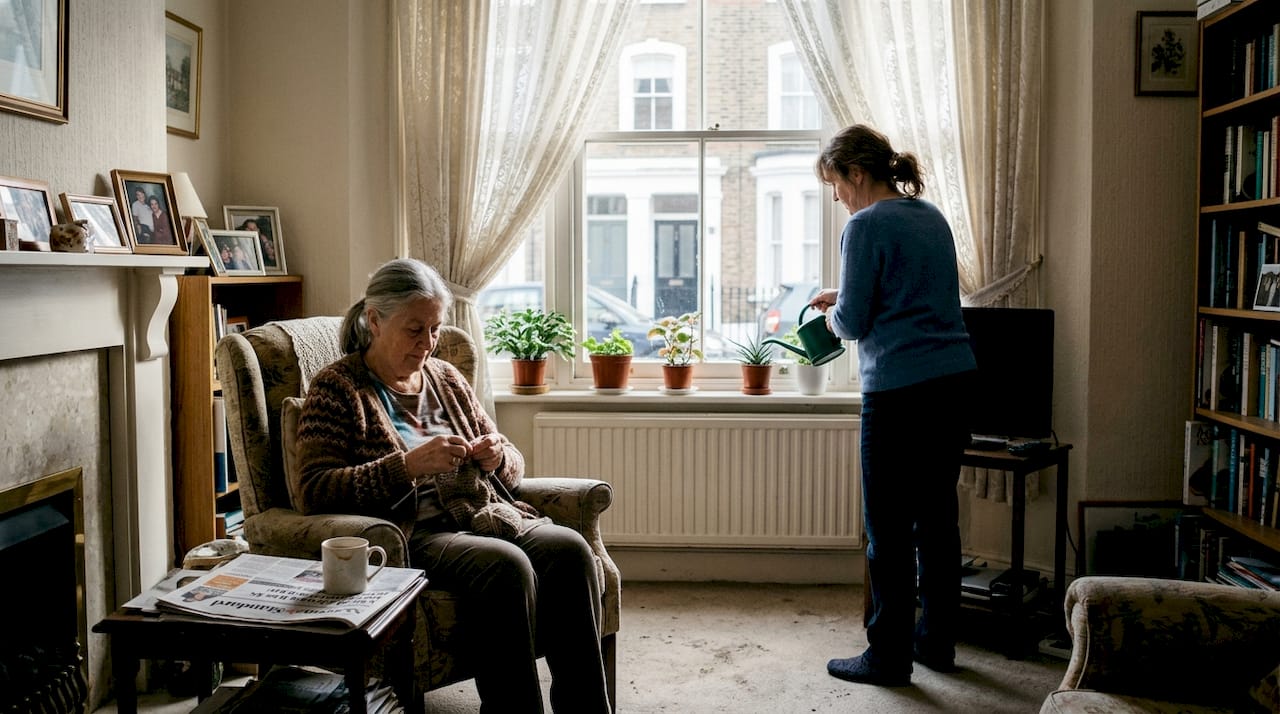
Home care provides personal care, companionship, meal preparation, and assistance with daily activities in the client’s home. This type of support focuses on helping elderly individuals maintain their routines, dignity, and independence without requiring medical interventions. Caregivers assist with bathing, dressing, grooming, and mobility, ensuring safety and comfort throughout the day. They also prepare nutritious meals, manage light housekeeping, and offer companionship to reduce loneliness and isolation.
The beauty of home care lies in its flexibility and personalization. Care schedules can range from a few hours per day to round-the-clock assistance, depending on the elder’s needs and family preferences. Because care happens in the familiar surroundings of the elder’s own home, it preserves emotional wellbeing and reduces the stress associated with relocating to unfamiliar environments. Home care staff are trained caregivers who understand the nuances of aging, but they are not typically registered nurses or medical professionals.
Key features of home care include:
-
Personal assistance with bathing, dressing, toileting, and grooming
-
Meal planning, preparation, and feeding support
-
Medication reminders and assistance with organizing pills
-
Light housekeeping, laundry, and errands
-
Companionship, conversation, and social engagement
-
Mobility support and fall prevention strategies
Pro Tip: If your elderly relative values independence and familiar surroundings, home care can provide the right balance of support without disrupting their sense of home and autonomy.
Home care works best for individuals who do not require constant medical supervision but need help with everyday tasks. It supports quality of life by allowing elders to age in place, surrounded by memories, neighbors, and routines they cherish. For families in London seeking talking about home care options, understanding this non-medical focus is the first step toward making an informed decision.
Understanding nursing care: skilled medical attention and supervision
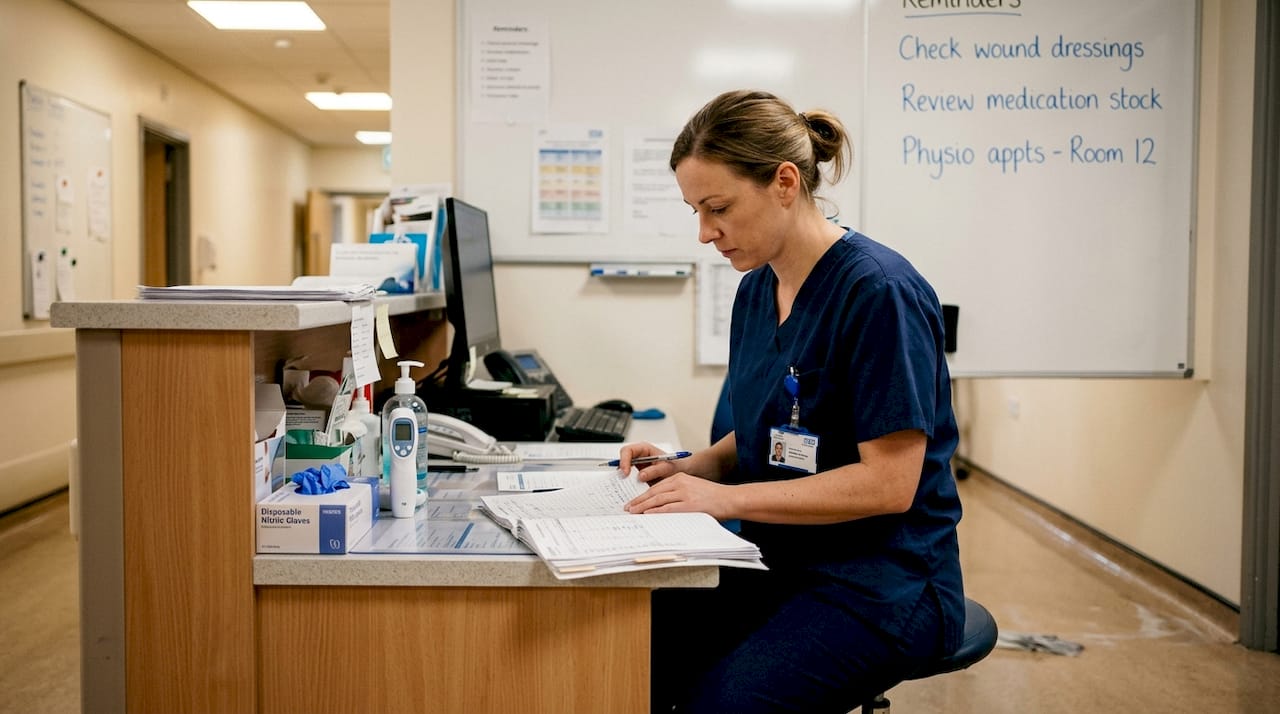
Nursing care includes skilled medical services such as medication management, wound care, and health monitoring, often provided in nursing homes or specialized settings. This level of care involves licensed nurses who deliver clinical treatments, manage complex health conditions, and ensure continuous medical oversight. Unlike home care, nursing care addresses serious health needs that require professional medical expertise and often 24-hour supervision.
Nursing care typically takes place in nursing homes, rehabilitation centers, or assisted living facilities equipped with medical infrastructure. In some cases, skilled nursing services can be delivered in the elder’s home through visiting nurse programs, but this is less common and usually reserved for specific medical treatments. The focus is on managing chronic illnesses like diabetes, heart disease, or dementia, administering injections, monitoring vital signs, and coordinating with physicians for ongoing treatment plans.
Core components of nursing care include:
-
Administration of medications, injections, and IV therapy
-
Wound care, catheter management, and post-surgical recovery support
-
Monitoring of vital signs, blood sugar levels, and other health metrics
-
Management of chronic conditions requiring regular medical intervention
-
Coordination with doctors, specialists, and therapists
-
24-hour supervision for safety and emergency response
Pro Tip: If your loved one has complex medical needs or requires frequent clinical interventions, nursing care provides the safety net of professional medical staff available around the clock.
Nursing care staff must meet higher regulatory standards and hold certifications that qualify them to perform medical procedures. Facilities offering nursing care are regulated by health authorities to ensure quality and safety. This level of oversight and expertise comes at a higher cost than home care, but it delivers peace of mind for families whose elderly relatives need intensive medical attention. For families exploring home care services London and comparing them to nursing options, recognizing the medical complexity each model addresses is crucial.
Key differences between home care and nursing care
The distinction between home care and nursing care centers on the type of support provided, the setting, and the qualifications of caregivers. The level of care, cost implications, location, and types of services vary notably between these two models. Home care emphasizes daily living assistance and emotional support in a familiar environment, while nursing care delivers medical treatments and health monitoring in specialized facilities or through skilled nursing visits.
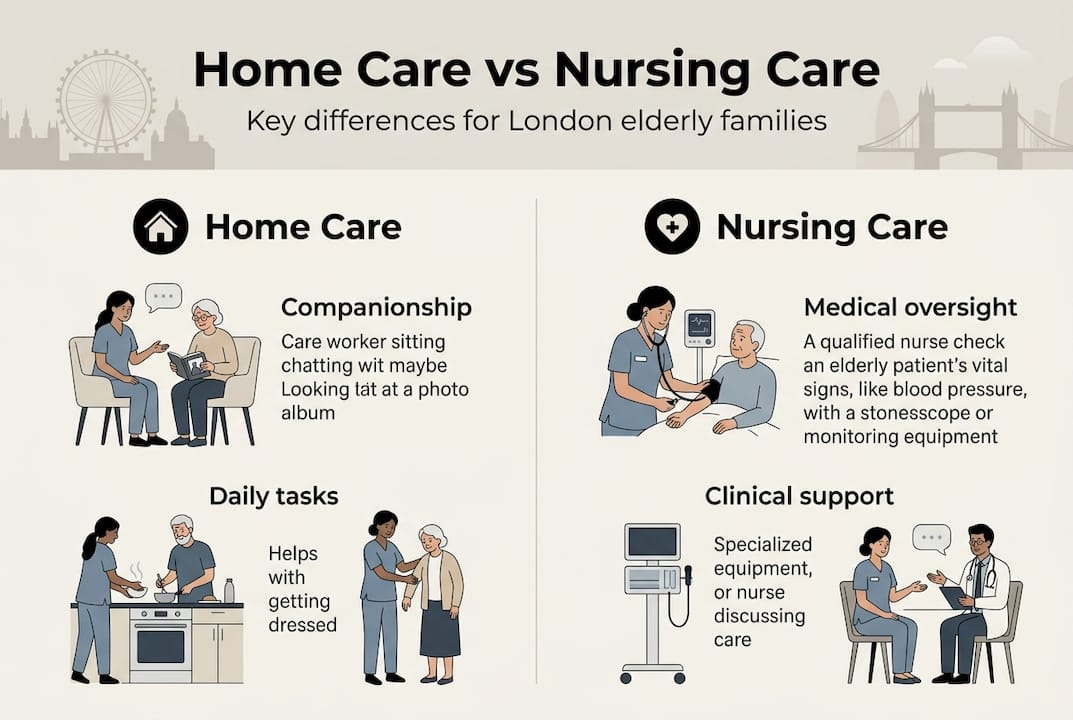
Comparison of home care and nursing care:
| Factor | Home care | Nursing care |
|---|---|---|
| Primary purpose | Assistance with daily living and companionship | Medical treatment and health supervision |
| Caregiver qualifications | Trained caregivers, not medical professionals | Licensed nurses and medical staff |
| Typical location | Elder’s own home | Nursing homes, rehab centers, or medical facilities |
| Medical services | Medication reminders, basic health observation | Medication administration, wound care, clinical monitoring |
| Cost range | Lower, varies by hours and care intensity | Higher due to skilled staff and facility costs |
| Family involvement | High, families often coordinate and participate | Lower, facility staff manage most care tasks |
| Flexibility | Highly flexible schedules and personalized plans | Structured routines and facility protocols |
Cost differences stem from the level of expertise required and the care setting. Home care is generally more affordable because it does not involve clinical staff or institutional overhead. Nursing care, with its medical focus and regulatory requirements, commands higher fees. However, the right choice depends less on cost alone and more on matching the elder’s health status and personal preferences with the appropriate level of support.
Factors influencing the choice:
-
Health complexity: Simple daily needs favor home care; chronic medical conditions require nursing care
-
Desire for independence: Elders who value staying home benefit from home care’s flexibility
-
Family capacity: Families able to assist and coordinate prefer home care; those needing full delegation opt for nursing facilities
-
Financial resources: Budget constraints may guide choices, but safety and health must remain priorities
Understanding these differences allows families to weigh independence, medical safety, and financial realities. For those navigating paying for home care, recognizing what each model offers clarifies which investment aligns with their elderly relative’s true needs.
How to decide between home care and nursing for your elderly relative
Making the right choice starts with a thorough assessment of your elderly relative’s medical and daily living needs. A comprehensive needs assessment is essential to identify the right care level and type for each individual. This evaluation should consider physical health, cognitive function, mobility, safety risks, and emotional wellbeing. Consulting with healthcare professionals, such as doctors or geriatric specialists, provides objective insights into whether medical supervision is necessary or if personal care support suffices.
Step-by-step decision-making process:
-
Evaluate medical complexity: Determine if your relative requires clinical treatments, medication management, or frequent health monitoring. If yes, nursing care is likely appropriate. If needs are primarily personal assistance, home care fits better.
-
Consider personal preferences: Ask your elderly family member about their comfort with staying home versus moving to a facility. Respecting their autonomy and dignity is crucial for emotional wellbeing.
-
Assess family involvement: Reflect on your family’s ability to coordinate care, provide companionship, and handle emergencies. Home care requires more family participation, while nursing facilities assume most responsibilities.
-
Review financial resources: Understand costs for both options and explore funding sources like insurance, government programs, or personal savings. Financial planning should align with long-term care sustainability.
-
Consult care professionals: Engage with needs assessment for elderly care services and speak with agencies offering both home and nursing care to compare personalized plans.
Pro Tip: Start with a trial period if possible. Many home care agencies offer flexible schedules that allow families to test the arrangement before committing long-term, helping you gauge whether the level of support meets your relative’s needs.
Balancing medical requirements, personal preferences, and financial realities ensures the chosen care model supports your elderly relative’s health and happiness. For families in London, resources like choosing a home care agency provide guidance on selecting reputable providers who align with your values and expectations. The goal is to honor your loved one’s independence while ensuring their safety and comfort.
Explore home and nursing care options with Kells Care
Kells Care has been delivering high-quality home care services in London for over 30 years, supporting families in making informed decisions about elderly care. Whether you need a few check-in visits or 24-hour assistance, Kells offers personalized care plans tailored to individual needs and preferences. The team provides expert guidance on talking about home care, helping families understand options, costs, and what to expect from different care models.
Kells Care’s experienced staff are fully qualified, DBS checked, and regulated by the Care Quality Commission, ensuring safety and professionalism. Families benefit from resources on paying for home care and comprehensive support in navigating care decisions. Discover more about how Kells can help by visiting the kells domiciliary care overview and exploring tailored solutions that promote quality of life, independence, and dignity for your elderly loved ones.
FAQ
What are the main differences between home care and nursing care?
Home care provides non-medical support at home, focusing on daily living tasks like bathing, dressing, meal preparation, and companionship. Nursing care offers skilled medical services such as medication administration, wound care, and health monitoring, often delivered in nursing homes or specialized facilities. The choice depends on whether your elderly relative needs clinical medical attention or assistance with everyday activities and emotional support.
Can home care providers handle medical needs?
Home care providers assist with personal care and daily tasks but typically do not perform clinical medical procedures like administering injections or managing complex wounds. They can offer medication reminders and observe general health changes, but they are not licensed nurses. For medical needs requiring skilled intervention, nursing care or visiting nurse services are recommended to ensure proper clinical oversight and safety.
How do I know if my elderly family member needs nursing care instead of home care?
If your relative requires complex medical treatments, frequent health monitoring, or 24-hour clinical supervision due to conditions like advanced dementia, heart disease, or post-surgical recovery, nursing care is advisable. For assistance mainly with everyday activities, companionship, and maintaining independence at home, home care may suffice. Conducting a professional needs assessment helps clarify the appropriate level of care based on health status and personal preferences.
Is home care more cost-effective than nursing care?
Home care is usually less expensive than nursing care due to the absence of skilled medical staff and institutional costs associated with facilities. However, total costs depend on care intensity, hours required, and specific services needed. For families exploring paying for home care, understanding funding options and comparing personalized quotes from providers helps determine the most sustainable financial approach while meeting your elderly relative’s needs.