
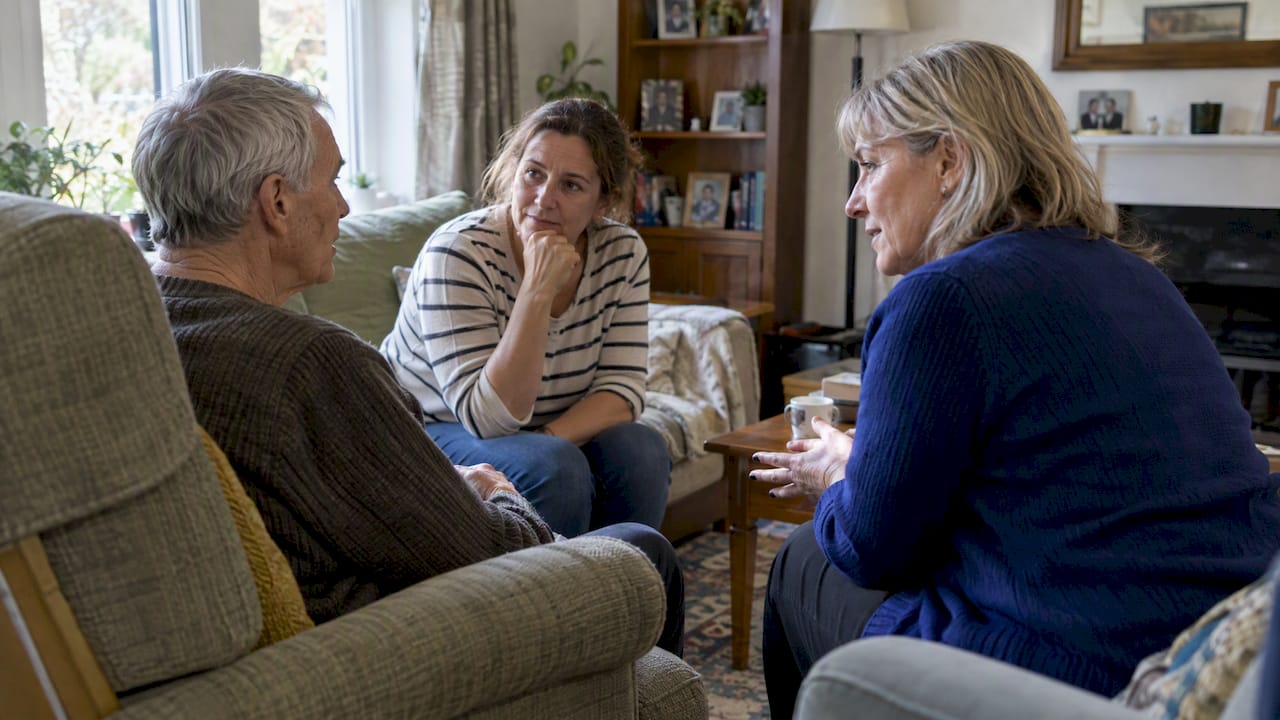
Motor neurone disease (MND) care at home works best when you plan it early, review it often and build it around the person’s wishes. In the UK that means a needs assessment, a funding route (council, NHS or private), the right health professionals alongside your carers, and a care plan that can grow as the condition progresses. This guide explains each step in plain language, for the person with MND and for the family around them.
TL;DR
- MND is progressive, so your care plan should be reviewed regularly, not set once. NICE guidance points to multidisciplinary care that adapts over time.
- Ask for a needs assessment and an Occupational Therapist (OT) visit early, before a crisis limits your choices.
- Check NHS Continuing Healthcare, which can fund care, and the Special Rules, which fast-track certain benefits for people nearing the end of life.
- Family carers can ask for their own Carer’s Assessment, and may be able to claim Carer’s Allowance.
- Start with a few visits and add more, up to live-in care or two carers, as needs change.
Table of Contents
- What MND care at home involves
- Start with a needs assessment
- Build the team around the carer
- Occupational Therapy and home adaptations
- Breathing, feeding and the care your carers must be ready for
- Paying for MND care at home
- How we support people with MND at home
- Our perspective: plan for the next stage, not just this one
- Looking after the family carer
- When home care is no longer enough on its own
- A simple checklist to start this week
- FAQ
- Sources
What MND care at home involves
MND affects the nerves that control movement. Over time, walking, using the hands, speaking, swallowing and breathing can all become harder. Thinking and memory are often less affected, so the person usually knows exactly what help they want. Good care respects that.
Home care for MND usually grows in stages:
- Early on: help with shopping, housework, meals, lifts to appointments and companionship, plus a first assessment.
- Middle stage: personal care such as washing, dressing and toileting, help with transfers, medication prompts and regular call-in visits.
- Later stage: longer or overnight support, two carers for moving and handling, equipment such as hoists, and support alongside nurses and palliative teams.
Nobody can tell you exactly how fast this will move, because it differs from person to person. That is the reason for planning ahead rather than reacting.
Start with a needs assessment
The NHS explains that in England you can arrange a paid carer through your local council after a needs assessment, or privately. The MND Association advises thinking about needs assessment, home care and home adaptations as early as possible.
Three practical points:
- Difficulty speaking does not stop an assessment. The MND Association says specialist techniques and aids can help your needs be understood. Ask for communication support, and have a family member or advocate present if you wish.
- Describe a bad day, not a good one. Assessors need to hear about the hardest moments: getting out of bed, using the toilet at night, choking at meals.
- Carers can be assessed too. NICE says anyone who cares for you can have a Carer’s Assessment, and that social services can offer support if you live alone or care for someone else.
If a council assessment finds you eligible, ask about direct payments, which let you choose your own agency. Our guide to respite funding in the UK explains the two assessments to request.
Build the team around the carer
Home carers are one part of the picture. NICE recommends coordinated care from a multidisciplinary team, covering information and support, organisation of care, symptom management and preparing for end of life. Insiders in MND care recommend reviewing the plan at least every two to three months.
That team commonly includes:
- a neurologist and an MND care coordinator or specialist nurse
- a GP and community nurses
- a physiotherapist, speech and language therapist and dietitian
- an Occupational Therapist
- palliative care or hospice teams
- your home care agency
Some hospices run joint clinics. For example, The Myton Hospices and the Shakespeare Hospice have worked with local partners on a monthly MND clinic, but availability depends on where you live. Ask your specialist nurse what is near you.
A good agency will share observations with this team: a change in swallowing, a new skin problem, more falls. Carers see the person every day, so they often notice changes first.
Coordinating professionals at home
Some people find it hard to keep appointments, referrals and records in one place. Digital tools can help: one Australian example is a platform for coordinating allied health support for dementia at home, which shows how matching, booking and shared records can reduce the admin. Its services are for Australia, so in the UK your route is the NHS, your council or a private provider.
Occupational Therapy and home adaptations
Do not wait for a fall. The MND Association advises asking for an OT assessment before adaptations are strictly necessary. An OT can recommend door widening, ramps, grab rails, bed and chair changes and hoists.
Funding such as a Disabled Facilities Grant often takes considerable time to arrange, which is why early application matters. Our guide to occupational therapy home assessments explains what to expect on the day, and our piece on mobility support covers safe moving at home.
Breathing, feeding and the care your carers must be ready for
Sooner or later many people with MND need help with breathing or eating. Two examples matter for home care:
- Non-invasive ventilation (NIV). The MND Association lists breathing therapies and ventilation support for people who feel breathless or sleep badly. NICE says the care team must check that family or home carers are willing and trained to help with the equipment. It is about daily practical support, not just the machine.
- Gastrostomy feeding. Planning this before a crisis gives you more choice about when and how it happens.
When you speak to any agency, including us, ask direct questions. Who trains carers on specific equipment, and who signs them off? Will the same carers visit regularly? How will they communicate with your nurse or therapist? Specialist clinical tasks are normally taught by the NHS team treating you, and the agency should be willing to work to their instructions.
Paying for MND care at home
Costs differ by route, so check each one in this order.
NHS Continuing Healthcare
If you have complex, long-term health needs, you may qualify for NHS Continuing Healthcare, a package of care arranged and funded entirely by the NHS. Where it is awarded, a Personal Health Budget is often the way care is delivered, letting you and your family manage the budget.
When someone’s condition is deteriorating rapidly and may be entering a terminal phase, clinicians can use the Fast Track Pathway Tool so that care can begin without delay. See our NHS continuing healthcare guide for how to apply.
Benefits
People nearing the end of life, likely to have 12 months or less, can use the Special Rules. These fast-track claims for benefits such as PIP, Universal Credit, ESA, DLA or Attendance Allowance, avoid a face-to-face assessment and award the highest rate. The evidence comes from a clinician on an SR1 form. It is not limited to cancer and applies to MND. Ask your GP or specialist nurse about it.
For family carers, Carer’s Allowance pays £86.45 a week if you care for someone at least 35 hours a week and they receive certain benefits. You do not need to be related or live together, but only one person can claim for the same individual, and it can affect other benefits. Check this before you claim.
Private funding
Many families combine routes: NHS or council funding for part of the care and private hours to add flexibility. We do not publish a price list, because MND care varies from a few visits a week to round-the-clock support. We give a clear quote after an assessment. For a London benchmark on one type of support, see our respite care cost guide.
How we support people with MND at home
We are Kells Domiciliary Care, and we have supplied home care to people in their own homes across London for over 30 years. We are regulated by the Care Quality Commission, and our carers are qualified and DBS checked.
For MND, families usually combine several of our services:
- Personal care assessments, so the plan starts from what the person actually needs
- Call-in visits for personal care on a contracted hours basis, medication assistance and meals
- Companionship and help with shopping and errands
- Respite cover, so family carers can rest
- Live-in care when needs become round-the-clock
- High dependency care with two carers attending, for safe moving and handling
- Palliative care at home, working alongside the nurses and hospice teams involved
You can see the full list on our home care services page, or contact us to talk through what you need. We also offer a free home care guide.
Our perspective: plan for the next stage, not just this one
In our years of home care in London, the hardest conversations are the ones that happen too late. A family comes to us after a fall, a hospital stay or an exhausted spouse has reached breaking point. At that point the choices have narrowed, and a move to residential care can be proposed against the person’s wishes.
So we encourage three habits. First, ask for the assessment while things are still manageable. Second, begin with a small amount of help, so the person gets to know their carers before they depend on them. Third, review the plan regularly and say out loud what is changing.

Independence and dignity are not luxuries in MND care. They mean the person decides how the morning goes, what they eat, who helps with washing and how. Our carers work to those preferences. Our guide on promoting independence at home sets out how.
We also believe family carers are part of the care plan, not outside it. Eating, sleeping and seeing friends are not selfish. They keep you able to carry on.
— Dan
Looking after the family carer
Caring for someone with MND can take over a family’s life. The MND Association notes that some carers provide over 100 hours of care per week in its discussion of government support for carers, and exhaustion is common. Practical steps:
- request a Carer’s Assessment through your council
- book regular respite, even a few hours a week, before you feel you need it
- tell your GP you are a carer
- call the MND Connect helpline
The MND Connect helpline is on 0808 802 6262, Monday to Friday, 9am to 4pm. It is free, confidential and open to people with MND, carers and families. Our guides to step-by-step respite care at home in London and what is domiciliary care can help you plan breaks.
When home care is no longer enough on its own
Home can remain the best place for most of the illness, but you should know the options:
- more hours or live-in carers
- two carers for every transfer
- district nursing and hospice at home support
- a short respite stay somewhere else
- a nursing home, if the person chooses it
NICE and experts stress early talks about end-of-life care, so wishes are recorded before communication becomes difficult. Our guides on end of life care and alternatives to care homes can help you think it through.
A simple checklist to start this week
- Call your GP or MND care coordinator and ask for a social care needs assessment.
- Ask for an OT referral and a list of likely adaptations.
- Ask whether an NHS Continuing Healthcare checklist should be completed.
- Ask your GP about the Special Rules if the prognosis is 12 months or less.
- Request a Carer’s Assessment for the main family carer.
- Talk to an agency about a first visit plan, and which carers will be regular.
- Write down the person’s wishes for care, now and later.
FAQ
How do I help someone with MND at home?
Start by asking what they want help with, and let them lead. Arrange a needs assessment, an OT visit and a review with their MND care team, then add carers for personal care, meals and moving safely. Keep checking the plan as the condition changes.
What is domiciliary care in the UK?
It is paid help in your own home, such as washing, dressing, toileting, shopping, cleaning and meal preparation. In England the NHS says agencies providing personal care must be registered with the CQC, while personal assistants you employ directly do not need to be.
What benefits can I get if I have MND?
PIP, Attendance Allowance or DLA may apply depending on your age and needs, and the Special Rules can speed up claims when life expectancy is 12 months or less. Your GP or specialist nurse can complete the SR1 form. The MND Connect helpline can also point you to benefits advice.
Is care for MS at home the same?
Not exactly. Multiple sclerosis (MS) is a different condition with a different course, so the plan will be based on your own assessment and your neurology team’s advice. We support people with physical disabilities at home, including help with personal care, mobility and respite, and we can discuss what suits you.
Sources
- NICE: Motor neurone disease, assessment and management
- NICE: Motor neurone disease (information for the public)
- NHS: Help at home from a paid carer
- MND Association: Needs assessment, home care and home adaptations
- MND Association: Breathing and ventilation
- MND Association: MND Connect helpline
- MND Association
- NHS Sussex: NHS CHC and FNC operational policy
- GOV.UK: Fast Track Pathway Tool for NHS Continuing Healthcare
- GOV.UK: The Special Rules for end of life
- GOV.UK: Carer’s Allowance