
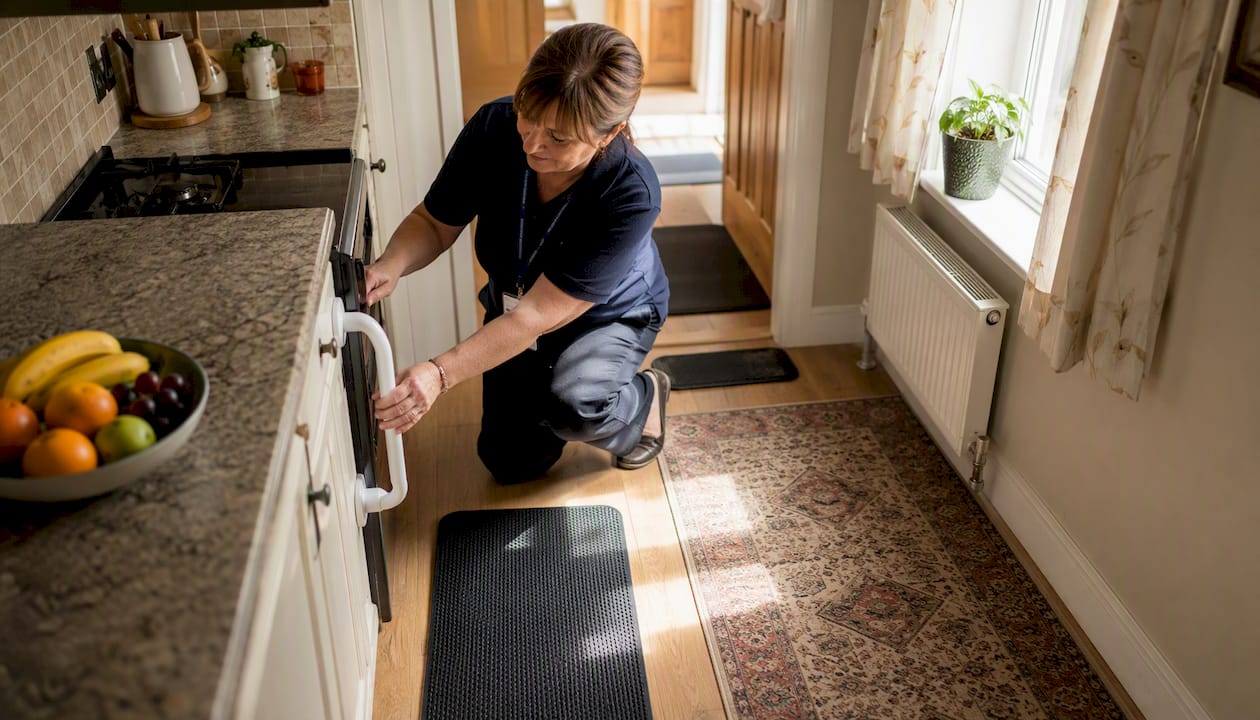
In this guide, “occupational therapy home assessment” means an in-home visit by a domiciliary care agency to assess your loved one’s daily needs and plan hourly visits or live-in support. It is not a clinical mobility assessment by an occupational therapist. Here is what to do next:
- Contact your local council’s adult social services for a free statutory care needs assessment. No GP referral is needed, and the council must assess regardless of income.
- Contact a private domiciliary agency such as Kells-care for an in-home assessment if you want faster planning or a private care package.
- Contact Citizens Advice if you are unsure which route suits your situation.
Pro Tip: Requesting a council assessment does not stop you commissioning private care at the same time. Many London families do both.
Key takeaways
A private domiciliary in-home assessment gives London families a faster, more personalised route to planned care than waiting for a statutory allocation alone.
| Point | Details |
|---|---|
| Council assessment is free | Any adult can request one via adult social services; no GP referral needed. |
| Private route is faster | A CQC-regulated agency can usually arrange a home visit within days. |
| Prepare before the visit | Bring a medication list, GP details, and involve the person who needs care. |
| After assessment | Expect a written care plan, agreed fees, and a financial assessment if council-funded. |
| Kells-care | Offers private in-home assessments across London, backed by extensive experience and CQC regulation. |
Table of Contents
- How do you start a private in-home domiciliary assessment?
- What support or adaptations might the assessment recommend?
- How do you compare private agencies beyond CQC ratings?
- What funding is available for private assessments and care?
- Why private domiciliary assessments matter more than families realise
- Kells-care can arrange your in-home assessment now
- Sources
How do you start a private in-home domiciliary assessment?
You can self-refer. Contact a CQC-regulated domiciliary agency directly, by phone or online, and ask for an in-home assessment visit. No referral from a GP or social worker is required for a private assessment.
Under the Care Act 2014, local authorities have a legal duty to assess any adult who may need care and support, involving the adult, their carers, and anyone the adult wishes to include. For the private route, the agency sends an assessor to your home, usually within days rather than weeks.
A London-focused care assessment guide can help you understand what to expect from both routes before you call anyone.
What support or adaptations might the assessment recommend?
A domiciliary assessment looks at daily living tasks: washing, dressing, meal preparation, medication management, and mobility around the home. Based on what the assessor observes, the resulting care plan may include:
- Personal care visits at set times each day
- Live-in carer support for round-the-clock needs
- Domestic help with shopping, cooking, and cleaning
- Companionship calls to reduce isolation
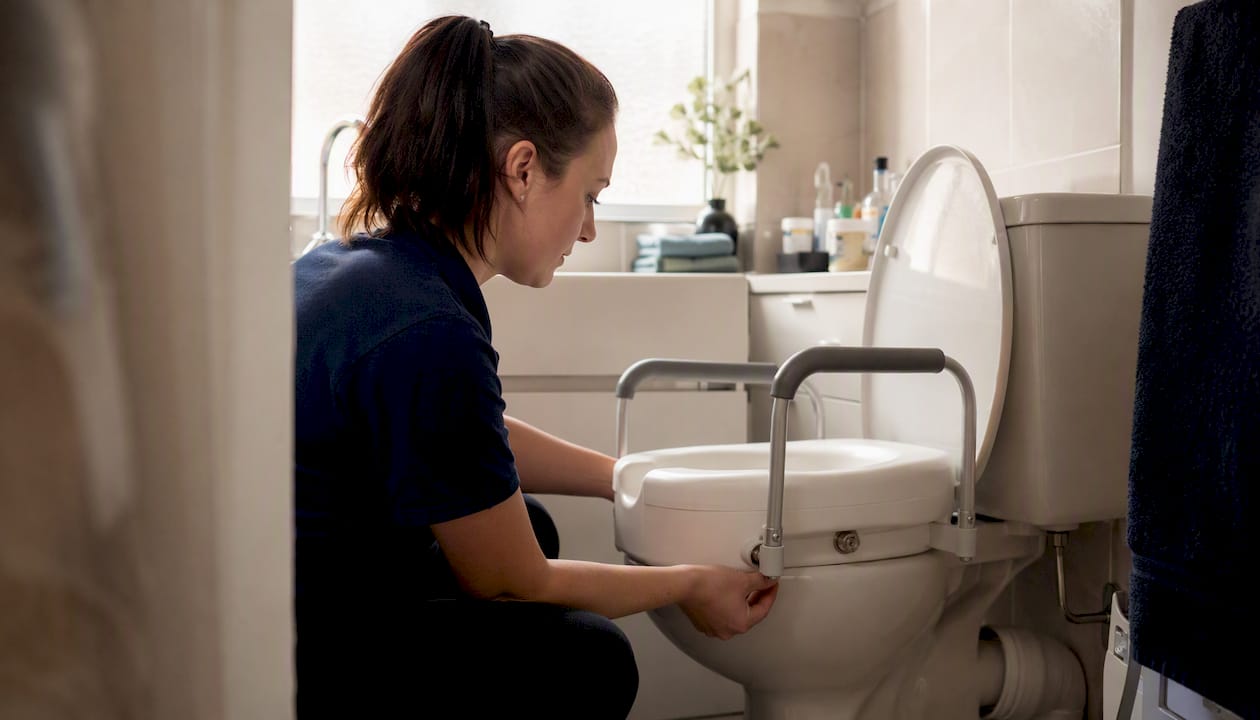
- Referral to an occupational therapist for equipment such as grab rails or a raised toilet seat, if the assessor identifies a need
The care plan is written and agreed with you and your loved one before care begins.
How do you compare private agencies beyond CQC ratings?
CQC assessors use five key questions: Safe, Effective, Caring, Responsive, and Well-Led, issuing ratings from Outstanding to Inadequate. Check the rating, but go further.
Ask agencies directly for:
- DBS certificates for all carers who will visit your home
- Training records showing dementia, medication, and manual handling competency
- Client feedback or references from families in similar situations
- A written care agreement before any visits begin
- Clarity on fees, notice periods, and what happens if a carer is unavailable
Read our guide on what CQC regulation means for families for a plain-language explanation of ratings and what to look for.
What funding is available for private assessments and care?
A statutory care needs assessment from the council is free. If the council finds eligible needs, it agrees a care plan and arranges a financial assessment (means test) to determine its contribution toward costs.
For private care, families pay the agency directly. Some people use:
- Attendance Allowance (for those over State Pension age with care needs)
- Personal Independence Payment (PIP) for working-age adults
- Direct Payments from the council, allowing families to buy care themselves once eligible needs are confirmed
Private assessment fees vary by agency; ask upfront whether the initial assessment visit carries a charge.
Why private domiciliary assessments matter more than families realise
Most families I speak with assume the council assessment is the only starting point. It is a good one, and it is free. But the statutory process can take weeks, and the resulting care package may not match what a family actually wants in terms of timing, carer consistency, or the specific tasks covered.
A private in-home assessment, done well, is a detailed conversation about a person’s life, not just their deficits. It asks what the person wants to achieve, not only what they struggle with. That distinction shapes everything that follows: the hours scheduled, the carers matched, the routines built. Families who invest time in a thorough private assessment tend to commission care that holds together for longer, with fewer changes and less distress for the person receiving it.
The statutory and private routes are not in competition. Use both where you can.
Kells-care can arrange your in-home assessment now
Kells-care has provided domiciliary home care across London for many years, with fully qualified, DBS-checked carers regulated by the CQC. Unlike waiting for a council allocation, Kells-care can arrange a private in-home assessment within days and build a written care plan around your loved one’s specific routines and preferences.
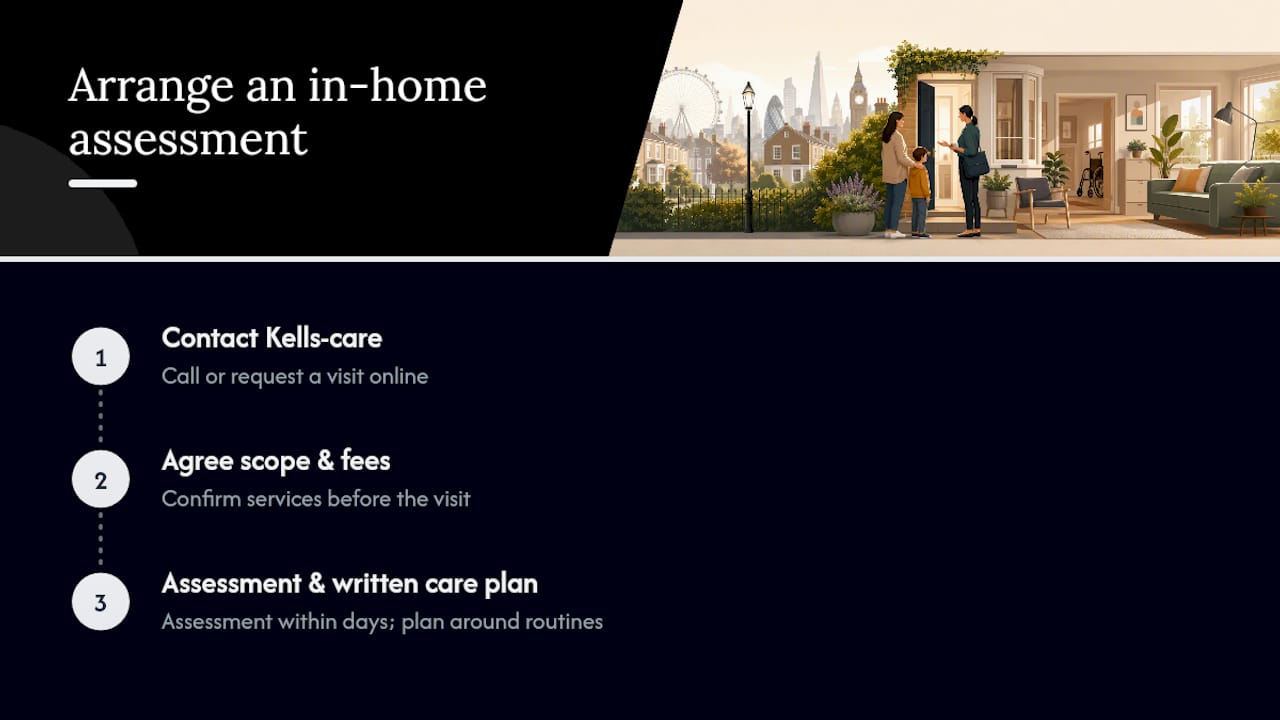
Two simple steps: call Kells-care or request a visit online, then agree the scope and any fees before a single visit takes place. Download the free Home Care Guide to understand your options, or read the questions to ask home care agencies before you compare providers.
Sources
- Getting a care needs assessment – Social care and support guide – NHS
- Gov
- Care Act 2014, section 9 — Assessment of an adult’s needs for care and support
- Assessment – Care Quality Commission
- Care needs assessment — Age UK
This article is general information, not a substitute for advice from a qualified lawyer. Consult a qualified legal professional about your own circumstances before acting on anything here.
Recommended
- Rehabilitation at home: A guide for London families – Kells Domiciliary Care
- Care assessments in London: a family’s guide to getting support
- Home care services: a complete guide for London families – Kells Domiciliary Care
- Home care safety checklist: Key steps for London families – Kells Domiciliary Care


