
TL;DR:
- Continuity of care ensures consistent relationships between patients and care providers, leading to better health outcomes for the elderly and chronically ill. High continuity reduces hospitalizations, emergency visits, and healthcare costs while improving treatment adherence and early detection of health changes. Building trust, maintaining communication, and advocating for sustained care relationships are essential for optimal health and safety.
Continuity of care is defined as the consistent, ongoing relationship between a patient and their care providers across time and settings. For elderly individuals and those living with chronic conditions, this consistency is not a comfort bonus. It is the foundation of safe, effective care. Research from the American Board of Family Medicine, a University of Oxford scoping review, and Medicare data all confirm that patients who receive continuous care experience fewer hospitalisations, lower costs, and better health outcomes. Understanding why continuity of care matters helps you, as a caregiver or family member, make better decisions about the support your loved one receives.
Why is continuity of care important for health outcomes?
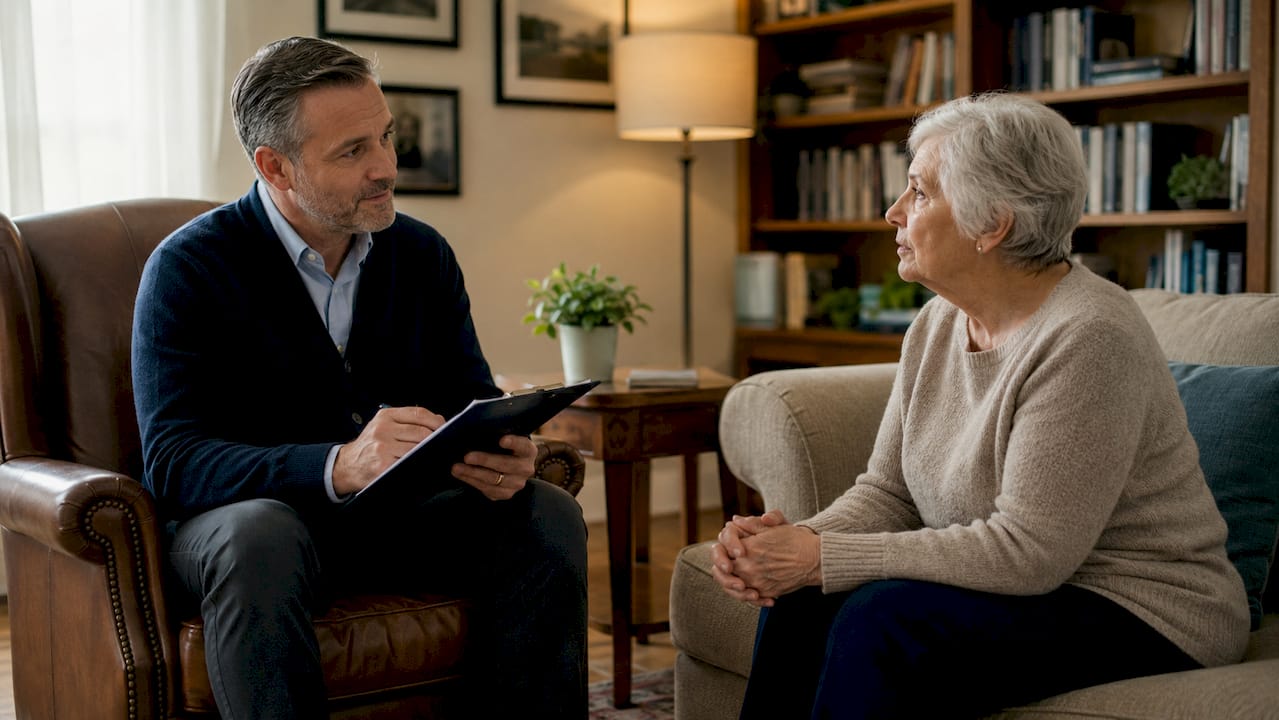
Continuity of care produces measurable improvements in health. The benefits are not theoretical. They show up in hospital admission rates, emergency department visits, and long-term quality of life.
Key benefits include:
- Fewer hospitalisations. Patients with high continuity of primary care physician relationships had 5.5% to 8.6% lower hospitalisation rates compared to those with low continuity, in a study of over 1.1 million Medicare beneficiaries. That reduction represents thousands of avoided admissions across a large population.
- Fewer emergency visits. Higher primary care continuity correlates with a 4.9% to 6.3% lower likelihood of emergency department visits based on Medicare fee-for-service data. Fewer emergencies mean less distress for your loved one and less pressure on you.
- Better treatment adherence. Relational continuity improves adherence to treatment plans and engagement in preventive care. When a patient trusts their carer, they are more likely to follow advice and report problems early.
- Early detection of changes. Continuity of care allows early detection of subtle symptom changes, preventing escalation to emergency interventions. A carer who knows your loved one’s baseline can spot a small shift before it becomes a crisis.
- Improved satisfaction. A University of Oxford 2026 scoping review of 180 papers found that high relational continuity improves patient satisfaction and care coordination in long-term and multimorbid patients. Satisfied patients are more engaged in their own care.
The thread connecting all these benefits is trust. When a patient and carer know each other well, communication improves, problems surface sooner, and care becomes genuinely personalised rather than reactive.
Relational continuity vs team-based continuity: what is the difference?
Many families assume continuity of care means one single person providing all care at all times. That is a common misconception, and it can cause unnecessary anxiety when a regular carer is unavailable.
| Type | Definition | Practical example |
|---|---|---|
| Relational continuity | Ongoing relationship with one consistent carer or clinician | A GP who has known your parent for ten years |
| Team-based continuity | A core care team sharing detailed, up-to-date knowledge of the patient | A home care team where every member knows the care plan |
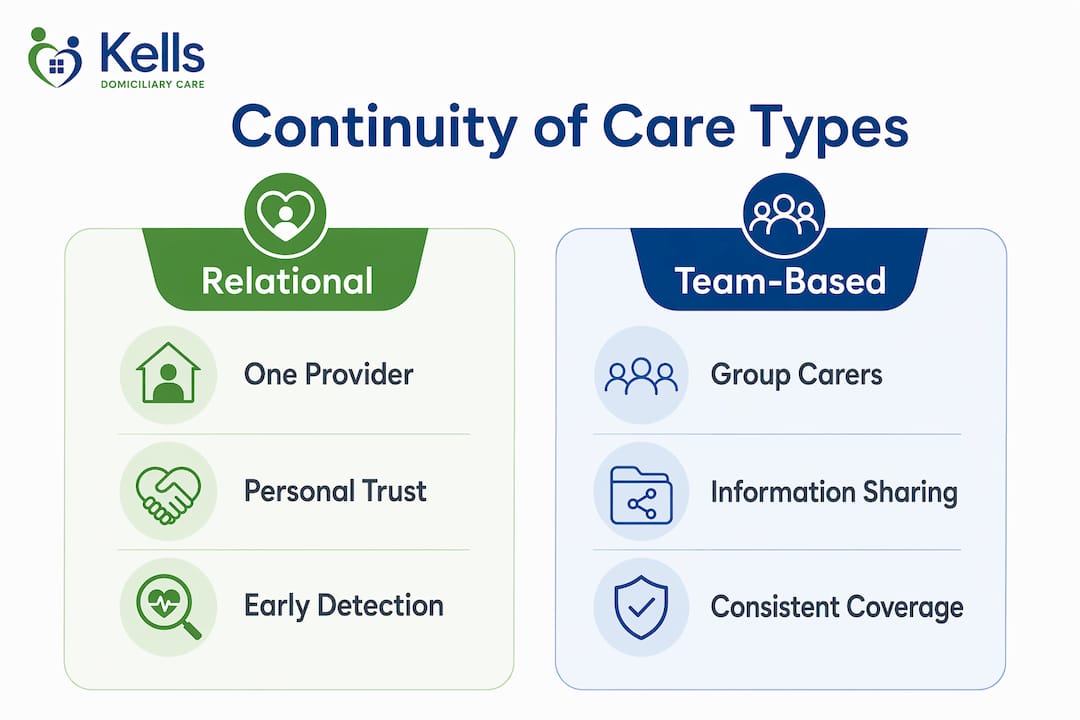
Relational continuity is built on the trust and knowledge developed over repeated interactions, enabling early detection and personalised treatment. This is the gold standard, and it is what most patients prefer. However, team-based continuity involves a core care team sharing intimate knowledge of the patient, ensuring personalised care even when the primary clinician is unavailable. Both models are valid, and the best services combine them.
For caregivers, this distinction matters practically. If your loved one’s regular carer is on leave, the question to ask is not “who is covering?” but “does the covering carer know my loved one’s history, preferences, and current care plan?” A well-run care team answers yes.
Pro Tip: Ask any care provider how patient information is shared within their team. A clear, documented handover process is a strong sign of genuine team-based continuity.
What challenges exist in maintaining continuity of care?
Continuity of care faces real pressures, and understanding them helps you advocate more effectively for your loved one.
- Workforce shortages. High staff turnover in social care and primary care disrupts relationships. When carers change frequently, the accumulated knowledge of a patient’s needs is lost, and trust must be rebuilt from scratch.
- Fragmented care transitions. Hospital discharge is one of the highest-risk moments in any care journey. Care transitions such as hospital discharge are high-risk moments, requiring assertive caregiver advocacy to ensure instructions are understood and followed. Discharge summaries are often incomplete, and community carers may not receive them in time.
- Access versus continuity trade-offs. NHS pressures mean patients are sometimes encouraged to see any available clinician rather than wait for their own GP. Prioritising continuity even if it requires slightly longer wait times leads to better long-term outcomes and reduces caregiver burden. Speed of access is not the same as quality of care.
- Poor information transfer. When a patient moves between hospital, rehabilitation, and home care, their medical history, preferences, and care plan must travel with them. Gaps in this transfer create risk.
Pro Tip: When your loved one is discharged from hospital, request a written discharge summary before leaving. Check it covers medication changes, follow-up appointments, and any new care instructions. This single step prevents many avoidable readmissions.
For more on managing this critical period, the guide on transitional care for families covers the key steps in detail.
How can caregivers support continuity of care at home?
You play a central role in maintaining continuity, even if you are not the primary carer. Your knowledge of your loved one is irreplaceable, and your active involvement strengthens every aspect of their care.
Here are practical steps you can take:
- Keep a care journal. Record daily observations about your loved one’s mood, appetite, mobility, and any symptoms. This log gives any new carer immediate context and helps identify patterns over time.
- Build relationships with providers. Introduce yourself to GPs, district nurses, and home carers. A familiar face and name makes communication easier and signals that you are an active participant in care.
- Encourage regular follow-ups. Chronic conditions require monitoring. Book GP reviews, medication checks, and specialist appointments in advance rather than waiting for problems to arise. Consistent medication management at home is particularly important for patients on complex regimens.
- Coordinate between providers. If your loved one sees multiple specialists, make sure each one knows what the others have prescribed or recommended. You may need to be the person who connects these dots.
- Use home care services for consistent support. Professional home care, delivered by a consistent team, extends continuity into daily life. Consistent home care supports independence while maintaining the familiar routines that matter to elderly patients.
- Share preferences and history. Tell carers about your loved one’s routines, food preferences, communication style, and what comforts them. This information transforms functional care into genuinely personal care.
Continuity is also about dignity and safety. Elderly patients benefit from a consistent care map that reduces fear and uncertainty when navigating complex health systems. Your role in creating and maintaining that map is significant.
What is the measurable impact of continuity of care on costs?
The financial case for continuity of care is strong, and it matters because resources follow evidence.
Patients with high continuity of primary care physician relationships had 7.4% to 10.4% lower healthcare costs compared to those with low continuity. That finding came from a study of over 1.1 million Medicare beneficiaries across 4,940 practices. Lower costs at that scale reflect a genuine structural benefit, not a marginal saving.
| Outcome | Impact of high continuity |
|---|---|
| Healthcare costs | 7.4%–10.4% lower |
| Hospitalisation rates | 5.5%–8.6% lower |
| Emergency department visits | 4.9%–6.3% lower likelihood |
Policy is beginning to reflect this evidence. The US Centers for Medicare and Medicaid Services (CMS) introduced the G2211 add-on code in january 2024 to compensate primary care providers for complexity in longitudinal relationships, potentially increasing reimbursement by around $3,600 per physician annually. The policy signals that sustained relationships have measurable value worth funding.
“Effective long-term care depends on a trusting, longitudinal relationship that allows early detection and correction of chronic conditions, preventing crisis-level interventions.” — American Academy of Family Physicians
For families managing chronic conditions, these numbers translate directly into fewer frightening hospital stays, less disruption to daily life, and better long-term outcomes for your loved one. Effective chronic disease management depends on exactly this kind of sustained engagement.
Key takeaways
Continuity of care is the single most evidence-backed factor in reducing hospitalisations, lowering costs, and improving quality of life for elderly and chronically ill patients.
| Point | Details |
|---|---|
| Continuity reduces hospitalisations | Patients with high care continuity have up to 8.6% lower hospitalisation rates, based on Medicare data. |
| Trust enables early detection | Consistent carers spot subtle symptom changes before they escalate to emergencies. |
| Team-based continuity is valid | A well-informed care team maintains personalised care even when individual carers change. |
| Caregivers are active participants | Keeping a care journal and coordinating between providers directly strengthens continuity. |
| Continuity lowers costs | High continuity correlates with 7.4%–10.4% lower healthcare costs across large patient populations. |
Why continuity changed how I think about care
I have worked alongside carers and families for many years, and the pattern I see most clearly is this: the families who struggle most are rarely those dealing with the most complex conditions. They are the ones whose loved ones have seen a different face at every appointment, a different carer every week, and a different GP at every visit.
The clinical evidence confirms what those families already feel. Continuity is not about sentimentality. It is about safety. A carer who knows that Mrs. Ahmed always becomes quieter before a urinary tract infection, or that Mr. Okafor’s appetite drops when his pain is poorly controlled, holds knowledge that no discharge summary can capture. That knowledge prevents harm.
What I find underappreciated is how much caregivers themselves benefit from continuity. When you know and trust the people caring for your loved one, your own anxiety reduces. You sleep better. You make clearer decisions. The relationship is not just between carer and patient. It includes you.
My honest advice: do not accept fragmented care as inevitable. Ask questions. Request the same carers where possible. Build the relationships. The research is clear, and so is the lived experience of every family I have spoken with. Continuity is worth fighting for.
— Dan
How Kells-care supports continuity of care in London
Kells-care has been providing personalised home care in London for over 30 years. Every care package is built around the individual, with consistent care teams who get to know your loved one’s routines, preferences, and needs over time. Kells-care is regulated by the Care Quality Commission (CQC), and all carers are fully qualified and DBS checked. Whether your family needs check-in visits or round-the-clock support, the focus is always on dignity, independence, and genuine continuity. Download the free home care guide to understand your options and take the first step towards consistent, high-quality care for your loved one.
FAQ
What does continuity of care mean?
Continuity of care means receiving ongoing care from the same provider or care team over time. It ensures that the people caring for you understand your history, preferences, and health needs.
Why does continuity of care matter for elderly people?
Elderly patients with consistent care experience fewer hospital admissions, better treatment adherence, and earlier detection of health changes. The University of Oxford’s 2026 scoping review of 180 papers confirms these benefits across long-term and multimorbid patients.
Can continuity of care be provided by a team rather than one person?
Yes. Team-based continuity means a consistent group of carers share detailed knowledge of the patient, maintaining personalised care even when individual team members are unavailable.
How can I help maintain continuity of care for my loved one?
Keep a care journal, build relationships with providers, coordinate between specialists, and request consistent carers from your home care agency. Active caregiver involvement is one of the strongest protectors of care continuity.
Does continuity of care reduce healthcare costs?
Research from the American Board of Family Medicine found that high continuity of care correlates with 7.4%–10.4% lower healthcare costs and 5.5%–8.6% lower hospitalisation rates across a study of over 1.1 million Medicare beneficiaries.


