TL;DR:
- Caring for an elderly loved one in London involves managing personal care, household safety, emotional support, and administrative tasks simultaneously. Understanding these interconnected responsibilities helps caregivers organize effectively and seek appropriate support, preventing burnout and ensuring quality care. Professional home care services can bridge the gap between knowledge and practice, offering tailored assistance to families in need.
Caring for an elderly loved one in London involves far more than most families expect. The role stretches across personal hygiene, medication tracking, meal planning, household safety, emotional support, and a mountain of administrative tasks, often all at once. If you’re currently juggling these responsibilities, you’ll know how quickly it can feel unmanageable. This guide breaks every caregiver duty into clear, practical categories so you can feel more organised, more confident, and better equipped to give your loved one the quality of care they deserve.
Table of Contents
- Core caregiver duties explained
- Personal care routines for elderly or disabled loved ones
- Household management and safety monitoring
- Providing emotional and social support
- Administrative and financial duties for family caregivers
- Our perspective: The gap between knowing and doing
- How Kells can support your family with care at home
- Frequently asked questions
Key Takeaways
| Point | Details |
|---|---|
| Comprehensive duty list | Caregiver duties cover personal care, admin, home safety, and emotional support for elderly Londoners. |
| Routines improve wellbeing | Consistent schedules and personalised care reduce stress for both carers and those they support. |
| Home safety is essential | Simple modifications and monthly checks can prevent dangerous accidents at home. |
| Admin support matters | Family caregivers should register for formal support and use logbooks to track tasks and wellbeing. |
| Seek support early | Accessing local and national carer resources prevents burnout and improves outcomes for all. |
Core caregiver duties explained
Understanding the full scope of caregiving is the first step towards managing it well. Many families underestimate how wide-ranging the role actually is, especially when supporting someone with dementia or a physical disability.
According to the Carers checklist from Age UK, core caregiver duties span personal care, meal preparation, medication management, mobility assistance, household tasks, emotional support, administrative work, and safety monitoring. That is a significant amount of responsibility, often falling on one or two family members.
Here is a summary of the key duty categories:
| Duty category | Examples |
|---|---|
| Personal care | Washing, dressing, grooming, oral hygiene |
| Nutrition and meals | Meal planning, cooking, special diets, hydration |
| Medication management | Dispensing medication, monitoring side effects |
| Mobility assistance | Transfers, walking aids, wheelchair support |
| Household tasks | Cleaning, laundry, shopping, home maintenance |
| Emotional and social support | Companionship, hobbies, conversation |
| Administrative tasks | Appointments, benefits, bills, correspondence |
| Safety monitoring | Falls prevention, wandering alarms, hazard removal |
These categories interact constantly. For example, meal preparation overlaps with medication management if certain foods affect how medicines work. Household tasks connect directly to safety monitoring. Seeing them together as a system, rather than a scattered list, helps enormously.
You can find practical elderly care steps and a free home care checklist to help you get organised from the start.
Key areas to focus on as a caregiver include:
- Washing, bathing, and personal hygiene
- Preparing nutritious meals that meet any dietary needs
- Managing and recording all medications
- Assisting with safe movement around the home
- Keeping the home clean, safe, and well-stocked
- Providing regular companionship and mental stimulation
- Managing appointments, finances, and official paperwork
- Monitoring for risks such as falls or wandering at night
Each of these areas carries real weight. Neglecting even one can affect your loved one’s health, safety, or wellbeing significantly.
Personal care routines for elderly or disabled loved ones
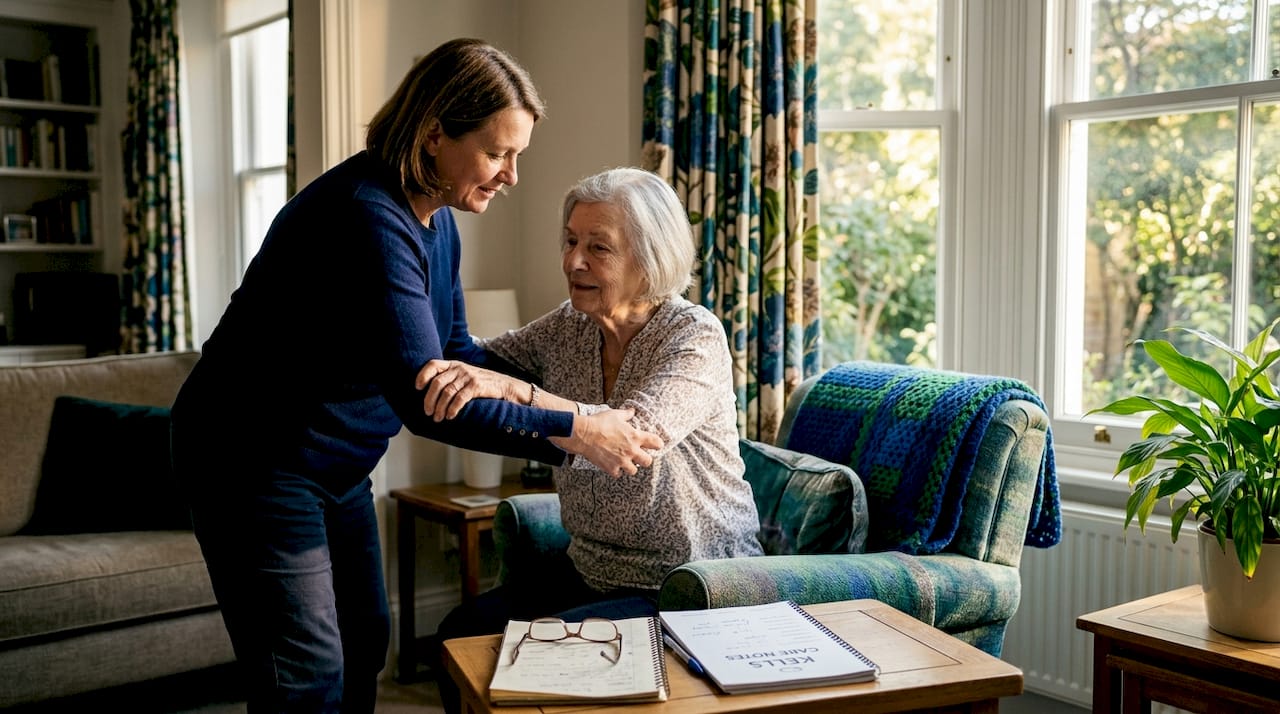
Now that duties are organised by category, let’s start with what matters daily: personal care routines. These are the tasks that most directly affect a person’s dignity, comfort, and physical health. Getting them right makes a real difference to how your loved one feels each day.
For someone with dementia, establishing consistency is especially important. Research from Trusted Care recommends consistent daily routines, visual aids such as signage and storyboards, assistive technology like GPS trackers and reminder devices, and breaking tasks into small, manageable steps. This approach reduces confusion and makes routines feel more familiar over time.
Here is a step-by-step approach to a morning personal care routine:
- Greet calmly and explain what is happening before starting any task
- Lay out clothing in order so the person can dress with as much independence as possible
- Support washing or bathing with appropriate aids such as bath seats or grab rails
- Assist with oral hygiene using a soft toothbrush and, if needed, a prompt card with steps
- Support grooming including hair, shaving, or any skincare that matters to the individual
- Offer a nutritious breakfast alongside morning medication if applicable
- Check hydration levels and encourage fluids throughout the morning
For those personalising care routines around a loved one’s preferences and abilities, small adjustments like using familiar toiletries or playing preferred background music can ease resistance and improve cooperation.
“Consistency in daily routines significantly reduces anxiety and agitation in people living with dementia. Predictability feels safe when memory is unreliable.”
If you are weighing up your options, it is worth reading about home care versus nursing to understand what level of support is most appropriate for your loved one’s needs.
Pro Tip: Keep a simple daily log noting how your loved one responded to each care activity. Patterns emerge quickly, and you will soon know the best time of day for bathing, the preferred style of breakfast, and when agitation is most likely to occur.
Hydration is frequently overlooked in personal care routines. Older adults often do not feel thirsty, particularly those with dementia. Offering fluids in small amounts across the day, rather than expecting large drinks, helps maintain adequate hydration and supports overall health. Finger foods and bite-sized portions are also helpful for those who struggle with cutlery or have reduced appetite.
Household management and safety monitoring
In addition to personal care, a safe and well-managed home environment is vital for both comfort and safety. Household duties are time-consuming, but they directly affect the risk of falls, infections, and accidents. Families often underestimate how much time these tasks take each week.
Essential household tasks include:
- Cleaning high-touch areas regularly to prevent infection, particularly in bathrooms and kitchens
- Laundry including changing and washing bedding frequently, especially for those with incontinence
- Food shopping with attention to dietary needs, preferences, and any swallowing difficulties
- Home maintenance such as replacing lightbulbs, fixing loose carpets, and reporting repairs promptly
- Waste management and keeping pathways inside and outside the home clear and clean
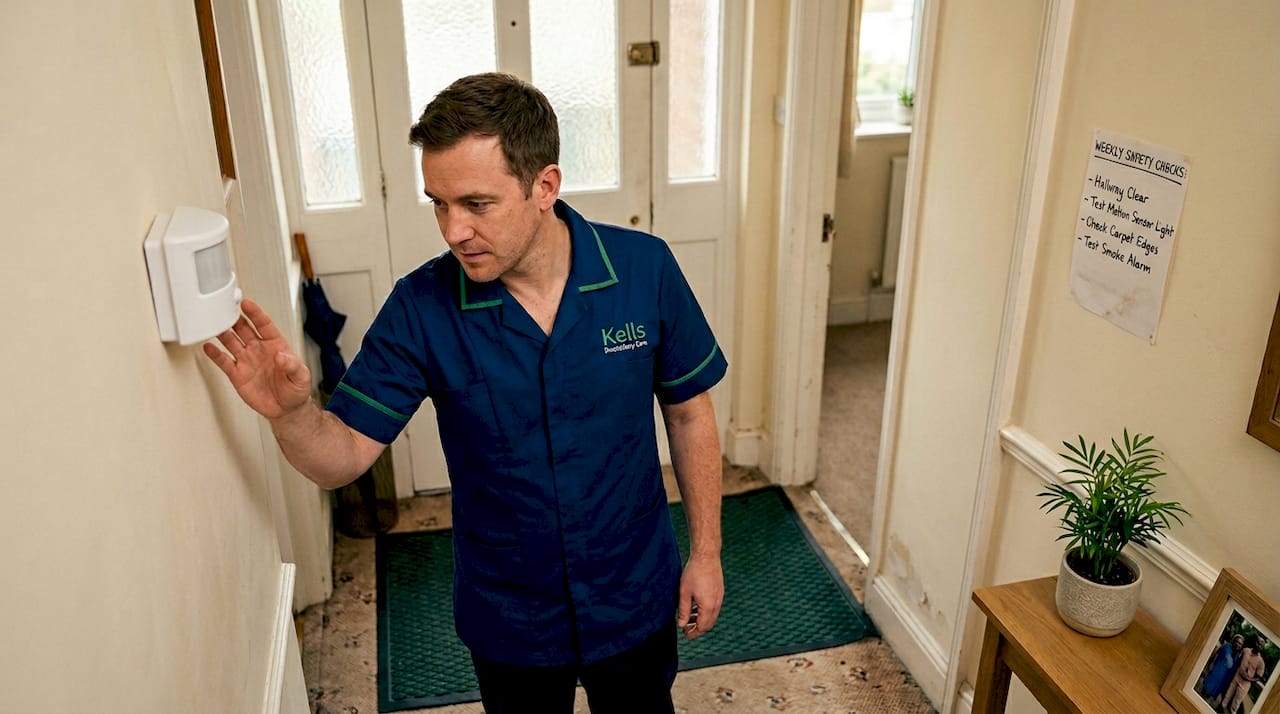
Safety monitoring is closely linked to household management. According to Trusted Care, removing hazards and improving lighting are among the most impactful steps you can take to create a safer environment for someone with dementia.
| Safety risk | Recommended action |
|---|---|
| Poor lighting | Install motion-sensor lights, especially on stairs and in bathrooms |
| Loose rugs and carpets | Remove or secure with non-slip backing |
| Bathroom falls | Fit grab rails, use a shower seat, and add non-slip mats |
| Medication access | Use a locked pill organiser or automated dispenser |
| Wandering at night | Fit door alarms and consider GPS tracking devices |
| Kitchen hazards | Use automatic hob shut-off devices and check appliances regularly |
Assistive technology has advanced significantly in recent years. Telecare systems, fall detectors, and smart doorbells can all add a layer of reassurance for both carers and their loved ones. Many are available through local councils or via occupational therapists at no direct cost. It is worth exploring the full home safety checklist before making any decisions.
You will also find detailed guidance in the step-by-step elderly care guide and in the free home care guide, both of which include practical safety advice tailored to London families.
Pro Tip: Walk through each room in your loved one’s home once a month and assess it for new hazards. Conditions change, mobility fluctuates, and what felt safe three months ago may no longer be appropriate. A quick monthly review takes under thirty minutes and could prevent a serious accident.
Providing emotional and social support
Physical and environmental care are crucial, but emotional and social support are equally important for wellbeing, especially for isolated or cognitively impaired elders. This area of caregiving is often the most personally demanding and the most easily overlooked when time is limited.
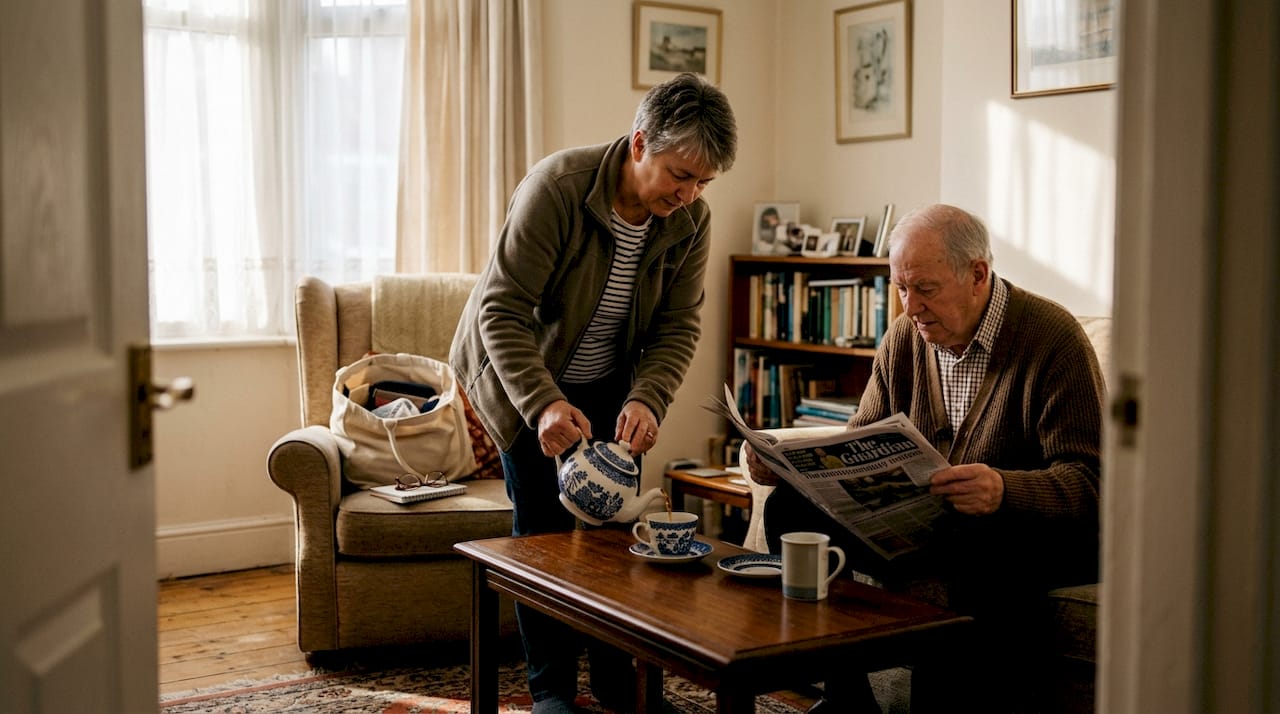
Loneliness in older adults is a genuine health risk. Regular companionship, conversation, and shared activities provide a sense of purpose and belonging. This matters enormously whether your loved one is living with dementia, recovering from a stroke, or simply finding it harder to get out of the house.
Here are some practical ways to provide meaningful emotional and social engagement:
- Schedule regular visits or calls, even short ones, so your loved one has something to look forward to
- Engage in familiar hobbies such as gardening, jigsaws, music, or reminiscence activities using old photographs
- Read aloud together or watch favourite programmes to share experiences without requiring effortful conversation
- Connect with local groups such as dementia cafés, day centres, or community singing groups in London
- Acknowledge feelings rather than redirecting them; sometimes your loved one simply needs to feel heard
For those supporting a loved one through dementia, managing agitation and challenging behaviour requires specific skills. Redirection, sensory aids like fidget blankets, and calm, consistent communication all help. Avoid confronting confused beliefs directly. Instead, acknowledge the emotion and gently shift focus.
“Four out of five family carers of people with dementia reach a point of crisis at some stage. Recognising the signs early and seeking support is not a failure; it is responsible caregiving.”
In late-stage dementia, the emotional demands intensify. Carers may be supporting with every aspect of eating, washing, and dressing, whilst also managing incontinence, wandering, and sundowning agitation. Understanding these challenges in advance helps families plan and ask for help before reaching breaking point. Guidance on communicating with carers can also support better coordination when professional help is brought in.
Do not underestimate your own emotional health throughout this process. Caregiver fatigue is real, and the people who care for others most diligently are often the ones who neglect themselves most severely.
Administrative and financial duties for family caregivers
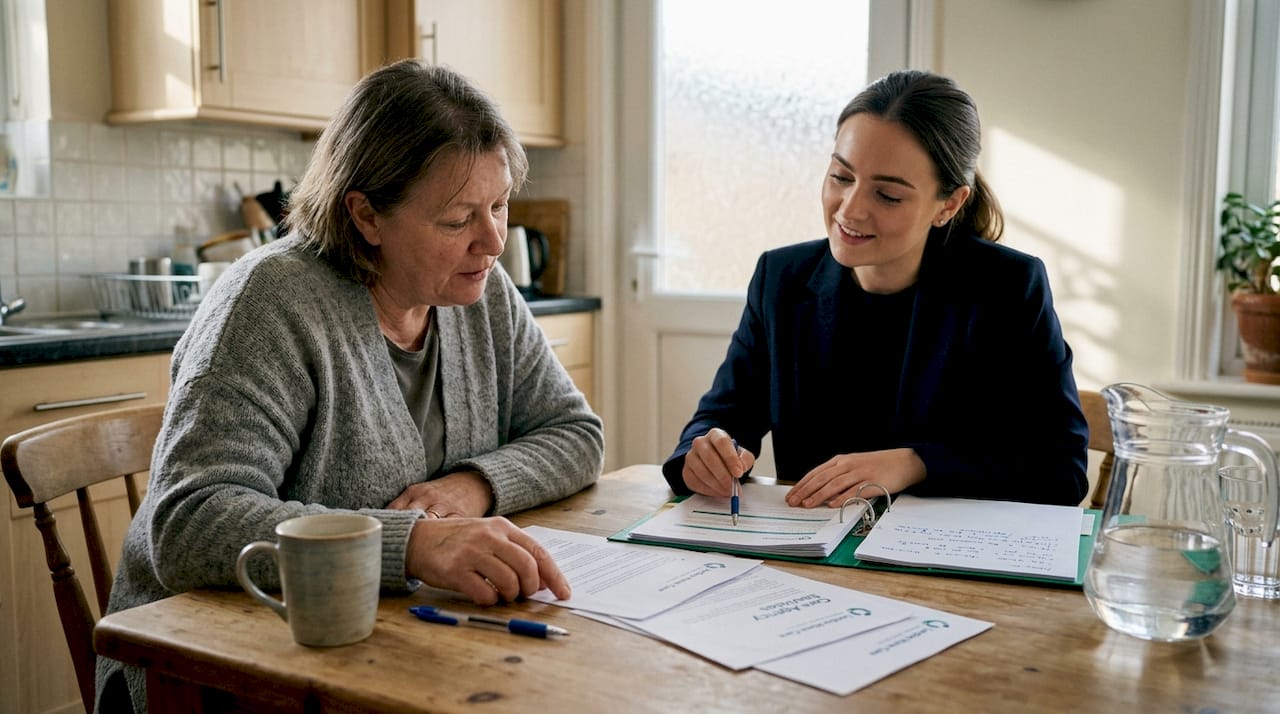
Alongside practical tasks, caregivers must also handle crucial administrative, legal, and financial duties that affect the whole family. This side of caregiving often catches families off guard, particularly during a crisis.
The scale of unpaid caregiving in the UK is significant. Data from Elder shows there are 5.7 million unpaid carers in the UK, with nearly one million people currently living with dementia, a figure set to rise to 1.4 million by 2040. Carers providing 35 or more hours of care per week may be eligible for Carer’s Allowance, currently £83.30 per week. Yet 21% of carers report struggling financially, and 65% experience sleep difficulties. These numbers highlight just how much support is needed and how little many families access.
Key administrative duties for London family caregivers:
- Register as a carer with your GP and your loved one’s local council to access a formal carer’s assessment
- Claim eligible benefits including Carer’s Allowance, Attendance Allowance for your loved one, and any council tax reductions
- Maintain an appointments diary covering GP visits, hospital outpatient appointments, therapy sessions, and social care reviews
- Manage finances such as direct debits, pension payments, and utility bills on behalf of your loved one if they cannot manage independently
- Plan legally by putting in place a Lasting Power of Attorney (LPA) for both health and finances as early as possible, ideally before cognitive decline makes this harder
- Keep a care logbook recording medications, incidents, changes in behaviour, and communications with health professionals
The LPA is particularly important. Without it, families may face lengthy and expensive legal processes to make decisions for a loved one who lacks mental capacity. Acting early is strongly advised. Solicitors in London who specialise in elder law can guide you through the process, and many offer initial consultations for free.
Support organisations for London carers include Carers UK, Age UK London, Alzheimer’s Society, and Dementia UK, all of which offer helplines, local groups, and practical guidance.
Our perspective: The gap between knowing and doing
Many caregiving guides tell you what to do. Very few address the gap between knowing your responsibilities and actually managing them week after week without burning out.
At Kells, we have worked with London families for over 30 years. One pattern we see repeatedly is families who have read all the right information and made all the right plans, but who are still struggling because they are trying to do everything alone. The administrative duties pile up at the same time as personal care needs intensify. Sleep deprivation compounds the difficulty of managing challenging behaviour. Financial pressure increases just as energy decreases.
The uncomfortable truth is that caregiving is a role that nearly always requires more support than one person can provide. Accepting help early, whether that is professional home care, a respite break, or simply delegating one category of tasks, is not giving up. It is the most practical decision a caregiver can make.
We also believe strongly that the best care is consistent care. Carers who are rested, supported, and informed provide better care than those who are exhausted and isolated. Your wellbeing is not separate from your loved one’s wellbeing. They are directly connected.
How Kells can support your family with care at home
At Kells Domiciliary Care, we have supported London families for over 30 years with flexible, personalised home care that genuinely fits around your loved one’s needs. Whether you need a few check-in visits each week or around-the-clock support, our experienced, DBS-checked carers are trained to handle the full range of duties covered in this guide, from personal care and medication management to household safety and companionship.
We are regulated by the Care Quality Commission (CQC) and proud to uphold the values of dignity, independence, and freedom of choice in every care plan we create. You can explore our home care services to find out how we can help, or contact us directly for a conversation about your family’s specific situation.
Frequently asked questions
What are the most important daily caregiver duties?
Daily duties include personal hygiene, medication management, meal preparation, and emotional support, covering the core areas outlined in the Age UK Carers checklist. Prioritising consistency across these areas makes everything else more manageable.
How can I make the home safer for an elderly person?
Remove trip hazards, improve lighting in high-risk areas, and add assistive devices like grab rails and non-slip mats, as recommended for dementia care. A monthly room-by-room safety check helps you stay ahead of new risks.
What support is available for unpaid family carers in London?
Carers can register with their GP and local council for a formal assessment, claim Carer’s Allowance, and access guidance from organisations like Age UK, Dementia UK, and Carers UK. London also has a range of local support groups and respite care options.
How do I manage challenging behaviour in dementia care?
Use predictable routines, visual supports, and calm redirection techniques, as outlined by Alzheimer’s caregiving experts. For complex or recurring behaviours, seek advice from a dementia specialist or community psychiatric nurse.
When should a family consider professional or respite care?
If you are experiencing caregiver burnout, sleep difficulties, or financial strain, or if your loved one’s needs have escalated beyond what you can safely manage alone, it is time to explore professional support. Getting help early prevents full crisis and leads to better outcomes for everyone.
Recommended
- The essential checklist for carers: A London family guide
- Home care services: a complete guide for London families – Kells Domiciliary Care
- Understanding the role of home carers for London families – Kells Domiciliary Care
- How to transition to home care in London: a step-by-step guide – Kells Domiciliary Care
- Role of Caregivers in Hospice – Making End-of-Life More Compassionate | Graceland Hospice Care Blog