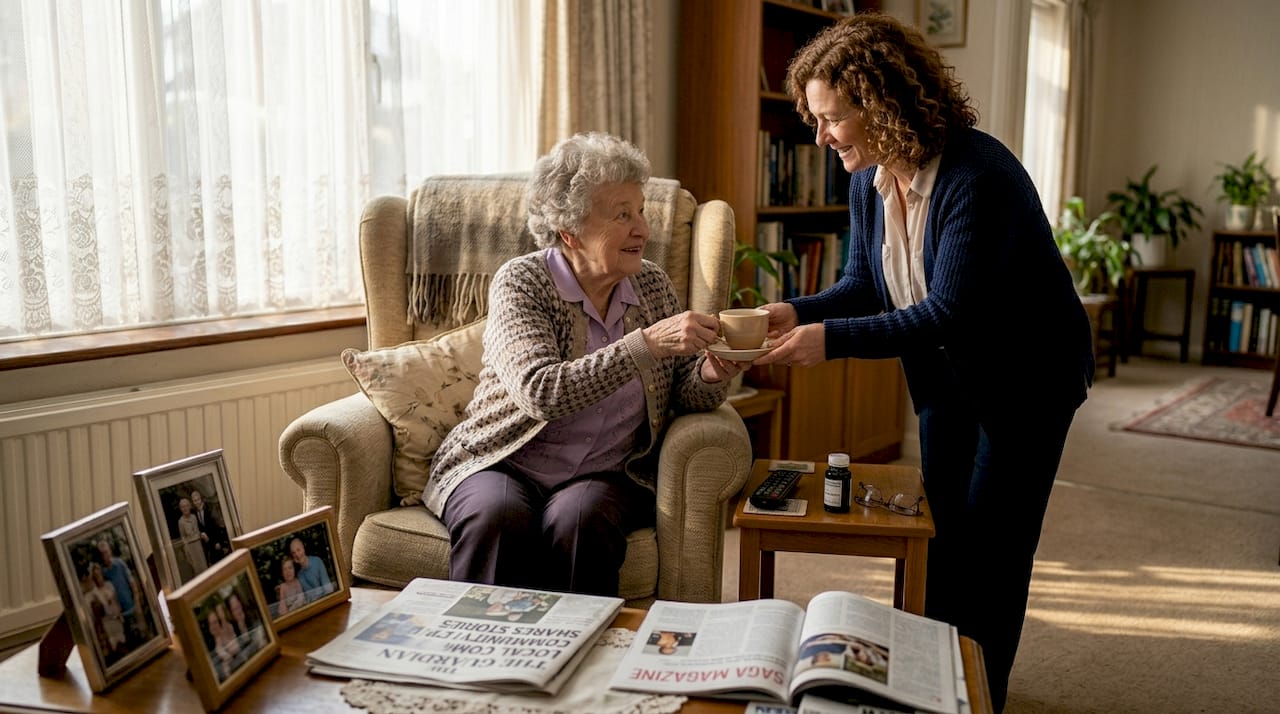
Many families assume that when a loved one needs regular support, moving into a care home is the only option. That is simply not the case. Domiciliary care, sometimes called home care, allows people to receive professional support in the comfort of their own home. It is a growing and well-regulated sector across England, with 505,886 people receiving CQC-regulated domiciliary care as of February 2026. If you are exploring care options for an elderly relative or a family member with a disability, this guide will help you understand exactly what domiciliary care involves, how it works, and how to find the right support in London.
Table of Contents
- What is domiciliary care?
- Key features and services of domiciliary care
- How domiciliary care is regulated and quality is assured
- Costs, funding, and how to plan for domiciliary care
- Pros and potential challenges of domiciliary care
- How Kells can support your family in London
- Frequently asked questions
Key Takeaways
| Point | Details |
|---|---|
| Care at home option | Domiciliary care lets people receive vital support while remaining in their own homes. |
| Range of services | It covers daily routines like washing, meals, medication, and social support. |
| Regulated for quality | All providers must meet CQC standards to ensure families’ peace of mind. |
| Planning and cost | Funding varies, with most families in London paying part or all of the costs after council assessment. |
| Personalised and flexible | Services are tailored to each individual’s needs and can evolve with changing circumstances. |
What is domiciliary care?
Domiciliary care is professional support provided to a person in their own home. It covers both practical tasks and emotional wellbeing, helping individuals maintain their independence without needing to move into a residential facility. The term comes from the Latin word for home, and that is precisely the point: care comes to the person, not the other way around.
People use domiciliary care for many different reasons. Some need help following a hospital stay. Others live with a long-term condition such as dementia, Parkinson’s disease, or a physical disability. Many older adults simply find that daily tasks have become harder to manage safely on their own.
According to NHS guidance on homecare, services typically include:
- Personal care such as washing, dressing, and toileting
- Meal preparation and support with eating
- Medication reminders and administration
- Mobility assistance and fall prevention
- Companionship and emotional support
- Light housekeeping tasks
“Domiciliary care is not just about physical tasks. It is about supporting a person’s dignity, confidence, and sense of self at home.”
At Kells, we have been providing this kind of support across London for over 30 years. You can learn more about our approach to home care and why so many families trust us with their loved ones. If you are just beginning to explore options, our guide on talking about home care with a relative is a helpful starting point.
Key features and services of domiciliary care
Understanding what domiciliary care is, let us explore the everyday reality of how it works for families. No two people have the same needs, which is why good domiciliary care always begins with a personalised assessment. This assessment looks at the individual’s health, daily routines, preferences, and goals. From there, a care plan is created that guides every visit.
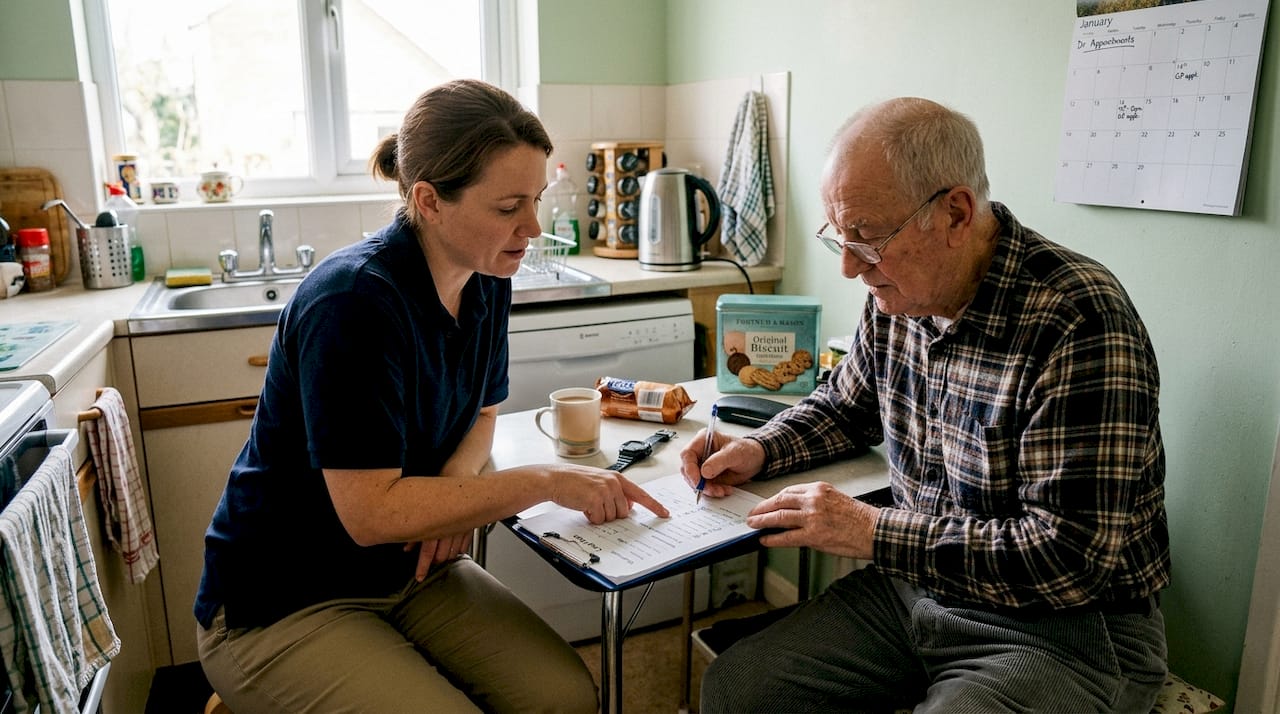
The Skills for Care workforce report 2025 confirms that personalised care plans are central to quality domiciliary care, with a strong emphasis on dignity and independence. This is not a one-size-fits-all service.
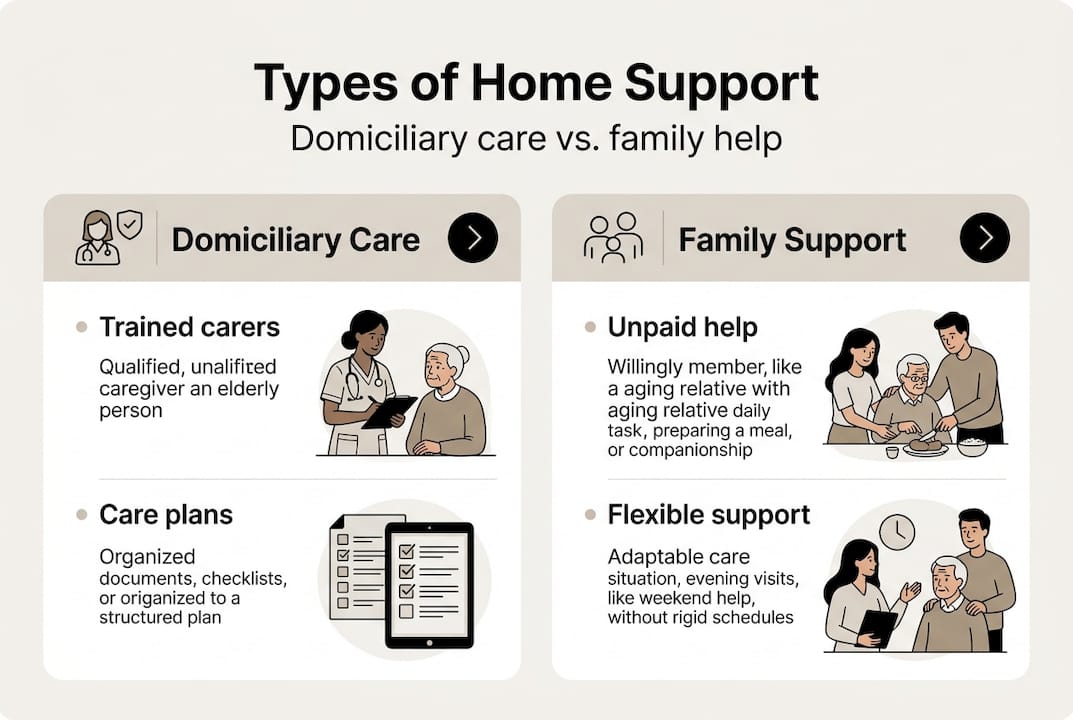
Here is a simple comparison to show how domiciliary care differs from informal family support:
| Feature | Domiciliary care | Informal family support |
|---|---|---|
| Trained and qualified carers | Yes | Not always |
| Consistent care plan | Yes | Rarely formalised |
| Regulated by CQC | Yes | No |
| Available around the clock | Yes | Limited by family availability |
| Medication management | Yes | Risky without training |
Domiciliary care does not replace the love and involvement of family. It complements it. Carers handle the tasks that require training or physical effort, freeing family members to focus on quality time together.
Pro Tip: When arranging personalised care assessments, bring a written list of your loved one’s daily routine, preferences, and any medical conditions. This helps the care team create a plan that truly fits their life.
For a broader overview of what to expect, the guide on understanding senior care terms is a useful resource for families new to this process. You can also read our dedicated page on elderly home care in London for local context.
How domiciliary care is regulated and quality is assured
To ensure high-quality care, it is important to understand how the sector is regulated and monitored. In England, all domiciliary care providers must be registered with the Care Quality Commission, known as the CQC. This is a legal requirement, not optional.
The CQC inspects providers against five key standards, often referred to as KLOEs (Key Lines of Enquiry):
| CQC standard | What it means in practice |
|---|---|
| Safe | Risks are managed; safeguarding is in place |
| Effective | Care achieves good outcomes for the person |
| Caring | Staff treat people with kindness and respect |
| Responsive | Care is tailored to individual needs |
| Well-led | The service is managed with integrity and transparency |
The Homecare Association’s 2025 report on CQC performance highlights that audits of care notes and medication charts are essential tools for maintaining standards. However, the report also notes challenges, including low inspection frequency and a tendency to focus on processes rather than outcomes.
“Families should not rely on CQC ratings alone. Ask providers directly how they monitor care quality between inspections and how they handle concerns.”
When choosing a provider, ask to see their most recent CQC report. A good provider will share it willingly. You can also check ratings directly on the CQC website. For additional guidance on keeping elderly relatives safe at home, safe care for elderly offers practical advice worth reading.
At Kells, we are fully CQC-regulated and proud of our record. Every carer is DBS checked and fully qualified, so you can feel confident in the support your loved one receives.
Costs, funding, and how to plan for domiciliary care
Once you understand regulation, the next consideration for most families is affordability and funding. Domiciliary care costs vary depending on several factors: the number of hours needed, the complexity of care, the tasks involved, and your location within London.
As a general guide, hourly rates range from £15 to £30 across England, with London typically sitting at the higher end. The London Borough of Hammersmith and Fulham’s cost of care report places the median hourly rate at around £24.01 in the London area.
Key factors that affect cost:
- Number of visits per day or week
- Duration of each visit (30 minutes vs. several hours)
- Specialist care needs such as dementia or complex medication
- Whether care is needed at weekends or overnight
- The specific borough within London
Funding options worth exploring include:
- Local authority funding: Your local council may contribute after a needs assessment and means test. Eligibility varies, so contact your borough directly.
- NHS continuing healthcare: Available in limited circumstances where care needs are primarily health-related.
- Direct payments: Some people receive funding directly to arrange their own care.
- Self-funding: Many families pay privately, either fully or as a top-up.
Pro Tip: Start the council assessment process early. Waiting times can be long, and beginning the conversation sooner means your loved one gets support faster. Our page on paying for home care explains the process clearly.
For a fuller picture of the financial side, our guide on the advantages of home care includes cost comparisons, and our home care vs nursing guide helps families weigh up their options.
Pros and potential challenges of domiciliary care
Before making a final decision, it is important to weigh the benefits and any downsides that can arise with domiciliary care. The good news is that for most families, the advantages are significant.
Main benefits of domiciliary care:
- Familiar surroundings: Staying at home reduces anxiety and supports emotional wellbeing, particularly for people living with dementia.
- Personalised support: Care is built around the individual, not a facility’s schedule.
- Maintained independence: People retain control over their daily routines and choices.
- Family involvement: Relatives can stay closely involved without carrying the full burden of care.
- Cost-effective: For those needing fewer hours, home care is often more affordable than residential care.
However, there are real challenges to be aware of. The Skills for Care 2025 report shows that the domiciliary care sector faces a vacancy rate of around 9%, with approximately 35% of domiciliary care roles on zero-hours contracts. This can affect carer continuity, which matters enormously to service users.
Pro Tip: Ask any provider how they handle staff absences and whether your loved one will see the same carers regularly. Consistency builds trust and makes care far more effective.
Choosing a well-established provider with low staff turnover makes a real difference. Read more about the benefits of home care to help you make a confident, informed choice.
How Kells can support your family in London
At Kells Domiciliary Care, we have spent over 30 years building a reputation for compassionate, reliable home care across London. We understand that choosing care for a loved one is one of the most important decisions a family can make. That is why we take the time to get it right, starting with a thorough assessment and a care plan that reflects your loved one’s individual needs, preferences, and goals.
Our carers are fully qualified, DBS checked, and supported by an experienced management team. We are regulated by the CQC and committed to promoting independence, dignity, and quality of life. Whether your family needs a few check-in visits each week or full-time round-the-clock support, we are here to help. Get in touch with us today to discuss how we can support your loved one at home.
Frequently asked questions
What is the difference between domiciliary care and residential care?
Domiciliary care means professional support is delivered in your own home, whereas residential care involves moving into a care facility full-time. With domiciliary services covering everything from personal care to companionship, many people find they can remain at home far longer than they expected.
Will the local council pay for domiciliary care in London?
The council may contribute following a needs assessment and means test, but many families pay some or all costs themselves. Hourly rates in London typically sit around £24 per hour, so it is worth exploring all funding routes early.
How is domiciliary care regulated for safety and quality?
All providers must be registered with the Care Quality Commission, which inspects against five standards: safe, effective, caring, responsive, and well-led. The CQC’s KLOE framework ensures a structured approach to quality assurance across all registered providers.
What should families look for when choosing a domiciliary care provider?
Check the provider’s CQC rating, ask about carer continuity, and confirm that care is tailored through a personalised care plan. A good provider will welcome your questions and involve your loved one in every decision.