
TL;DR:
- Personalised home care centers on supporting individuals’ routines, preferences, and goals, not just tasks.
- Regular assessments, collaborative planning, and continual reviews ensure care adapts to changing needs.
- Effective personalisation requires active family involvement, good communication, and a committed, trained care team.
Finding the right support for an elderly parent, a family member with a disability, or a loved one living with dementia is rarely straightforward. Standard care packages often focus on completing tasks rather than understanding the person behind them. The result is care that feels impersonal, rushed, and disconnected from what truly matters. But genuine personalisation changes all of that. When support is shaped around individual routines, preferences, and goals, people thrive at home with greater dignity and independence. This guide walks you through every step of achieving truly personalised home care, from the first conversation to ongoing review.
Table of Contents
- Understanding personalised home care: Why it matters
- Getting started: Assessing needs and setting goals
- Designing the personalised care plan: Practical frameworks
- Delivering truly personalised support: Common pitfalls and best practices
- Planning for review: Ensuring continuous improvement
- A fresh perspective: Why personalisation is harder and more worthwhile than it sounds
- Looking for personalised home care in London?
- Frequently asked questions
Key Takeaways
| Point | Details |
|---|---|
| Collaboration is core | Effective personalisation starts with open dialogue and joint planning among clients, families, and care teams. |
| Fit support to the individual | Care should always reflect routines, culture, health, and life goals, not a rigid checklist. |
| Review care regularly | Frequent reviews and flexibility keep home support effective as needs change. |
| Family involvement matters | Families who actively participate in planning and feedback achieve better care outcomes. |
| Personalised care drives outcomes | Tailored approaches reduce hospital stays and boost wellbeing, saving both stress and money. |
Understanding personalised home care: Why it matters
Personalised home care is not simply about choosing which tasks a carer carries out. It is about building support around the whole person: their history, their values, their relationships, and what makes a good day feel like a good day. This is fundamentally different from a one-size-fits-all approach, where a fixed schedule of tasks is delivered regardless of individual need.
Several groups benefit particularly from this kind of tailored support:
- Elderly individuals living alone or with reduced mobility who need support structured around their established routines
- People living with dementia, where familiarity, consistent carers, and preference-led support are essential for wellbeing
- Individuals with physical or learning disabilities who require specific communication styles or adapted environments
- Those recovering from surgery or illness, where reablement goals and pacing matter enormously
- Families from cultural or faith communities where language, diet, and values must be woven into everyday care
The evidence for personalisation is striking. Personalised home visits reduce unplanned hospital admissions by 35% in frail older adults. That is not a small improvement. It represents fewer frightening hospital stays, better recovery, and more time spent at home.
The benefits of home care extend well beyond convenience. Research consistently links person-centred support with improved mental wellbeing, greater independence, and reduced feelings of loneliness. The Care Quality Commission (CQC) and the National Institute for Health and Care Excellence (NICE) both set out standards for person-centred care, requiring that services actively involve individuals and families in every decision.
“Person-centred care plans are created through collaborative assessments involving the individual, family, and care team.”
This collaborative model is what separates genuine personalisation from a checkbox exercise. When families, individuals, and carers work together to build a care plan, the results are measurably better.
Getting started: Assessing needs and setting goals
Before any care begins, it is important to gather the right information. A thorough assessment forms the foundation of everything that follows. Rushing this stage often leads to mismatched support and frustration on all sides.
Here is a typical assessment checklist to guide you:
| Area | What to explore |
|---|---|
| Daily routines | Wake time, meals, bedtime, preferred activities |
| Medical history | Diagnoses, medications, allergies, mobility levels |
| Cultural and religious needs | Language, dietary requirements, faith practices |
| Social connections | Family, friends, community groups |
| Current support | Existing formal and informal care arrangements |
| Personal goals | What the individual wants to achieve or maintain |
Once this information is collected, you can move into collaborative goal-setting. The needs assessment process is a formal step that local authorities and care agencies use, but families can prepare well in advance.
Here is a practical sequence to follow:
- Gather information from the individual, GP, and any current carers before any formal meeting.
- Involve the person themselves at every stage, adjusting the format to suit their communication needs.
- Use open questions to uncover what truly matters, not just what support is needed medically.
- Write down goals in the individual’s own words wherever possible.
- Agree on priorities together, acknowledging that preferences may sometimes conflict with clinical recommendations.
Transitioning to home care can feel overwhelming, but a structured approach makes a real difference.
Pro Tip: Ask questions like “What does a good day look like for you?” and “What would you most hate to lose?” These open questions often reveal goals that a standard medical assessment would never uncover, and they shape care in ways that genuinely improve wellbeing.
Person-centred plans require this collaborative assessment to be meaningful, not just a form-filling exercise.
Designing the personalised care plan: Practical frameworks
A well-designed care plan does far more than list tasks. It tells the story of the person and maps out how support will help them live the life they want. The structure of an effective person-centred plan includes several key elements.
Comparison: Task-list vs person-centred care plan
| Feature | Task-list plan | Person-centred plan |
|---|---|---|
| Focus | Completing set tasks | Achieving individual goals |
| Flexibility | Fixed schedule | Adapts to changing needs |
| Family involvement | Minimal | Active partner |
| Review frequency | Annual or as required | Regular, with mini-reviews |
| Language used | Clinical and formal | Individual’s own words |
A robust person-centred plan covers the current situation, goals, and strategies, along with review dates and clear connections between different areas of care. This structure ensures nothing falls through the gaps.
Here is a step-by-step approach to building the plan:
- Document current status, including health, mobility, mood, and daily functioning.
- Record goals in clear, measurable terms, such as “walk to the kitchen independently three times a day.”
- Outline support strategies for each goal, specifying what the carer will do and what the individual will do themselves.
- Note preferences and non-negotiables: preferred names, foods, music, times, and routines.
- Set a review schedule, building in dates from the outset rather than waiting for a crisis.
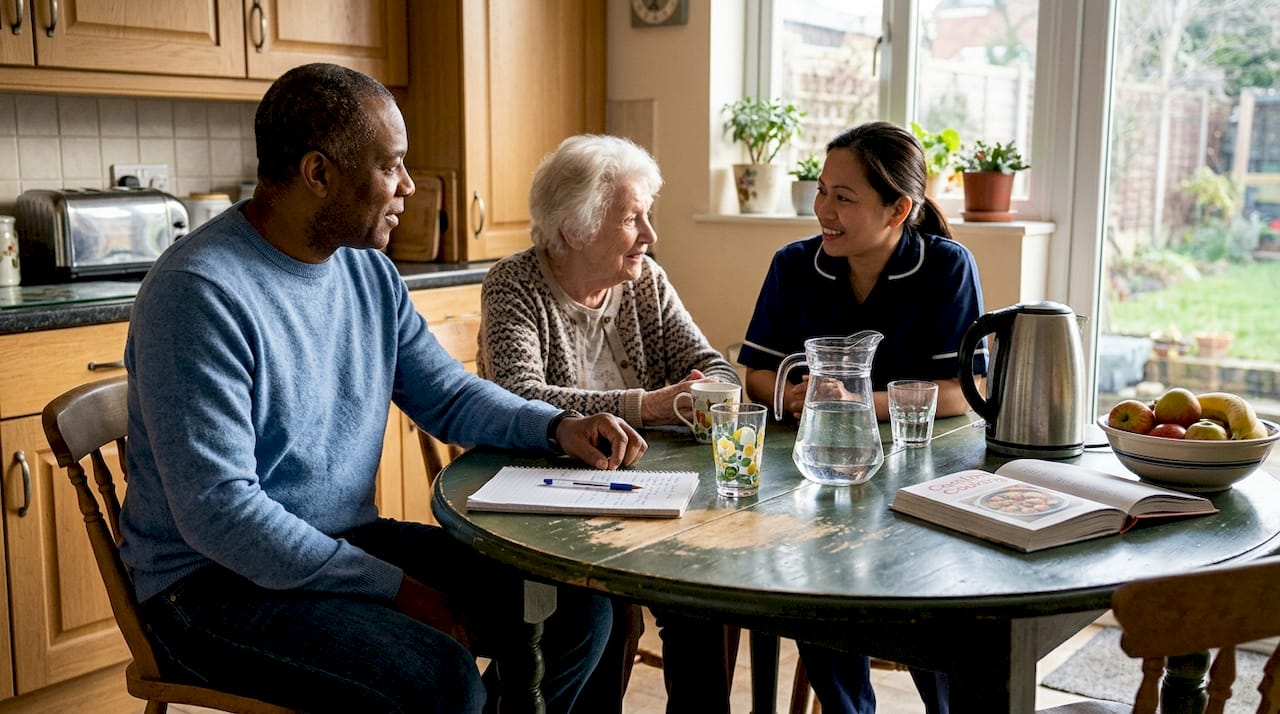
Family involvement in home care is not a nice extra. It is a core part of what makes person-centred care work. Families know things about their loved ones that no assessment form can capture.
Pro Tip: For individuals with dementia or those recovering from surgery, schedule informal reviews monthly and a formal written review every quarter. Needs shift quickly in these situations, and an outdated plan can cause real harm.
Exploring personalised care options early gives families a clearer sense of what is possible.
Delivering truly personalised support: Common pitfalls and best practices
Even the best care plan can fail if delivery falls short. Several systemic and practical barriers commonly undermine person-centred support in London and across the UK.
Common pitfalls include:
- Short visits of 15 minutes or less, which leave insufficient time for meaningful, personalised support
- Staff turnover, which breaks the continuity that individuals, particularly those with dementia, depend on
- Poor communication between carers, families, and health professionals, leading to missed changes in needs
- Cultural mismatches, where carers are not matched to the individual’s language, faith, or gender preferences
- Funding limitations, which restrict visit lengths and the range of support available
“Dementia and cognitive impairment require specialist training for behaviours and preferences, alongside genuine cultural sensitivity for London’s diverse families.”
Cultural and linguistic matching matters enormously in a city as diverse as London. If your loved one speaks Gujarati, Somali, or Polish as their first language, communicating with carers effectively is not a luxury. It directly affects safety and wellbeing.
Practical steps to protect the quality of delivery include communicating with carers clearly and consistently, keeping a simple daily log, and encouraging the person receiving care to give feedback. For specialist needs such as end-of-life care or reablement after a stroke, ensure the agency has demonstrable experience in that area.
Following elderly care best practices gives families a reliable framework for monitoring what is being delivered against what was planned.
Planning for review: Ensuring continuous improvement
Care plans are not fixed documents. Needs change, sometimes gradually and sometimes suddenly. Building a structured review process into care arrangements from the very beginning is one of the most important things a family can do.
Here is when a review should be triggered:
- After a hospital admission or significant health event
- When the individual reports dissatisfaction or distress
- When a carer notices a change in behaviour, mood, or physical ability
- At regular scheduled intervals, regardless of whether anything has changed
- When family circumstances shift, such as a main family carer becoming unavailable
The data supports this approach clearly. Personalised home visits reduce hospital admissions by 35% and improve wellbeing scores and frailty measures in older adults. Reviews are not bureaucratic exercises. They are the mechanism through which care stays genuinely personal.
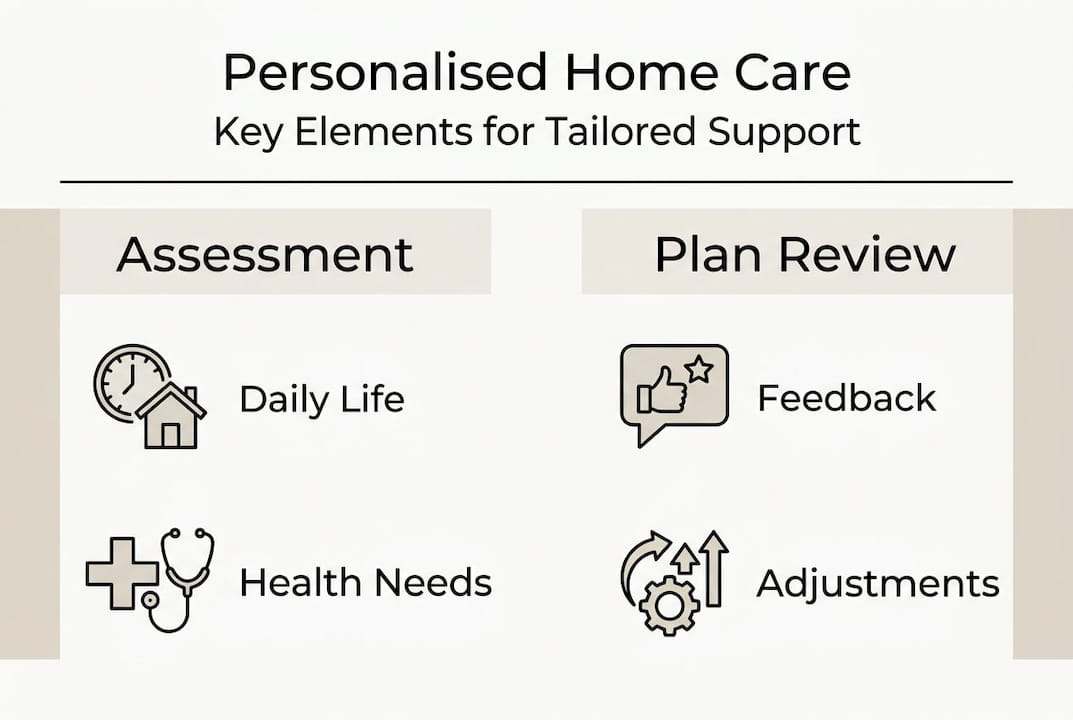
Feedback loops matter too. Make it easy for the person receiving care to say when something is not working. A simple notebook at home, a monthly phone call from a care coordinator, or a short check-in from the carer at the end of each visit can all surface problems before they escalate.
Pro Tip: Hold a brief informal review monthly and a fuller written review every three months. This rhythm catches emerging issues early, particularly for individuals with progressive conditions such as Parkinson’s or dementia.
For a full overview of what to expect from ongoing support, the complete home care services guide is a helpful resource for London families.
A fresh perspective: Why personalisation is harder and more worthwhile than it sounds
Most families assume that requesting personalised care is simply a matter of ticking boxes and providing a list of preferences. In practice, true personalisation requires something more demanding: assertive advocacy, ongoing attention, and a willingness to challenge default approaches.
Task-based care is the default because it is easier to commission, manage, and audit. It rarely fits real people. Families who achieve genuinely person-centred support tend to be those who actively question routines, ask for changes when something is not working, and treat the care team as partners rather than contractors.
Workforce barriers such as low pay and zero-hours contracts make consistency harder for agencies to guarantee. This does not mean personalisation is impossible. It means families need to remain engaged, and the best agencies actively involve families as an extended team in reviewing and shaping care. The investment of time and energy is real. So are the results: better health, greater happiness, and a life lived on the individual’s own terms.
Looking for personalised home care in London?
At Kells Domiciliary Care, we have spent over 30 years building home care services around the people we support, not around what is easiest to deliver. Every care arrangement begins with a thorough, collaborative assessment, and we keep families involved at every stage. Our carers are fully qualified, DBS checked, and regulated by the CQC.
If you are ready to take the next step, our guides can help. Start by exploring domiciliary care explained to understand what professional support looks like in practice. You can also compare your options with our home care vs nursing comparison, or prepare for agency conversations with our list of questions for home care agencies.
Frequently asked questions
What makes a home care service truly personalised?
A genuinely personalised service is shaped around the individual’s daily routines, preferences, culture, and health needs through collaborative care planning that actively involves family members and the care team from the outset.
How often should a personalised care plan be reviewed?
Review a plan whenever health or circumstances change significantly, and at formal scheduled intervals of every three to six months. Plans need frequent adjustments, particularly for evolving conditions such as dementia.
Can home care be personalised for people with dementia?
Yes. With specialist training and close family involvement, care can be adapted to match individual cognitive needs, behavioural patterns, and preferences. Dementia requires specialist approaches to behaviour and communication to be effective.
Does personalising home care cost more?
Not necessarily. Research shows that tailored care cuts admissions and associated costs, meaning thoughtful personalisation can be more economical overall than reactive or hospital-based care.
What are common pitfalls in delivering personalised home care?
Short visits, staff turnover, and poor communication are the most common barriers. 15-minute visits and workforce issues consistently undermine quality; regular reviews and family involvement are the most effective safeguards.
Recommended
- Talking about home care, Home Care, North London, Kells Care
- How families shape quality home care for loved ones – Kells Domiciliary Care
- Discover the advantages of home care for your loved ones – Kells Domiciliary Care
- What is home care? Personalised support options explained – Kells Domiciliary Care