
Before a carer arrives, secure a private and safe space for them to work from, confirm the care plan and medicines arrangements, and put together a simple information pack. These three steps stop first-day confusion and help the handover go smoothly. Once they’re in place, everything else, from routines to equipment, falls into order much faster.
TL;DR:
- Ensuring a private room with lockable storage, proper furniture, and reliable Wi-Fi significantly helps a carer settle quickly and perform their duties effectively.
- Conducting a home safety assessment to remove trip hazards and checking bathroom dimensions supports safe transfers and reduces injury risks.
- Making routines familiar and gradually introducing the carer helps people with dementia feel secure and reduces anxiety during the transition.
- A comprehensive care plan with detailed medication instructions and a designated medicines administration log prevents errors and ensures proper support.
- Preparing an accessible information pack, emergency contacts, and clear contact protocols for visitors helps the carer manage day-to-day tasks and emergencies smoothly.
Table of Contents
- Setting up a private, practical room for the carer
- Making the home safe: quick fixes, and when to call in an occupational therapist
- Bathroom access, hoists and equipment carers need to work safely
- Routines, dementia-friendly touches and introducing a new carer
- Getting medicines and the care plan right
- Sorting the paperwork: finances, keys and an information pack
- Planning for emergencies and keeping carers safe
- Your first-day checklist for when the carer arrives
- What regulated agencies expect: a realistic look at the handover
- Managing visitors and family interactions while carers are present
- The emotional side of arranging care
- How Kells can help with the transition
- Sources
- FAQ
Setting up a private, practical room for the carer
A live-in carer needs somewhere to rest and keep their belongings safe, just as your family member needs their own space respected. Start with the basics: a proper bed, a bedside lamp, a comfortable chair and a small table for paperwork or a laptop. Lockable storage matters too, both for the carer’s possessions and for anyone else’s peace of mind.
Think about privacy on both sides. The carer will want a door that closes properly and a little quiet time. Your family member will want reassurance that their own space stays theirs.
- A bed, lockable storage, bedside lamp, comfortable chair and small table.
- Accessible power sockets near the bed for phone charging.
- Reliable Wi-Fi or phone signal so the carer can stay in touch off-shift.
An en suite is a bonus, not a requirement, though a nearby bathroom that isn’t shared with visitors helps everyone settle. Most of this can be sorted in an afternoon.
Making the home safe: quick fixes, and when to call in an occupational therapist
Falls and trip hazards cause most home accidents, so start there. Clear floors of clutter, tape down or remove loose rugs, and widen walking routes so that a carer can move confidently, especially if a wheelchair or walking frame is involved.
- Check flooring is level and firm enough to support hoist wheels if one will be used.
- Add brighter bulbs in hallways and stairwells, plus a night light near the bedroom and bathroom.
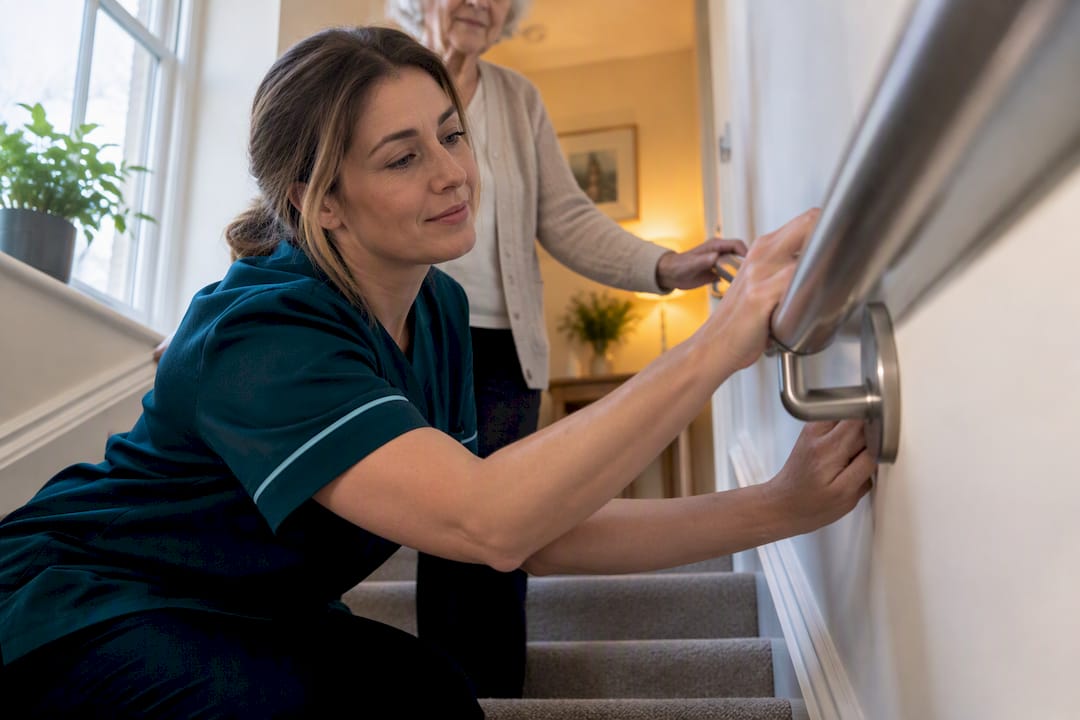
- Fit handrails on stairs and near the toilet if balance is a concern.
- Use high-contrast colours on step edges and door frames where dementia affects depth perception.
Pro Tip: Walk the route from bedroom to bathroom to kitchen yourself, at night, with the main lights off, to spot hazards a torch tour would miss.
If mobility needs are more complex, ask your GP or council for an occupational therapist assessment. Councils can provide minor aids and adaptations such as grab rails and raised toilet seats free of charge after assessment, though larger adaptations may carry a charge depending on local policy.
Bathroom access, hoists and equipment carers need to work safely
Bathrooms cause the most difficulty for carers supporting someone with limited mobility. Measure the door width and the turning space inside before assuming a wheelchair or commode will fit. Check the bed height too: many carers find transfers far easier with an adjustable bed, and slings or hoists need somewhere dry and accessible to be stored.
- Measure doorways and turning circles in the bathroom and bedroom.
- Confirm bed height suits safe standing transfers.
- Arrange dedicated, dry storage for slings and hoist parts.
Hoist use should always follow a written risk assessment, and safe practice commonly calls for two trained staff on a mobile hoist unless an individual assessment shows one person can manage safely. Never improvise a lift with household furniture or towels: the NHS is clear that poor handling technique risks serious injury to both people. Speak to an occupational therapist before buying equipment: many items can be trialled or loaned through the council first.
Routines, dementia-friendly touches and introducing a new carer
Familiar routines matter more than almost anything else when someone is adjusting to a new carer, particularly with dementia. Keep meal times, bedtimes and favourite activities as close to normal as you can during the first weeks.
- Use a memory box or labelled photos to help identify family members and daily objects.
- Keep a visible, predictable daily schedule near the kitchen or bedroom.
- Introduce the carer gradually with short visits before they move in or start regular shifts.
- Share a simple script the carer can use to reintroduce themselves calmly each morning if memory is affected.
Alzheimer’s Society guidance recommends keeping routines familiar and introducing new carers gradually to ease anxiety. Tell the carer what matters to your relative, favourite phrases, foods they dislike, topics to avoid, while keeping sensitive medical details confidential unless they’re relevant to daily care.
Getting medicines and the care plan right
The care plan is the single most important document you’ll prepare, and it needs to say exactly what medicines are taken, at what dose, when, and what to do for “as needed” doses. It should also state who orders repeat prescriptions and where medicines are stored.
- List every medicine by name, dose and time, including any PRN instructions.
- Agree who is responsible for ordering, collecting and storing medicines securely.
- Set up a written administration log the carer signs after each dose.
CQC guidance states that medicines support must be recorded in the care plan, with trained, competent staff and clear, agreed arrangements for storage and disposal. This matters because gaps in medicines records are among the most common problems inspectors find. NHS guidance also recommends reviewing the care plan roughly every six weeks, or sooner if needs change, so build that review into your calendar now.
Sorting the paperwork: finances, keys and an information pack
A short information pack saves a carer hours of guesswork on day one. Keep it somewhere obvious, ideally by the front door or in the kitchen.
- Emergency contacts, GP surgery details, medicines list and known allergies.
- Wi-Fi password, key safe code or spare key location.
- Preferred daily schedule, likes, dislikes and any legal documents such as power of attorney.
Work out who pays for care and how spending will be tracked, a simple notebook or spreadsheet is enough for most families. If you’re employing a carer directly rather than through an agency, you take on employer responsibilities including payroll and pension duties, so get advice if you’re unsure. Finally, tell your home insurer that a live-in carer will be resident: most policies need updating to reflect who lives in the property.
Planning for emergencies and keeping carers safe
A carer working alone needs a clear plan for when something goes wrong, and so does your family. Put together a Carer’s Emergency Card with the essentials and agree who steps in if the regular carer is unexpectedly unavailable.
- Write down GP, out-of-hours service, social services and next-of-kin numbers, and keep them by the phone.
- Name at least one backup person who can attend at short notice.
- Agree a simple check-in routine so a lone carer’s wellbeing is never overlooked.
- Record any incident promptly and know when to escalate to social services or emergency care.
Pro Tip: Stick the emergency contact list to the fridge as well as saving it digitally, paper works when phones don’t.
Emergency planning is often overlooked, yet a shared emergency contact protocol makes a real difference if the usual arrangement suddenly falls through.
Your first-day checklist for when the carer arrives
Print this out and tick items off as the carer settles in.
- Check the room is ready: bed made, storage cleared, lamp working.
- Hand over medicines, the administration log and the care plan for signature.
- Give keys, the Wi-Fi password and a tour of the home.
- Walk through the day’s schedule together, meals, activities, rest times.
- Agree who stays for introductions and for how long.
- Flag any outstanding equipment or safety issues immediately.
A calm, unhurried handover sets the tone for everything that follows.
What regulated agencies expect: a realistic look at the handover
A properly regulated home care agency will always ask for a clear care plan, along with proof that its staff are DBS-checked, trained and ready for the handover. Carers from a CQC-regulated provider also expect ongoing reviews and, where mobility or equipment needs arise, a referral for an occupational therapy assessment. This structure exists to protect both the person receiving care and the carer doing the work.

Managing visitors and family interactions while carers are present
Family visits can be a source of comfort, but they also need a little planning once a carer is working in the home. Agree in advance whether visitors should call ahead, particularly during personal care times such as washing, dressing or medication rounds, so the carer isn’t interrupted mid-task.
It helps to be upfront with relatives about the carer’s role and boundaries. A carer isn’t there to entertain guests or manage a full house, their focus is the person they’re supporting. Let visitors know quiet times, meal times and rest periods so the household runs smoothly rather than around competing demands.
Some families find it useful to agree a simple house rule, for instance that only one or two visitors come at once, or that visits happen after the morning care routine is finished. This isn’t about restricting contact, it’s about protecting the routine that helps your family member feel settled, particularly important where dementia is involved and unpredictability causes distress.
Carers also benefit from knowing who’s who. A short note or introduction, explaining which relatives visit regularly and any sensitivities around certain visits, prevents awkward moments and helps the carer support the relationship rather than get in its way. Respecting the carer’s working space matters too: treat their room as private, and avoid using it for storage or as an overflow guest space, even when family numbers grow for a weekend visit.

The emotional side of arranging care
Guilt and relief often arrive together when you bring in a carer, and that’s a normal response, not a sign you’ve made the wrong choice. Careful preparation, backed by a proper assessment, genuinely improves safety and daily life for everyone involved.
— Dan
How Kells can help with the transition
Kells Domiciliary Care offers live-in care, call-in visits and personalised care plans built around what your family actually needs, not a standard package. Getting started involves an initial assessment and a written care plan, so you’ll know exactly what’s included before anything begins. If you’d like a clearer picture first, the free home care guide is a useful starting point, or you can look through the full range of home care services to see what fits your situation.
Sources
- Keeping safe and independent at home
- Using Hoists to Move Patients policy
- Managing medicines: information for adult social care services
This article is general information, not a substitute for advice from a qualified doctor. Consult a qualified healthcare professional about your own circumstances before acting on anything here.
FAQ
Can a bed-bound person live at home?
Yes, with the right equipment, trained carers and a documented care plan, many bed-bound people are supported safely at home. This usually involves a hospital-style bed, pressure care, and hoist use following a proper risk assessment.
How much does a home carer charge per hour?
Private rates vary between agencies, so it’s worth contacting a few for quotes. The Homecare Association recommends a minimum rate of £34.42 per hour for local authority-funded care in 2026–27, which gives a useful benchmark even for private arrangements.
How do you stay sane while caring for an elderly parent?
Building in regular breaks, whether through respite care or family support, makes a real difference to your own wellbeing. Recognising that guilt and relief often sit side by side is normal, and getting practical support in place tends to ease both feelings over time.
How do I prepare my home if I’ll be away and a carer is covering?
Leave the same essentials you’d want for any handover: an up-to-date care plan, medicines list, emergency contacts and a note of the daily routine. Confirm who the carer should contact if a decision is needed while you’re unreachable.


