
TL;DR:
- Palliative care at home supports symptom relief and emotional wellbeing for serious illnesses.
- Early planning and integrated team support improve quality of life and family experience.
- Access varies across London, and families should proactively assess needs and funding options.
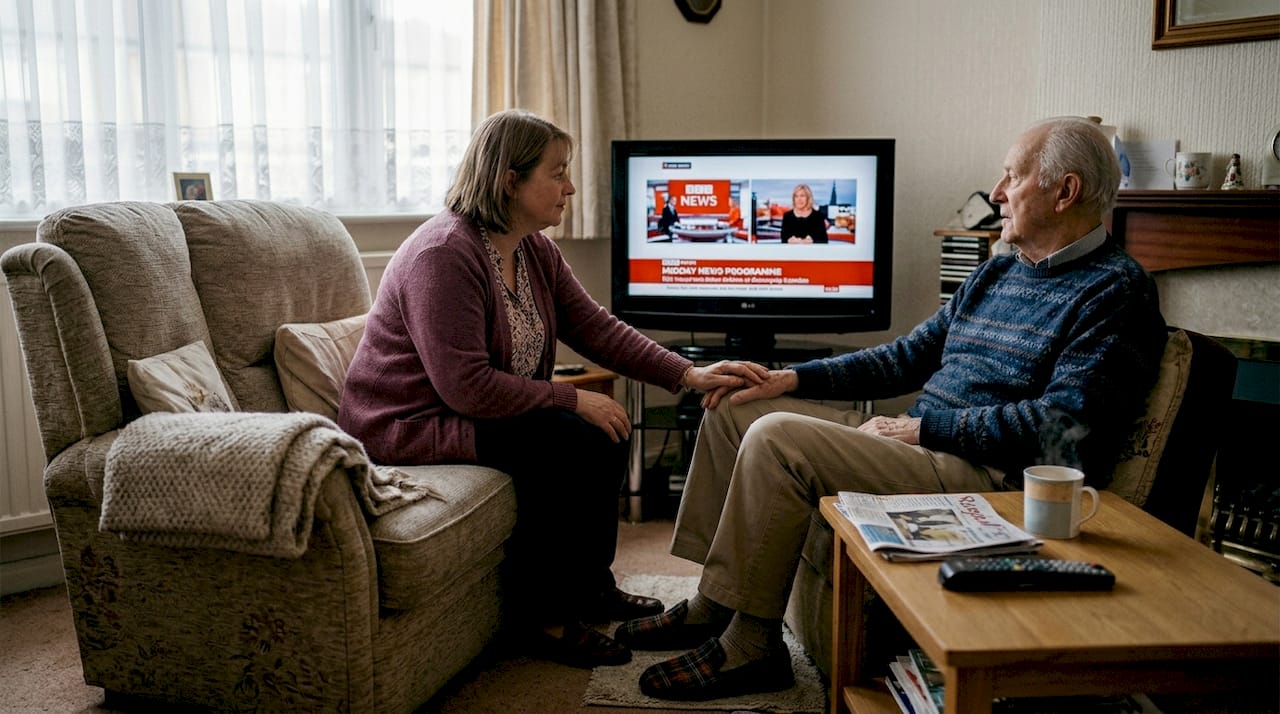
Many families in London assume palliative care only happens in hospital, or that it is reserved for the final days of life. This is one of the most common and costly misconceptions we encounter. In reality, palliative care at home is about relieving symptoms and stress for anyone living with a serious or life-limiting illness, and it can run alongside curative treatments from the moment of diagnosis. This guide explains what it means, who it helps, how it works in practice, and how your family can access it in London.
Table of Contents
- What is palliative care at home?
- Benefits of receiving palliative care at home
- Who provides palliative care at home and how does it work?
- Challenges, barriers, and ways families can prepare
- What most guides miss: early planning and integration matter most
- How Kells Care can support your family’s home palliative journey
- Frequently asked questions
Key Takeaways
| Point | Details |
|---|---|
| Earlier is better | Start palliative care at home as soon as possible for the best outcomes. |
| Family support counts | Access to respite and specialist advice helps prevent family carer burnout. |
| Hospital isn’t always best | Home palliative care can offer more comfort, control, and potentially cost savings. |
| Multidisciplinary teams matter | Joined-up care from GPs, nurses, and hospice professionals ensures quality support at home. |
What is palliative care at home?
Palliative care at home is a form of specialist support delivered in the place where a person feels most comfortable: their own home. It is not limited to the final weeks of life. It is appropriate for anyone living with a chronic, serious, or life-limiting condition, whether that is cancer, heart failure, dementia, or a neurological illness.
The core goals are straightforward. The aim is to relieve physical symptoms, reduce emotional stress, support family members, and preserve dignity and comfort throughout the illness. This is not about giving up on treatment. It is about making sure that quality of life remains as high as possible at every stage.
Palliative care at home focuses on symptom management, pain relief, and emotional support for both patients and families. In practice, this can include:
- Pain and symptom management, including medication reviews
- Emotional and psychological support for the person and their family
- Practical help with daily living tasks
- Coordination between different health professionals
- Spiritual and social care, where needed
- Advice on equipment, nutrition, and environment
Care is typically delivered by a team that may include specialist palliative nurses, GPs, hospice staff, and trained domiciliary carers. You can read more about how this fits into broader domiciliary care arrangements for families in London.
Pro Tip: Ask your GP specifically about a referral to a community palliative care team, not just general district nursing. The level of specialist support can be significantly different.
Benefits of receiving palliative care at home
Knowing what palliative care at home is, let us explore why so many families now prefer it and what research shows about outcomes.
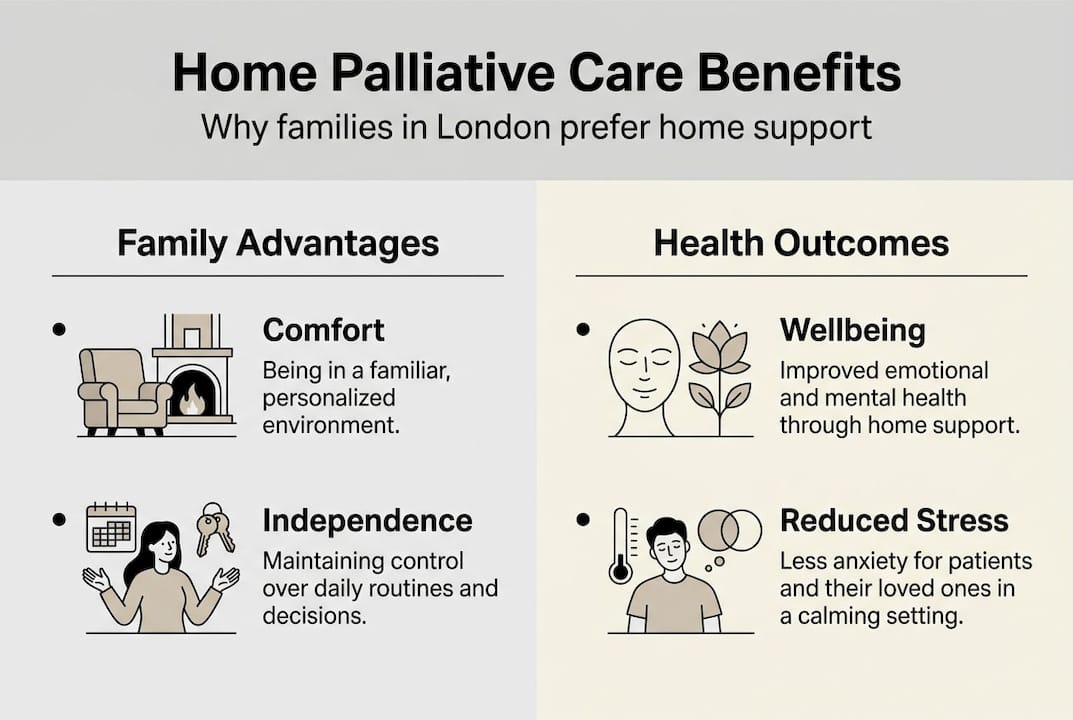
Most families, when asked, say they would prefer their loved one to be cared for at home rather than in hospital. The evidence supports this preference. In-home palliative care models improve symptom control and quality of life without compromising the standard of care. People report feeling more in control, more comfortable, and less anxious when they are in familiar surroundings.
For London families specifically, this matters enormously. London hospital deaths are higher than the England average, which suggests many Londoners are not yet accessing the home-based options available to them.
| Factor | At-home palliative care | Hospital palliative care |
|---|---|---|
| Comfort and familiarity | High | Lower |
| Symptom control | Comparable or better | Variable |
| Family involvement | Greater | More restricted |
| Patient satisfaction | Generally higher | Moderate |
| Cost to NHS | Often cost-neutral | Higher |
| Likelihood of home death | Significantly higher | Low |
Some of the key benefits families report include:
- Greater dignity in familiar surroundings with personal belongings
- More family time without the restrictions of ward visiting hours
- Reduced hospital admissions and emergency attendances
- Better emotional wellbeing for both the person and their carers
You can explore the broader advantages of home care and how it supports independence and wellbeing for elderly relatives. If you are weighing your options, our home care vs nursing guide offers a practical comparison for London families.
Who provides palliative care at home and how does it work?
Having seen the advantages, it is important to understand who is involved in providing palliative care at home and how families in London can actually access it.
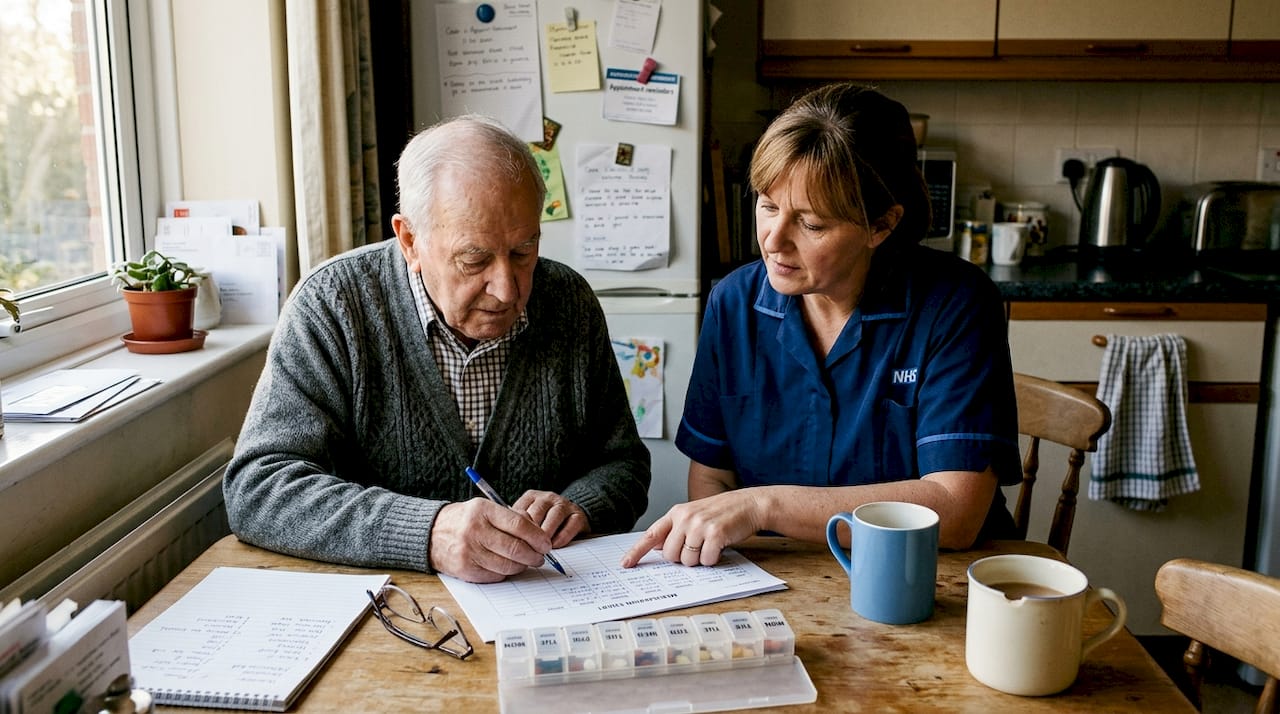
Palliative care at home is rarely delivered by one person alone. It works best as a joined-up effort between several professionals and the family. The people typically involved include:
- GPs, who often coordinate the overall care plan
- Community palliative care nurses, who manage complex symptoms
- Hospice outreach teams, who provide specialist advice and support
- Domiciliary carers, who assist with daily personal care
- Social workers, who help with practical and financial needs
- Family caregivers, who play a central and often underestimated role
Multidisciplinary integration is key; families should prioritise NHS or hospice referrals through their GP for the best access to coordinated support.
Here is how the process typically works in London:
- Referral: Your GP or hospital consultant identifies palliative care needs and makes a referral.
- Assessment: A specialist nurse or palliative care team visits to assess needs and preferences.
- Care planning: A personalised care plan is created, covering medical, emotional, and practical needs.
- Delivery: Care begins, with regular visits from the relevant professionals.
- Review: The plan is reviewed regularly as needs change.
| Care model | Provider | Cost |
|---|---|---|
| NHS community palliative care | NHS trust or ICB | Free at point of use |
| Hospice outreach | Charity hospice | Free or subsidised |
| Private live-in care | Private agency | Self-funded or CHC |
Pro Tip: Ask your GP about Continuing Healthcare (CHC) funding. If your relative has a primary health need, NHS-funded home care may be available at no cost to your family.
For families beginning this journey, our elderly home care guide and our page on recognising when home care is needed are useful starting points. You can also visit Kells Care to learn more about our services across London.
Challenges, barriers, and ways families can prepare
While home palliative care offers many benefits, it is essential to be aware of challenges and how to address them proactively.
Access to palliative care at home in London is not equal. Provision varies depending on which Integrated Care Board (ICB) area your relative lives in, and some boroughs have significantly better-resourced community teams than others. Access varies due to staffing and commissioning; family carer support and respite are critical parts of making home care sustainable.
Common barriers families face include:
- Staff shortages, particularly for overnight and weekend cover
- Lack of 24/7 support, leaving families uncertain in a crisis
- Carer burden, as family members take on significant caring responsibilities
- Inconsistent information about what is available locally
- Financial pressures, particularly for those who do not qualify for NHS funding
“The current system is fragmented and underfunded. Families are often left navigating complex services at the most difficult time of their lives. A national strategy for palliative care is urgently needed.” King’s College London, 2025
There are practical steps your family can take now to prepare:
- Request a formal care needs assessment through your local council or GP surgery
- Arrange regular respite so that family carers can rest and recover
- Ask about carer training so you feel confident supporting your relative at home
- Understand your options by reading our guide on paying for home care
- Have an open conversation with your family using our advice on talking about home care
Preparing early makes a genuine difference. Families who plan ahead report feeling far less overwhelmed when care needs increase.
What most guides miss: early planning and integration matter most
Most articles about palliative care focus on what happens in the final weeks. We think this misses the point entirely.
In our experience, the families who navigate home palliative care most successfully are those who start the conversation early, often shortly after a serious diagnosis, long before a crisis point. Early involvement in palliative care improves quality of life and aligns with the preference most people express to die at home.
Waiting until things become urgent means families are making decisions under enormous emotional pressure, with fewer options available. Starting early means you can build relationships with the right professionals, understand what funding is available, and put a plan in place that genuinely reflects your relative’s wishes.
Integration matters just as much as timing. A palliative care team that communicates well, shares information, and works alongside your family rather than in isolation produces far better outcomes than a fragmented collection of separate services. When a carer, a nurse, and a GP all know the same plan and speak to each other regularly, the person being cared for benefits enormously.
The emotional needs of family carers also deserve attention from the outset, not as an afterthought. Carer wellbeing directly affects the quality of care a loved one receives. This is not a secondary concern. It is central to the whole approach.
How Kells Care can support your family’s home palliative journey
At Kells Care, we have been providing high-quality home care across London for over 30 years. We understand how much is at stake when a family member needs palliative support, and we are here to help you find the right path forward. Our experienced, fully qualified carers are DBS checked and regulated by the CQC, giving you confidence that your relative is in safe hands.
Whether you are just beginning to explore your options or are ready to arrange care, our elderly home care guide and home care vs nursing comparison are practical places to start. Visit Kells Care to speak with our team and get personalised advice for your family’s situation.
Frequently asked questions
What services are included in palliative care at home?
Home palliative care usually involves symptom management, pain relief, emotional support, help with daily needs, and coordinated care from a team of professionals. The exact services depend on the individual’s condition and preferences.
How do I arrange palliative care at home in London?
Start by speaking to your GP, who can make a referral to NHS or hospice palliative services. NHS and hospice referrals usually begin with a GP consultation, so this is always the best first step.
Can you have palliative care at home while receiving curative treatment?
Yes. Palliative care is available alongside active treatment at any stage of a serious illness, not just at the end of life. It focuses on comfort and quality of life in parallel with any ongoing treatment.
What should families consider before choosing home palliative care?
Families should consider local service availability, the level of support available for carers, and whether 24/7 care is needed. Resource availability and carer support can vary significantly across London, so planning ahead is essential.
Recommended
- Elderly home care in London: A guide for families – Kells Domiciliary Care
- Post-hospital home care: a London family guide 2026 – Kells Domiciliary Care
- Recognising signs you need home care: London family guide – Kells Domiciliary Care
- What is domiciliary care? A family guide to home support – Kells Domiciliary Care