
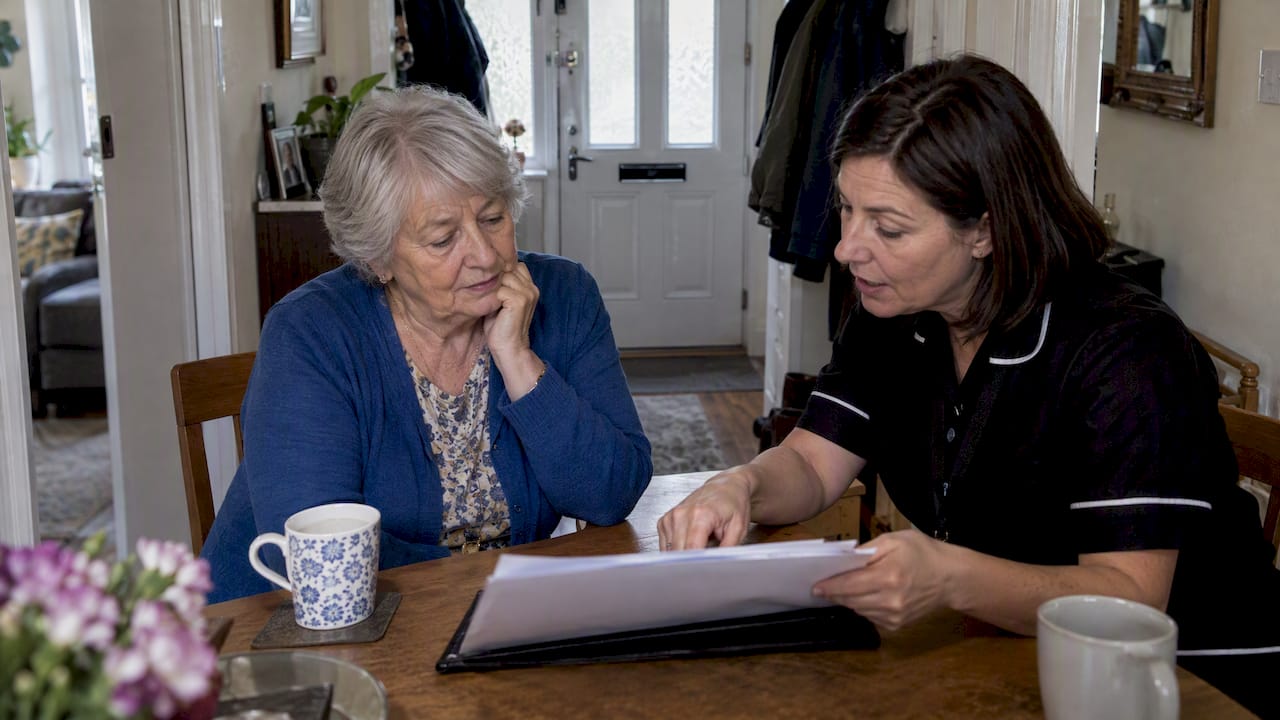
The accepted quality benchmark is that most home care visits should be at least 30 minutes. Shorter calls are allowed only in narrow, agreed circumstances. This guidance comes from NICE, the Care Quality Commission and the Care Act. We explain the exceptions below.
TL;DR:
- Shorter visits under 30 minutes are acceptable only if they are well-defined, agreed in advance, and documented as part of a broader, approved care package.
- Realistic scheduling is essential, with travel time properly accounted for, as back-to-back appointments can cause shortfalls in actual care time.
- People with cognitive impairments or complex needs may require longer visits or multiple carers to ensure safety, dignity, and effective support.
- Providers should record the reasons for any deviations from the 30-minute standard and review visit lengths regularly to adapt to changing needs.
- Monitoring patterns, such as frequent very short visits and late arrivals, helps identify rushed care, prompting review or escalation if quality is compromised.
Table of Contents
- What the official guidance says and why
- When shorter visits are acceptable
- How to agree and record visit lengths
- Scheduling, travel time and realistic rostering
- When visits should be longer than the minimum
- Monitoring, red flags and what to do if visits feel rushed
- How a regulated agency applies these standards in practice
- Balancing quality and affordability in care planning
- How Kells Domiciliary Care can help
- Sources
- FAQ
What the official guidance says and why
NICE guideline NG21 recommends that home care visits give workers enough time to talk with the person and their carer, carry out the planned care, and travel to the next call without rushing. The related quality standard, QS123, frames 30 minutes as the benchmark for older people using home care, except where a shorter visit has been agreed as part of a wider package of support.
The Care Act statutory guidance backs this up from the commissioning side. It expects local authorities and providers to factor in the real costs of delivering care, including travel, so that workers have the time they need rather than a schedule built around convenience.
Time matters because care is rarely just a task. A rushed visit can mean a carer skips the conversation that reveals a new pain, a change in mood or early signs of illness. Thirty minutes allows for proper communication, a genuine choice in how care is delivered, and safe, unhurried assistance with washing, dressing or moving around the home.
When shorter visits are acceptable
A visit under 30 minutes is not automatically poor care. NICE sets out specific conditions under which a short call is appropriate, and these should be written into the care plan, not improvised on the day.
- The visit is carried out by a worker the person already knows, within a wider package of longer visits.
- The call is limited to a single, well-defined task, such as a medication prompt or a safety check.
- The short visit has been agreed in advance with the person, their family and the care provider, with the reason recorded.
A welfare check to confirm someone is safe before bed, or a brief call to check a single dose of medication has been taken, are typical examples. What makes them acceptable is not the task itself but the agreement and documentation behind it.
How to agree and record visit lengths
Visit length should be set against the outcomes the person needs, not picked from a standard template. A care plan built around what the visit must achieve, washing, meals, mobility support, conversation, naturally points to how long it should take, and that figure should be reviewed as needs change.
Providers and commissioners are expected to:
- Record the agreed visit length and the reason for any exception in the care plan.
- Set a review date so visit lengths are checked against changing needs, not left static for years.
- Report short visits and the circumstances behind them, so patterns can be monitored over time.
Families arranging care should ask a provider directly: how is this visit length calculated, what happens if more time is needed on a given day, and how often will the plan be reviewed? Our guide on what to expect at a first home care visit covers these questions in more detail.
Pro Tip: Ask for the agreed visit length in writing, including any exceptions, before the care package starts.
Scheduling, travel time and realistic rostering
A visit length on paper only means something if the rota actually delivers it. NICE’s guidance on scheduling and travel time points out that unrealistic rosters, ones that ignore how long it takes to travel between calls, push carers to cut corners or arrive late, shrinking the real contact time below what was promised.
A common problem is back-to-back scheduling with no buffer, so a 30-minute visit effectively becomes 20 minutes once the carer accounts for parking, stairs or traffic. When reviewing a care contract or an agency’s rota, ask specifically how travel buffers are allocated and whether electronic call monitoring records arrival and departure times rather than scheduled times alone. Our guide to scheduling daily care visits explains what a realistic rota looks like.

When visits should be longer than the minimum
Thirty minutes is a floor, not a target for everyone. Some needs call for more time as a matter of safety rather than preference.
People living with dementia or other cognitive impairment often need longer for reassurance and orientation during a visit, since rushing can cause distress or confusion. Communication or sensory loss can mean a carer needs extra time to confirm instructions have been understood. Support with eating and drinking, especially for anyone with swallowing difficulties, needs unhurried supervision rather than a quick prompt.
In these situations, a longer single visit, or a visit with two carers attending for safety during moving and handling, is often the better arrangement. Families should raise this directly during care planning rather than waiting for a problem to surface, and ask whether a trial period of extended visits can be arranged before committing long term.
Monitoring, red flags and what to do if visits feel rushed
The CQC’s provider information return guidance asks providers to report how many scheduled visits of 15 minutes or less took place over the previous 28 days. This is a monitoring measure, not a recommended length, but it gives families and commissioners a concrete figure to ask about.
Warning signs worth tracking include carers regularly arriving late and leaving early, tasks being skipped or rushed, and a pattern of very short visits with no documented exception. One off day is not a pattern; several in a month is.
- Keep a simple written record of visit start and end times and what was actually done.
- Ask the provider for a care-plan review if visits consistently feel too short for the tasks involved.
- If nothing changes, raise it with the commissioner or report it to the CQC.
Our home care safety checklist gives a simple format for keeping that record. A care-sharing tool such as KinCarer can also help families log visit times and share notes between relatives.
How a regulated agency applies these standards in practice
A CQC-regulated agency builds rotas around the care plan, not the other way round, allowing travel time between calls and documenting any agreed exception with a clear reason and review date. Staff are DBS-checked, and rotas are personalised so the same familiar carers attend where possible, which matters most for people with dementia or complex needs. This kind of structured scheduling is what turns a guideline like NICE’s 30-minute benchmark into something a family can actually rely on day to day.
Balancing quality and affordability in care planning
Dignity should drive decisions about visit length, not the other way round. Budget pressures are real, and I understand the temptation to shave minutes off a visit to save cost. But a 30-minute minimum exists because shorter calls correlate with rushed, unsafe care for people who need help with washing, eating or moving. If cost is the sticking point, ask for a time-limited trial of a shorter visit with a fixed review date, rather than accepting it as permanent.
— Dan
How Kells Domiciliary Care can help
A reputable domiciliary care provider has long experience supplying home care, with staff vetted and working under appropriate regulatory oversight. Visit lengths are tailored around the individual’s care plan, whether that requires shorter focused visits or longer sessions allowing proper personal care and interaction.
Our services include call-in visits, live-in care and support for children with learning disabilities, autism or mental health needs, alongside personal care on contracted hours, companionship and dementia care scheduled around the person rather than a template. For anyone needing extra support, we also arrange high dependency care with two carers attending where that’s the safer option.
If you’re putting together a care plan and want visit lengths that match the guidance above, download our free home care guide or get in touch to arrange a care-plan review.

This article is general information, not a substitute for advice from a qualified doctor. Consult a qualified healthcare professional about your own circumstances before acting on anything here.
Sources
- NICE guideline NG21 — Home care recommendations
- Care and support statutory guidance (Care Act)
- CQC PIR guidance — Service specific questions
FAQ
What is the minimum length for a home care visit?
The widely used benchmark is 30 minutes, as set out in NICE’s quality standard QS123. Shorter visits are acceptable only where they’re agreed in advance as part of a wider care package, with the reason recorded in the care plan.
Are 15-minute care visits legal?
A 15-minute visit is not automatically unlawful, but it is closely monitored. The CQC asks providers to report how many scheduled visits of 15 minutes or less they carried out in the previous 28 days, treating very short calls as a quality indicator rather than a standard.
Why do care visits sometimes need to be longer than 30 minutes?
People with dementia, communication difficulties or needs around eating and drinking often need more time so the carer isn’t rushing essential tasks. Extending visit length, or arranging two carers for complex physical support, protects both safety and dignity.
Who decides how long a care visit should be?
Visit length is agreed between the person receiving care, their family and the provider, and recorded in the care plan under the Care Act statutory guidance. It should be reviewed regularly rather than fixed once and left unchanged.
What should I do if a care visit feels too rushed?
Start by keeping a written record of actual visit times and what was completed. If the pattern continues, ask the provider for a care-plan review, and escalate to the commissioner or the CQC if nothing improves.


