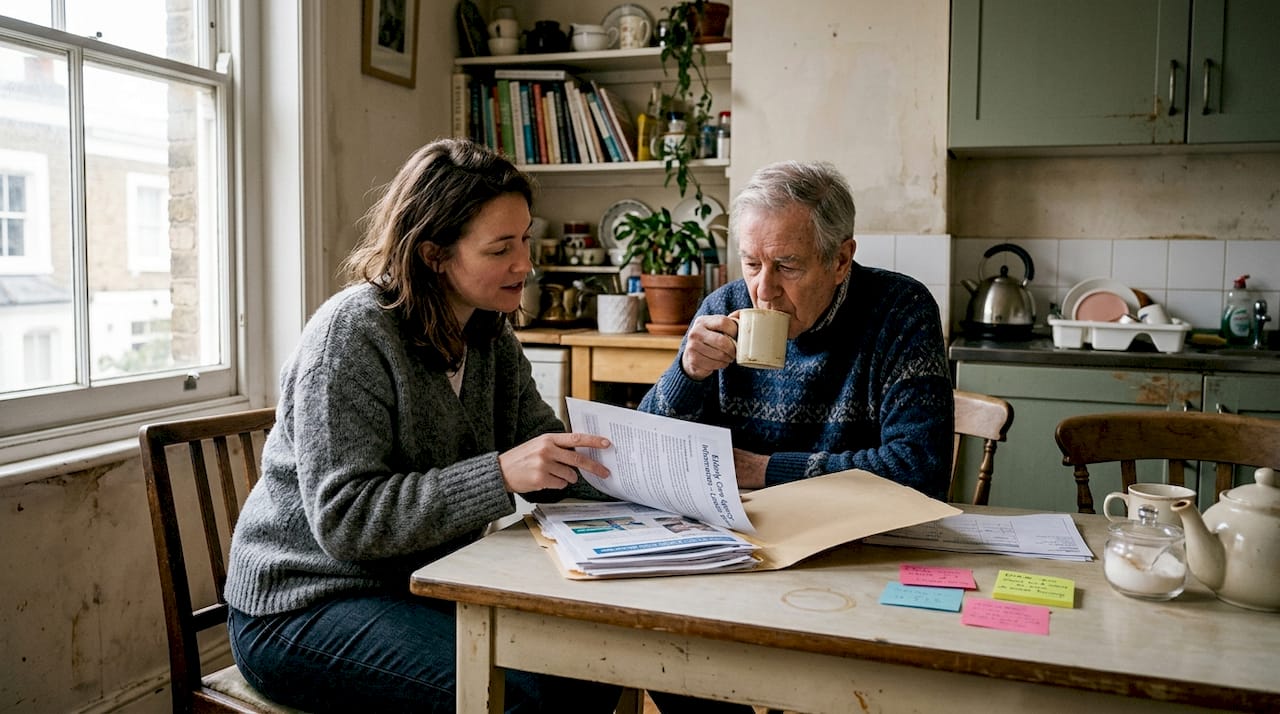
Sundowning is a late-afternoon to evening rise in confusion, agitation or distress in some people living with dementia. The first thing to do is stay calm, speak slowly, and check for hunger, thirst, pain, a full bladder, or medication that’s due. Most cases respond to these simple, non-drug steps before anything else is needed. If distress is sudden or severe, treat it as a reason to call for medical advice.
TL;DR:
- Address potential physical causes such as pain, infection, hunger, or medication issues before attributing episodes solely to sundowning.
- Keep a detailed diary of daily routines, activities, and episodes to identify patterns and inform healthcare assessments.
- Make simple home adjustments like even lighting, night lights, and clear exits to reduce visual triggers and wandering risks.
- Prioritize early detection of treatable issues like urinary tract infections or medication side effects during GP reviews.
- Share evening responsibilities and seek professional support to prevent carer exhaustion, which can exacerbate behavioral episodes.
Table of Contents
- Recognising dementia sundowning symptoms and when they strike
- What causes sundowning? Common triggers to check first
- Managing sundowning behaviour: safe steps during an episode
- How to prevent sundowning with daily routine changes
- Adjusting the home to reduce evening confusion
- When should you contact a GP about sundowning?
- Supporting yourself as a carer through sundowning
- What Kells-care sees in over 30 years of dementia home support
- The gap between sundowning advice and sundowning reality
- Get practical evening support from Kells-care
- Sources
Recognising dementia sundowning symptoms and when they strike
Sundowning shows up differently in each person, but a few patterns repeat often enough that most carers will recognise them within a few episodes.
- Restlessness, pacing, or an inability to settle
- Increased confusion or asking repeatedly to “go home”
- Shouting, crying, or vocal distress
- Hallucinations or suspiciousness towards familiar people
- Resistance to normal routines like washing or eating
Episodes typically begin in the late afternoon and can run on into the evening, with published guidance citing a window roughly between 16:30 and 23:00. It’s not a rare quirk of dementia care, either. Estimates suggest it affects somewhere between 20% and 66% of people with dementia, with the higher figures more common in Alzheimer’s-specific reports. If you’re seeing this in someone you care for, you are dealing with something well documented, not something unusual to your household.
What causes sundowning? Common triggers to check first
Before assuming an episode is “just sundowning,” it’s worth ruling out a treatable cause. Sundowning is best treated as a signal of unmet need, not an inevitable part of the day.
Physical causes are the first port of call:
- Pain, including breakthrough pain just before a scheduled dose
- Infection, particularly a urinary tract infection
- Hunger, thirst, constipation, or needing the toilet
- Medication timing or side effects
Circadian and environmental factors matter just as much. A long daytime nap, an irregular sleep pattern, or simply not enough daylight earlier in the day can all tip someone into evening distress. So can low light, shadows, glare from a window, background noise, or a sudden change to the daily routine. None of these are dramatic on their own, but together they build up across the afternoon until something gives.
Managing sundowning behaviour: safe steps during an episode
When an episode starts, a calm, ordered response makes the difference between a short wobble and a long, distressing evening.
- Stay calm and slow down. Lower your voice, soften your body language, and avoid arguing with what the person believes is happening.
- Check the basics. Offer the toilet, a drink, a small snack, and check whether pain relief or other medication is due.
- Reassure rather than correct. Distraction and reassurance work better than logical argument when someone is convinced of something untrue.
- Redirect gently. Familiar music, a photo of someone they love, or a short walk around the house can ease the moment without confrontation.
- Manage safety, not control. Supervise if they’re pacing towards a door, clear obvious hazards, and guide rather than physically restrain.
- Call for help if things escalate. If the person becomes violent, collapses, or shows signs of a medical emergency, treat it as urgent and seek professional help without delay.
Pro Tip: Keep a short script in your head for the moment panic hits: “You’re safe, I’m here, let’s have a cup of tea.” Rehearsed calm is easier to reach for than calm you have to invent on the spot.
Our guide to dementia behaviour management walks through more of these de-escalation techniques in detail.
How to prevent sundowning with daily routine changes
Prevention starts with knowing your own pattern, not a generic one. Keeping a diary for one to two weeks is one of the most useful things a carer can do: note the time, what they’d eaten, any medication given, and what the episode looked like. Patterns usually surface faster than expected.
- Get outside or near a bright window in the morning and early afternoon
- Limit long daytime naps to protect night-time sleep
- Fill the day with one or two meaningful activities, not just passive time
- Cut back on late caffeine, alcohol, and heavy evening meals
- Wind down with low lighting and gentle music before bed
Daylight exposure earlier in the day genuinely shapes how well the body’s sleep and wake cycle holds together by evening. A diary built over one to two weeks also gives your GP something concrete to work from rather than a vague description of “bad evenings.” Our piece on building dementia routines has more examples of how to structure a calmer day.
Adjusting the home to reduce evening confusion
Small changes to the physical space cut down on the visual confusion that often sits behind an episode. Uneven lighting, shadows, and reflections are easy to miss as triggers because carers don’t see the room the way someone with dementia does.
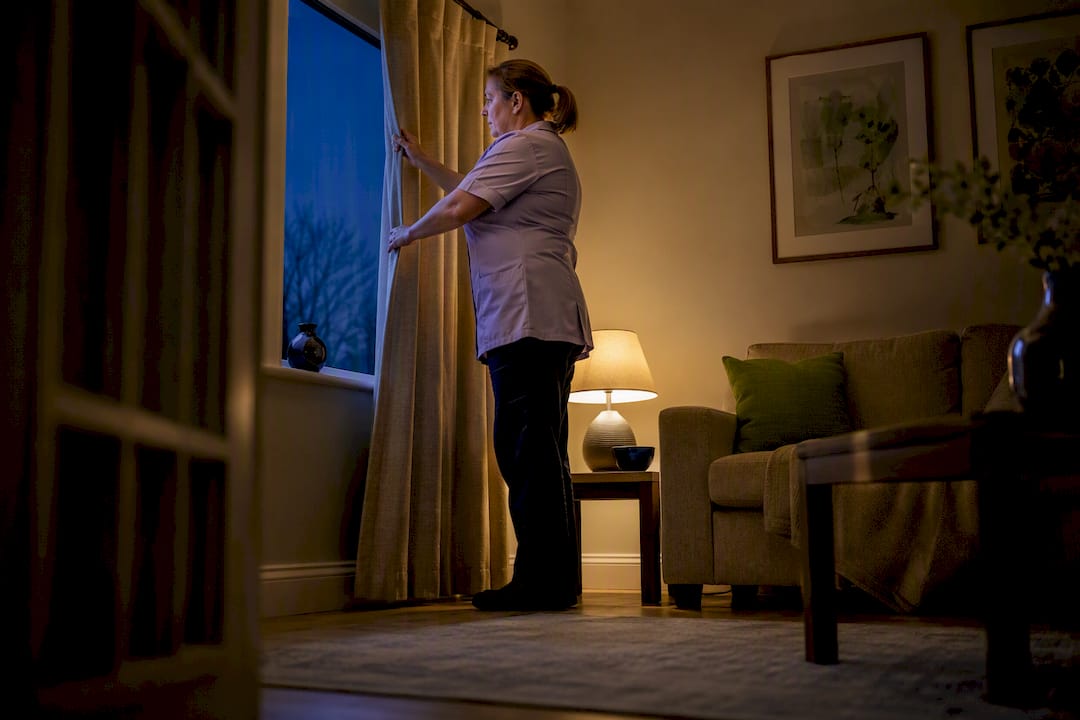
- Close curtains before dusk and keep lighting even, not patchy, through the evening
- Add night lights along routes to the bathroom or bedroom
- Cover or remove mirrors and shiny surfaces that can be misread as another person
- Turn off loud or flickering television and reduce background noise after dinner
- Fit a simple door alarm, keep exit routes clear of hazards, and move coats or keys out of easy reach
- Use a clock showing the day and time, and label doors clearly
Our home safety guide for dementia covers wandering risk in more depth if this is a recurring worry.
When should you contact a GP about sundowning?
Take your diary to the GP appointment. It turns a vague “evenings are hard” into a pattern a clinician can actually investigate for infection, medication side effects, or pain.
- Book a GP review if episodes are new, worsening, or increasingly frequent
- Ask specifically about a urinary tract infection, which often causes sudden confusion in older adults
- Raise medication timing, since some drugs cause agitation as they wear off or peak
- Know that medication for agitation is not usually the first response and is considered only after assessment
- Treat sudden, severe distress, physical collapse, or new confusion as reasons to seek urgent care rather than waiting for a routine appointment
Our dementia emergencies guide sets out what counts as urgent versus what can wait for a scheduled review.
Supporting yourself as a carer through sundowning
Tiredness in the carer feeds tiredness in the person you’re caring for. A frazzled evening rarely calms anyone down. Sharing evening shifts with another family member, booking a short home-care visit, or arranging occasional respite protects both of you from the slow burn-out that makes every sundowning episode feel worse than the last.
A simple evening checklist helps on the hardest days:
- Medications given and logged
- A drink and small snack offered
- Hazards locked away or out of reach
- Emergency and GP contact numbers to hand
Dementia UK’s helpline, local dementia advisers, and peer-support groups are worth having saved in your phone before you need them, not after.
What Kells-care sees in over 30 years of dementia home support
Over many years of domiciliary care in London, professional carers have seen how much a familiar evening visit changes the shape of a bad afternoon. Personalised evening visits, overnight checks, live-in care, and respite support all give families breathing room. Combining the home changes above with professional support, rather than choosing one or the other, tends to be what actually holds up over months, not just one good evening.
The gap between sundowning advice and sundowning reality
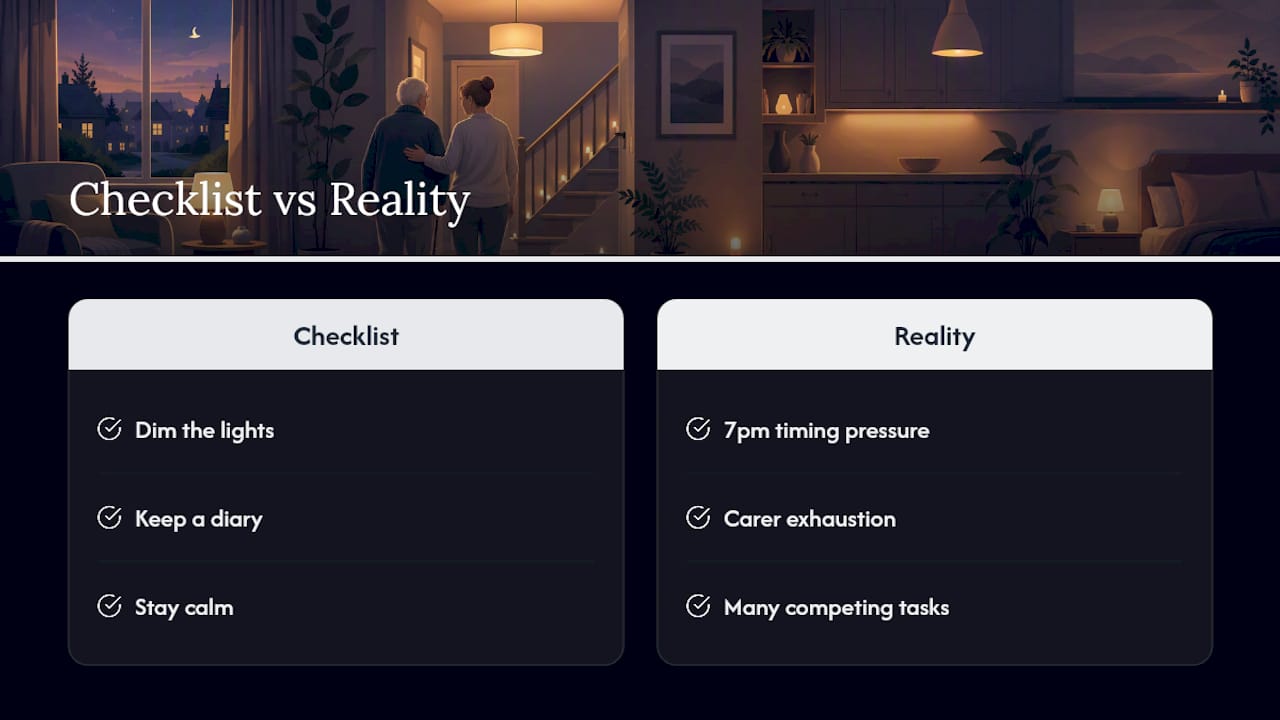
Most sundowning advice reads like a checklist: dim the lights, keep a diary, stay calm. All true, and all genuinely useful. What gets underplayed is how much of this comes down to carer capacity, not carer knowledge. Families rarely fail because they don’t know to check for a UTI or close the curtains before dusk. They fail because it’s 7pm, they’re exhausted, and the checklist feels like one more task on top of a day that already had thirty.
The conventional advice also treats sundowning as something to manage in isolation, evening by evening. The more useful frame is to treat it as feedback about the whole day. A person who’s had two hours of daylight, one meaningful activity, and no three-hour afternoon nap will usually have a gentler evening than one who’s had none of those things. The diary works precisely because it forces you to look at the whole 24 hours, not just the bad hour.
If there’s one thing to prioritise above the rest, it’s ruling out pain and infection early rather than assuming it’s “just the dementia.” That single check, repeated whenever behaviour changes, catches more treatable causes than any amount of lighting adjustment ever will.
— Dan
Get practical evening support from Kells-care
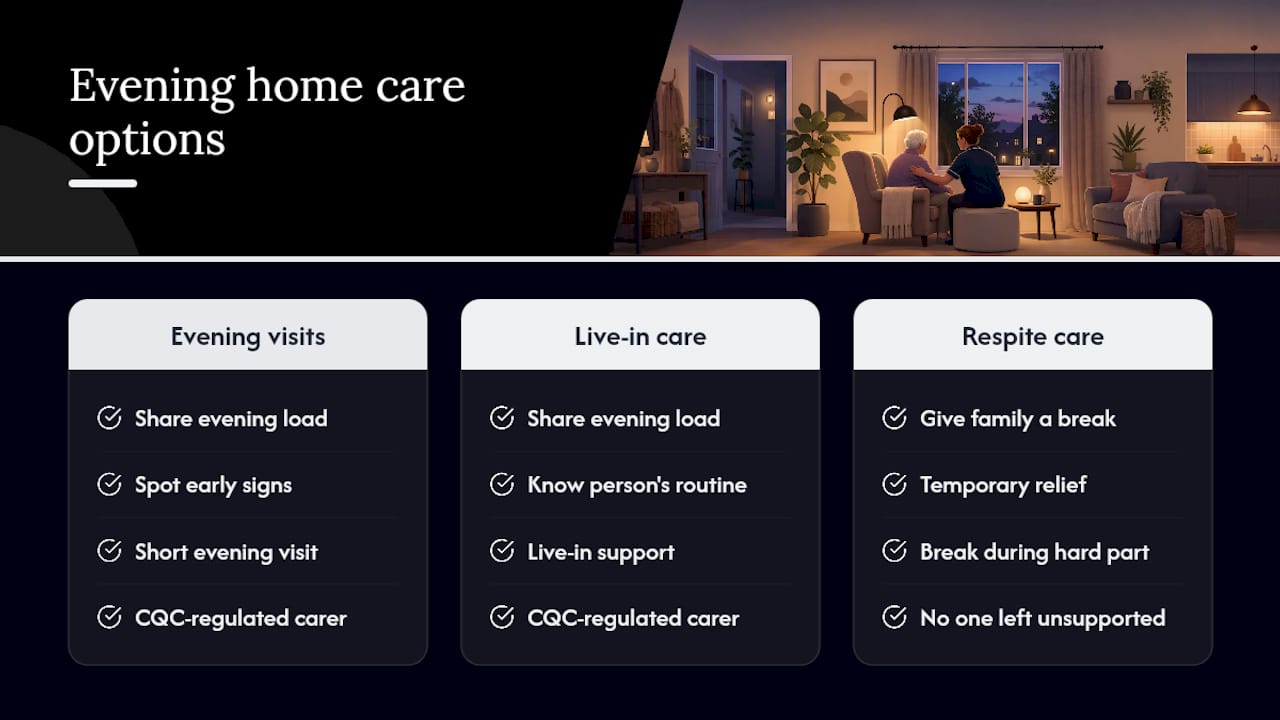
Home care services can give families a way to share the evening load rather than carrying it alone. A carer who knows the person’s routine can spot the early signs of an episode, run through calm checks, and stay through the window when distress tends to build, whether for a short evening visit or live-in support. Respite care can give family carers a break from the hardest part of the day without leaving anyone unsupported.
Our free home care guide walks through how evening visits, live-in care, and respite are arranged, and what to expect from a CQC-regulated carer coming into your home. Get in touch through the guide or our enquiry form to talk through what your evenings actually look like and where a bit of extra support would help most.
This article is general information, not a substitute for advice from a qualified doctor. Consult a qualified healthcare professional about your own circumstances before acting on anything here.
Sources
- What is dementia sundowning? Signs, symptoms and tips – Dementia UK
- Sundowning – Dementia Carers Count
- Living with dementia: behaviour — NHS