
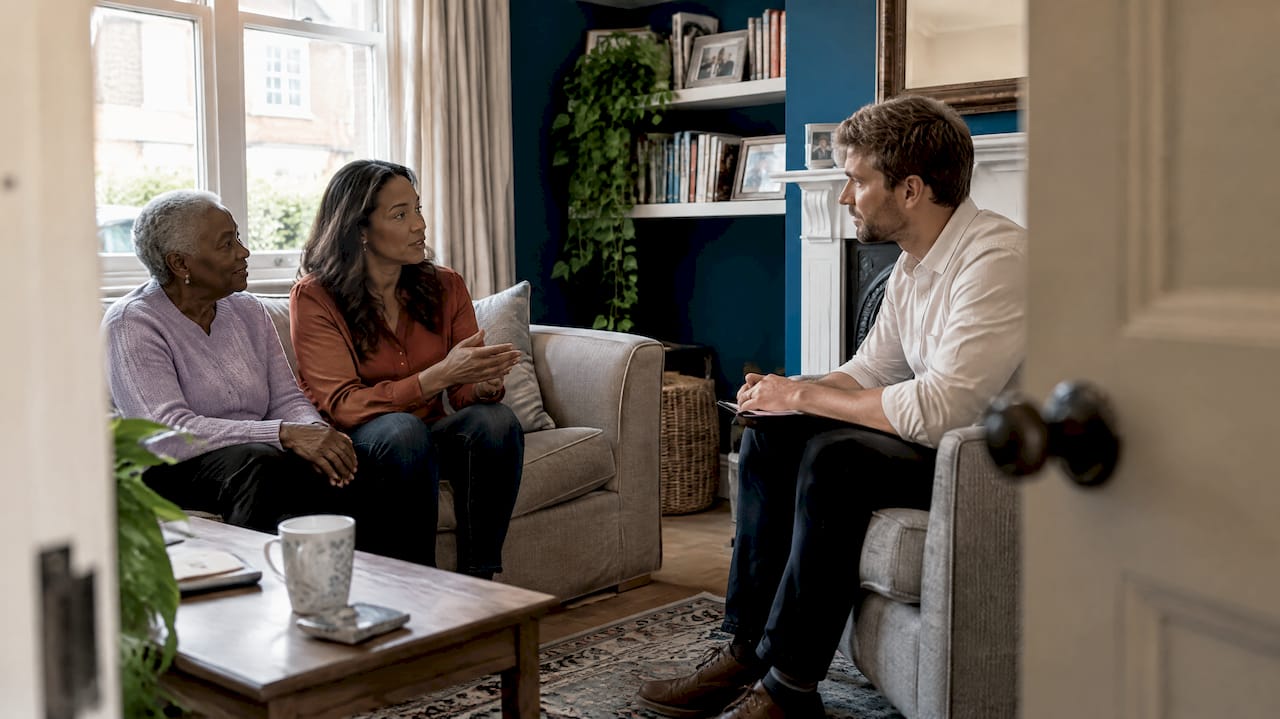
To book agency care staff for a parent, partner or child in London, you work through five things in order: set out the care needs, confirm the agency’s CQC registration and carer vetting, agree a written care plan, understand the cost and who can help pay, and agree how problems and changes are handled. Done in that order, booking takes days rather than weeks and you start with carers who suit the person, not just carers who are free. We are Kells Domiciliary Care, a CQC-regulated London agency with over 30 years of experience, and this is the routine we would give a friend.
TL;DR
- Start with the needs, not the agency: tasks, mobility, medication, communication, safety, diet and cultural wishes. A good agency assesses these itself and writes them into a care plan.
- Ask for the agency’s CQC registration and confirmation that every carer has a DBS check (a police records check for people working with vulnerable adults and children).
- Agree visit times, regular carers, cover for sickness and holidays, and how to complain before the first visit.
- For scale, the Homecare Association’s Minimum Price for Homecare in England was £32.14 per hour from April 2025. Your own quote and your council’s rates are what count.
- Your council must offer a free needs assessment. Savings above £23,250 usually mean you pay for care yourself.
Table of Contents
- What “agency care staff” means for a family
- Step 1: Set out the care needs
- Step 2: Check registration and vetting
- Step 3: Agree the care plan and who will come
- Step 4: Understand the cost and who pays
- Step 5: Agree safeguarding, complaints and changes
- Make the home safer while you arrange care
- Choosing the type of booking
- Booking with Kells
- Our view: the booking is the beginning of the relationship
- FAQ
- Sources
What “agency care staff” means for a family
The phrase covers two different bookings. Care homes book temporary staff to cover shifts. Families book carers to come to a person’s own home, either for visits of 30 minutes to a few hours, or as live-in care, where a carer stays in the house. This guide is for families.
The agency employs, trains and manages the carers, and arranges cover when someone is ill or on holiday. That is the main difference from employing a personal assistant yourself, where you become the employer. Gloucestershire County Council’s guidance on using an agency suggests asking whether the agency employs its staff and meets its tax and National Insurance payments, which shows how much sits with the agency rather than with you.
Home care usually covers two kinds of help. NICE guideline NG21 describes personal care (getting in and out of bed, washing and bathing, toileting, dressing, eating and drinking) and help with housework that keeps someone safely at home. It also lists live-in care workers among the options. Most families need a mix of both.
Step 1: Set out the care needs
Before you phone anyone, write down what the day looks like now and where it goes wrong. You do not need clinical language. Think about mornings, meals, medication, nights, getting out of the house and who currently helps.
An agency should then run its own assessment. Independent Age’s factsheet on arranging home care says it should cover:
- tasks the person finds difficult, and how involved the family is
- sight, hearing and communication preferences
- continence, mobility and disability equipment
- getting in and out of the home
- mental health
- help with medication
- safety at home, including the risk of falls
- dietary needs
- social, religious and cultural needs
The agency then writes a care plan with you. It should match any council assessment and meet the eligible needs identified there.
Where this goes wrong: families often describe the main problem, such as “Mum needs help washing”, and miss the ones that cause trouble later: missed tablets, a fear of being alone at night, or a carer who cannot communicate with someone who has hearing loss or dementia. Our personal care assessments cover the whole picture, so the plan reflects the person and not just the first request. Our guide to personalising home care shows what that looks like in practice.
If the person has dementia, a disability or additional needs
Say so at the first call. NICE NG21 says home care workers should recognise and respond to dementia, diabetes, mental health and neurological conditions, physical and learning disabilities and sensory loss, with specialist support for complex conditions. Parents of children with learning disabilities, autism, mental health needs or challenging behaviours should explain triggers, routines and communication style at this stage. The match between carer and child matters more than the number of hours.
Step 2: Check registration and vetting
In England, agencies that provide personal care must be registered with the Care Quality Commission (CQC), the independent regulator of health and social care. You can ask to see the registration details. Gloucestershire County Council recommends asking for:
- the agency’s CQC registration details
- a copy of its insurance policy
- confirmation that all staff have been screened through the Disclosure and Barring Service (DBS)
- details of staff qualifications, experience, training and support
The Direct Payments Advisory Service factsheet from October 2024 adds questions on how staff are managed and monitored, how complaints are handled, what happens when carers are on holiday or off sick, how risks are assessed, and whether you will receive copies of hours worked.
Every registered agency must also produce a statement of purpose when it applies to register. Independent Age says it covers how to contact the agency, key contract terms, working hours, fees and payment methods, insurance, safety, complaints and how to contact social services. Ask for it. It also helps to know what a DBS check shows: the basic check lists past criminal records and certain police cautions, and the DBS helpline for England and Wales is 0300 0200 190.
Our carers are fully qualified and DBS checked, and Kells is regulated by the CQC. If you want to understand what those checks mean before you speak to anyone, we explain them in what a DBS check is, why DBS-checked carers matter and why CQC matters for vulnerable people. Our page on agency carer ID checks also explains how to confirm that the person at the door is the carer you were told to expect.
Step 3: Agree the care plan and who will come
The care plan is the contract in everyday terms. NICE recommends that it asks about the person’s aspirations, needs and priorities, covers practical support such as shopping and cooking as well as personal care, makes the role of family explicit, describes how success will be measured, and has a short summary at the start (NICE NG21 recommendations).
Before booking, agree these points in writing:
- Visit times and length. Morning and bedtime visits are the hardest to staff, so confirm them early.
- Regular carers. NICE recommends building teams of workers around a person and telling people in advance if staff will change, and why.
- Cover. Ask who comes if the regular carer is ill.
- Changes. NICE says providers should work with people to negotiate changes, such as when visits happen. Ask how much notice the agency needs to change or cancel a visit.
- Reviews. Ask how often someone checks that the person is happy with the service.
The Care Quality Commission describes what good looks like in its guidance on home-care agencies, updated February 2024: enough staff for a reliable, unrushed service, dignity and human rights protected, and short-notice warning if the carer changes. Use it as the standard for your first conversation.
Medication
If carers will prompt or help with tablets, the plan should say exactly what they do and how medicines are stored. The CQC says staff should give medicine safely, store it correctly and involve the person in reviewing it where possible. Our practical guide to medication management in home care explains how this works, and medication assistance is one of the services we provide.
Step 4: Understand the cost and who pays
For families, the price question comes in three parts: what care costs, whether the council will contribute, and how to pay.
What care costs
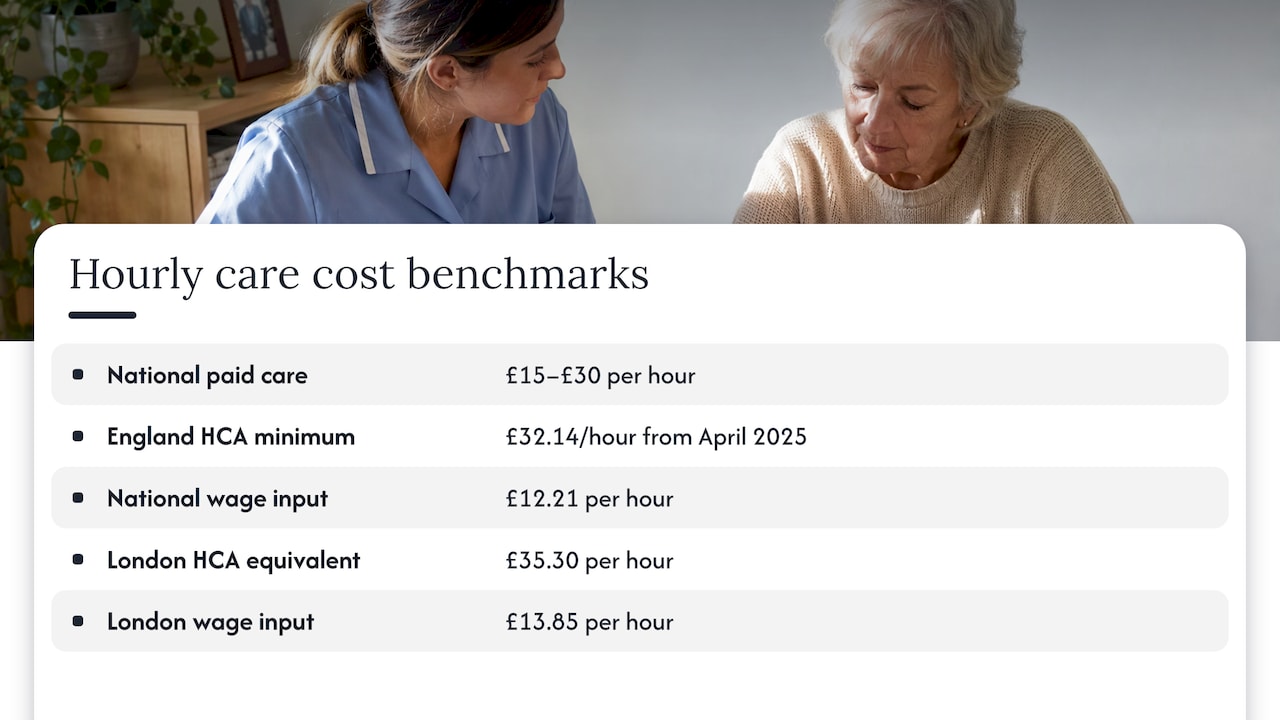
The NHS says help at home from a paid carer costs from £15 to £30 an hour across the country, depending on where you live. In London, costs sit higher because wages and travel costs do.
The Homecare Association, the sector’s membership body, publishes a Minimum Price for Homecare. For England it was £32.14 per hour from April 2025. That figure covers the National Living Wage of £12.21 an hour, carer travel time, mileage, employment on-costs and a contribution to running a compliant care business. Its equivalent rate using the London Living Wage of £13.85 an hour was £35.30 per hour. The figure is updated each year, so check the Association’s latest publication. What you pay depends on the agency’s own quote, the time of day, the number of carers and the type of care. The same report says employment costs make up 70 to 75% of the total cost of homecare, which is why hourly rates reflect what carers are paid.
Kells does not publish a standard hourly price, because care is personalised around each person. We give you a quote after we understand the needs, and it can be hourly or a package.
Whether the council will help
Anyone can ask their council for a free care needs assessment. According to Age UK’s factsheet on getting care and support, the council considers whether needs arise from a physical or mental impairment or illness, and whether they leave the person unable to achieve two or more listed outcomes, with a significant impact on wellbeing. If they do, the council carries out a financial assessment to set the person’s contribution.
The main money rules, for England:
- Above £23,250 in savings and capital, the person generally pays the full cost of care, and the NHS explains the options for self-funding. They can arrange care themselves, or ask the council to arrange it and bill them, though not every council offers this and some charge a fee.
- At £14,250 or below, capital is disregarded and only income counts, according to Lambeth Council. Between the limits, people contribute from income plus a set amount from capital, as set out in the government’s 2025 to 2026 charging circular.
- If the council meets eligible needs, it works out a personal budget. Lambeth’s guidance says this can be managed by the council or taken as a direct payment, which lets you arrange the care yourself.
London boroughs set some rules themselves. Tower Hamlets Council, for example, stopped charging for care delivered in your own home from 1 April 2025. Check your own borough’s page for its current policy. If you are using a direct payment to pay for an agency, tell us at the first call so we can set out hours and invoices in the way your borough requires.
Step 5: Agree safeguarding, complaints and changes
This part rarely feels urgent when you are booking and matters most when something goes wrong. Ask the agency how it protects the person. The CQC says people should be protected from bullying, harassment, harm or abuse, including neglect and financial abuse, and that incidents should be dealt with quickly and openly.
NICE NG21 recommends a written safeguarding process, with key contacts: emergency services, the agency’s registered manager, the local authority safeguarding helpline, and bodies such as the CQC, Action on Elder Abuse and the local Healthwatch. It also says the home care worker may be the first to spot abuse or neglect, including self-neglect.
If carers will shop or pay bills, Independent Age says a good agency has a policy on how staff handle the person’s money. Ask to see it, and agree how receipts are kept.
Finally, agree how to end or change the service: the notice period, what happens if the person goes into hospital, and how to move from a few visits a week to daily care or live-in care.
Make the home safer while you arrange care
Carers do more than visits. They notice hazards. Falls are a particular risk for older people, and for people with fragile bones a fall can mean a fracture. Practical steps include clearing walkways, checking lighting and keeping medicines organised, and there is useful detail on how to reduce fall risk at home for people with osteoporosis. Tell the agency about any falls history during the assessment so the care plan covers it.
Choosing the type of booking
| Situation | Usual fit |
|---|---|
| Help with washing, dressing, meals or medication a few times a day | Call-in visits |
| Needs through the day and night, or a couple who want to stay together | Live-in care |
| Memory loss, confusion or changes in behaviour | Dementia care at home |
| A child or adult with a learning disability, autism, mental health needs or challenging behaviours | Specialist support matched to the person |
| Family carers who need a break | Respite cover |
| Shopping, errands and housework | Domestic help |
If you are comparing home care with a care home, our guide to alternatives to care homes sets out the options. For wider reading, our home care services guide and how to choose a home care agency in London cover the same ground in more detail.
Booking with Kells
We provide call-in visits, live-in care, dementia care, personal care, companionship, medication assistance, palliative care, respite cover, domestic help and errands, and support for adults and children with physical or learning disabilities and mental health conditions. Every carer is DBS checked, and we are regulated by the CQC. See the full range on our home care services page, or request our free home care guide if you are still deciding.
Our view: the booking is the beginning of the relationship
We have supplied home care to people in their own homes across London for over 30 years. The families we meet are rarely short of information. They are short of time, and often tired.
Our advice is to book on the quality of the first conversation. An agency that asks about the person’s habits, wishes and worries, and not only the hours, is planning care around them. That is how we work: our services are personalised, flexible and built around independence, dignity and freedom of choice.
We would rather you checked us properly than took our word. Our carers are qualified and DBS checked, and we are regulated by the CQC. Hours can be a short visit or round-the-clock care, and the plan can change as needs change.
Dan
FAQ
How quickly can I book agency carers?
That depends on the agency and on how complex the needs are. Visits can start once the assessment is done and the care plan is agreed. Contact us with the person’s needs and we will explain the timing for your situation.
Do I have to go through the council?
No. You can arrange and pay for care yourself at any time. The NHS says anyone can ask the council for a free needs assessment, and that if your savings are above £23,250 you will not be entitled to council help with costs.
Can I ask for the same carer each time?
Yes, and you should say so at booking. NICE recommends building teams of workers around a person and giving advance notice if staff change. Put this in the care plan.
What should I ask an agency before signing?
Ask for its CQC registration details, its insurance, confirmation that all carers have DBS checks, and details of training and qualifications. Also ask about cover for sickness, how complaints are handled and what the total cost will be.
Can the agency help with a child who has autism or challenging behaviours?
Yes. We support children with learning disabilities, mental health issues, autism and challenging behaviours. Share the child’s routines, triggers and communication style when you first speak to us so the plan fits them.
Sources
- Arranging home care, Independent Age
- Home care: delivering personal care and practical support, NICE NG21
- NICE NG21 recommendations
- Using an agency factsheet, Gloucestershire County Council
- Direct Payments Factsheet: Using an Agency
- What can you expect from a good home-care agency? Care Quality Commission
- Help at home from a paid carer, NHS
- A Minimum Price for Homecare 2025 to 2026, Homecare Association
- How to get care and support, Age UK
- Paying for your own social care, NHS
- Calculating your contribution to your care, Lambeth Council
- Direct payment guidance, Lambeth Council
- Social care charging for care and support 2025 to 2026, GOV.UK
- Paying for my care, Tower Hamlets Council
- Fall prevention in osteoporosis