TL;DR:
- Independent living support is a personalized framework enabling individuals to live autonomously with tailored assistance based on their goals. It is distinct from assisted living and includes services like personal care, skill-building, and home adaptations to preserve independence and enhance quality of life. Early planning and flexible, responsive support plans significantly improve safety, dignity, and social connection for both older adults and people with disabilities.
Many families assume that independent living support means minimal help for people who are almost fully self-sufficient. That assumption leads to delayed decisions and missed opportunities. What is independent living support, really? It is a broad, personalised approach to enabling elderly individuals and people with disabilities to live on their own terms, with exactly the right level of assistance built around their goals. It spans everything from occasional help with daily tasks to structured, round-the-clock supported living. Understanding this distinction is the first step toward making genuinely informed choices for the people you care about.
Table of Contents
- Key takeaways
- What is independent living support
- Independent living versus other care options
- How personalised support plans work
- Practical guidance for families and caregivers
- The benefits of independent living support
- My perspective on independent living support
- How Kells-care supports independent living at home
- FAQ
Key takeaways
| Point | Details |
|---|---|
| Support is highly personal | Independent living support is tailored to individual goals, not a fixed set of services. |
| It differs from assisted living | Independent living focuses on autonomy; assisted living provides more hands-on daily medical and personal care. |
| Plans evolve over time | Good support adapts as a person’s needs, routines, and goals change. |
| Funding is often separate | Support service costs and housing costs are usually funded through different channels. |
| Early planning matters | Starting the planning process before a health crisis gives families far more options. |
What is independent living support
Independent living support is the framework of services, resources, and assistance that enables a person to live in their own home or community setting while maintaining as much autonomy as possible. The philosophy at its core is straightforward: every person, regardless of age or disability, has the right to make choices about their own life.
This support does not follow a single template. For an older adult, it might mean weekly help with shopping, medication reminders, and occasional personal care. For a person with a developmental disability, it might mean tailored daily assistance covering personal hygiene, cooking, and skill-building, sometimes with 24/7 staff available depending on assessed need.
The types of support typically included are:
- Personal care: Help with washing, dressing, grooming, and continence management.
- Domestic assistance: Cleaning, laundry, meal preparation, and shopping.
- Skill-building: Learning to manage finances, cook independently, use public transport, or communicate effectively.
- Social support: Facilitating community activities, friendships, and peer connections.
- Home adaptations: Installing grab rails, ramps, or assistive technology to reduce risk.
- Advocacy and information: Helping individuals understand their rights and navigate services.
It is worth distinguishing between two main populations. For older adults, independent living communities are designed for those who do not yet require daily help with activities of daily living (ADLs), but who benefit from structured social environments and convenient access to support nearby. For people with disabilities, Supported Independent Living (SIL) provides much more hands-on assistance, often funded through individual support plans.
Consumer-controlled centres run by and for people with disabilities take this further. Their core services include peer counselling, skills training, advocacy, and community education, all shaped by the principle that disabled people themselves should define what independence looks like.
Independent living versus other care options
One of the most common points of confusion for families is understanding where independent living support sits in relation to other types of care. The differences matter, both financially and practically.
Here is a clear comparison:
| Care type | Level of daily assistance | Medical care | Autonomy level | Best suited for |
|---|---|---|---|---|
| Independent living support | Low to high, depending on needs | Minimal or none on-site | Very high | Active adults or those with mild to moderate needs |
| Assisted living | Moderate, help with most ADLs | Some nursing oversight | Moderate | Those needing regular personal care and supervision |
| Nursing home / residential care | High, most ADLs supported | Full medical and nursing care | Lower | Complex medical or dementia care needs |
| Supported Independent Living (SIL) | Variable, from scheduled to 24/7 | Not typically medical | High, within supported framework | People with disabilities living in community settings |
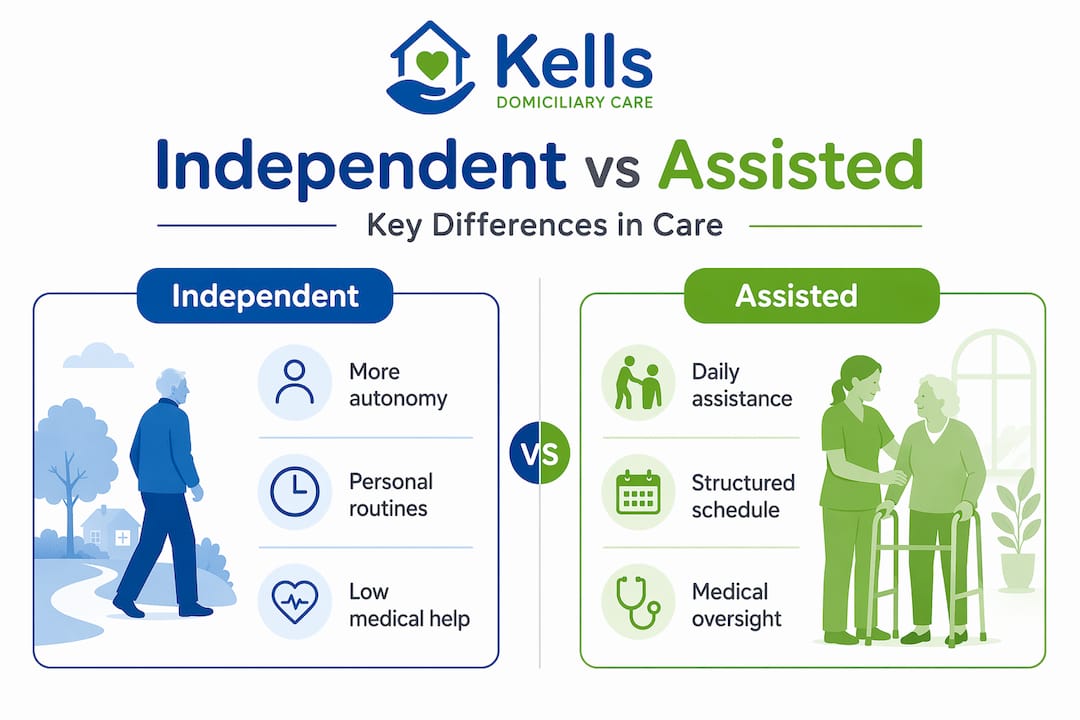
The key distinction is autonomy. Independent living is not a medical facility; the person remains in charge of their own choices and routines. Assisted living shifts more control to care staff and introduces regular clinical oversight. Nursing care is appropriate when health needs are complex and continuous.
Financially, independent living support at home is often more cost-effective than a residential placement, particularly when funded through local authority assessments or self-funded arrangements. Families should understand that SIL funding covers support staff costs but not rent or living expenses, which are typically funded separately through housing benefits or personal income.
Pro Tip: If your loved one is currently managing most daily tasks but struggling with social isolation or one or two specific activities, independent living support at home is very likely the right starting point. Residential care is a significant step that is best reserved for when home-based options have been fully explored.
How personalised support plans work
Good independent living support does not stay the same year after year. Flexible support aligns with personal routines and evolving goals, which directly improves satisfaction and outcomes for the person receiving it.
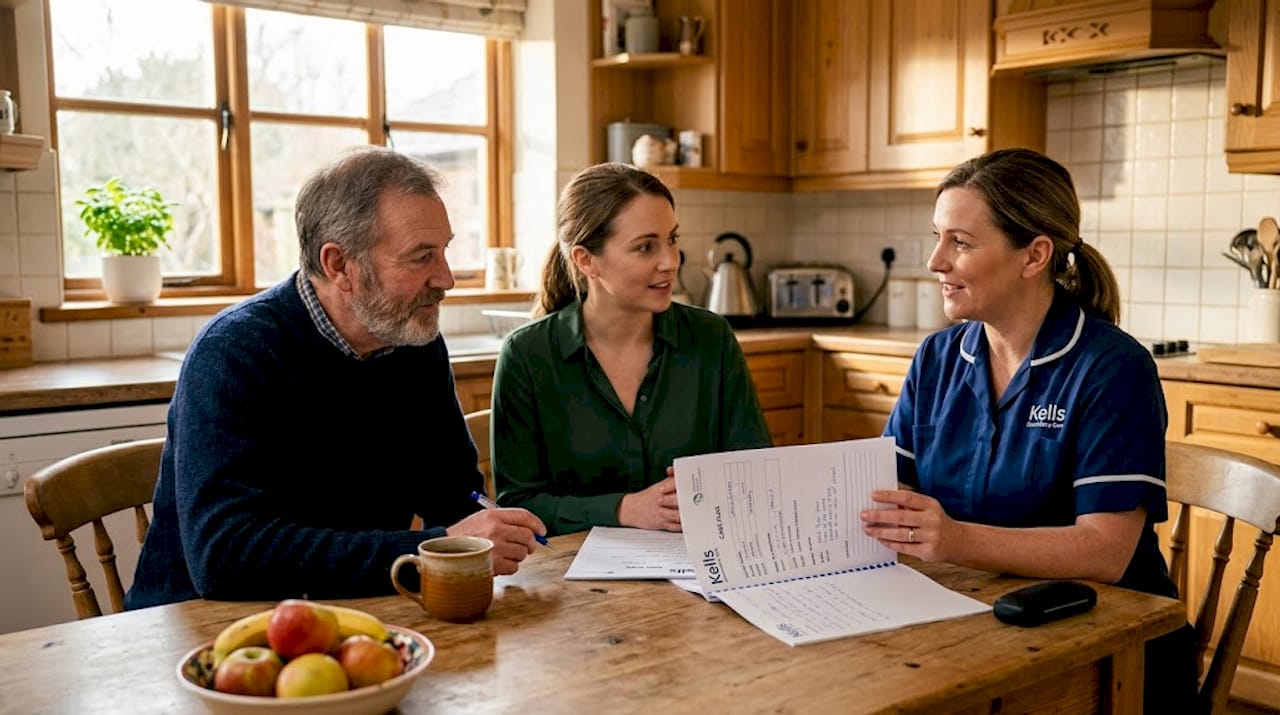
The process typically begins with a formal needs assessment. In the UK, this is carried out by a local authority social worker or an independent care manager. The assessment looks at what the person can do independently, where they need help, and what their personal goals are. From this, an individual support plan (ISP) is created.
The plan covers several dimensions:
- Daily living skills: Which tasks the person manages alone and which need support, and at what frequency.
- Social goals: Connections to community groups, family contact, or peer support networks.
- Health and wellbeing: Medication management, GP appointment support, and access to therapies.
- Housing adaptations: Any physical changes needed to make the home environment safer.
- Emergency planning: What happens if the person’s condition changes or a carer is unavailable.
For people with disabilities, these plans are reviewed regularly, often every six to twelve months, and adjusted as circumstances change. A young adult building independent living skills may need intensive support initially, then gradually reduce it as confidence and competence grow.
For older adults, the trajectory can go the other way. Someone starting with a weekly check-in may need more frequent visits over time. This is why a good provider will build flexibility into the plan from the start rather than treating it as a fixed contract.
Pro Tip: When setting up a support plan, ask the provider how they handle a sudden increase in need. A responsive provider should be able to adjust schedules within days, not weeks. This flexibility is one of the most important practical factors to assess.
Social connection deserves special mention. Independent living communities balance privacy with social connection, preventing the isolation that is a genuine risk when someone lives alone. A good support plan will include specific plans for social engagement, not treat them as an optional extra. You can read more about personalised elderly care to understand how this works in practice.
Practical guidance for families and caregivers
Knowing that independent living support exists is one thing. Knowing how to access and navigate it is another. Here is a step-by-step approach to getting started.
- Assess current and future needs honestly. Look at what your loved one manages well and where they are struggling. Think not just about physical tasks but social wellbeing and safety at home.
- Request a formal needs assessment. In England, contact your local authority to request a Care Act assessment. This is free and is the gateway to publicly funded support.
- Research providers carefully. Ask whether they are regulated by the Care Quality Commission (CQC), what their staff training covers, and how they handle emergencies.
- Ask the right questions. How is support scheduled? What happens if a carer is unwell? How often is the plan reviewed? Can support hours be increased at short notice?
- Understand the funding picture. Funding for home care can come from local authority funding, NHS continuing healthcare, direct payments, or self-funding. Each has different eligibility criteria.
- Plan the transition thoughtfully. Introduce new carers gradually where possible. Familiar routines and consistent carers make a significant difference to how quickly someone settles.
- Know when to reassess. Watch for signs that the current level of support is no longer enough, such as repeated falls, missed medications, significant weight loss, or increased confusion.
Many independent living communities require prospective residents to be functionally independent before admission, so planning ahead of a health crisis gives families considerably more options. This is not something to leave until a crisis forces the decision.
The benefits of independent living support
When support is well-matched to a person’s needs, the benefits are tangible and significant.
- Greater quality of life. People supported to live at home report higher levels of happiness and life satisfaction than those moved to residential care before they are ready.
- Preserved dignity and privacy. Remaining in familiar surroundings, with control over daily routines, protects a person’s sense of self in a way that institutional care often cannot.
- Reduced caregiver stress. When professional support is in place, family members can shift from a primary care role to a relationship role, spending time together rather than managing tasks.
- Improved safety. Structured support includes regular monitoring, medication management, and home adaptations that reduce accident and hospital admission risk.
- Stronger social connection. Consumer-controlled peer support and community-based services actively combat the isolation that is one of the most significant risks for both older adults and people with disabilities living alone.
- Skill development. For younger adults with disabilities, support focused on building capabilities rather than simply providing care can lead to genuine, lasting independence over time.
The benefits of independent living support extend beyond the individual too. Families report that having professional support in place reduces anxiety and helps them be more present and less stretched when they do spend time with their loved one.
My perspective on independent living support
I’ve seen families arrive at this process with the same worry: that asking for support means giving up on independence. In my experience, the opposite is true. The right support, delivered with respect and consistency, is precisely what makes independence possible.
What I’ve found is that the biggest missed opportunity is waiting too long. Families often seek help only after a crisis, when options are limited and the person needing support has already lost confidence. Starting earlier, even with light-touch assistance, builds trust between the individual and their carers and keeps more doors open.
I’ve also noticed that independence looks different for everyone. Recognising that independence is personal and fluid helps families prepare better plans and leads to genuinely more meaningful support. A 75-year-old who wants to keep managing her own finances and walking to the shops is expressing independence just as clearly as a young adult with a disability who wants to choose his own social activities.
The most promising development I see is the move toward truly flexible, personalised support. Away from rigid timetables and toward plans that fit around real lives. That shift, when done well, is where the real difference is made.
— Dan
How Kells-care supports independent living at home
At Kells-care, we have been helping London families navigate exactly these decisions for over 30 years. Whether your loved one needs occasional check-in visits or more regular personal care, our team builds a support plan around their specific goals and routines, not a standard package.
All our carers are fully qualified, DBS checked, and regulated by the Care Quality Commission. We understand that personalised home support is not just about completing tasks. It is about maintaining dignity, promoting confidence, and keeping the people you love connected to the lives they want to lead.
Download our free home care guide to explore your options in plain language, or get in touch with our team directly to arrange a no-obligation conversation about what support might look like for your family.
FAQ
What does independent living support include?
Independent living support includes personal care, domestic help, skill-building, social facilitation, and home adaptations. The specific services depend on an individual assessment of needs and goals.
How does independent living differ from assisted living?
Independent living prioritises autonomy and self-directed routines, while assisted living involves more hands-on daily care and clinical oversight. Independent living support is suited to those who can still direct their own choices with varying levels of practical assistance.
Who funds independent living support in the UK?
Funding can come from a local authority following a Care Act assessment, NHS continuing healthcare, direct payments, or personal funds. SIL funding covers support staff costs separately from housing costs, and families often need to combine multiple sources.
When should a family start planning for independent living support?
Planning should begin well before a health crisis, as many communities require functional independence on entry and waiting lists can be significant. Starting early gives families far more control over the outcome.
Can independent living support be increased if needs change?
Yes. Good support plans are reviewed regularly and adjusted as circumstances evolve. A responsive provider should be able to increase support hours or add new services without requiring a complete reassessment from scratch.