Carers in the UK are not automatically entitled to a free COVID-19 vaccine in 2026; eligibility is now decided by age and clinical risk. Many carers remain eligible for the free flu jab, though. Your first move is simple: check your GP record, confirm your carer status is flagged, and book through the NHS App or National Booking Service or by calling 119.
TL;DR:
- Carers no longer receive automatic COVID-19 vaccine eligibility; instead, eligibility depends on age and clinical risk, with the spring booster limited to specific high-risk groups.
- The flu jab remains accessible for carers, especially those receiving Carer’s Allowance or living with high-risk individuals, and can be booked via GP surgeries or pharmacies.
- Registering as an unpaid carer on your GP record is quick and helps prioritize health checks and support, though it does not guarantee vaccine eligibility.
- Care home, agency, and volunteer staff are not legally required to be vaccinated but may face role-specific vaccination policies set by employers, especially during outbreaks.
- Most vaccine side effects are mild and temporary, and reporting any suspected adverse reactions can be done through the MHRA Yellow Card scheme to support safety monitoring.
Table of Contents
- Who can get the COVID-19 vaccine now: age and clinical criteria
- Flu and other vaccines carers should know about
- How to check and record your caring status with your GP
- How to check eligibility and book your vaccine
- What the rules mean for care home staff, agency staff and visitors
- Vaccine safety, side effects and how to report concerns
- A practical checklist for carers, from Kells’ frontline experience
- Why the carer eligibility change catches people out
- Sources
Who can get the COVID-19 vaccine now: age and clinical criteria
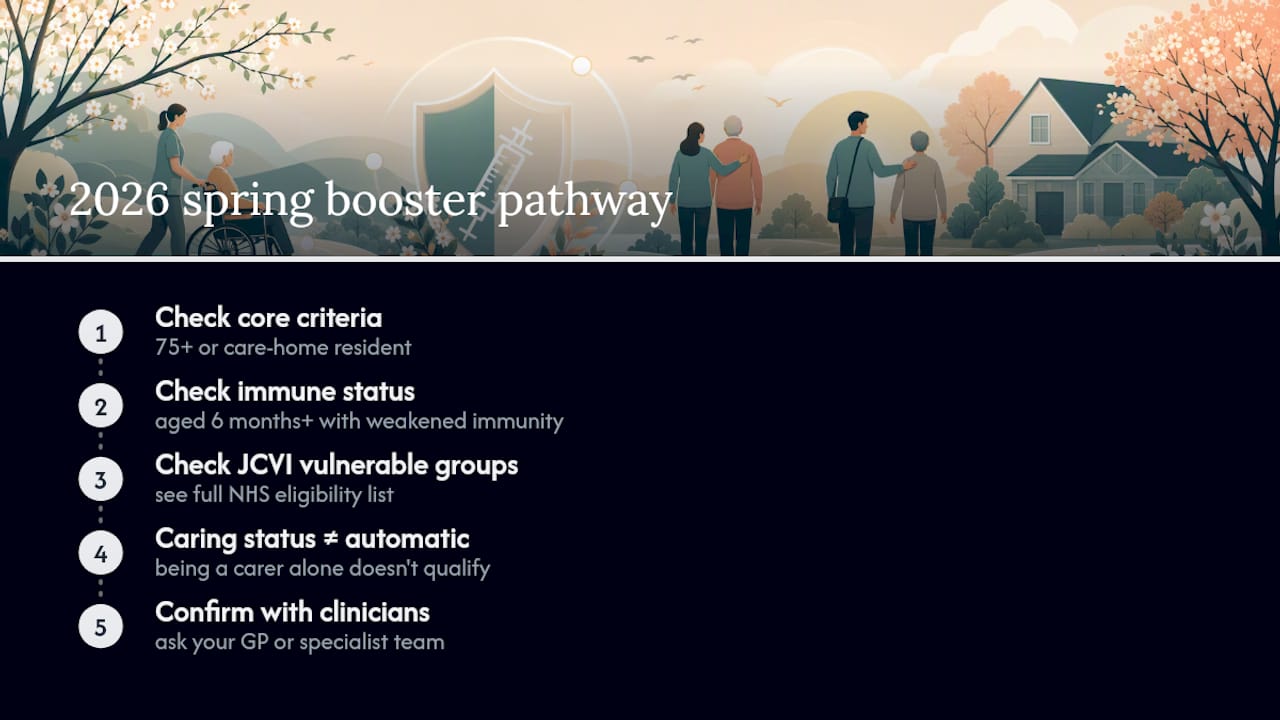
The rules changed. Being a carer, paid or unpaid, no longer puts you automatically in line for a free COVID-19 vaccine. Eligibility now runs on clinical risk rather than occupation, and the 2026 spring booster programme is offered to adults aged 75 and over, care-home residents, and anyone aged six months and above with a weakened immune system, alongside other groups the JCVI has flagged as clinically vulnerable.
This is a deliberate shift. For several years, unpaid carers sat in a defined priority cohort and received invitations as a group. That approach has been replaced with a narrower, risk-based model designed to concentrate protection where the clinical case is strongest, according to UKHSA’s 2026 guidance. It means two carers doing near-identical roles can have completely different entitlements, depending on their own age or health, not the person they look after.
If you’re not sure where you stand, don’t guess. Ring your GP surgery or, if you have a long-term condition, ask your specialist team whether you fall into a current clinical risk group. The NHS COVID-19 vaccine page sets out the full list of eligible groups and is worth checking each time a new seasonal campaign opens, because the criteria have moved before and will likely move again.
Flu and other vaccines carers should know about
Here’s the good news: the free flu jab is still very much open to carers, and the eligibility rules for it haven’t shifted the way COVID-19 rules have. You qualify if you receive Carer’s Allowance, if you’re the main carer for an older or disabled person, or if you live with someone who’s at high risk from flu, according to NHS flu vaccine guidance.
The flu programme runs every autumn, delivered through GP surgeries and community pharmacies, with many sites offering walk-in slots alongside booked appointments. If you missed the main autumn window, it’s still worth ringing your surgery, since some clinics keep stock running into winter.
Beyond flu and COVID-19, some paid carers need role-specific jabs depending on their employer and client group. Hepatitis B is sometimes recommended for care staff with exposure to bodily fluids, and pertussis (whooping cough) protection can matter if you work with pregnant clients or newborns. These aren’t universal requirements. Check with your employer or occupational health team rather than assuming your role automatically includes them.
How to check and record your caring status with your GP
A carer’s flag on your GP record is a simple marker that tells your surgery you provide unpaid care for someone else. It doesn’t guarantee vaccine eligibility on its own, but it does help your GP prioritise health checks, flag support services, and reach you faster when programmes do include carers.
Getting registered takes minutes, not weeks:
- Phone or visit your GP surgery and ask specifically to be added as an unpaid carer on your record.
- Have your NHS number ready, along with basic details of the person you care for.
- Ask your surgery about a carer’s health check, many offer one annually.
- If your surgery is slow to respond, contact your local authority’s carers support service or a local carers’ centre, who can often nudge things along.
Our checklist for carers guide walks through this registration step alongside other practical groundwork worth doing early.
How to check eligibility and book your vaccine
Once you know where you stand, booking is straightforward. The National Booking Service and NHS App are the main routes for eligible seasonal vaccines, letting you pick a local slot in a few taps. If you can’t get online, or you need help in another language, calling 119 gets you the same booking service by phone, free of charge, with translation support available.
Walk-in options exist too. Many pharmacies and NHS sites run drop-in clinics during active campaigns, so it’s worth checking local pharmacy listings if a booked slot doesn’t suit your schedule.
- Confirm your eligibility before you travel to any site, don’t assume a walk-in clinic will vaccinate you on spot checks alone.
- Ask about accessible appointments or home visits if you or the person you care for has mobility difficulties, some areas offer outreach clinics for exactly this reason.
- Bring your NHS number and photo ID where possible to speed up registration on the day.
Pro Tip: If your GP record is out of date, you may still get an automated invitation even though the current criteria have moved on. Always double check eligibility before attending, rather than relying on an old letter or text.
What the rules mean for care home staff, agency staff and visitors
Vaccination as a condition of deployment, often shortened to VCOD, was scrapped for wider adult social care settings back in March 2022, and that legal position hasn’t returned since, per government operational guidance. No care worker, agency staff member or volunteer can currently be legally required to be vaccinated as a condition of doing their job.
That said, “not legally required” doesn’t mean “never asked about.” Individual care homes retain the right to set their own local entry expectations for visitors and contractors, particularly during outbreak periods, and some still ask staff to confirm vaccination status as part of infection control policy. If you work through an agency or in a care home, check directly with your employer or with CQC-related guidance on what’s expected at your specific site, since policies vary between providers even though the national mandate has gone.
Employers are still encouraged to actively support staff uptake, even without the power to compel it. If you’re redeployed or unsure about your rights in this area, your employer’s HR team or occupational health service is the right first port of call.
Vaccine safety, side effects and how to report concerns
Most people who get a COVID-19 or flu vaccine experience nothing worse than a sore arm, mild fatigue, or a short-lived headache. These usually settle within a day or two.
- Rest and take paracetamol if you feel achy or feverish after vaccination.
- Keep the injection site clean and avoid heavy exercise for a day if it’s tender.
- Watch for anything that feels disproportionate, high fever lasting several days, severe swelling, or breathing difficulty.
Call NHS 111 if symptoms feel wrong but aren’t life threatening. Call 999 for severe allergic reactions or breathing problems that come on quickly.
If you experience a suspected side effect worth flagging, report it through the MHRA Yellow Card scheme. Every report submitted helps regulators spot patterns across the wider population, which is precisely how vaccine safety monitoring in the UK is designed to work: individual reports feeding a national picture.
A practical checklist for carers, from Kells’ frontline experience
Here’s what actually gets carers vaccinated without weeks of back and forth:
- Get your carer’s flag added to your GP record now, don’t wait for a booster campaign to prompt it.
- Check current eligibility criteria before assuming you qualify, they’ve changed once already and may change again.
- Book through the NHS App, National Booking Service, or 119 as soon as a slot opens.
- Arrange transport or ask about a home visit if mobility is an issue for you or the person you support.
- Keep a simple record of what you’ve had and when, useful for both you and any care agency you work with.
Kells-care has spent over 30 years supplying home care across London, with CQC-regulated, fully DBS-checked carers who understand exactly how confusing shifting NHS guidance can feel for families juggling someone else’s health alongside their own.
Why the carer eligibility change catches people out
The biggest misunderstanding I keep seeing is carers assuming that because they were once automatically invited for a COVID-19 booster, they still are. That’s simply not how the system works anymore. The shift from occupation-based to risk-based eligibility was a genuine policy change, not a temporary blip, and it means carers now have to do the checking themselves rather than waiting for a letter.
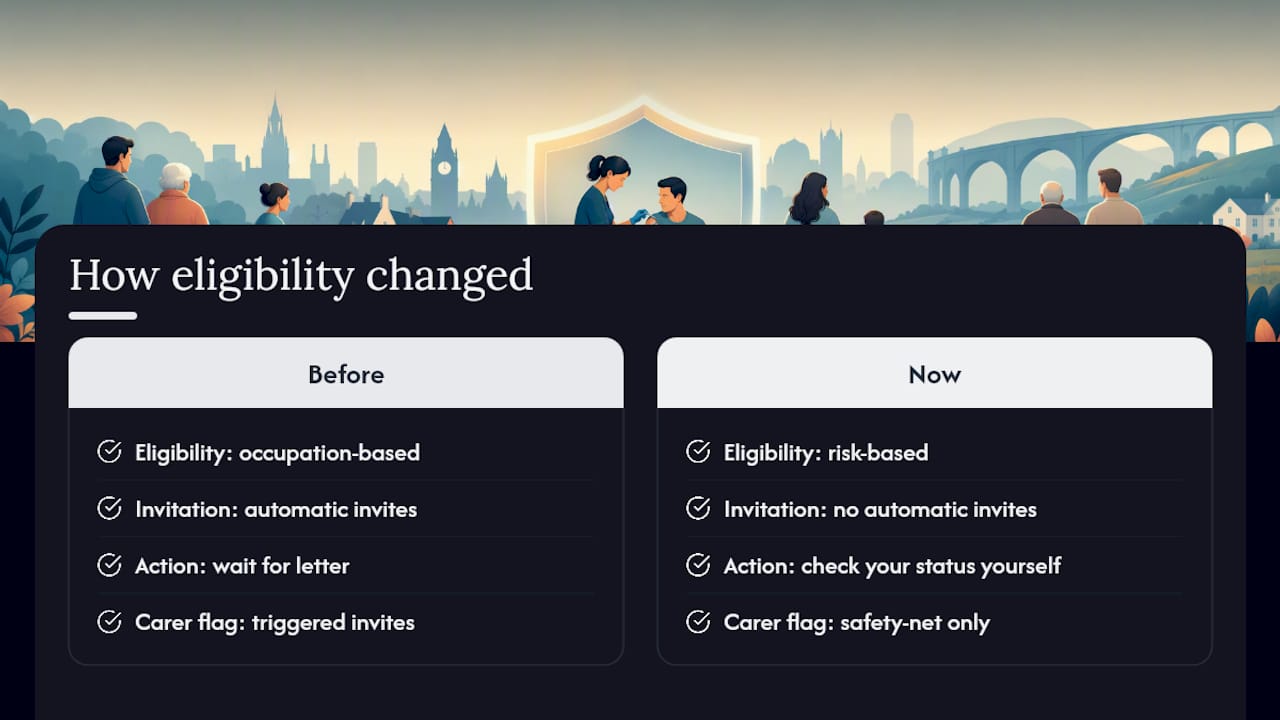
Conventional advice tends to focus entirely on booking mechanics, the app, the phone number, the pharmacy list. That’s useful, but it skips the harder problem: knowing whether you’re eligible at all before you try to book anything. I’d argue the carer’s flag on your GP record matters less for COVID-19 access these days and more as a general safety net, flu invites, health checks, and being on the radar for whatever comes next.
If you take one thing from this, prioritise confirming your own clinical risk category before you do anything else. Everything downstream, flu jabs, boosters, workplace policies, only makes sense once you know which group you actually sit in.
— Dan
This article is general information, not a substitute for advice from a qualified doctor. Consult a qualified healthcare professional about your own circumstances before acting on anything here.
Sources
- Who’s eligible for the 2026 COVID-19 vaccine, or ‘Spring Booster’?
- COVID-19 vaccine
- Vaccinations national booking service
- MHRA Yellow Card coronavirus reporting
Need support arranging home care alongside managing your own health appointments? Our free home care guide walks London families through personalised care options, from check-in visits to full live-in support, so vaccination admin doesn’t have to compete with everything else you’re juggling.