The most effective approach to stroke recovery at home is a goal-focused, team-led rehabilitation plan practised in short, frequent daily sessions with regular reviews. According to the NHS, recovery can take days, months, or years, and the best outcomes come from continuing the therapies started in hospital — physiotherapy, speech and language therapy, occupational therapy, and cognitive rehabilitation — within a safe, well-adapted home environment.
Start with these immediate actions:
- Contact your stroke nurse or community stroke team before leaving hospital to confirm your discharge plan.
- Ask your GP for a referral to community rehabilitation services if you have not already been assessed.
- Begin simple, safe exercises as directed by your physiotherapist — even short daily walks or seated movements count.
- Involve family carers from the start: they are a core part of the rehabilitation team, not just bystanders.
- Keep the emergency number (999) accessible at all times, and know the FAST signs (Face drooping, Arm weakness, Speech difficulty, Time to call 999) for any sudden new symptoms.
Who to call first: your hospital stroke nurse or community stroke team for rehabilitation queries; your GP for medication and ongoing health concerns; 999 for any sudden new neurological symptoms.
Key takeaways
Stroke recovery at home works best when short, daily practice is built into a structured plan agreed with the multidisciplinary team, reviewed regularly, and supported by family carers and regulated home care.
| Point | Details |
|---|---|
| Start with a discharge plan | Confirm written goals, equipment, and a 72-hour follow-up from the community stroke team before leaving hospital. |
| Practise little and often | Short, frequent daily sessions support neuroplasticity better than long, infrequent efforts. |
| Know your entitlements | A formal 6-month review of rehabilitation goals is an NHS entitlement; request it if it is not offered. |
| Act on red flags immediately | Sudden new weakness, face droop, speech loss, or severe headache requires 999, not a GP call. |
| Kells-care supports home rehab | CQC-regulated, DBS-checked carers in London provide supervised practice, medication support, and live-in options alongside NHS therapy. |
Table of Contents
- What should you expect at discharge and when does home rehabilitation begin?
- What do the core rehabilitation therapies involve at home?
- How do you set rehabilitation goals with the multidisciplinary team?
- Daily practice and safe exercises you can do at home
- How do you adapt the home and choose the right equipment?
- Managing the most common problems after a stroke at home
- How do you access rehabilitation, funding, and social care in the UK?
- What is a realistic recovery timeline after stroke?
- When should you call for urgent help or request reassessment?
- A perspective on home rehabilitation from a London domiciliary care provider
- How professional home care can support your stroke recovery
- Sources
What should you expect at discharge and when does home rehabilitation begin?
Leaving hospital after a stroke can feel abrupt. A well-prepared discharge makes the difference between a smooth start at home and a frightening one.
Your discharge plan should be agreed with you and your family before you leave hospital. NICE guidance is clear: a health and social care plan must be discussed and agreed with the person after stroke and their family, and the specialist stroke team should follow up within 72 hours of transfer home. That 72-hour window is not optional — if contact does not happen, chase it.
A complete discharge plan should include:
- Agreed rehabilitation goals (written down, not just verbal)
- Equipment already in place at home (grab rails, shower seat, raised toilet seat)
- Confirmed follow-up appointments with the community stroke team, GP, and relevant therapists
- Contact details for the stroke nurse, community team, and out-of-hours support
- Medication list with clear instructions
- A named carer or family member who has been briefed on the plan
Early supported discharge: who qualifies?
Early supported discharge (ESD) allows people who can move from bed to chair — independently or with assistance — to continue specialist rehabilitation at home rather than staying in hospital. The key requirement is a safe home environment. ESD teams typically include physiotherapists, occupational therapists, and speech and language therapists who visit at home, often daily in the early weeks. Not every area offers ESD; ask the ward team directly whether your local service provides it.
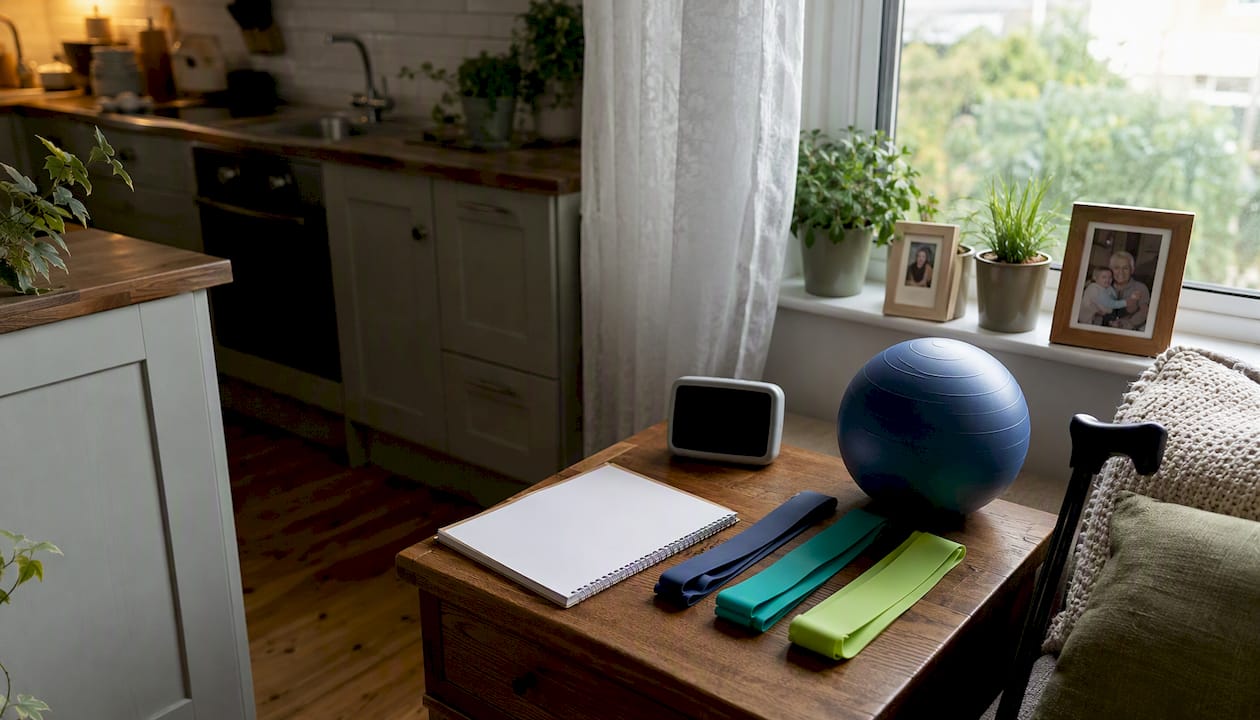
Pro Tip: Write down every agreed goal at the discharge meeting and note who is responsible for each one — therapist, carer, or family member. A simple notebook kept by the bed becomes an invaluable record at the 6-month review.
A formal review of rehabilitation goals and support should be offered after several months. If your needs change before then, you do not have to wait — contact the community stroke team or GP to request an earlier reassessment.
What do the core rehabilitation therapies involve at home?
NHS and NICE guidance recommends that the discharge plan includes physiotherapy, occupational therapy, speech and language therapy, cognitive rehabilitation, and dietetics where needed. At home, each of these looks slightly different from the hospital version, but the goals are the same: regain function, build independence, and prevent complications.
NICE recommends that rehabilitation be offered by specialist stroke services at a needs-based intensity of at least 3 hours a day, 5 days a week, covering physiotherapy, occupational therapy, and speech and language therapy. In practice, community provision often falls short of this, which is why family-supported practice between sessions matters so much.
| Therapy | Typical home-based goals | Practical home tasks |
|---|---|---|
| Physiotherapy | Walking, balance, strength, transfers | Daily walking practice, seated exercises, stair practice with supervision |
| Occupational therapy | Self-care, kitchen tasks, return to hobbies | Dressing practice, adapted cooking, fatigue management strategies |
| Speech and language therapy | Communication, swallowing safety | Short conversation drills, reading aloud, supervised mealtimes |
| Psychological support | Mood, anxiety, adjustment | Structured relaxation, goal review, carer support sessions |
| Dietetics | Nutrition, hydration, weight management | Texture-modified meals, hydration monitoring, supplement guidance |
Telerehabilitation — video or phone sessions with therapists — is increasingly used between face-to-face visits. It works well for communication exercises, cognitive tasks, and guided movement practice when a therapist cannot attend in person. Ask your community team whether remote sessions are available in your area.
How do you set rehabilitation goals with the multidisciplinary team?
Shared goals speed recovery. When the person after stroke, their family, and the multidisciplinary team (MDT) agree on the same short-term tasks and longer-term aims, practice at home becomes focused rather than scattered.
Goals work best when they are SMART: Specific, Measurable, Achievable, Relevant, and Time-bound. Vague aims like “get better at walking” are harder to practise and harder to celebrate. Concrete ones are not.
Example goal wording:
- Mobility: “Walk to the kitchen and back without support by the end of week 3.”
- Self-care: “Put on a shirt independently, using the button hook, within 10 minutes by the end of the month.”
- Communication: “Name 10 everyday objects correctly in a 5-minute session by the end of week 2.”
Questions to ask the team at discharge
- What are the three most important things to practise daily?
- Which activities should we avoid until reviewed?
- Who do we contact if there is a change in ability or a new symptom?
- How do we record progress between sessions?
- When is the next scheduled review, and how do we request an earlier one?
Agreeing responsibility
Clarity about who does what prevents both gaps and duplication. A simple agreement at discharge might look like this:
- Physiotherapist: sets the exercise programme and reviews it fortnightly
- Occupational therapist: advises on equipment and daily task practice
- Family carer: supports daily practice, records any changes, and attends review appointments
- GP: manages medication and refers for additional support if needed
The Stroke Association notes that overprotectiveness can limit recovery. Supporting someone to try a task — even imperfectly — is more helpful than doing it for them. Praising small improvements sustains motivation during the slower phases.
Daily practice and safe exercises you can do at home
Short, frequent rehearsals of daily tasks produce better functional gains than long, infrequent sessions. The brain responds to repetition, and consistent small efforts across the day are more effective than a single exhausting hour of practice.
Mobility and transfers
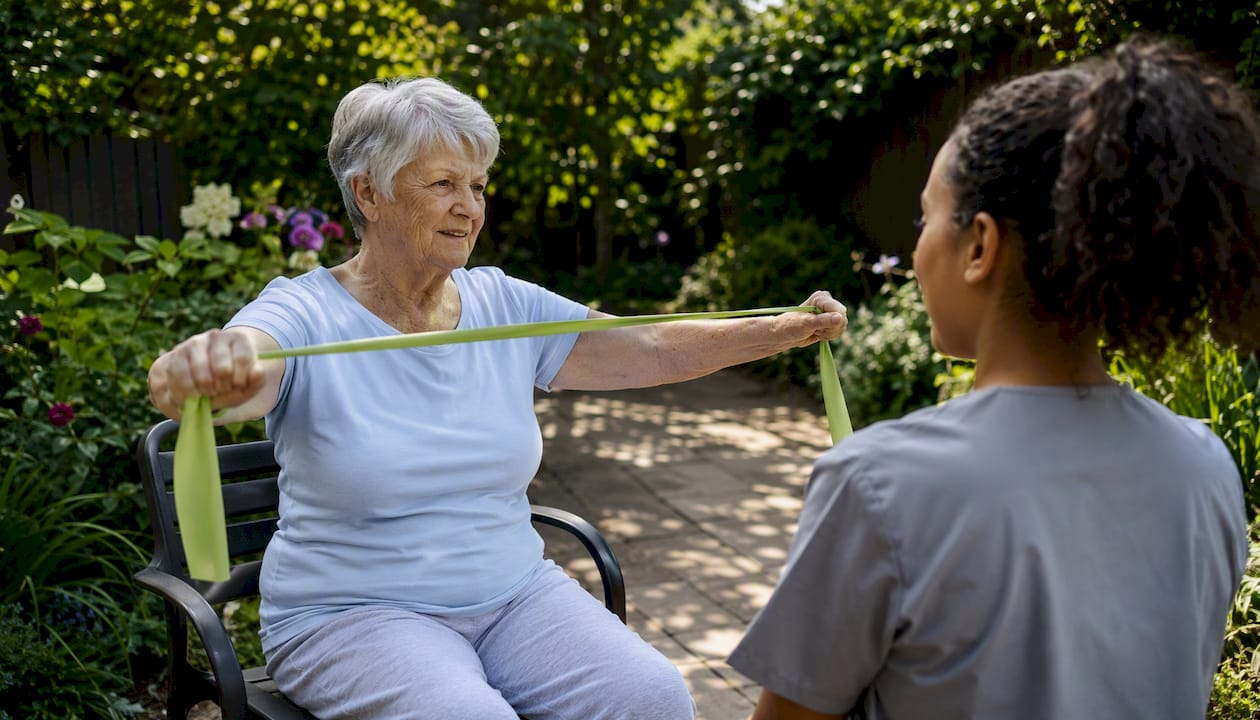
- Start each morning with 5 minutes of seated leg exercises (ankle circles, knee lifts, foot taps).
- Practise standing from a chair 5–10 times, using armrests for support if needed.
- Walk a short, familiar route indoors — to the kitchen, to the bathroom — at least twice a day.
- Practise transfers (bed to chair, chair to toilet) with a carer present until the therapist confirms it is safe to do independently.
- Increase distance and reduce support gradually, only as the therapist advises.
Hand and arm use
- Squeeze a soft ball or rolled flannel for 2 minutes, three times a day.
- Practise picking up and placing objects of different sizes (a cup, a pen, a coin).
- Use the affected hand for simple tasks — turning a tap, pressing a light switch — even if the movement is slow.
- Rest between repetitions; fatigue reduces the quality of movement and increases fall risk.
Communication drills
- Name objects around the room for 5 minutes each morning.
- Read a short sentence aloud and repeat it twice.
- Have a brief, unhurried conversation with a family member — no pressure to find words quickly.
Pro Tip: Keep practice sessions to 15–20 minutes and spread them across the day. A tired brain learns less. Carers who notice the person becoming frustrated or fatigued should pause the session and return to it later.
Safety checklist before each practice session:
- Non-slip footwear is on.
- The practice area is clear of trip hazards.
- A carer or family member is within calling distance.
- The person has eaten and is not overtired.
- Emergency contact details are visible.
Two brief examples show how small task breakdowns help. One family found that breaking the morning routine into four separate steps — wash face, brush teeth, dress top half, dress bottom half — reduced the time needed and let their relative complete each step with pride rather than frustration. In another case, a survivor with limited hand strength regained confidence by starting with a lightweight mug before progressing to a standard cup, a change suggested by their occupational therapist and practised daily by a carer.
How do you adapt the home and choose the right equipment?
Prioritise mobility and personal-care aids that match the survivor’s actual goals. An occupational therapist (OT) assessment before or shortly after discharge is the most reliable way to identify what is needed. The Stroke Association recommends that home adaptations and equipment be checked during discharge planning.
Common equipment and adaptations to consider:
- Grab rails: beside the toilet, bath, shower, and at the top and bottom of stairs
- Raised toilet seat: reduces the effort of sitting down and standing up
- Shower chair or bath board: allows safe washing with reduced fall risk
- Non-slip bath mat: low cost, high impact
- Bed rail or transfer board: supports safe transfers in and out of bed
- Perching stool: useful in the kitchen for tasks that require standing
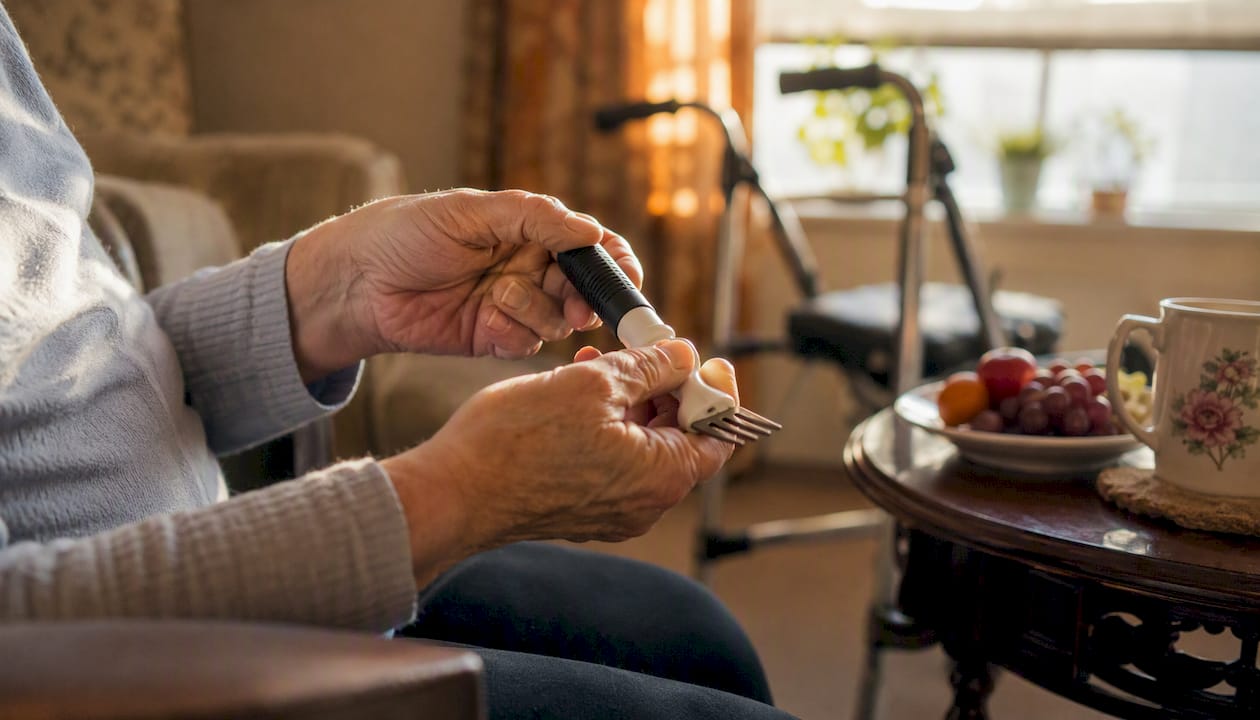
- Adapted cutlery and crockery: angled spoons, plate guards, non-slip mats
- Dressing aids: button hooks, long-handled shoe horns, elastic laces
- Communication aids: letter boards, simple apps, or voice-output devices for those with aphasia
The CHSS practical guidance for stroke recovery at home provides a detailed equipment checklist covering mobility, kitchen, and personal-care adaptations that families can work through with their OT.
To request an OT home assessment, ask the hospital OT before discharge or contact your GP or community stroke team after returning home. The Disabled Living Foundation (now part of the Living Made Easy service) offers independent advice on equipment choice at livingmadeeasy.org.uk. Some equipment is provided free through the NHS or social services; others may need to be purchased privately.
Managing the most common problems after a stroke at home
Fatigue
Post-stroke fatigue is not ordinary tiredness. It can arrive without warning and is not always related to how much activity has been done. Pace activity across the day using a simple energy diary: note when energy is highest and schedule the most demanding tasks — exercises, personal care — for those windows. Rest periods are not optional; they are part of the rehabilitation plan.
Swallowing and communication
Dysphagia (difficulty swallowing) carries a risk of aspiration — food or liquid entering the airway. Never change the texture of food or the consistency of drinks without guidance from a speech and language therapist. Follow the prescribed diet texture exactly, supervise all mealtimes, and keep the person upright for at least 30 minutes after eating.
For communication difficulties (aphasia), keep sentences short, allow extra time for responses, and avoid finishing sentences for the person. Short daily practice sessions, as described above, support gradual improvement.
Warning: Seek urgent medical attention if swallowing suddenly worsens, if the person chokes repeatedly, or if there is any new difficulty speaking or understanding speech.
Pain and spasticity
Muscle stiffness and shoulder pain are common after stroke. Gentle, regular movement and positioning (keeping limbs in a neutral, supported position) help prevent worsening. A physiotherapist can advise on specific stretches and positioning aids. Do not attempt to force a stiff limb; report persistent or worsening pain to the community stroke team.
Mood and cognition
Anxiety and depression affect a significant proportion of stroke survivors. Low mood is not a sign of weakness; it is a recognised medical consequence of stroke. Encourage the person to talk about how they are feeling, maintain social contact where possible, and contact the GP if low mood persists for more than two weeks. Cognitive changes — memory difficulties, reduced concentration — are also common and can be addressed through structured daily routines and cognitive exercises recommended by the OT or neuropsychologist.
Pro Tip: Carers are at risk of burnout too. Build regular breaks into the weekly routine and contact the Stroke Association’s helpline (0303 3033 100) for carer support resources.
Medication management and preventing complications
Keep a written medication list and set daily reminders. Never stop or adjust medication without speaking to the GP or stroke nurse first. Check skin regularly for pressure sores, particularly over bony areas (heels, hips, tailbone), and reposition the person every two hours if mobility is very limited. Report any redness, broken skin, or signs of infection promptly.
How do you access rehabilitation, funding, and social care in the UK?
Step-by-step: requesting services
- Before discharge: ask the hospital social worker or discharge coordinator to arrange a social care needs assessment.
- At home: contact your GP to request referral to community physiotherapy, occupational therapy, and speech and language therapy.
- For reablement: ask the local authority social services department. Reablement services provide short-term intensive support to help re-learn daily living skills; some local authorities offer this free for up to six weeks, though provision varies by area.
- For intermediate care: ask the community stroke team or GP. Intermediate care bridges the gap between hospital and full independence and is typically NHS-funded for a short period.
- For NHS continuing healthcare (CHC): if needs are substantial and primarily health-related, request a CHC assessment through the GP or community nurse. CHC fully funds care at home for those who meet the eligibility criteria.
- For council-funded care: a local authority care needs assessment determines eligibility for funded domiciliary care. Contact adult social services at your local council.
Community stroke teams, GPs, and social services are the central routes to ongoing rehabilitation at home. The Stroke Association provides helplines and practical resources for families navigating these systems.
Where statutory provision is insufficient or waiting times are long, regulated private domiciliary care can fill the gap. Choosing a CQC-regulated provider means the care is inspected and meets national standards.
Preparing for an assessment
- Write a list of everything the person cannot do independently, including tasks they can do but find unsafe or exhausting.
- Note the times of day when support is most needed.
- Bring the discharge plan and any written goals to the assessment.
- Ask for the outcome in writing and request a review date.
Contact: Stroke Association helpline: 0303 3033 100. Local authority adult social services can be found via gov.uk.
What is a realistic recovery timeline after stroke?
The fastest gains are usually in the first weeks and months after stroke, but meaningful improvement can continue for years. The Stroke Association is clear on this: progress does not stop at six months or one year, and consistent, goal-oriented practice supports neuroplasticity long after the acute phase.
Typical milestones:
- First week at home: focus on safety, establishing routines, and beginning simple daily exercises. The community stroke team should have made contact within 72 hours of discharge.
- Weeks 2–6: increase the duration and complexity of practice sessions. Most people see the most rapid functional gains during this period.
- 3 months: a review of goals is appropriate. Some people return to work or driving (subject to DVLA assessment); others are still working on core mobility and self-care.
- 6 months: a formal review of rehabilitation goals and support should be offered by the community stroke team or GP. This is an NHS entitlement, not a favour — ask for it if it is not offered.
- 1 year and beyond: recovery continues. Fatigue, mood, and cognitive changes may still be present and deserve ongoing attention. Annual GP reviews and access to community services remain relevant.
Small, consistent, goal-oriented tasks reduce both carer and survivor burnout and produce better functional gains than sporadic intense sessions. A short walk every morning is worth more than an exhausting hour once a week.
When should you call for urgent help or request reassessment?
Red flags requiring 999 immediately
- Sudden new weakness or numbness in the face, arm, or leg
- Face drooping on one side
- Sudden loss of speech or difficulty understanding speech
- Sudden severe headache with no obvious cause
- Sudden loss of vision in one or both eyes
- Sudden loss of balance or coordination
These symptoms may indicate a further stroke or TIA (transient ischaemic attack). Do not wait to see if they pass.
Escalating non-urgent concerns
- Contact the community stroke team or GP if there is a noticeable decline in ability, new pain, or worsening mood.
- If the community team is not responding, contact the GP directly and describe the change in status clearly: what has changed, when it started, and how it differs from the baseline.
- Request a formal reassessment from social services if care needs have increased since the last assessment.
- If you feel current support is inadequate, you have the right to request a review of the care plan at any time.
Emergency preparedness at home
Keep a single-page emergency information sheet visible in the home. It should include: the person’s name and date of birth, a list of current medications, the GP’s name and number, the community stroke team’s contact details, and the name of the next of kin. Carers and family members should know where it is.
A perspective on home rehabilitation from a London domiciliary care provider
Most families arrive home from hospital with a discharge plan, a bag of equipment, and a great deal of uncertainty. What they often lack is someone to translate the therapist’s instructions into the rhythm of an ordinary day.
At Kells-care, carers working with stroke survivors do not simply assist with tasks — they schedule practice into the visit. A morning call might include supervised dressing practice before helping with breakfast; an afternoon visit might involve a short walk to the garden and back, recorded in the progress notes for the therapist to review. The goal is always to do with the person, not for them.
Dignity matters enormously in this. Breaking a task into small steps — rather than taking over when it becomes slow — preserves the person’s sense of agency and conserves their energy for the next attempt. A carer who waits an extra two minutes for someone to button their own shirt is doing more for that person’s recovery than one who does it in thirty seconds.
Pro Tip: Co-ordinate carer visits with therapy sessions where possible. A physiotherapy session in the morning followed by a carer-supported practice walk in the afternoon doubles the repetition without doubling the fatigue. Share the therapist’s notes with the carer and the carer’s observations with the therapist.
Kells-care’s staff are CQC-regulated, fully DBS-checked, and have supported London families through post-stroke rehabilitation for over 30 years. The rehabilitation at home guide for London families offers practical, family-facing guidance on co-ordinating domiciliary care with community therapy.
How professional home care can support your stroke recovery
Regulated domiciliary care fills the gaps that statutory provision cannot always cover — consistent daily support, medication prompts, and hands-on practice assistance between therapy sessions.
Kells-care offers personalised home care services tailored to stroke survivors in London, including:
- Supervised exercise and mobility practice between therapy sessions
- Medication prompts and adherence support
- Assistance with personal care, dressing, and mealtimes
- Swallowing-safe meal preparation following SLT guidance
- Live-in care for those who need round-the-clock support
- Respite care to give family carers a planned break
All Kells-care staff are CQC-regulated and DBS-checked. With over 30 years of experience supporting London families, the team understands how to work alongside NHS community services rather than duplicate them. Request your free home care guide to find out how domiciliary care can complement your rehabilitation plan, or contact Kells-care directly at Kells-care to arrange an initial conversation.
Sources
- Recovering from a stroke – NHS
- Recommendations | Stroke rehabilitation in adults | Guidance | NICE
- Stroke recovery
- stroke – recovery at home (CHSS guidance)
This article is general information, not a substitute for advice from a qualified doctor. Consult a qualified healthcare professional about your own circumstances before acting on anything here.


