

TL;DR:
- Regulated care involves health and social services legally registered with the CQC in England to ensure safety and quality. Choosing a registered provider ensures oversight, qualified staff, safeguarding measures, and transparency, reducing risks for vulnerable family members. Verification via the CQC register and inspection reports is essential before selecting a care provider, emphasizing accountability and standards.
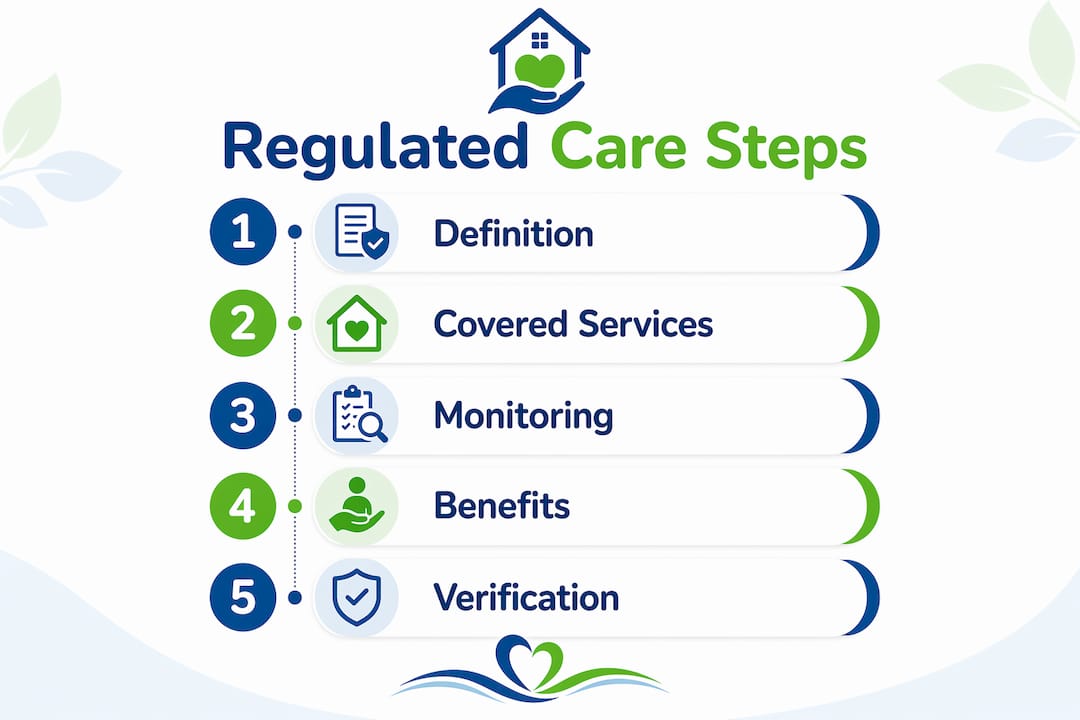
Regulated care is defined as specific health and social care services that must be legally registered with and inspected by an independent body to guarantee safety, quality, and accountability. In England, this framework is established under the Health and Social Care Act 2008, which created the Care Quality Commission (CQC) as the authority responsible for overseeing these services. Regulated activities include personal care, nursing, and certain medical treatments. Understanding what regulated care means in practice helps you make confident, informed decisions when choosing support for an elderly or disabled family member.
What is regulated care and which services does it cover?
Regulated care covers specific activities that directly affect a person’s health, safety, and physical wellbeing. These activities must be registered with the CQC before a provider can legally deliver them. Providing these services without registration is a criminal offence under the Health and Social Care Act 2008 (Regulated Activities) Regulations 2014.
The most common regulated activities include:
- Personal care: Assistance with bathing, dressing, toileting, and grooming
- Nursing care: Clinical support such as wound management, catheter care, and medication administration
- Complex medical treatments: Services involving diagnostic procedures or therapeutic interventions
- Accommodation with nursing or personal care: Residential or nursing home placements
- Treatment of disease, disorder, or injury: Including physiotherapy and occupational therapy delivered in a clinical context
One detail that surprises many families is that not all care activities require regulation. Companionship visits, light housework, shopping assistance, and social support generally fall outside the regulated care definition. A provider may be registered for some activities but not others, which means you need to check exactly what a provider is registered to deliver, not simply whether they appear on the CQC register.
Providers whose services span several categories may need multiple registrations for different regulated activities. This reflects the legal complexity of care provision and is worth asking about when you speak to any agency.

Pro Tip: Ask any prospective care provider to show you their CQC certificate of registration and confirm which specific regulated activities are listed on it. A reputable agency will share this without hesitation.
How is regulated care monitored and enforced in the UK?
The Care Quality Commission is the independent regulator for health and social care in England. Its authority is substantial. The CQC can fine, close, or prosecute providers who operate without proper registration or who fail to meet required standards. This enforcement power is what gives regulated care its real meaning for families.
The CQC monitors providers against five key questions, asking whether a service is:
- Safe: Are people protected from abuse and avoidable harm?
- Effective: Does care achieve good outcomes and follow best practice?
- Caring: Are staff compassionate and respectful?
- Responsive: Are services organised around individual needs?
- Well-led: Is the service managed with transparency and accountability?
Inspection reports are published publicly on the CQC website, giving families direct access to findings. Ratings range from Outstanding to Inadequate, and providers rated Requires Improvement or Inadequate face formal enforcement action.
“Regulatory oversight is fundamental to maintaining safety and dignity in care, especially when family members rely on agencies to provide consistent support.” — Why Choosing a Regulated Care Agency Matters
It is also worth understanding the difference between licensure and accreditation. Licensure is a government permit to operate legally, while accreditation is a voluntary, more rigorous third-party quality assessment. An agency can be licensed without being accredited. For skilled nursing care in particular, accreditation is recommended as an additional quality indicator. Families should ideally look for providers who hold both, as this combination offers the highest level of assurance.
Running a care service without the required CQC registration can lead to legal actions including fines and court prosecutions. Registration is a legal licence, not a voluntary badge. This distinction matters when you are comparing providers and one appears to offer similar services at a lower cost without CQC oversight.
What are the benefits of choosing regulated home care?
Choosing a regulated care provider gives your family member access to a system built around their protection. Regulated agencies are required to employ trained and vetted staff, follow safeguarding procedures, manage medications safely, and maintain clear records of care delivery. These are not optional extras. They are legal requirements.
The practical benefits for families include:
- Trained and DBS-checked staff: All carers working in regulated services must undergo Disclosure and Barring Service checks, confirming they are safe to work with vulnerable adults
- Safeguarding procedures: Regulated providers must have clear policies for identifying and reporting abuse or neglect
- Medication management: Carers in regulated services are trained to administer and record medications correctly, reducing the risk of errors
- Transparent complaints procedures: Regulated providers must have a formal complaints process, and unresolved complaints can be escalated to the CQC
- Consistent quality standards: Inspections create accountability and give families an independent assessment of care quality
The peace of mind this brings is significant. When your parent or relative is receiving care at home, you cannot always be present. Knowing that an independent body has assessed the provider, that staff are qualified, and that there is a formal process if something goes wrong changes the experience entirely. You can find more detail on care quality standards and what they mean for your family in Kells-care’s dedicated guide.
How to verify if a care provider is regulated
Confirming a provider’s regulated status takes only a few minutes and is one of the most important steps you can take before agreeing to any care arrangement. Verification steps include checking the provider’s registration on the official CQC register, reviewing their inspection reports, and asking directly about staff qualifications.
Follow these steps before committing to any provider:
- Search the CQC register: Visit cqc.org.uk and search by provider name or location. Confirm the provider is registered and check which regulated activities are listed.
- Read the most recent inspection report: Look at the five ratings and read the detailed findings. Pay particular attention to the Safe and Well-led sections.
- Ask about staff training: Request confirmation that all carers are DBS checked and trained in areas relevant to your family member’s needs, such as dementia care or medication management.
- Clarify the scope of regulated activities: Confirm that the specific services your family member needs, such as personal care or nursing support, are included in the provider’s registration.
- Ask about complaints and escalation: A regulated provider will have a written complaints procedure. Ask to see it and confirm the process for raising concerns with the CQC if needed.
Understanding the CQC’s role in home care in more depth can help you interpret inspection reports and ask better questions when speaking to providers.
Pro Tip: Licensing requirements can vary, and some providers offer a mix of regulated and unregulated services. Always ask specifically which activities on your care plan are covered by the provider’s CQC registration.
Key takeaways
Regulated care is the legally required registration and oversight of specific health and social care services, and choosing a CQC-registered provider is the most reliable way to protect a vulnerable family member’s safety and dignity.
| Point | Details |
|---|---|
| Regulated care definition | Specific health and social care activities legally required to be registered with the CQC under the Health and Social Care Act 2008. |
| Not all care is regulated | Companionship, housework, and social support are typically unregulated; always check what a provider is registered to deliver. |
| CQC enforcement powers | The CQC can fine, close, or prosecute providers operating without registration or failing to meet required standards. |
| Key benefits for families | Regulated providers must employ DBS-checked staff, follow safeguarding procedures, and maintain transparent complaints processes. |
| How to verify a provider | Search the CQC register, read inspection reports, and confirm which specific regulated activities are covered before agreeing to care. |
Why regulated care is the decision that matters most
When families contact me about care for a parent or relative, the question I hear most often is: “How do I know they will be safe?” The honest answer is that regulation does not guarantee perfection, but it creates the conditions in which good care is far more likely to happen consistently.
What I have observed over many years is that families often focus on price or availability first and regulation second. That order of priority carries real risk. An unregulated provider may offer a warm, friendly service, but without CQC oversight there is no independent check on staff training, safeguarding practices, or medication handling. If something goes wrong, the formal routes for complaint and redress are far weaker.
The distinction between licensure and accreditation is one that most families have never heard of before they start researching care. Yet it is genuinely meaningful. A provider can be licensed to operate without having undergone the more rigorous scrutiny that accreditation involves. When the care need is complex, such as nursing support or dementia care, that additional layer of quality assurance matters.
My strongest advice is this: treat CQC registration not as a box to tick but as the starting point for your assessment. Read the inspection report in full. Look at how the provider responded to any concerns raised. A provider who takes regulatory feedback seriously and acts on it is demonstrating exactly the kind of accountability you want caring for your family member. Understanding why qualified carers matter is part of that same picture.
— Dan
Trusted regulated home care in London from Kells-care
Kells-care has been providing regulated domiciliary care across London for over 30 years. As a CQC-registered agency, Kells-care delivers personal care, check-in visits, and round-the-clock support, all carried out by fully qualified, DBS-checked carers. Every service is personalised to the individual, with a focus on dignity, independence, and freedom of choice.
If you are beginning to explore care options for a family member, the free home care guide from Kells-care is a practical starting point. It covers what to expect, what questions to ask, and how to plan for care at home. You can also explore the full range of home care services available, or contact the team directly for a personalised conversation about your family’s needs.
FAQ
What is the regulated care definition in the UK?
Regulated care refers to specific health and social care services, including personal care, nursing, and certain medical treatments, that must be legally registered with the Care Quality Commission under the Health and Social Care Act 2008. Providing these services without registration is a criminal offence.
What is regulated home care and how does it differ from unregulated care?
Regulated home care covers hands-on activities such as bathing, dressing, and medication management, all of which require CQC registration. Unregulated home care typically includes companionship, light housework, and shopping support, which do not require registration.
Who regulates care services in England?
The Care Quality Commission (CQC) is the independent regulator for health and social care in England. It registers providers, conducts inspections, publishes ratings, and has the authority to fine or close providers who fail to meet required standards.
How do I check if a care provider is regulated?
Search the provider’s name on the CQC register at cqc.org.uk to confirm their registration status and the specific regulated activities they are authorised to deliver. Reading their most recent inspection report gives you an independent assessment of their quality and safety.
Why choose regulated care over an unregulated provider?
Regulated care providers are legally required to employ trained and DBS-checked staff, follow safeguarding procedures, and maintain transparent complaints processes. This accountability structure gives families confidence that care will be delivered safely and consistently.