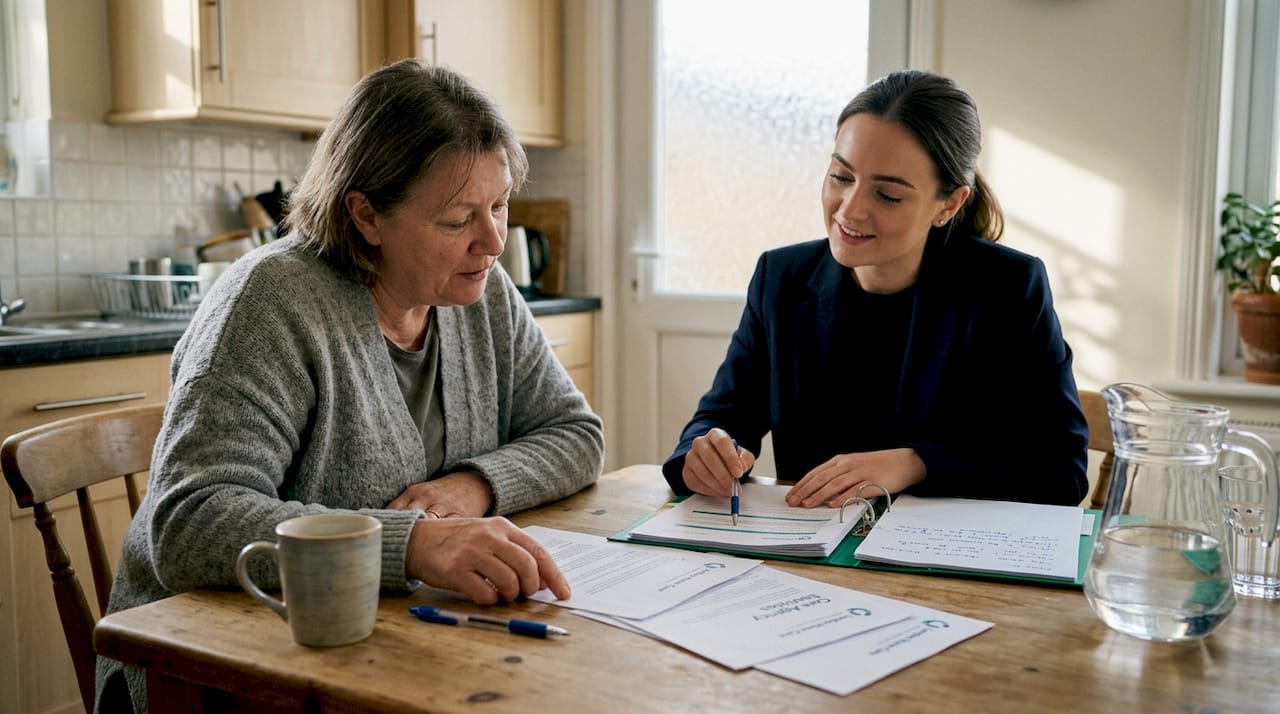
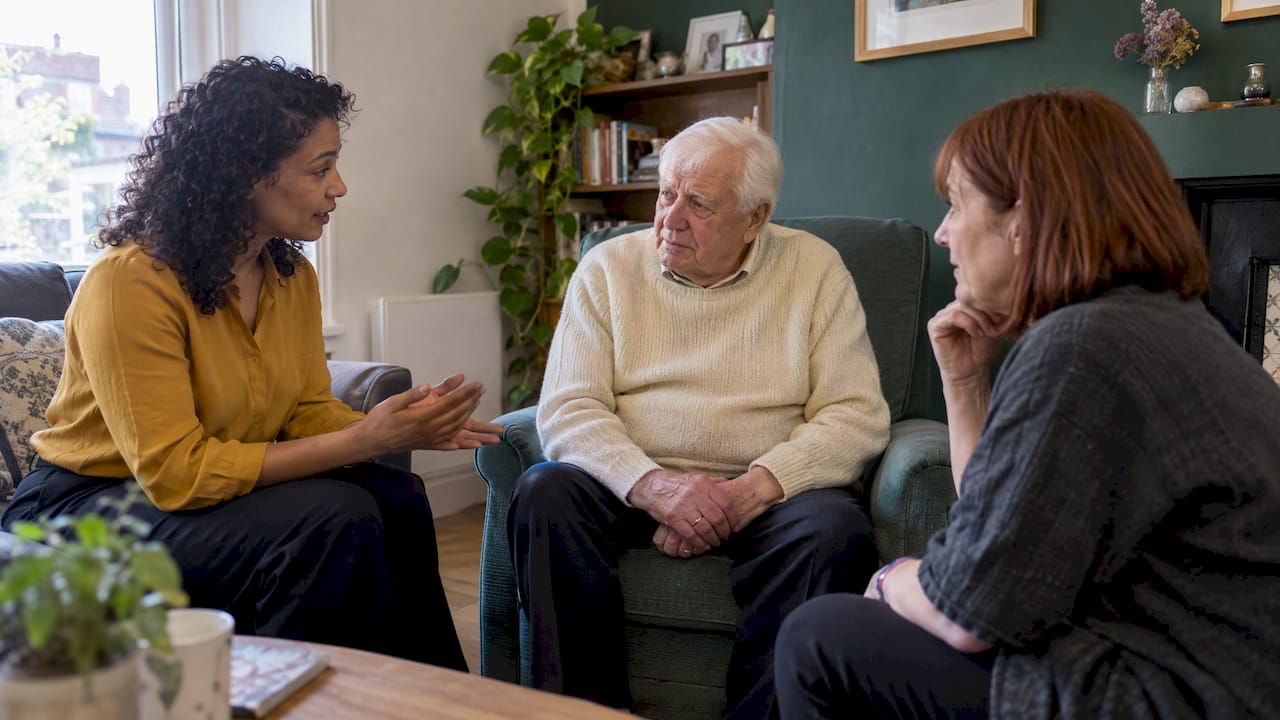
A safeguarding alert is a concern that someone receiving care may be experiencing abuse or neglect. It is not a finding that anything has happened. The Redbridge Safeguarding Adults Board glossary defines an alert as a concern that a person at risk is or may be a victim of abuse, neglect or exploitation. In home care, alerts are raised by carers, families, nurses and neighbours, and a well-run agency raises them early. We are Kells Domiciliary Care, a CQC-regulated London agency with over 30 years of experience, and this guide explains what an alert means, what to watch for and what happens next.
TL;DR
- An alert is a worry passed to the right people, not proof of abuse. The threshold for raising one is purposefully low.
- Anyone can raise a concern with the local authority, including family, friends and neighbours. You do not need proof.
- A carer who raises an alert is doing the job well. NICE says reporting concerns is a marker of good care, not just a sign of poor care.
- In immediate danger, call 999. Otherwise, contact the adult social care team at the borough where your relative lives.
- Choosing a qualified, DBS-checked, CQC-regulated agency gives you carers trained to notice and report concerns.
Table of Contents
- What a safeguarding alert means in home care
- Why a good carer raises alerts
- Signs a family might notice
- Who can raise a concern, and how
- What happens after an alert
- If you are unhappy with how a concern was handled
- Reducing the risk before an alert is needed
- Our perspective
- Care that is built around noticing
- FAQ
- Sources
What a safeguarding alert means in home care
“Safeguarding” means protecting an adult’s right to live safely, free from abuse and neglect, while respecting their choices. For a deeper background, our guide what is safeguarding in care covers the basics for families.
Three terms are worth separating:
- Alert or concern. Someone has noticed something worrying. It may come from a disclosure, an incident or signs and indicators.
- Enquiry. The local authority decides whether it needs to look into the matter and who should do so.
- Outcome. The council and others agree what action, if any, will protect the person.
Most alerts never reach a formal outcome of abuse. Some end with extra support, a changed care plan or a conversation. Others are closed with no further action. That is the system working as intended, because the threshold for raising an alert is set low so that small worries are not left unspoken.
The legal test sits in section 42 of the Care Act 2014. The London Multi-Agency Adult Safeguarding Policy sets out that a local authority must act where it has reasonable cause to suspect an adult in its area:
- has needs for care and support,
- is experiencing, or is at risk of, abuse or neglect, and
- as a result of those needs, cannot protect themselves.
The authority must then make, or arrange, whatever enquiries it thinks necessary to decide whether action is needed and, if so, what and by whom.
This applies to people who arrange and pay for their own care, too. Age UK’s factsheet FS78 (December 2025) explains that the definition does not depend on the person receiving council-funded care or meeting eligibility criteria.
Why a good carer raises alerts
Families sometimes feel uneasy when an agency says it has raised an alert. It should reassure you. NICE’s home care guidance (NG21, 2015) states that a home care worker may be the first person to spot abuse or neglect, including self-neglect, and should respond proportionately. It also says providers should build a culture where reporting is seen as a marker of good care.
The same guidance expects a provider to have a written process for safeguarding concerns that matches local authority procedures. It lists key contacts: emergency services, the registered manager, the local authority safeguarding helpline, and other sources of support such as the Care Quality Commission, Action on Elder Abuse and local Healthwatch.
London boroughs write these duties into their contracts. Havering’s homecare service specification requires providers to:
- train staff in safeguarding legislation and multi-agency procedures,
- make accurate, factual records at the time of a concern,
- refer incidents of abuse to the borough’s safeguarding team without delay, and
- refer relevant information to the Disclosure and Barring Service where there is a concern about harm or risk of harm.
The point for families: an alert about a carer, a family member or the home environment is part of a normal protective system. The question to ask of any agency is whether its carers are trained to notice and trained to report. Our article on why qualified carers matter for safety and dignity goes into this.
Signs a family might notice
You see your relative more clearly than any professional does. The NHS guidance on abuse and neglect of adults at risk (last reviewed 26 March 2024) lists signs such as:
- becoming quiet and withdrawn,
- unexplained aggression or sudden changes in character,
- looking unkempt or thinner,
- bruises, wounds or fractures, or repeated injuries,
- not wanting to be left alone with particular people,
- a cold or unusually dirty home,
- missing items or sudden changes in finances.
The Family Action adults handbook (May 2026) groups indicators by type:
| Type | Examples |
|---|---|
| Physical abuse | Unexplained or repeated marks, injuries or fractures, grip marks, fear around one person, unauthorised restraint |
| Psychological abuse | Withdrawal, low self-esteem, tearfulness, behaviour that changes when a particular person is present |
| Neglect | Untreated injuries, pressure sores, more falls, poor hygiene, unused medication building up, a risky environment |
| Self-neglect | Weight change, an unclean home, refusing services, hoarding, a cold home because bills are unpaid |
The West Sussex early warning signs briefing adds quieter signals: a change in routine, visits by unknown people, or the adult refusing contact with a friend, relative or carer they previously welcomed.
Signs are not proof
A bruise can come from a fall. Withdrawal can come from a new medicine, a urinary infection or the progression of dementia. If your relative has dementia, a change in behaviour has many possible causes, and our guide to dementia behaviour management steps shows how carers approach it. You do not have to work out the cause before you speak up. Raising the concern is how the cause gets looked at by people trained to do so.
For children and adults with learning disabilities, autism or mental health needs, changes in behaviour may be the only way they communicate distress. Note what changed, when, and who was present. Parents of a child under 18 should be aware that child protection routes differ from adult safeguarding, and the local authority’s children’s services team is the right contact for a child.
Who can raise a concern, and how
Anyone can. The 4LSAB safeguarding concerns guidance (July 2025) says anyone worried that an adult who may have care and support needs is at risk of, or experiencing, abuse or neglect can raise it with the local authority. You only need reasonable cause to suspect the first two criteria above. The third, whether the person can protect themselves, is for the local authority to assess. The same West Sussex briefing notes that family, friends, professionals and the public alike should report concerns where the adult has care and support needs.
The route depends on urgency:
- Immediate danger or a crime in progress: call 999.
- A concern that is not an emergency: contact the adult social care or safeguarding team at the London borough where your relative lives. Each borough publishes its own number and online form on its council website.
- A concern about the care agency itself: tell the agency’s registered manager as well, and tell the council. The agency should have a process for this, and the council can look at the wider picture.
Write down the facts before you call: dates, what you saw or were told, who was present, and anything that has changed. Stick to what you observed rather than what you think it means.
If your relative is able to decide for themselves, tell them you are raising a concern and why, unless doing so would put them at greater risk. Safeguarding is meant to support people in making choices and having control, one of the aims in Age UK’s summary of the statutory guidance.
What happens after an alert
Once the council receives a concern, it does not simply start an investigation. In Hammersmith & Fulham, for example, a social worker carries out an initial risk assessment and gathers information to decide whether the section 42 criteria are met, according to the borough’s caused enquiry guidance. Other London boroughs follow the same London-wide framework with local variations.
The usual path looks like this:
- Triage. The council decides how urgent the concern is. The Kingston-hosted South-West London protocol says all alerts are triaged in line with the safeguarding process before a proportionate response is chosen.
- Criteria check. If all three section 42 criteria are met, the council has a duty to start an enquiry. Only the local authority can initiate one. It also has discretion to look into a case where the criteria are not met, and the response may be something other than a section 42 enquiry, as the 4LSAB guidance explains.
- Who leads. The council considers who is best placed to lead. Where a crime is suspected, the police lead the criminal investigation, and the council remains responsible for making sure the enquiry is acted on.
- The adult’s views. The enquiry usually starts by asking the person what they want to happen. It is not meant to prove an allegation true or false. Information is gathered only so far as it informs what action is needed to keep the person safe.
The statutory objectives of an enquiry, listed in the same 4LSAB guidance, include establishing the facts, finding out the adult’s views and wishes, assessing their needs for protection, support and redress, and helping them to achieve resolution and recovery.
Which borough is responsible?
London has 32 boroughs plus the City of London, and people often receive care in one borough while funding comes from another. The ADASS out-of-area protocol (revised 30 October 2025) states that where the risk is posed, that local authority is responsible under section 42 for ensuring enquiries are made. If you are unsure which council to call, start with the one where your relative lives. They can pass it on.
If you are unhappy with how a concern was handled
You are entitled to ask the council what happened to your concern and to ask who is leading any enquiry. If you feel the response was too slow or did not take your relative’s wishes into account, put your questions to the council in writing and keep a copy. The council’s complaints procedure is on its website. If you remain concerned about the standard of a care provider, you can also tell the CQC, which regulates care providers in England. NICE lists the CQC, Action on Elder Abuse and local Healthwatch among the sources of support for people with safeguarding worries.
If your concern is that a care plan is not being followed day to day, our guide to what to do when a care plan is not followed sets out who to contact and how to keep records.
Reducing the risk before an alert is needed
Most families want fewer alerts, not just better handling of them. Practical steps that help:
- Know who is coming. Ask for the carer’s name and the visit schedule in advance, and check that the same small team visits. Our home care safety checklist for London families lists what to confirm.
- Prepare the home. Safe storage of medicines, privacy and clear access all lower risk. The three steps to ready your home for carers cover this.
- Match visit length to need. Rushed visits lead to missed care and missed signs. See our guide on 30 minute home care visits for how to document and monitor them.
- Keep a care record in the home that you and the carers can both read, so changes are noticed early.
- Look after the carers’ safety too. A safe working relationship protects everyone. Our carer safety at home guide explains how.
Signs that someone needs more support often show up before a crisis. Recognising the signs you need home care can help you act while the situation is manageable.
Our perspective
We have supported people in their own homes across London for over 30 years, and our view is simple: a safeguarding alert is a sign that someone was paying attention.
Families should expect the carers coming into the home to be qualified and DBS checked, and the agency to be regulated by the CQC. Those are the standards we hold ourselves to. We aim to promote independence, dignity and freedom of choice, and that includes taking a worry seriously and passing it to the right people rather than keeping it quiet.
Our care is personalised around the person, whether that is a short call-in visit, live-in care, dementia care or support for a child or adult with a learning disability, autism or mental health needs. Knowing someone well is what lets a carer notice that something has changed.
If you are worried about a loved one’s care, you do not need to wait for certainty. Raise it, write it down and ask questions.
Dan
Care that is built around noticing
If you are arranging care for a relative in London, the offer pages show what we provide. Call-in visits, live-in care and support for children with disabilities are all delivered by qualified, DBS-checked carers. Our home care services page covers personal care, companionship, dementia care, medication assistance, respite cover and more. You can contact us to talk through your situation and arrange a personal care assessment.
FAQ
Does a safeguarding alert mean my relative has been abused?
No. An alert is a concern that abuse or neglect may be happening, and it can come from a sign or an incident. The council then decides what, if anything, needs to be done, and many alerts end with extra support or no further action.
Can I raise a concern if I am not sure?
Yes. You need reasonable cause to suspect, not proof. Anyone can raise a concern with the local authority where the person lives, and the council decides whether the full legal test is met.
Will the council always start an enquiry?
Not always. The council has a duty to enquire when all three section 42 criteria are met, and it can choose to act even when they are not. The response may be something other than a formal enquiry.
Does it apply if we pay for care ourselves?
Yes. Age UK explains that the safeguarding duty does not depend on council funding or eligibility for council services. Anyone with care and support needs who is at risk and cannot protect themselves is entitled to a response.
What should I do in an emergency?
Call 999 if someone is in immediate danger or a crime is happening. For anything else, contact the adult social care team at the borough where your relative lives and write down what you have seen.
Sources
- Glossary of Terms Used in Safeguarding Adults, Redbridge SAB (January 2023)
- South-West London Inter-agency Adult Safeguarding Protocols (version 2, February 2022)
- NICE NG21: Home care for older people (2015)
- London Multi-Agency Adult Safeguarding Policy (November 2025)
- Age UK factsheet FS78 (December 2025)
- Havering service specification for homecare services
- NHS: abuse and neglect of adults at risk
- Family Action adults handbook: recognising abuse and neglect (May 2026)
- Early warning signs for safeguarding: learning briefing
- 4LSAB Safeguarding Concerns guidance (July 2025)
- Hammersmith & Fulham caused enquiry guidance
- ADASS out-of-area safeguarding protocol (30 October 2025)