Anxiety after a stroke is common, and it is not a sign of weakness or a failure to cope. Around one in four people who have a stroke will experience anxiety, and it can start straight away or months later. It responds to support. If you or someone you love is feeling constantly on edge, worried or afraid since a stroke, this guide explains what to look for, where to get help in the UK and how families can make daily life calmer.
TL;DR
- Anxiety affects roughly a quarter to a third of stroke survivors, and it can appear months or even more than a year after the stroke.
- Typical signs include restlessness, a racing heartbeat, poor sleep, trouble concentrating and avoiding going out.
- Tell your GP or stroke team if anxiety is widespread, causes distress or stops you doing things you want to do. Talking therapies, medication and self-help techniques can all play a part.
- Families help most with patience, practical support, one question at a time and a predictable routine.
- Home care can take everyday pressure off the survivor and the family while recovery continues.
Table of Contents
- How common is anxiety after a stroke?
- Signs and symptoms of anxiety after stroke
- Why anxiety develops after a stroke
- When to seek help, and how anxiety is assessed
- Treatment and self-help options
- How families can support someone who is anxious
- Our perspective on anxiety after stroke
- How Kells can help at home
- FAQ
- Sources
How common is anxiety after a stroke?
More common than most families expect. The National Clinical Guideline for Stroke says anxiety affects around one-quarter of people with stroke and, like depression, may only become obvious after several months. The Stroke Association gives a similar picture: around one in four people who have a stroke will experience anxiety within the first five years.
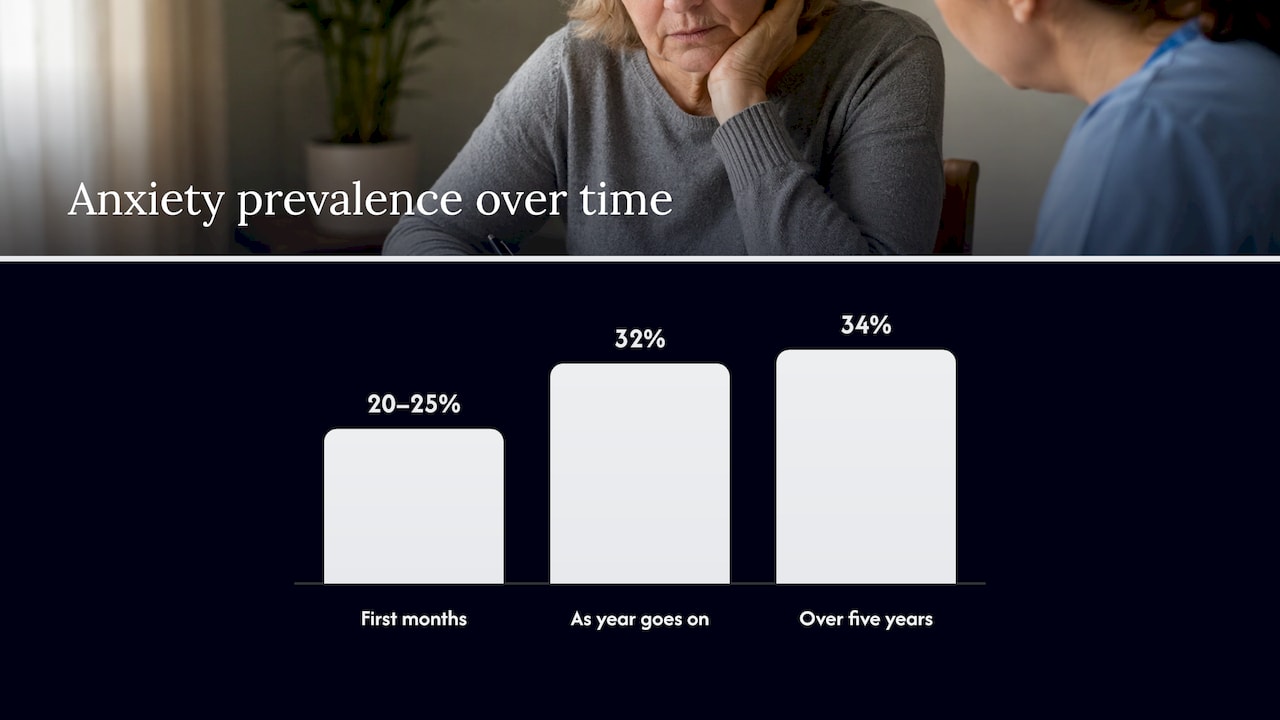
Research figures vary with how and when people are measured. An analysis of 584 patients found that 35% had post-stroke anxiety three to six months after an ischaemic stroke, with rates between 27% and 45% across different groups. The American Heart Association reports anxiety in 20% to 25% of people in the first months, rising to 32% as the year goes on, and 34% over five years.
Two points matter for families:
- Timing is unpredictable. The same American Heart Association piece notes that emotional and personality changes can appear immediately or be delayed, sometimes by more than a year, and can change in intensity over time.
- Anxiety rarely arrives alone. Low mood, mood swings and loss of confidence often sit alongside it. In a UK survey quoted in the national guideline, 44% of people with stroke reported anxiety or depression, 42% mood swings and 47% reduced self-confidence.
So if a relative seemed to cope well in hospital and is now frightened at home, that is a recognised pattern, not something you have missed.
Signs and symptoms of anxiety after stroke
Anxiety is the body’s automatic response to stress, and after a stroke the body and mind have plenty to react to. The Stroke Association lists these common signs:
- restlessness or a sense of dread
- feeling on edge
- difficulty concentrating
- a racing heartbeat
- trembling or shaking
- feeling sick, or butterflies in the stomach
It also describes knock-on effects: sleeping problems, tiredness, muscle tension, irritability, and avoiding activities such as going out or meeting people.
What it can look like at home
Signs are not always spoken. Families often notice:
- a person who used to enjoy a short walk now refuses to leave the house
- constant checking, asking where you are or when you will be back
- fear of being left alone, or of having another stroke
- panic when routines change, such as a different carer, a new appointment or a visitor arriving unannounced
- night-time worry and broken sleep
- snapping at people over small things
Some symptoms overlap with the stroke itself. Fatigue, poor concentration and tremor can have more than one cause, which is one reason a professional assessment is worth having.
How it can affect recovery
This is why it deserves attention rather than patience alone. StrokeLINK notes that ongoing anxiety can affect recovery and rehabilitation and is linked to greater dependence, poorer attention and concentration, poor sleep, a smaller social network and reduced quality of life. The Stroke Association’s emotional changes guide makes the positive point: getting support for anxiety can help you focus on rehabilitation, eating well and staying active, and feeling more relaxed helps recovery.
Why anxiety develops after a stroke
There is rarely one cause. The national guideline says mood disturbance after stroke can come from psychosocial factors, neurochemical changes in the brain, or both.
In plain terms:
- The experience itself. A stroke is sudden and frightening. Many survivors fear it will happen again.
- Loss and change. Losing independence, driving, work, speech or mobility is a lot to absorb.
- Changes in the brain. Damage can affect the areas and chemical messengers that help regulate mood.
The American Heart Association lists factors that raise the risk of anxiety after stroke: younger age at the time of the stroke, lower income, being unable to work, social isolation, previous mental health conditions and a more severe stroke. None of these is a prediction for any one person, but they show who may need extra attention. Someone living alone, cut off from friends and worried about money is more likely to struggle than someone surrounded by support.
When to seek help, and how anxiety is assessed
Do not wait for anxiety to become unbearable. The Stroke Association advises seeking help if:
- you are becoming anxious about a wide range of things
- anxiety is stopping you doing things you want to do, or causing distress
- you feel anxious for no obvious reason
Start with your GP or your stroke team. If a person ever talks about harming themselves, treat it as urgent: contact your GP the same day, call NHS 111, or call 999 if there is immediate danger. The national guideline quotes a UK survey in which 16% of people with stroke reported suicidal thoughts, so this is not rare enough to ignore.
What screening should look like
The National Clinical Guideline for Stroke 2023 recommends that people with stroke are routinely screened for anxiety and depression with standardised tools, alongside other sources of information. It also recommends that services screen for mood and cognitive problems within six weeks of the stroke, and again at six and 12 months.
If your relative has not been asked about their mood at those points, it is reasonable to raise it at the next review. A study from the University of Plymouth reports that the HADS-A was the only self-report anxiety screen validated in stroke patients, though the Geriatric Anxiety Inventory has since also been validated, and that the short GAD-2 may be a useful screen in the acute setting.
If speech and language are affected
About a third of stroke survivors have aphasia, so standard questionnaires do not always work. The national guideline says assessment measures should be adapted for mild aphasia, and that some tools are designed for more severe aphasia, including the Behavioural Outcomes of Anxiety (BOA) scale. If your relative struggles to explain how they feel, tell the team and ask which adapted tools they use. Your own observations of behaviour and sleep are valuable evidence.
If you feel you are not being listened to
The Stroke Association says emotional problems are often missed by doctors and can be hard to get taken seriously. Its advice is to trust that you know yourself better than they do and keep asking until you get the support you need. Keep a simple diary of what happens, when and how long it lasts. It makes the conversation much easier.
Treatment and self-help options
The Stroke Association says cognitive behavioural therapy (CBT) and medication can help with anxiety after stroke, and that self-help techniques such as breathing exercises and mindfulness can also be useful.
Talking therapies and psychological care
NICE-linked guidance on psychological care after stroke describes a stepped approach. At the first level this means routine checks of mood and thinking, active listening, normalising what the person is going through, giving advice and information, and signposting. At the second level it means clear routes to clinical psychology and brief psychological interventions. It also says psychological support should be seen as just as critical to recovery as physical rehabilitation.
The Stroke Association’s emotional changes guide adds that in some areas of the UK you can refer yourself for talking therapies without going through your GP. Check the NHS website for your area.
Medication
Medication is a decision for a GP or specialist who knows the person’s full history, including other medicines. A 2017 Cochrane review of treatments for anxiety after stroke looked at three small trials with 196 participants, and reported lower anxiety scores with paroxetine and buspirone, while calling for more well-designed trials. In practice, that means treatment should be chosen and reviewed with a clinician rather than started or stopped alone.
Everyday self-help
These are simple and can be practised together:
- Slow breathing. Breathe slowly and deeply from the stomach, then repeat for a few minutes. The Stroke Association suggests this as a first step when anxiety rises.
- A steady daily routine. Regular meal, rest and activity times reduce surprises.
- Small, planned outings. Start with the garden or the end of the road and build up, rather than avoiding going out altogether.
- Grounding with the senses. Naming things you can see, hear and touch brings attention back to the present. Our guide to anxiety support at home walks through this step by step.
- Gentle physical activity within the limits set by the rehabilitation team.
Recovery works best when physical and emotional care are planned together. If you want to understand how physiotherapists, psychologists, occupational therapists and others fit together, this explainer on multidisciplinary therapy approaches is a helpful starting point.
How families can support someone who is anxious
You do not need to say the perfect thing. Consistency and patience do most of the work.
Communication that lowers tension
The Stroke Association’s Supporting a stroke survivor guide advises giving the person time to answer, asking one question at a time and not answering for them. These habits matter even more when someone is anxious, because feeling rushed or talked over raises worry quickly.
- Use short sentences and a calm, even voice.
- Say what is going to happen before it happens: “The carer is coming at ten to help with lunch.”
- Acknowledge the feeling before trying to fix it: “That sounds frightening.”
- Avoid surprises such as unannounced visitors or last-minute changes.
Practical help
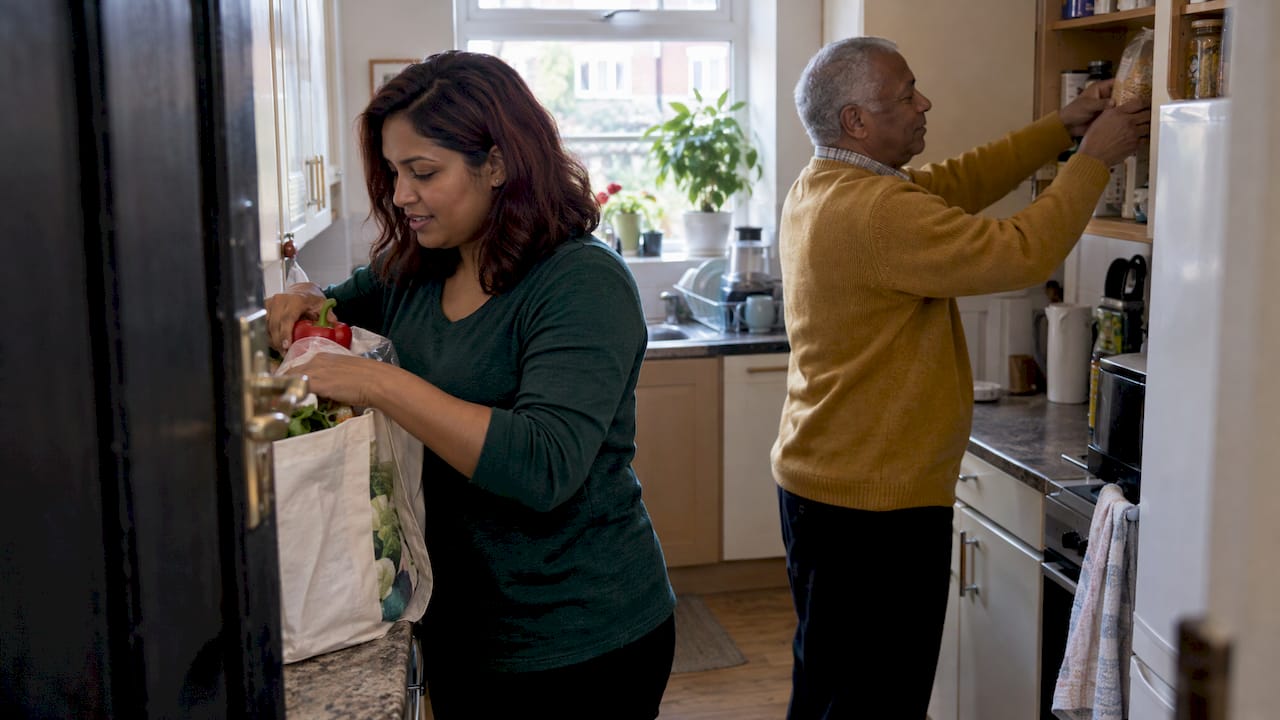
The same guide suggests offering practical help such as shopping, cleaning or childcare, asking what the person needs, and looking after carers’ wellbeing. Practical tasks that are lifted from the survivor remove many small worries. Missed medication, an empty fridge or an unmade bed can feed anxiety at night.
Look after yourself too
Anxiety in one person is tiring for everyone nearby. If you are the main carer, our guide to carer stress relief offers realistic ways to rest and recharge, and the wider stroke recovery at home guide covers day-to-day planning.
Support beyond the family
Several UK services are free to use:
- The Stroke Association’s Emotional Support Service offers specialist help and peer support sessions, and in Northern Ireland, counselling by phone, online or face to face. Its page explains that services in England, Wales and Northern Ireland are funded by the NHS or social services, so free to the user, and can vary by area, while Scotland works through partnerships with other organisations.
- The Brain Charity provides practical help on living with stroke, emotional support such as counselling, phone befriending and group therapy, and free support for carers, friends and family from anywhere in the UK.
If you are in London and the person you care for also lives with memory problems, our pages on dementia care strategies and mental health support for families may help you sort out what is stroke-related and what needs a separate assessment.
Our perspective on anxiety after stroke
We have been supporting people in their own homes across London for over 30 years, and one pattern comes up again and again: the hospital stay ends, the visitors thin out, and the fear arrives when the house goes quiet.
From our point of view, anxiety after a stroke is often tied to daily life. It is the worry about getting to the toilet safely, about taking the right tablets, about being alone at night or about becoming a burden. That is why we believe care that is personalised around the person, rather than a fixed timetable, matters so much.
Our carers are fully qualified, DBS checked and regulated by the CQC, and we aim to protect independence, dignity and freedom of choice. In practice, we think this means the same familiar faces where possible, visits at predictable times, help with personal care and medication, and unhurried companionship. A calm, known routine will not replace the clinical help a GP or psychologist can give, but we have seen it make that help easier to use and daily life easier to face.
If you are exhausted as a family member, we would also encourage you to think of respite cover as part of the recovery plan, not a last resort. A rested carer is a calmer presence.
Dan
How Kells can help at home
We provide domiciliary care across London, from short call-in visits to live-in care, tailored to each person. Services include personal care, companionship, medication assistance, shopping and errands, home help and respite cover, delivered by qualified, DBS-checked carers, and we are regulated by the Care Quality Commission. Many families find that a regular visit gives the survivor something predictable to rely on and gives the family time to rest.
If your relative is coming home from hospital, our post-hospital home care guide explains what to organise first. You can see the full list of what we offer on our home care services page, or contact us to talk through what would suit your family.
FAQ
Is anxiety after a stroke normal?
Yes. The National Clinical Guideline for Stroke says anxiety affects around one in four people with stroke. It is a recognised effect, not a personal failing. If it is distressing or stops you doing things you want to do, speak to your GP or stroke team.
Can anxiety start months after the stroke?
Yes. The national guideline notes that anxiety may only become evident after several months, and the American Heart Association reports emotional changes that sometimes emerge more than a year later. Screening is recommended at six and 12 months for this reason. Mention any new worries at follow-up appointments.
Can anxiety slow stroke recovery?
Ongoing anxiety is linked with poorer sleep, poorer attention and concentration, a smaller social network and greater dependence, according to StrokeLINK. Support can help a person put more energy into rehabilitation. Raising it early gives the best chance of getting help in place.
How can I help a parent who cannot explain how they feel?
Give them time to respond, ask one question at a time and do not answer for them. Share what you have noticed, such as poor sleep or avoiding outings, with the stroke team, who can use assessment tools adapted for aphasia. A calm, predictable routine at home also helps.
Can home care help with post-stroke anxiety?
Home care is not a treatment for anxiety, and clinical help should come from a GP or specialist. What carers can do is provide dependable company, support with personal care and medication and practical help around the house. These things often take daily pressure off both the survivor and the family.
Sources
- National Clinical Guideline for Stroke: anxiety, depression and psychological distress
- National Clinical Guideline for Stroke 2023
- Prevalence of poststroke anxiety (PubMed)
- Emotional changes, Stroke Association
- Emotional changes after stroke guide, Stroke Association
- Supporting a stroke survivor, Stroke Association
- Our Stroke Support services, Stroke Association
- Nurses play key role in addressing mental well-being after stroke, American Heart Association
- Anxiety and worry, StrokeLINK
- Anxiety screening after stroke, University of Plymouth
- Psychological care after stroke, NICE shared learning
- Interventions for treating anxiety after stroke, Cochrane review
- Stroke support, The Brain Charity