

Domestic care means in-home support with everyday household tasks, helping you or a loved one stay independent and comfortable at home. If you need it now, your first step is to request a free care needs assessment from your local council’s adult social services department. For private care without a wait, you can contact a Care Quality Commission (CQC)-regulated agency directly. Kells Domiciliary Care, for example, has provided CQC-regulated home care across London for over 30 years.
Quick orientation before you read on:
- What it covers: light housekeeping, laundry, shopping, meal preparation, errands, and bed linen changes
- Who provides it: local councils, independent homecare agencies, personal assistants, and charities
- Typical cost: hourly rates generally range from the mid-twenties to the high thirties of British pounds, depending on location and provider
- First action: request a needs assessment from your council, or contact a CQC-regulated agency for private care
Key takeaways
Domestic care works best when you start the needs assessment early, check CQC and DBS credentials, and ask agencies directly about staff pay and turnover before committing.
| Point | Details |
|---|---|
| Start with a needs assessment | Request a free assessment from your local council’s adult social services before arranging anything else. |
| Check CQC and DBS credentials | Verify any agency’s CQC registration and confirm all carers hold current DBS checks before care begins. |
| Understand capital thresholds | Thresholds differ by nation (e.g. — in England); contact your council early if savings are close to the limit. |
| Ask about pay and turnover | Employment costs are 70–75% of homecare delivery costs; high turnover signals unsustainable pay and inconsistent care. |
| Kells-care as a London option | Kells-care offers CQC-regulated hourly and live-in domestic care in London; download the free guide to explore options. |
Table of Contents
- What does domestic care actually include?
- Who provides domestic care in the UK?
- How to arrange domestic care in the UK
- What does domestic care cost, and how can you fund it?
- How to choose a safe, reliable domestic care agency or carer
- Why fee rates and staff pay affect the quality of your care
- A perspective on what domestic care really means
- How Kells-care supports families arranging home care in London
- Sources
What does domestic care actually include?
Domestic care, sometimes called home help or domiciliary care, covers the practical household tasks that keep a home running safely. The NHS describes homecare as spanning both domestic help and personal care, though the two are distinct.
Domestic tasks a carer typically covers:
- Light cleaning, hoovering, and tidying
- Laundry and ironing
- Changing bed linen
- Meal preparation and light cooking
- Grocery shopping and collecting prescriptions
- General errands and accompanying to appointments
Personal care is different. It includes help with washing, dressing, toileting, and other intimate assistance. Personal care usually requires a higher level of training and is always regulated by the CQC. Domestic care alone may not require CQC registration, but most reputable agencies are registered regardless.
When a council assesses eligibility, it looks at outcomes rather than service labels. The key questions are whether you can maintain a habitable home environment and whether you can manage your nutrition. If domestic tasks are causing you to fall short of those outcomes, you may qualify for funded support. You can read more about how personalised in-home support fits alongside personal care.
UK terminology can be confusing. “Domestic care”, “home help”, “domiciliary care”, and “homecare” are often used interchangeably. In practice, domiciliary care is the broader term that covers both domestic and personal support delivered in the home.
Who provides domestic care in the UK?
There are four main routes to getting domestic support at home, each with different levels of convenience, control, and responsibility.
- Local authority-arranged care: your council commissions a provider on your behalf after a needs and financial assessment. You have less choice over the agency but fewer administrative responsibilities.
- Independent homecare agencies: you choose and contract with a CQC-registered agency directly. This gives you more control over who visits and when.
- Personal assistants (PAs): you employ someone directly, often using a direct payment from the council. This offers the most flexibility but makes you the employer, responsible for payroll, tax, National Insurance, and arranging holiday or sickness cover.
- Charities and volunteer services: organisations such as Age UK and local community groups sometimes offer low-cost or free domestic support, particularly for older people.
Trust signals to check for any provider:
- CQC registration and recent inspection rating (check at cqc.org.uk)
- DBS (Disclosure and Barring Service) checks for all staff
- Employer’s liability insurance
- Clear staff training and supervision policies
Understanding CQC regulation and why DBS checks matter can help you ask the right questions before signing anything.
Employing a PA directly gives you maximum control, but the NHS notes that you take on full employer responsibilities, including cover arrangements when your PA is ill or on holiday. An agency removes that burden, though it costs more per hour.
Pro Tip: Before ruling out direct employment, check whether your council offers a payroll support service for direct payment recipients. Many do, which removes much of the administrative load.
How to arrange domestic care in the UK
Whether you go through the council or privately, the process follows a clear sequence.
- Request a care needs assessment from your local council’s adult social services team. It is free and you are entitled to one regardless of your finances. Find your council at Gov. Kells-care can also help you prepare for this process through its needs assessment support page.
- Receive a financial assessment (means test) if your needs assessment finds you eligible for support. The council will look at your savings, income, and assets to determine your contribution.
- Choose how your care is arranged: council-commissioned care, a direct payment to manage yourself, your own agency, or a PA you employ directly. The Independent Age factsheet on arranging home care covers each option in plain language.
- Agree a care plan and start date with your provider. The plan should specify tasks, visit times, and how changes are requested.
If you need support urgently, you do not have to wait for the council process to complete. Arranging a short private package while assessments are under way is a practical option, and you can request reassessment if your finances change and council funding becomes relevant.
Independent Age and Age UK both advise starting the needs assessment early, particularly if your savings are approaching the capital thresholds that trigger council funding. Gaps in service are much easier to avoid when the paperwork is already in motion.
What does domestic care cost, and how can you fund it?
Costs vary by location, provider, and the level of support needed. Reported hourly rates sit in the mid-£20s to high-£30s across the UK, with London and the South East typically at the higher end. Live-in care is quoted by the week and can range from several hundred to over a thousand pounds, depending on the provider and care complexity.
Funding routes available in the UK:
- Self-funding: you pay the full cost privately. Ask agencies for itemised pricing and compare at least three providers.
- Local authority contribution: available after a needs assessment confirms eligibility and a means test determines your contribution. Age UK explains the means-testing process in detail.
- NHS Continuing Healthcare (CHC): fully funded NHS care for people with a primary health need. Assessed separately from social care.
- Direct payments: the council gives you money to arrange your own care rather than commissioning it for you.
- Benefits: Attendance Allowance (for those over State Pension age), Personal Independence Payment (PIP), and Carer’s Allowance can all contribute to care costs.
Capital thresholds by UK nation (upper limit above which you are fully self-funding):
Note: thresholds and charging rules change periodically. Always confirm current figures with your local authority before making financial decisions.
If your savings are approaching the threshold for your nation, request your needs assessment now rather than waiting. Once you cross the upper threshold, you fund care entirely yourself until your assets fall below it.
How to choose a safe, reliable domestic care agency or carer
Choosing the right provider takes more than a quick internet search. A practical checklist makes the process manageable.
Questions to ask any agency or prospective carer:
- Are all staff DBS-checked before they start work?
- What training do carers receive, and is it refreshed regularly?
- What is the staff turnover rate? High turnover often signals low pay or poor management.
- How is cover arranged if my regular carer is ill or on holiday?
- How long are visits, and is that time protected or can it be cut short?
- What does the invoice include, and are there any additional charges?
- What is the notice period for ending the arrangement?
What to expect from a typical visit. A domestic care visit usually lasts between 30 minutes and an hour, depending on the tasks agreed. Age UK’s guidance makes clear that visits of 15 minutes or less are generally inappropriate where personal care is involved. Even for domestic tasks alone, very short visits rarely allow enough time to do the job properly.
Red flags to watch for:
- No DBS checks, or reluctance to confirm them in writing
- No written care plan before care starts
- Inconsistent carers with no explanation offered
- Vague or verbal-only pricing with no written contract
- No complaints procedure or named contact for concerns
Contract essentials to insist on:
- A written care plan specifying tasks, visit times, and review dates
- Agreed visit length and the tasks to be completed each visit
- A clear cancellation and complaints procedure
- Itemised invoicing with no hidden charges
For a detailed checklist tailored to London families, the questions to ask home care agencies guide from Kells-care covers each of these points.
Why fee rates and staff pay affect the quality of your care
This is the part most families do not think to ask about, and it matters more than the agency’s website suggests.
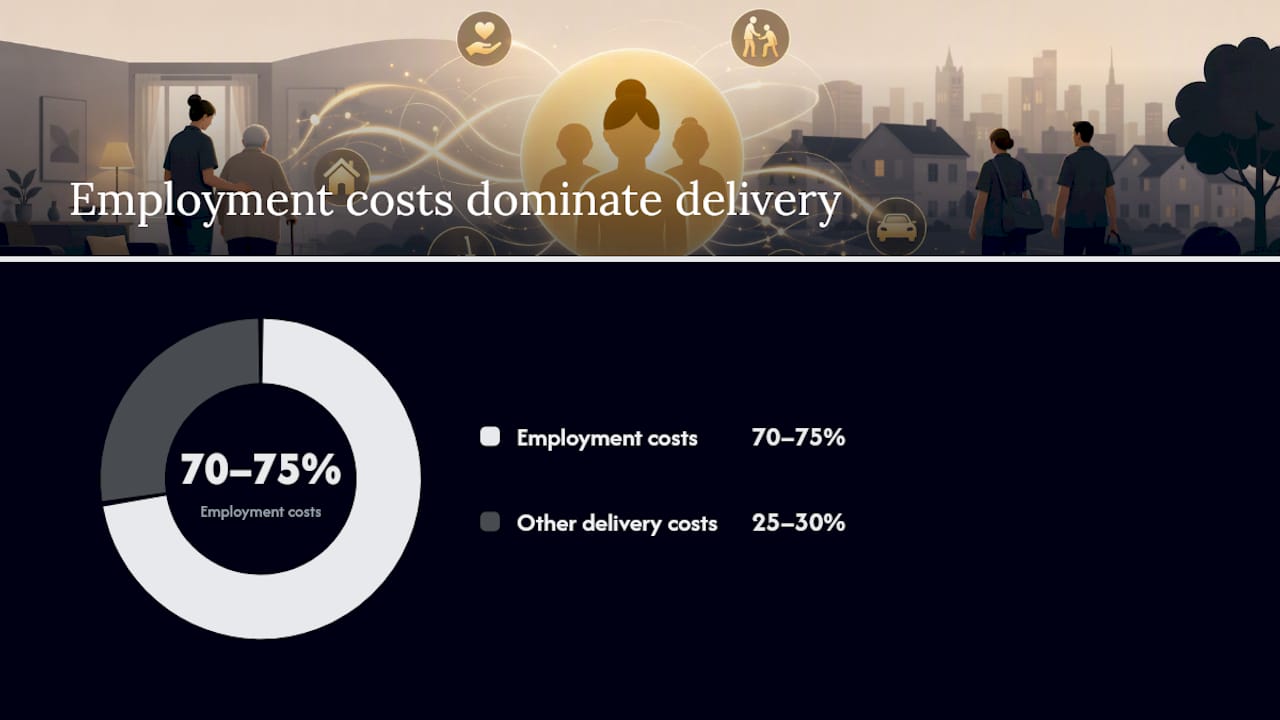
The Homecare Association’s fee rate research finds that employment costs account for 70–75% of homecare delivery costs. When local authorities pay inadequate fee rates, providers cannot cover travel time and statutory employment costs while also paying competitive wages. The result is high staff turnover, reduced training investment, and, ultimately, inconsistent care.
This matters for you whether you are self-funding or receiving council-arranged care. Ask agencies directly:
- What do you pay your careworkers per hour, including travel time?
- What is your annual staff turnover rate?
- Do you publish your pay and fee policies?
- How do you supervise carers and check on quality?
A provider that pays well and retains staff will almost always deliver more consistent, higher-quality care. High turnover means unfamiliar faces, missed preferences, and gaps in continuity. The Homecare Association also recommends that local authorities publish their fee rates so families can see whether the rate paid is sustainable.
A perspective on what domestic care really means
Most conversations about domestic care focus on tasks: the cleaning, the shopping, the laundry. That framing is understandable, but it misses the point.
The real value of good domestic support is not a clean kitchen. It is the confidence that comes from living in a home that feels manageable, safe, and yours. For many older people and those living with a disability, the moment domestic tasks become unmanageable is the moment independence starts to feel fragile. Getting the right support in early, before a crisis, almost always leads to better outcomes than waiting until things deteriorate.

There is also a tendency to treat the council route and the private route as opposites. They are not. A short private arrangement while assessments proceed, a direct payment used to employ a trusted PA, a CQC-regulated agency covering the tasks the council does not fund: these combinations are common and often the most practical answer. The system is not binary, and families who understand that tend to navigate it far better.
One thing worth saying plainly: the cheapest agency is rarely the best value. If a provider’s hourly rate looks significantly lower than the market average, ask why. Low rates almost always mean lower staff pay, higher turnover, and less consistent care. The Homecare Association’s research on employment costs makes this connection explicit. Paying a sustainable rate is not a luxury; it is what keeps the same carer coming through your door each week.
How Kells-care supports families arranging home care in London
Kells-care has been providing CQC-regulated domiciliary care across London for over 30 years. Whether you need a few hours of domestic support each week or round-the-clock live-in care, the team can build a package around your specific situation.
Services include hourly home visits, live-in care, dementia support, domestic assistance and errands, respite care, and temporary staffing for care homes. All carers are DBS-checked, fully trained, and supervised. Council and NHS funding options remain open to you regardless of whether you speak to Kells-care first.
To get started, download the free home care guide from Kells-care, which walks through the assessment process, funding options, and what to look for in a provider. Or visit Kells-care to speak with the team directly.
Sources
- Gov
- Help at home from a paid carer – Social care and support guide – NHS
- Fee rates for state-funded homecare in 2025–26 – Homecare Association
- Homecare
- Paying for homecare | Age UK
This article provides general information only and is not a substitute for professional advice. Confirm current funding thresholds and eligibility rules with your local authority or a qualified care adviser.


