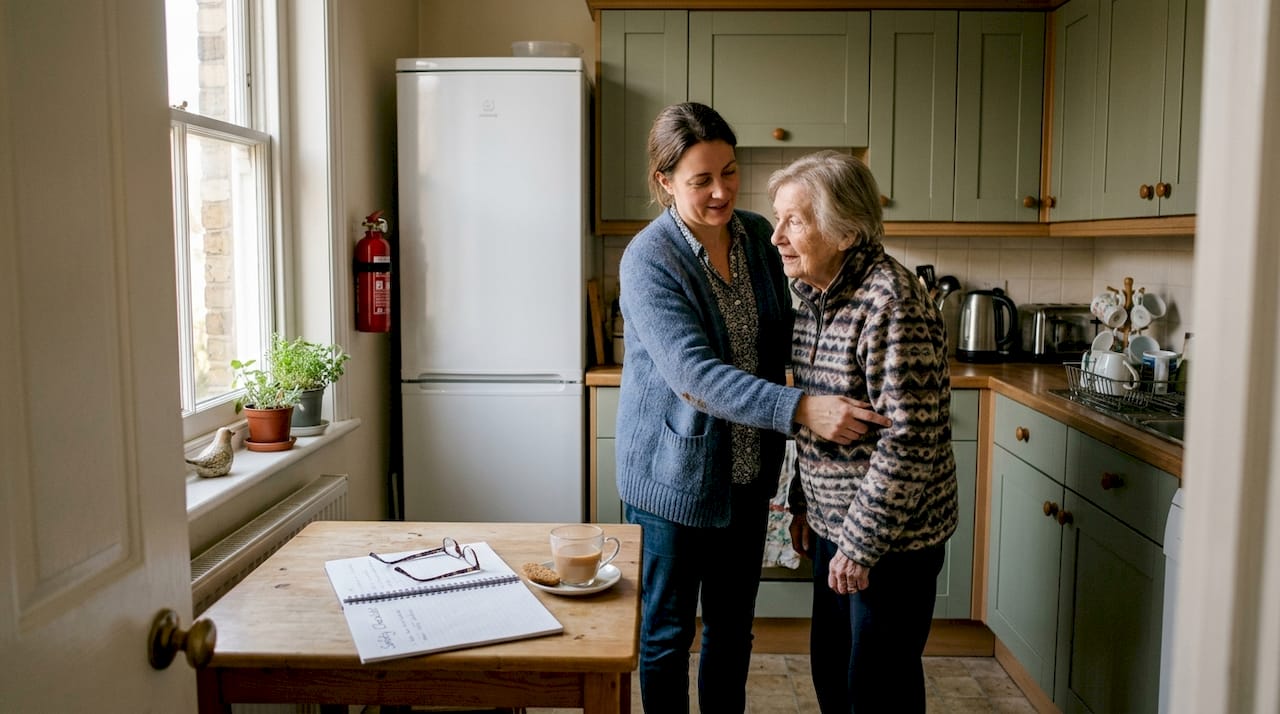

Short breaks are needs-based services, and every London council has a legal duty to provide a range of them to disabled children and their families. The quickest first step is to check your borough’s short breaks statement or ask children’s social care for a needs assessment. Families who want tailored, flexible support at home sometimes also turn to a regulated domiciliary respite provider alongside council-arranged options.
TL;DR:
- Eligibility depends on assessed need, not diagnosis, so families can request a Child in Need assessment through social care before receiving a formal diagnosis.
- Direct payments can fund short breaks or a personal assistant, while London domiciliary respite typically costs £20 to £35 per hour.
- Overnight residential stays separated by about four weeks or less may be linked, potentially affecting disability benefits that help cover care.
- Each borough’s short breaks statement lists local eligibility, providers, and application routes, but families should contact social care directly when published options do not fit.
- For autistic children, arrange visual schedules, consistent carers, advance notice of changes, and detailed communication and sensory guidance before the first session.
Table of Contents
- What short breaks look like: types and real examples parents will see
- Who is eligible and how to request an assessment in London
- Funding short breaks: direct payments, council places and charges
- Planning and safeguarding a short break: care plans and the benefits linking rule
- Where to find short breaks in London: a search checklist
- Perspective: how a regulated domiciliary provider in London can deliver in‑home short breaks
- Specific considerations and adaptations for children with autism during short breaks
- Role and involvement of family carers during short breaks
- Coordination between short break providers and Kells domiciliary care services in London
- What most families get wrong about short breaks
- How Kells can help arrange in-home short breaks in London
- FAQ
- Sources
What short breaks look like: types and real examples parents will see
Short breaks fall into three broad bands. Universal services are open to all families and include after-school clubs or holiday play schemes with some inclusive support. Targeted services are aimed at children with a specific level of need, such as sitting services or small-group sensory sessions. Specialist short breaks cover higher-need situations, including overnight stays in an approved carer’s home or residential settings for a weekend.
The short breaks statutory guidance confirms that breaks can happen in the child’s own home, an approved carer’s home, a residential setting or a community venue, and can run as day, evening, overnight or weekend activities.
In practice, families in London tend to encounter:
- Sensory play sessions for younger children with communication or processing needs.
- Youth clubs and sports sessions with one-to-one support workers.
- Arts and holiday activity programmes adapted for additional needs.
- Residential activity weekends for older children and young people.
When you look at a provision, ask whether staff are trained in your child’s specific needs, whether they can administer medication safely, and whether the venue has the physical adaptations your child requires, such as hoists or a quiet sensory room.
Who is eligible and how to request an assessment in London
Eligibility for short breaks is needs-based under the Children Act 1989, not diagnosis-based. You can ask for an assessment even before you have a formal diagnosis for your child, and guidance from Sense confirms entitlement rests on assessed need rather than a specific label.
Most families reach an assessment through one of these routes:
- Ask your child’s SENCO or school to raise a referral to children’s social care.
- Speak to your GP or health visitor, who can refer into disabled children’s services.
- Contact your borough’s parent carer forum for advice on local routes and timescales.
- Contact your borough’s disabled children’s social work team directly to request a Child in Need assessment.
- Before any referral, gather evidence: school reports, any existing diagnosis letters, and a short account of your family’s daily routine and pressure points.
If a request is turned down, ask for the decision in writing with reasons, since this gives you something concrete to challenge. You can also seek independent advocacy, raise a formal complaint through your council’s complaints procedure, or ask your local parent carer forum to help escalate the case.
Funding short breaks: direct payments, council places and charges
Short breaks can be funded in several ways, and it helps to understand them before you commit to a plan. Councils commission some places directly and fund others through targeted grants, while some voluntary-sector activities carry a modest charge even when the council part-funds the overall scheme.
- Council-commissioned places are usually free or low-cost once an assessment confirms eligibility.
- Targeted funding often covers specific groups, such as children with higher support needs.
- Voluntary and charity-run clubs may ask for a contribution towards staffing or activities.
Direct payments offer more flexibility. The Contact short breaks toolkit explains that families can use a personal budget paid as a direct payment to buy short breaks themselves or employ a personal assistant, rather than relying solely on commissioned places.
Domiciliary respite in London typically runs at £20 to £35 per hour, which gives a useful benchmark when comparing in-home support against council-arranged clubs or sitting services. Our autism care cost guide sets out what to budget for depending on the hours and support level your child needs.
Planning and safeguarding a short break: care plans and the benefits linking rule
A well-written short break care plan protects your child and gives providers a clear brief. It should set out medical needs and medication protocols, communication preferences and dislikes, required staffing ratios, agreed behaviour strategies, and emergency contact arrangements. The statutory guidance expects parents to be genuine partners in drawing this plan up and reviewing it regularly.

Safeguarding checks you should expect include DBS-cleared staff, documented training for the specific needs your child has, and carers who are formally approved rather than informal volunteers. Ask how often plans are reviewed and who attends those reviews.
One detail many families miss: overnight residential stays can affect disability benefits. Guidance on benefits during residential stays explains that stays separated by about four weeks or less are added together under the “linking rule,” and once linked stays reach this approximate duration, care-related benefit payments can be affected.
Pro Tip: Check the linking rule before agreeing to a regular pattern of overnight short breaks, so you can plan around any benefit impact in advance.
Where to find short breaks in London: a search checklist
Every London borough publishes a Short Breaks Services Statement as part of its local offer, as required by the Breaks for Carers of Disabled Children Regulations 2011. This document lists what counts as universal, targeted and specialist provision locally, who is eligible, and how to apply, though the detail varies by borough, as shown in Haringey’s short breaks statement.
To build a realistic picture of what is available to your family:
- Read your borough’s short breaks statement in full, including the eligibility criteria and named providers.
- Contact your local parent carer forum, since they often know about small charity-run clubs councils signpost rather than commission directly.
- Ask about NHS keyworker or integrated care services if your child has complex health needs alongside a disability.
- Check your council’s leisure and holiday activity programmes for inclusive sessions.
- Before contacting any provider, have your assessment paperwork, EHCP (if your child has one) and a medication summary ready to share.
Perspective: how a regulated domiciliary provider in London can deliver in‑home short breaks
Paid domiciliary respite, including call-in visits, sitting services and overnight cover, is a lawful and flexible way to arrange a short break, and families can fund it through direct payments or privately. Home care agencies typically have extensive experience, employ DBS-checked carers, and are regulated by the CQC. Our published cost guides let families see pricing before committing.
If this route suits your family, the practical next step is a short assessment call to discuss your child’s routine, followed by a trial visit and a rota built around school terms or holidays. Our step-by-step guide to respite care at home walks through exactly how this works.
Specific considerations and adaptations for children with autism during short breaks
Autistic children often need more preparation and consistency than a generic short break setting provides. Predictability matters: a visual schedule, a consistent carer where possible, and advance notice of any change in plan all reduce distress. Sensory needs vary widely, so ask whether a venue or carer can accommodate noise sensitivity, lighting preferences, or a need for movement breaks.
Communication style is another key adaptation. Some autistic children use augmentative communication tools or specific routines around food, transitions or physical contact, and any short break provider should be briefed on these in detail before the first visit, not worked out on the day.
Clinical appointments that sit alongside a short break, such as hearing checks or ear care, also benefit from sensory-aware handling. Services such as sensory-aware ear wax removal show how clinical providers can adapt appointments for children who find standard procedures distressing, which is worth bearing in mind when scheduling any health-related visit during a break.
Our guide to autism support sets out reasonable adjustments in more depth, and it is worth sharing relevant sections with any new provider before a placement begins.

Role and involvement of family carers during short breaks
Short breaks work best when parents and carers stay involved rather than stepping back entirely. You know your child’s routines, triggers and comfort strategies in more detail than any new provider can learn in a single handover, so your input into the care plan carries real weight.
Most statutory guidance expects parents to take part in planning meetings and reviews, not just receive a finished plan. This is your opportunity to flag what has worked before, what has not, and what has changed since the last review.
Staying involved does not mean staying present throughout the break itself, since the point of a short break is to give you time to rest, work or spend time with other family members. A clear handover at drop-off and pick-up, plus a short written note from the provider about how the session went, keeps you informed without requiring you to be on site.
If something is not working, raise it early rather than waiting for the next scheduled review. Providers and councils generally prefer a quick conversation to a problem that has built up over months.
Coordination between short break providers and Kells domiciliary care services in London
Families often combine council-arranged short breaks with paid domiciliary support rather than choosing one or the other. A child might attend a commissioned holiday play scheme two mornings a week and have an in-home sitting service or overnight cover arranged privately for the rest.
We work alongside whatever council-arranged provision your family already has, rather than replacing it. If your child has a short break care plan, we can align our visits with the same medical protocols, communication notes and behaviour strategies that plan already sets out, so your child experiences consistency across providers. We find this especially useful for families who need cover outside the hours a council-commissioned club runs, such as early mornings, evenings or school holiday gaps.
Our guide to direct payments explains how a personal budget can fund this kind of combined approach, letting you use council-arranged places for some of the week and a domiciliary provider for the rest.
What most families get wrong about short breaks
The biggest mistake we see is families treating their borough’s short breaks statement as the final word on what is available, when it is really a starting point for a conversation. Councils are required to publish a range of services, but the right fit for your child often needs a direct conversation with the disabled children’s team rather than a tick-box reading of the document.
The second common error is waiting for a diagnosis before requesting an assessment. Entitlement is based on need, not a label, and delaying a request can mean months of lost support while paperwork catches up.
What we think families should prioritise first is clarity about their own household’s pressure points: which hours of the week are hardest, what kind of break actually restores capacity, and what level of consistency your child needs from a carer. That clarity makes every conversation with a council, a charity or a paid provider faster and more productive.
— Dan
How Kells can help arrange in-home short breaks in London
If you would rather arrange paid respite directly, we offer call-in visits, overnight and sitting cover, and support for children with autism and challenging behaviours, all delivered by DBS-checked carers under CQC regulation.
- Flexible call-in visits or overnight cover built around your family’s routine.
- Behaviour support from carers briefed on your child’s existing care plan.
- Transparent costs, with our respite cost guide and free home care guide available for budgeting.
To talk through what a trial visit could look like for your family, get in touch with our team.
FAQ
Are there any free holidays available for autistic children in the UK?
Some charities and local authorities fund or subsidise holiday activity schemes for disabled children, including autistic children, often through targeted short breaks funding. Availability depends on your borough’s short breaks statement and any means-tested criteria it sets, so check your local offer and ask your parent carer forum about current schemes.
Where can I find autism-friendly holidays in the UK?
Your borough’s short breaks statement is the first place to check, since it lists commissioned and signposted activities designed for children with additional needs. Parent carer forums and voluntary-sector directories often list smaller, autism-specific holiday schemes that councils do not directly commission but regularly recommend.
What are some good places to visit in the UK with an autistic child?
The right destination depends on your child’s sensory needs and routine requirements more than the location itself, so look for venues that publish sensory information or offer quiet times. Many attractions now provide visual guides or sensory maps in advance, which it is worth requesting before booking any trip.
What can you get for free if you have autism?
Entitlements vary by local authority and individual assessed need, so there is no single national list of free provision. A needs assessment through your borough’s disabled children’s team is the right starting point to find out what is free, subsidised or charged in your area.
Sources
- Breaks for Carers of Disabled Children Regulations 2011
- Short breaks statutory guidance: safeguarding and promoting welfare of disabled children
- Haringey short breaks statement 2023–2025
- Short breaks toolkit for parent carers (Contact)