
TL;DR:
- Autism support involves personalized services and interventions that promote independence and wellbeing. Early intervention, therapeutic supports, educational plans, and peer mentoring improve quality of life for autistic individuals. Families play a key role in accessing, coordinating, and regularly reviewing support tailored to individual needs.
Autism support is defined as a set of person-centred services, adaptations, and interventions designed to help autistic individuals live with greater independence, dignity, and wellbeing. The term covers a wide range of provision, from early childhood therapies and Individual Education Plans to coordinated professional care and peer-led mentoring. The DSM-5 classifies autism support needs across three levels of intensity, giving families and clinicians a shared framework for planning. Research shows that personalised supports improve quality of life outcomes more than any sociodemographic factor. Understanding what autism support services exist, and how to access them, is the most practical step you can take for your family right now.
What types of autism support services are available?
Autism support services span the full lifespan and are delivered by a wide range of professionals. The most effective provision combines several types of support working together rather than relying on a single intervention.

Early intervention
Early intervention services are available for children from birth to age 3 and do not require a formal autism diagnosis to begin. Publicly funded programmes often provide these services free or at reduced cost. Starting early matters because the brain is at its most adaptable during the first years of life, and targeted support during this window produces the strongest developmental gains.

Therapeutic supports
Three therapies form the backbone of most autism support plans:
- Speech and language therapy addresses communication differences, including both verbal and non-verbal expression.
- Occupational therapy builds skills for daily living, from dressing and eating to managing sensory environments.
- Behavioural interventions focus on reducing distress and building functional skills, always with the goal of improving quality of life rather than eliminating autistic traits.
Educational supports
Individual Education Plans, known as IEPs, are legally recognised documents that set personalised learning goals and specify the adjustments a school must make. A well-written IEP names specific targets, identifies the professionals responsible, and sets a review date. Families have the right to participate in writing and reviewing this plan, which makes it one of the most powerful tools available to you.
Peer support and mentoring
Peer-led mentoring programmes, where autistic adults support autistic young people, produce statistically significant improvements in self-awareness, social confidence, and communication skills. A randomised controlled trial confirmed these gains. Neurotypical mentors often struggle to address the specific social and identity challenges autistic individuals face. Lived experience fills that gap in a way professional training alone cannot.
Who delivers autism support?
Collaborative care teams typically include speech and language therapists, occupational therapists, psychologists, specialist teachers, and care coordinators. Families are not passive recipients in this team. You are the most consistent presence in your loved one’s life, which makes you the most important navigator in the entire system.
Pro Tip: Ask every professional involved in your family member’s care to share their goals in writing. A shared document prevents conflicting advice and keeps everyone working towards the same outcomes.
How is autism support personalised to individual needs?
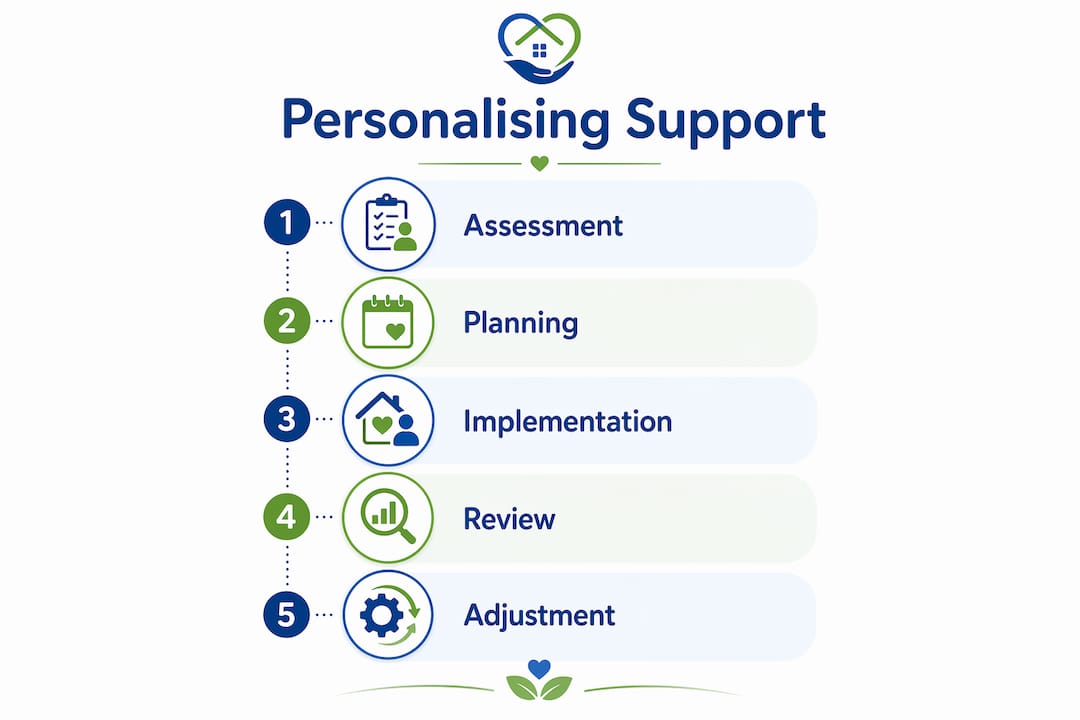
No two autistic people have identical support needs. Effective provision starts with a thorough assessment and is adjusted continuously as the person grows and changes.
DSM-5 support levels as a planning tool
The DSM-5 assigns support levels separately for social communication and for restricted or repetitive behaviours. The three levels are:
| DSM-5 level | Social communication | Repetitive behaviours |
|---|---|---|
| Level 1 | Noticeable difficulties without support | Inflexibility causes significant interference |
| Level 2 | Marked difficulties even with support | Frequent enough to be obvious to casual observers |
| Level 3 | Severe difficulties; very limited initiation | Extreme difficulty coping with change |
These levels guide the intensity of support a person receives. They are not fixed labels. Support needs change across the lifespan, particularly during school transitions and when entering employment, and regular reassessment is the only way to keep provision relevant.
Person-centred versus service-centred approaches
A service-centred approach fits the person to whatever is available. A person-centred approach starts with the individual’s strengths, communication style, and goals, then builds provision around those. The NHS confirms that autism support focuses on autonomy and dignity rather than correcting autistic traits. That distinction matters enormously in practice.
Personalised adaptations can include changes to the physical environment, such as reducing fluorescent lighting or creating a quiet space at home. They can also include adjustments to communication methods, for example using visual schedules or Augmentative and Alternative Communication devices. Predictable routines reduce anxiety and build confidence. A practical autism-friendly home checklist can help you identify which environmental changes will have the most immediate impact.
Pro Tip: Review your family member’s support plan at every major life transition, not just annually. School entry, moving to secondary school, and starting work are all moments when needs shift significantly.
How can families access and coordinate autism support?
Accessing autism support services can feel like navigating a complex system with no map. The good news is that you have more options than most families realise.
-
Start before diagnosis. Families can self-refer for early intervention evaluations based on developmental delay alone. Waiting for a formal diagnosis before seeking help costs time in critical developmental windows.
-
Contact your GP or health visitor. In the UK, a referral from your GP or health visitor opens the pathway to specialist assessment and connects you to local autism support services. Keep a written record of every conversation and every referral made.
-
Request a needs assessment from your local authority. Under the Children and Families Act 2014, children with special educational needs are entitled to an Education, Health and Care (EHC) plan. This legally binding document coordinates support across education, health, and social care.
-
Build your coordination team. Effective autism support depends on professionals sharing goals and strategies. Ask for a lead professional or care coordinator who can act as a single point of contact. The role of care coordinators is to reduce the burden on families by managing communication between services.
-
Document everything. Keep a folder with assessment reports, IEPs, EHC plans, and correspondence. This record becomes invaluable when transitioning between services or challenging a decision.
-
Know your rights. Families have the right to request reviews, challenge decisions, and seek independent advice. Local authority SEND Information, Advice and Support Services (IASS) provide free, impartial guidance.
Learning how to communicate with carers and other professionals clearly and confidently is one of the most practical skills you can develop as a family navigator.
What are the benefits of autism support for individuals and families?
The evidence for well-coordinated autism support is clear and consistent. Benefits extend to the autistic individual and to the whole family.
“Autistic individuals had only about 50.4% of desired quality-of-life outcomes present, but personalised supports largely improve these outcomes more than sociodemographic factors. A study of 860 autistic adults showed that 52.1% of personalised supports were in place, correlating directly to better quality of life.”
Source: Springer Nature
That finding is significant. It means the supports you put in place matter more than background circumstances you cannot change. You have real influence over your family member’s quality of life.
The key benefits of coordinated autism support include:
- Improved social communication. Targeted speech and language therapy builds skills that help autistic individuals connect with others on their own terms.
- Greater independence in daily life. Occupational therapy and structured routines reduce reliance on others for everyday tasks, building confidence over time.
- Reduced family stress. Coordinated care means fewer contradictory messages from different professionals and a clearer path forward for the whole family.
- Stronger autistic identity. Peer-support programmes build self-esteem and autism pride, helping individuals see their neurodivergence as a difference rather than a deficit.
- Better mental health outcomes. When support is well matched to need, anxiety decreases and overall wellbeing improves for both the autistic individual and their caregivers.
Promoting client independence at home is one of the most direct ways to translate these benefits into everyday life.
Key takeaways
Autism support is most effective when it is personalised, coordinated across professionals, and reviewed regularly as needs change across the lifespan.
| Point | Details |
|---|---|
| Start early, without waiting for diagnosis | Early intervention services are available from birth and do not require a formal autism diagnosis to begin. |
| Use DSM-5 levels as a planning guide | Support levels 1–3 guide service intensity but are not fixed; reassess at every major life transition. |
| Person-centred planning produces better outcomes | Personalised supports improve quality of life more than any sociodemographic factor, according to research with 860 autistic adults. |
| Families are the most important navigators | Coordinating communication between professionals and documenting all plans is the most impactful role a family can play. |
| Peer-led mentoring fills a unique gap | Autistic-led mentoring programmes produce measurable gains in self-awareness, social confidence, and communication skills. |
What I have learned from watching families navigate autism support
One thing stands out after years of observing how families engage with autism support systems: the families who achieve the best outcomes are not necessarily the ones with the most resources. They are the ones who ask the most questions.
There is a persistent misconception that you must wait for a formal diagnosis before anything useful can happen. That belief costs families months, sometimes years, of support during the periods when it matters most. The system does allow earlier access than most people realise, and knowing that changes everything.
I have also noticed that support needs are rarely static. A child who manages well at primary school may struggle significantly at secondary school, not because their autism has changed, but because the environment has. Families who treat support planning as an ongoing conversation rather than a one-time event consistently report better outcomes. The autism care workflow is not a straight line. It loops back, adjusts, and evolves.
My strongest advice is this: focus on what your family member can do and build from there. Deficit-focused planning demoralises everyone involved. Strengths-focused planning creates momentum. The goal of autism support is not to produce a neurotypical person. It is to help an autistic person live a life that feels meaningful and self-directed to them.
— Dan
How Kells-care supports families with personalised home-based care
Kells-care has provided personalised domiciliary care across London for over 30 years. For autistic individuals, home-based support offers a significant advantage: familiar environments reduce anxiety and allow skills to be practised in the settings where they matter most. Kells-care’s carers are fully qualified, DBS checked, and regulated by the Care Quality Commission, so families can be confident in the quality of care provided. Support is built around each individual’s needs, routines, and communication preferences, not a fixed service template. To find out what personalised home care looks like in practice, download the free home care guide from Kells-care and take the first step towards coordinated, dignified support at home.
FAQ
What is autism support, exactly?
Autism support is a set of person-centred services and adaptations designed to help autistic individuals live with greater independence and wellbeing. It includes therapies, educational plans, peer programmes, and coordinated professional care tailored to individual strengths and challenges.
Do you need a diagnosis to access autism support services?
No. Early intervention services for children from birth to age 3 do not require a formal autism diagnosis. Families can self-refer based on developmental concerns, which allows support to begin during critical developmental windows.
What do autism support groups do?
Autism support groups provide peer connection, shared experience, and practical information for autistic individuals and their families. Peer-led programmes in particular show evidence-based improvements in self-esteem, social confidence, and autistic identity.
How often should an autism support plan be reviewed?
Support plans should be reviewed at every major life transition, including school entry, moving to secondary school, and entering employment. Support needs are dynamic and a plan that worked well at one stage may need significant adjustment at the next.
How can families find autism support near them?
Start with your GP or health visitor for a referral to specialist assessment. Contact your local authority to request an Education, Health and Care needs assessment. Local SEND Information, Advice and Support Services (IASS) provide free, impartial guidance on available autism assistance resources in your area.