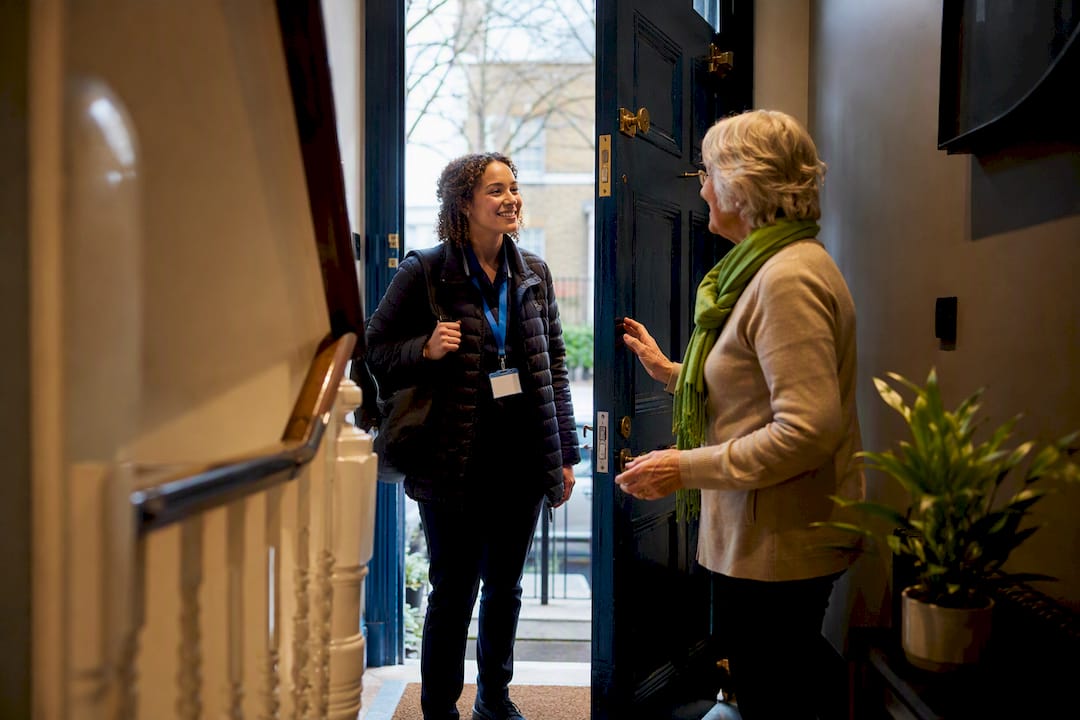
A direct payment is the part of your council personal budget paid straight to you, or to someone you nominate, so you can arrange your own eligible care and support instead of the council arranging it for you. You must be 16 or over and have been assessed as having eligible needs. It buys real flexibility over who cares for you and when, but it comes with financial management or employer duties attached.
TL;DR:
- Direct payments are typically limited to adults over 16 with assessed eligible care needs, with some groups like parents of disabled children and carers qualifying.
- Managing a direct payment requires a care needs and financial assessment, along with careful record-keeping and compliance with employer responsibilities if employing a personal assistant.
- Direct payments can fund employment of a personal assistant, care agency services, and specific equipment, but cannot cover residential care, general household bills, or NHS services.
- Councils monitor spending through receipts and bank statements, with serious repercussions for unaccounted expenses or missing evidence, especially in the first year.
- Using a regulated care provider can simplify management and compliance, while direct employment demands legal obligations such as payroll registration and insurance.
Table of Contents
- What is a direct payment and who can get one?
- How do you apply for direct payments for care?
- What can direct payments be used for?
- Managing your direct payment account and employer duties
- How do councils monitor and review direct payments?
- Are direct payments right for you? Pros, cons and a quick checklist
- What should you do next to set up direct payments?
- Kells’ perspective on making direct payments work in practice
- How Kells-care fits into your direct payment plan
- Sources
What is a direct payment and who can get one?
Direct payments exist because the Care Act 2014 gives adults with eligible care needs the right to ask for their personal budget in cash rather than having the council commission services on their behalf. Sections 31 to 33 set out when a council must make a direct payment and when it retains discretion. GOV.UK confirms the core eligibility rule: you need to be 16 or older and formally assessed as having eligible social care needs.
Several groups can qualify:
- Disabled adults and older people assessed as needing ongoing care and support
- Parents of disabled children, who can receive payments on the child’s behalf
- Carers who have their own assessed support needs
- Young people aged 16 or 17 moving towards adult social care
Capacity matters here. If you cannot manage the money or the decisions that go with it, someone else, an “authorised person” or “nominated person”, can receive and manage the payment for you, provided the council agrees they can act in your best interests. Councils have discretion in some situations, particularly around care home funding and specific vulnerable groups, so it is always worth checking local policy with your social worker before assuming a blanket entitlement.
How do you apply for direct payments for care?
Getting a direct payment starts with a needs assessment, not a payment request. The process runs in a fairly predictable sequence:
- Contact your local council’s adult social care team and ask for a care needs assessment. Have details of your daily routine, existing support, and any diagnoses ready.
- Attend the assessment, where a social worker identifies your eligible needs and drafts a care and support plan.
- Ask specifically for a direct payment during care planning if you want to manage the budget yourself; it is not always offered automatically.
- Go through a financial assessment, which determines whether you make a client contribution towards your personal budget based on income and savings.
- Agree the direct payment amount and frequency with the council, typically paid regularly into a dedicated account.
If the council refuses direct payments, or you disagree with the amount, you have the right to ask for a formal review, and ultimately to make a complaint through the council’s statutory complaints procedure. Keep a written record of every conversation. It strengthens your case if the dispute escalates.
What can direct payments be used for?
The rule of thumb: money must go on meeting the needs identified in your care and support plan, delivered by someone competent and, where relevant, properly checked.
Permitted uses typically include:
- Employing a personal assistant (PA) directly for personal care, companionship or support with daily tasks
- Paying a CQC-regulated home care agency for hourly visits or live-in care
- Respite care, day services, and short breaks that appear in the care plan
- Equipment, transport or activities directly tied to agreed care outcomes
What you cannot do with it is just as important. Direct payments cannot fund permanent residential care placements, ordinary household bills unrelated to your care needs, NHS-funded clinical services, or anything outside the agreed plan. Two families with identical budgets might use them completely differently: one employs a PA directly and manages payroll themselves, while another pays an agency an hourly rate and never becomes an employer at all. Both are legitimate, but they carry very different admin loads.
Managing your direct payment account and employer duties
Councils usually pay into a dedicated bank account, a pre-paid card, or a managed account run by a third-party provider, generally every four weeks. Age UK notes that direct payments are most valuable when you want genuine control over who cares for you, provided you are ready for the paperwork that comes with it.
If you employ a PA directly, you take on real legal obligations:
- Registering as an employer for PAYE and National Insurance
- Arranging employers’ liability insurance
- Considering workplace pension duties
- Carrying out DBS checks and budgeting for holiday and sick pay
GOV.UK is direct about this: taking on staff makes you an employer with all the responsibilities that title carries, and it recommends using a direct payment support service if you are unsure. Many councils fund exactly this kind of support at little or no cost, and it is worth asking for one before you commit to direct employment.
Pro Tip: Keep every receipt, invoice, and bank statement in one folder, physical or digital, from day one. Councils ask for evidence at review, and scrambling to reconstruct six months of spending is far harder than filing it as you go.
Where the admin feels too heavy, paying a CQC-regulated agency for hours or live-in care sidesteps most of this. You keep choice over which carer visits and when, without becoming an employer.
How do councils monitor and review direct payments?
Expect scrutiny, particularly in the first year. Councils typically follow a pattern:
- An initial check shortly after setup to confirm the payment is being used as agreed.
- An annual review, or sooner if your needs or circumstances change significantly.
- Evidence requests, usually receipts, bank statements, or pre-paid card transaction logs.
- Suspension or repayment demands if spending strays from the care plan, unspent funds build up, or records go missing.
Council guidance from Worcestershire illustrates this well: unexplained gaps in receipts or bank statements are among the most common triggers for a clawback demand. If a council raises concerns, respond quickly, provide the records you have, and ask for a direct payment support service if you need help getting your paperwork in order. Disputes can be escalated through the same complaints route used for assessment disagreements.
Are direct payments right for you? Pros, cons and a quick checklist
The trade-off is consistent: control in exchange for responsibility.
Benefits: choice of carer, flexible hours that fit your routine, and the ability to keep the same familiar face rather than rotating agency staff.
Drawbacks: ongoing administration, potential employer duties, and the risk of clawback if records slip.
Before deciding, ask yourself:
- Can you realistically manage an account and keep records, or does someone need to do it for you?
- Is there a nominated or authorised person available if you cannot manage it alone?
- Would you rather employ a PA directly, or pay a regulated agency and skip the employer paperwork entirely?
What should you do next to set up direct payments?
Start practically. Request your needs assessment, ask explicitly for a direct payment during care planning, and request a direct payment support service in the same conversation, most councils offer one free of charge. Open a separate account before any money arrives, and gather ID and bank details early so nothing delays the first payment.
Using a CQC-regulated agency alongside your direct payment removes the employer burden while keeping your say over who visits and when. Kells-care has provided home care across London for over 30 years, with carers who are fully qualified, DBS-checked, and CQC-regulated.
| Action | Why it matters |
|---|---|
| Request a needs assessment | Triggers eligibility for a personal budget |
| Ask for a direct payment support service | Reduces audit and admin errors later |
| Open a dedicated account | Keeps council funds separate and traceable |
| Keep receipts and statements from day one | Prevents disputes at annual review |
Before your first review, gather bank statements and invoices into one file. It saves hours when the council asks for evidence.
Kells’ perspective on making direct payments work in practice
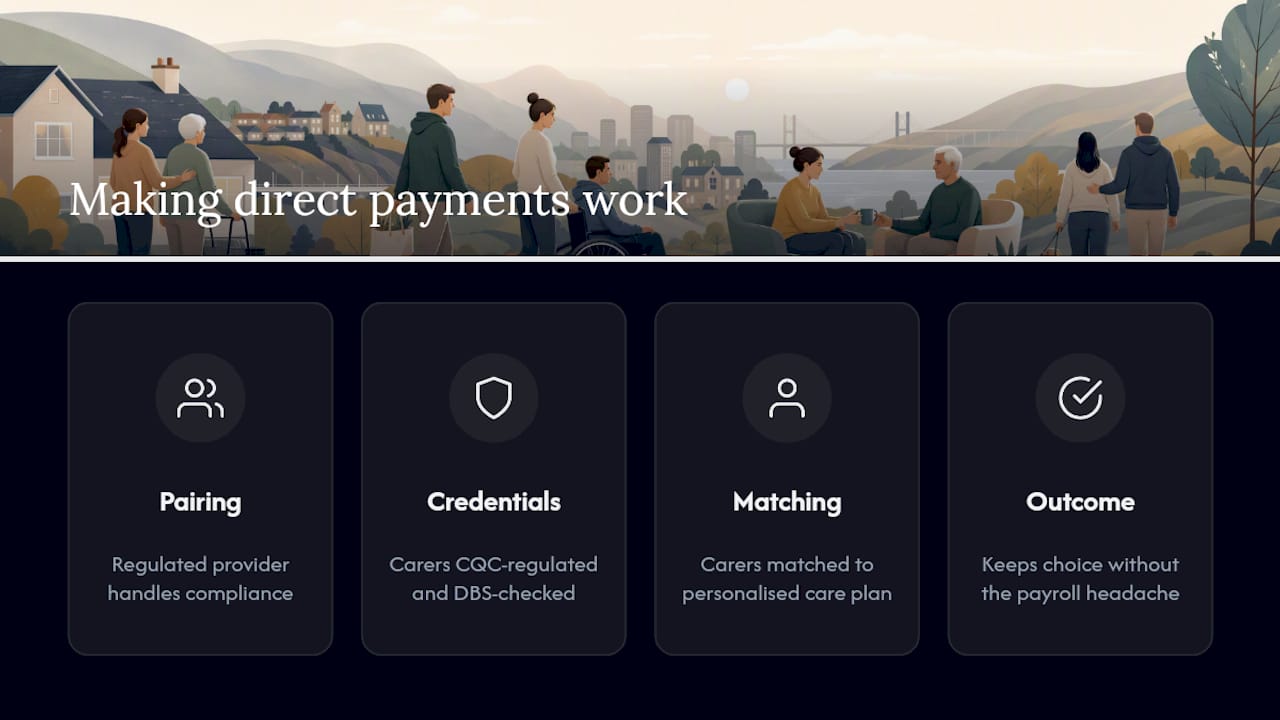
We see direct payments succeed most often when families pair the flexibility with a regulated provider who handles the compliance side. That combination keeps choice without the payroll headache.
Dan holds direct experience advising London families on care funding decisions; specific case studies and credentials will be added here.
Our carers remain CQC-regulated, DBS-checked, and matched to each client’s personalised care plan.
— Dan
How Kells-care fits into your direct payment plan
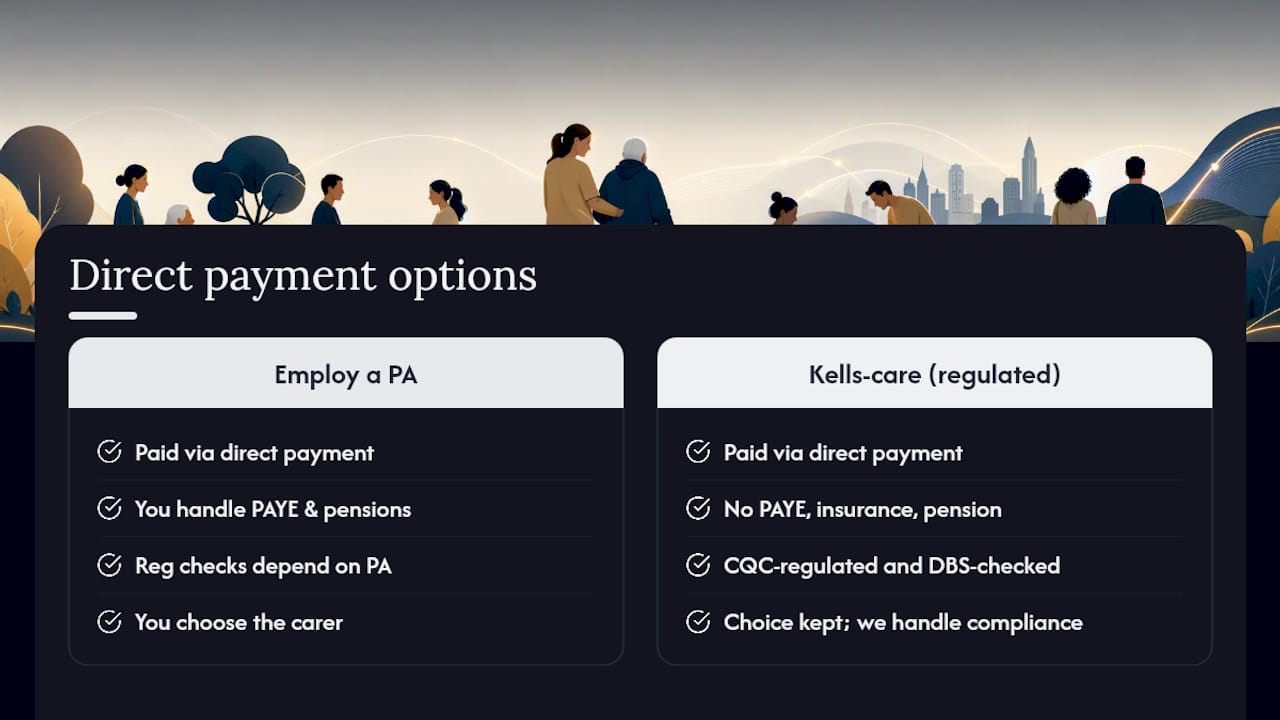
Kells-care provides exactly the kind of regulated support that makes direct payments manageable rather than stressful. Our hourly visits, live-in care, and respite services can all be paid for through your direct payment, and because our carers are CQC-regulated and DBS-checked, you avoid the PAYE, insurance, and pension obligations that come with employing a PA directly. You keep the choice; we handle the compliance.
If you are weighing up direct employment against a regulated route, our free home care guide walks through what a typical care package costs and how it fits alongside a council personal budget. For families comparing home care against a move into residential care, this guide to evaluating care options is a useful starting point too.
Get in touch with our home care team for an initial conversation about how your personal budget could work with our services, no obligation, just a clear answer on whether it fits.
This article is general information, not a substitute for advice from a qualified financial advisor. Consult a qualified financial professional about your own circumstances before acting on anything here.
Sources
- Gov
- Legislation
- Personal budgets and direct payments — Age UK
- Direct payments — Worcestershire County Council


