
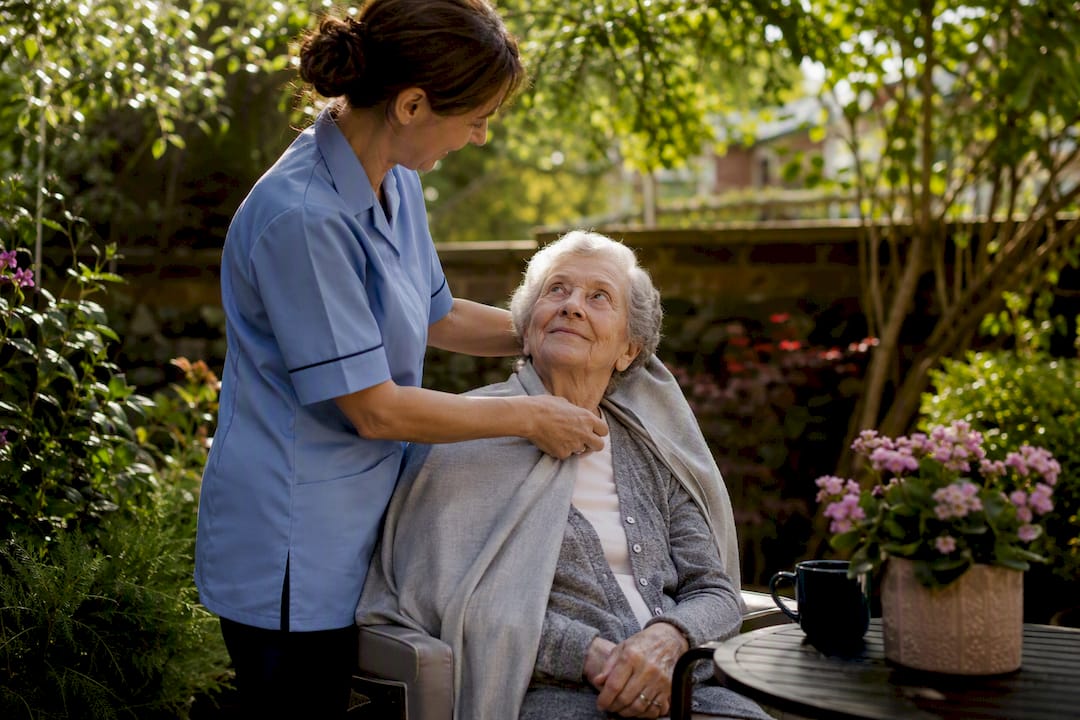
You are likely eligible for Attendance Allowance if you have reached State Pension age and need help with personal care or supervision because of a disability, illness, or frailty. You must normally have needed that help for six months, though this waiting period is waived if you are nearing the end of life. Payment comes at one of two weekly rates depending on whether your needs are daytime, night-time, or both.
- You must be State Pension age or over
- You need help with personal care or supervision for safety
- You have needed this help for six months (unless special end-of-life rules apply)
- Two weekly rates exist, based on day and night care needs
Your first step is to get the official claim form from GOV.UK, or ask someone to request one on your behalf if filling it in yourself feels too much.
Key Takeaways
Attendance Allowance eligibility rests on need for care, not diagnosis, age over State Pension age, and six months of that need unless end-of-life rules apply.
| Point | Details |
|---|---|
| Eligibility is need-based | You qualify through daily care needs, not a specific diagnosis, once you reach State Pension age. |
| Six-month rule has an exception | Normal claims need six months of prior need; end-of-life claims skip this and often pay the higher rate. |
| Two rates apply | £76.70 lower rate for day or night needs, £114.60 higher rate for both, tax-free and not means-tested. |
| Evidence beats generalities | A dated care diary and specific daily examples strengthen a claim far more than vague statements. |
| Awards affect other benefits | Pension Credit, Council Tax Reduction, and Carer’s Allowance can all be affected once Attendance Allowance starts. |
Table of Contents
- Who can claim: age, health conditions, and exclusions
- The six-month rule and end-of-life exceptions
- Do you meet the residence and immigration rules?
- What actually counts as needing help: day and night examples
- Attendance Allowance rates and how they affect other benefits
- How to apply: forms, evidence, and what happens next
- Care homes, hospital stays, and your entitlement
- Building an evidence file that supports your claim
- What the eligibility rules actually reward
- Frequently asked questions
- Sources
Who can claim: age, health conditions, and exclusions
Attendance Allowance is built around one central question: do you need help because of your health, not what that health problem is officially called. You must have reached State Pension age, and you must have a physical disability, a sensory impairment, a mental health condition, or a cognitive condition such as dementia that means you need help with personal care or someone to keep an eye on you for your own safety.
You do not need a formal diagnosis. Independent Age’s guidance is clear that the assessment focuses on daily difficulty, not a label on a medical file. Struggling to wash, dress, or manage stairs safely counts, whether or not a specialist has named the underlying condition.
There are exclusions worth knowing before you apply:
- You cannot claim if you are already receiving Personal Independence Payment (PIP), Disability Living Allowance (DLA), Adult Disability Payment (ADP), or Armed Forces Independence Payment (AFIP)
- Most people subject to immigration control are excluded, with some exceptions covered below
- You must meet UK residence rules, covered in the next section
Pro Tip: Check your exact State Pension age on GOV.UK before applying. It has shifted for people born after certain dates, and applying too early wastes time.
The six-month rule and end-of-life exceptions
Ordinarily, you must have needed help for at least six months before an award starts. This is a qualifying period, not a waiting period after you claim.
Special rules exist if a clinician believes you may not live longer than 12 months. In that case, the six-month wait is bypassed entirely, and claims are usually paid faster and at the higher rate from the outset.
- Ask your GP, consultant, or specialist nurse to complete form SR1 on your behalf
- The clinician sends this directly to the Department for Work and Pensions, so you do not need to handle medical paperwork yourself
- You do not need to tell the person you’re claiming for the reason behind the SR1 if it’s easier not to
Pro Tip: If a family member is reluctant to discuss prognosis, the SR1 process can be handled entirely between clinician and DWP, without difficult conversations at home.
Do you meet the residence and immigration rules?
Alongside age and health, you must satisfy the past presence test: you generally need to have been in Great Britain for at least two of the last three years. This covers England, Wales, and Scotland specifically.
You also need to be “habitually resident” in the UK, the Channel Islands, the Isle of Man, or Ireland. A handful of exceptions exist:
- Refugees and people granted humanitarian protection
- Certain UK nationals who have lived in the EEA or Switzerland
- Members of the armed forces posted overseas
- Some Crown servants and their partners
If you have spent long periods abroad, it is worth checking your specific circumstances against GOV.UK’s guidance rather than assuming you are excluded.
What actually counts as needing help: day and night examples
The rules split need into two categories: attention during the day, and supervision to prevent danger, day or night.
Daytime attention covers practical, physical tasks:
- Getting washed, dressed, or using the toilet
- Eating meals, including help with cutting food or reminders to eat
- Moving safely around the home, including getting in and out of a chair or bed
- Communicating, for people with hearing or speech difficulties
Continual supervision looks different. It applies where someone faces a real risk of harm without watching over, such as a history of falls, seizures, memory lapses that lead to wandering, or confusion that puts them at risk with cookers or medication.
Night-time needs have their own test: either help lasting 20 minutes or longer, needing help repeatedly through the night, or someone needing to stay awake specifically to watch over you.
The rules hinge on whether you need help, not whether you are currently getting it. Someone managing alone, unsafely, without a carer can still qualify.
This distinction catches people out constantly. A person coping through sheer stubbornness, or because a spouse quietly does everything without complaint, still meets the criteria if the underlying need is there.
Attendance Allowance rates and how they affect other benefits
Attendance Allowance pays at two weekly rates. The lower rate is £76.70 for day or night care needs, and the higher rate is £114.60 for people needing help both day and night, or who qualify under end-of-life rules.
The award level depends entirely on the pattern of need described in your claim form and any assessment, not on the underlying diagnosis. Two people with the same condition can receive different rates if their daily difficulties differ.
Attendance Allowance is tax-free and not means-tested, so your savings, pension, or other income have no bearing on whether you qualify. Once awarded, it often opens doors elsewhere:
- Pension Credit can increase, sometimes substantially, once Attendance Allowance is in payment
- Council Tax Reduction and Housing Benefit calculations may improve
- A family member caring for you may become eligible for Carer’s Allowance, subject to their own earnings limit
Citizens Advice recommends telling other benefit offices as soon as your award letter arrives, since these reviews rarely happen automatically.
How to apply: forms, evidence, and what happens next
Getting the paperwork right the first time saves months of delay. Here is the practical sequence:
- Request the AA1 claim form from GOV.UK, by phone, or ask a family member or carer to request it on your behalf
- For end-of-life claims, ask a clinician to complete the SR1 form instead
- Note the date your care needs began, since this affects when payment can start
- List specific daily difficulties with real examples, rather than general statements
- Include GP and specialist contact details, plus current medication
- Return the form by post, and keep a copy
The AA1 notes explain that DWP may contact your GP or other professionals directly, with your consent, rather than always requiring a face-to-face assessment. Where one is needed, it typically involves a short visit or phone call focused on daily routine, not a medical examination.
Claims commonly take several weeks to process. You can check progress by contacting the Attendance Allowance helpline directly.
Pro Tip: Write down three or four specific incidents from the past fortnight, not just “I need help washing.” Specific examples carry far more weight with assessors than general statements.
Care homes, hospital stays, and your entitlement
If your local authority funds your care home place, Attendance Allowance is usually not paid. If you fund your own care home place privately, you can still claim as normal.
During a hospital stay, you can submit a claim, but payment typically only starts once you are discharged. If you already receive Attendance Allowance and go into hospital, payment is usually suspended after a set period and resumes on your return home.
Building an evidence file that supports your claim
A strong claim rests on specific, dated detail rather than vague description. Age UK’s guidance suggests keeping a care diary, noting particular tasks you needed help with and when, alongside your medication schedule and any GP letters confirming daily limitations.
- Keep a dated care diary logging specific incidents, not general impressions
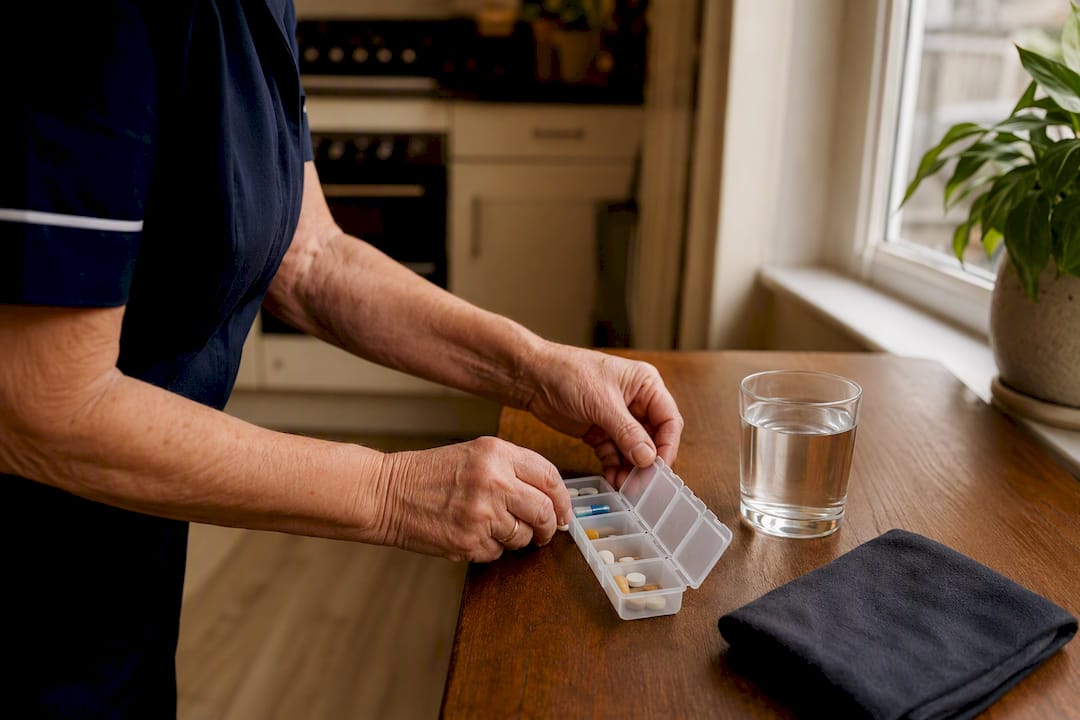
- Note medication times and any missed doses linked to confusion or forgetfulness
- Ask your GP for a brief letter referencing your daily difficulties
- Photograph mobility aids, grab rails, or adaptations already in use at home
If you already receive visits from paid carers, their contemporaneous notes on what help was given and when can add real weight to a claim, since they are dated and specific rather than recalled after the fact. Kells-care has provided home care across London for over 30 years, and our staff are DBS-checked and regulated by the CQC, so families often ask us how visit notes can support a benefits application.
Pro Tip: Ask your carer or care coordinator to note specific tasks and times in visit records. These small details are exactly what assessors look for.
If juggling daily care alongside a benefits claim feels like a lot to manage alone, arranging personalised home care can lighten the load while you sort out entitlement. Kells-care’s free home care guide walks through what support looks like day to day, without any obligation to sign up.
What the eligibility rules actually reward
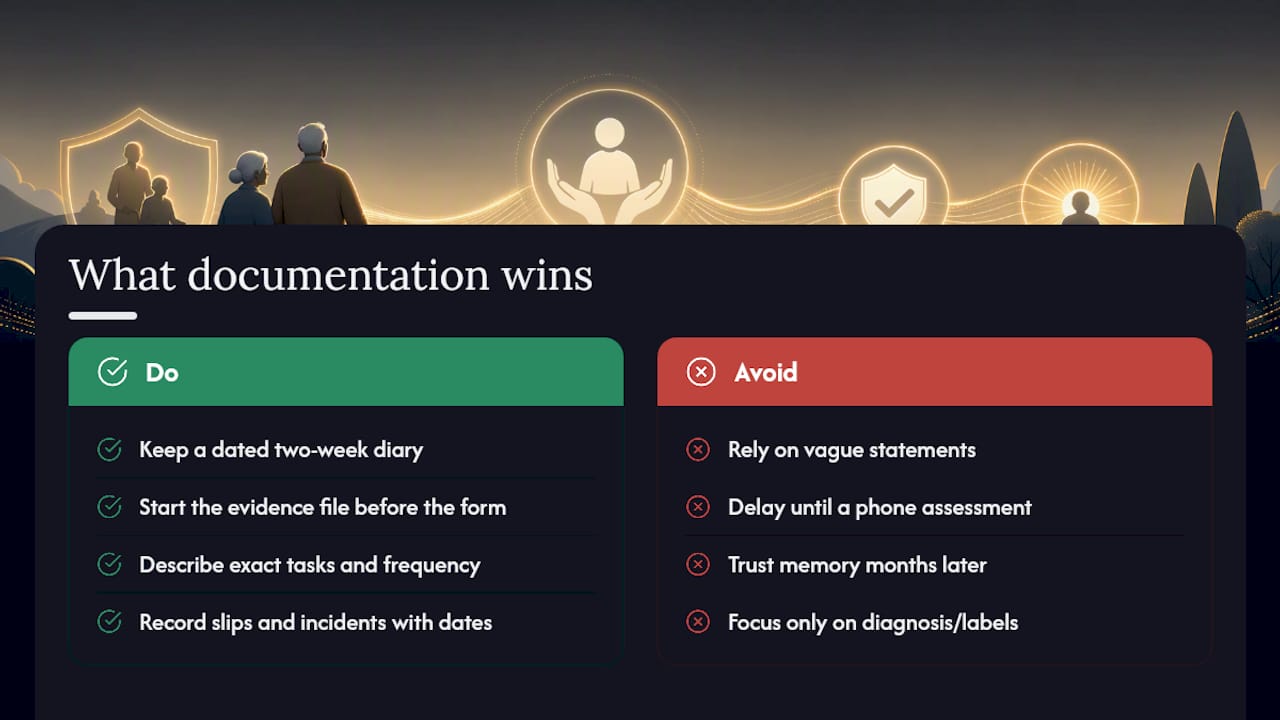
The system rewards documentation, not desperation. Plenty of people who plainly qualify get turned down first time, not because their need isn’t real, but because their form describes it too generally. “I struggle with washing” loses to “I need help getting into the bath three mornings a week and have slipped twice in the past month.”
Conventional advice tends to focus heavily on the six-month rule and the rate bands, as if the hardest part is understanding the criteria. It isn’t. The hardest part is translating a lived, messy daily reality into the specific language an assessor is trained to score against. Families who keep even a rough diary for a fortnight before applying tend to fare far better than those relying on memory during a phone assessment months later.
If there’s one thing worth prioritising above all else, it’s this: start the evidence file before you start the form. Diagnosis, professional titles, and clinical language matter less than most people assume. What matters is a clear, dated account of what happens on an ordinary Tuesday.
Frequently asked questions
Can I claim Attendance Allowance if I still live independently?
Yes. Eligibility depends on your need for help, not whether you currently receive it or live alone.
Does Attendance Allowance affect my State Pension?
No. It is paid on top of your State Pension and does not reduce it, since it is not means-tested.
Can a family member claim Carer’s Allowance if I get Attendance Allowance?
Possibly, if they provide at least 35 hours of care a week and meet the separate Carer’s Allowance earnings limit and eligibility rules.
What happens if my condition changes after I’m awarded Attendance Allowance?
You must report changes in your care needs to DWP, since an improvement or deterioration can affect which rate applies.
Can I appeal if my claim is refused?
Yes. You can ask for a mandatory reconsideration first, and appeal to a tribunal if you still disagree with the outcome.
This article is general information, not a substitute for advice from a qualified financial advisor. Consult a qualified financial professional about your own circumstances before acting on anything here.