
TL;DR:
- Outcome-focused care involves tailoring support around personal goals that matter most, emphasizing quality of life. It replaces task-based measures with shared, measurable achievements, promoting independence, dignity, and community participation. Families can advocate for comprehensive, regularly reviewed plans that truly reflect their loved ones’ aspirations.
Outcome-focused care is the practice of tailoring health and social care services to help individuals achieve the outcomes that matter most to them, with a clear emphasis on quality of life, independence, and personal goals. The industry term used across UK statutory guidance is “outcomes-based care,” and both phrases describe the same approach. The Care Act 2014 defines the core purpose of adult care as helping people achieve outcomes that matter most to them, covering everyone with or without ongoing care needs. For families in London supporting an elderly or disabled loved one, understanding what is outcome-focused care is the first step towards securing genuinely meaningful support.
How does outcome-focused care differ from traditional care?
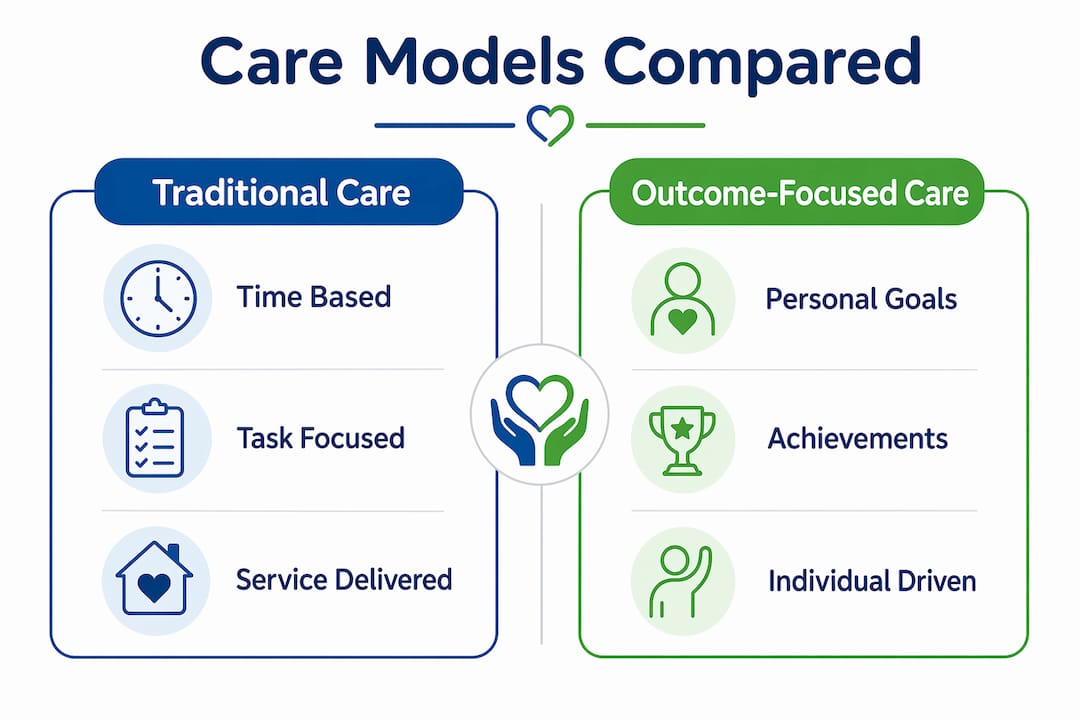
Traditional care models measure success by inputs: time spent, tasks completed, visits delivered. A carer might spend 30 minutes on personal care, and the record shows exactly that. The person receiving care has little say in what those 30 minutes achieve.

Outcome-focused care measures success differently. Agreed outcomes are specific achievements jointly decided between the individual, their family, and care professionals, recorded in the care plan, and used to monitor real progress. Instead of logging “30 minutes bathing,” the outcome reads: “I want to feel fresh and confident to attend my community book group.” That single shift changes everything about how care is planned and delivered.

The table below shows the practical difference between the two approaches.
| Traditional care | Outcome-focused care |
|---|---|
| Measured by time and tasks | Measured by personal achievements |
| Carer decides what is done | Individual and family agree on goals |
| Static, task-based care plan | Flexible, regularly reviewed plan |
| Focus on deficits and needs | Focus on aspirations and strengths |
| Success = visit completed | Success = goal achieved |
Pro Tip: When reviewing a care plan, ask whether each entry starts with “I want to” or “I will be able to.” If the plan reads like a task list rather than a set of personal goals, request a review with the care provider.
The difference between the two models is not just philosophical. Outcome-based care empowers individuals as active partners who are experts in their own lives, producing support that is meaningful rather than routine. For families, this means your loved one’s care plan reflects who they are, not simply what they cannot do.
What goes into an outcome-focused care plan?
A genuine outcome-focused care plan starts with a real conversation. The Care Act 2014 mandates that assessments must be genuine conversations about needs and goals, not procedural checklists. Local authorities must consider all aspects of wellbeing, including a person’s ambitions, skills, and social connections.
The key components of a well-constructed plan include:
- Person-led goals written in the first person. Outcomes that begin with “I” keep the individual as the primary stakeholder. “I want to cook my own breakfast three times a week” is far more powerful than “assist with meal preparation.”
- Specific and measurable targets. Vague goals are impossible to review. A good outcome has a clear timeframe and a defined measure of success.
- Social, emotional, and community participation goals. Holistic outcomes include social connections, faith, and community participation alongside daily living needs. Ignoring these risks unnecessary early care dependency.
- Ongoing assessment, not a one-time exercise. The Adult Social Care Outcomes Framework (ASCOF) tracks social care-related quality of life and control over daily life across the UK. It exists precisely because outcomes must be monitored over time, not ticked off once.
- Collaboration between all parties. The individual, family members, social workers, and care providers all contribute. No single voice dominates the plan.
Pro Tip: Ask the care coordinator to share the care plan in plain language before signing. If you cannot find your loved one’s goals written in their own words, the plan needs revision.
Understanding the role of social workers in this process helps families engage more confidently. Social workers are responsible for facilitating these conversations and ensuring the plan reflects the individual’s full life, not just their care needs.
What are the benefits of outcome-focused care?
Outcome-focused care produces measurable improvements in quality of life. Success is measured by changes that matter to the individual, such as “the person can now prepare meals unassisted,” rather than “six home visits delivered.” That shift in measurement changes what carers prioritise and how families assess whether care is working.
The core benefits for families and those receiving care include:
- Greater personal independence. Care plans built around individual goals actively support client independence at home, rather than creating reliance on carers for tasks a person could manage themselves.
- Stronger sense of dignity and self-worth. When a person’s goals and preferences shape their daily care, they remain in control of their own life. This directly supports dignity in care as a lived experience, not just a policy principle.
- Better mental and emotional well-being. Achieving personal goals, however small, builds confidence and reduces feelings of helplessness. Social and community goals within the plan further protect against isolation and low mood.
- Clearer communication for families. When outcomes are written in plain language, families understand exactly what care is trying to achieve. This makes it far easier to advocate for a loved one and to spot when something is not working.
- More adaptive and responsive support. Because outcome-focused plans are reviewed regularly, care adjusts as needs and goals evolve. A person recovering from a fall may have different goals in march than they did in january, and the plan should reflect that.
What are the common misconceptions about outcome-focused care?
Several misunderstandings prevent families from getting the most from this approach. Recognising them early saves time and frustration.
-
“Care planning is just about identifying what my loved one cannot do.” This is the most common misconception. Outcome-focused care treats individuals as experts in their own lives, focusing on what they want to achieve, not cataloguing deficits. A good assessment explores strengths and aspirations alongside needs.
-
“Tasks and outcomes are the same thing.” They are not. A task is an action a carer performs. An outcome is a change in the person’s life. Confusing the two leads to generic care plans that feel impersonal and fail to improve quality of life.
-
“Once the care plan is agreed, it stays the same.” Outcomes are dynamic and require regular review. Static care plans are unlikely to be truly outcome-focused. Goals change as health, circumstances, and personal ambitions evolve.
-
“Social and emotional goals are extras, not real care needs.” The Care Act 2014 explicitly requires local authorities to consider social connections, community participation, and emotional well-being as part of the assessment. These are not optional additions.
-
“Families have no power to challenge a care plan.” Families have a right to request holistic reviews if an assessment focuses too narrowly on tasks rather than aspirations. Local authorities are required to arrange independent advocacy for individuals who cannot fully participate in their own assessment.
How can families support outcome-focused care?
Your involvement as a family member or caregiver makes a genuine difference to the quality of the care plan and the outcomes achieved. Active participation is not just welcome; it is built into the legal framework.
- Start with open-ended questions. Ask your loved one: “What would make your day feel worthwhile?” or “What would you like to be able to do that you cannot manage now?” These conversations surface goals that a formal assessment might miss.
- Work collaboratively with care providers. Share what you know about your loved one’s history, preferences, and personality. Care professionals bring clinical knowledge; you bring personal knowledge. Both are needed for a plan that truly fits.
- Participate in reviews, not just initial assessments. Outcomes need ongoing management and regular review to remain relevant. Attend review meetings, ask whether goals have been met, and request changes when circumstances shift.
- Advocate for the full picture. If a review focuses only on physical tasks, raise social, emotional, and community goals explicitly. You have the right to request a broader assessment.
- Use available resources. Families in London can access guidance on personalising home care services to understand how to shape care plans around individual goals and preferences.
Pro Tip: Keep a simple notebook of your loved one’s goals, progress, and any changes in their wishes between formal reviews. This record becomes invaluable evidence when requesting plan updates.
Freedom of choice in care is a right, not a privilege. Families who understand this are far better placed to secure care that genuinely improves their loved one’s life.
Key takeaways
Outcome-focused care improves quality of life by replacing task-based care with personal goals, agreed collaboratively, reviewed regularly, and measured by real changes in the individual’s life.
| Point | Details |
|---|---|
| Definition is statutory | The Care Act 2014 defines outcome-focused care as helping individuals achieve what matters most to them. |
| Goals replace tasks | Outcomes are written in the person’s own words and measure life changes, not carer activity. |
| Plans must be reviewed | Static care plans are not truly outcome-focused; regular reviews keep goals relevant and achievable. |
| Families have legal rights | Families can request holistic reviews and independent advocacy if assessments are too narrow. |
| Social goals are care needs | Community participation, faith, and emotional well-being are legally required parts of any assessment. |
Why outcome-focused care matters more than most families realise
I have spent years working alongside families navigating the care system in London, and the pattern I see most often is this: families accept the first care plan they are given because they do not know they can ask for something better.
The uncomfortable truth is that many care plans still read like task lists. They describe what a carer will do, not what the person receiving care will achieve. That is not outcome-focused care. It is outcome-focused care in name only.
What I have found actually works is treating the care plan as a living document that belongs to the individual, not the provider. When families come to reviews prepared with specific goals in their loved one’s own words, the conversation changes entirely. Professionals respond to clarity. A goal like “I want to walk to the corner shop independently by april” is far harder to ignore than a vague request for “more support with mobility.”
The other thing I would encourage every family to do is push for social and community goals to be written into the plan formally. These are not soft extras. They are the goals that most directly protect against depression, isolation, and premature dependency. I have seen individuals regain confidence and reduce their care needs simply because a plan included a goal around attending a local group once a week.
Outcome-focused care, done properly, is a partnership. Your loved one brings their life, their wishes, and their expertise in being themselves. The care team brings professional knowledge and practical support. Your role as a family member is to hold both sides accountable to the goals that were agreed.
— Dan
Outcome-focused home care in London with Kells-care
Kells-care has delivered personalised home care across London for over 30 years, with a clear commitment to promoting independence, dignity, and freedom of choice for every client. Every care plan Kells-care creates is built around the individual’s own goals, reviewed regularly, and adapted as needs change.
If you are ready to understand your options, the free home care guide from Kells-care is a practical starting point for London families. For families looking at specific support options, the guide to personalised elderly care in London explains how outcome-based approaches work in practice. Kells-care’s team is regulated by the Care Quality Commission and ready to discuss how a truly outcome-focused plan can be built around your loved one’s life.
FAQ
What is outcome-focused care in simple terms?
Outcome-focused care means organising support around what a person wants to achieve in their life, rather than around a fixed list of tasks. Goals are written in the person’s own words and reviewed regularly to reflect changing needs.
How does the Care Act 2014 relate to outcome-focused care?
The Care Act 2014 legally requires local authorities to help individuals achieve outcomes that matter most to them, making outcome-focused care the statutory foundation for adult social care in England.
What is the difference between outcome-focused and patient-centred care?
Both approaches place the individual at the centre of care decisions. Outcome-focused care specifically measures success by whether agreed personal goals are achieved, while patient-centred care is a broader principle covering respect, communication, and involvement in decisions.
Can families request a more outcome-focused assessment?
Yes. Families have the right to request a holistic review if an assessment focuses too narrowly on tasks. Local authorities must also arrange independent advocacy for individuals who cannot fully participate in their own assessment.
How are outcomes measured in home care?
Outcomes are measured by real changes in a person’s life, for example, whether they can now prepare a meal independently or attend a community activity, rather than by the number of visits or hours of care delivered.