

TL;DR:
- Mobility support encompasses tools, services, and professional assistance to help individuals move safely and independently despite disabilities. Proper assessment by a therapist is essential to identify the most suitable aids and services tailored to each person’s unique needs.
Mobility support is defined as the full range of tools, services, and professional assistance designed to help individuals move safely and independently despite physical challenges or disability. This includes devices such as wheelchairs, mobility scooters, and walking frames, as well as mobility assistance that covers transfer support, specialised transport, and personalised caregiving. Whether you are looking for help for yourself or a loved one, understanding what mobility support covers is the first step towards maintaining dignity and independence at home. A professional assessment by an occupational therapist or physiotherapist is the most reliable way to identify which combination of aids and services will work best for your situation.
What is mobility support and who needs it?
Mobility support is the structured assistance provided to anyone whose ability to move freely is affected by age, disability, injury, or long-term health conditions. The term covers a broad spectrum, from a simple walking stick to a fully powered wheelchair, from a volunteer driver scheme to round-the-clock personal care at home.
The people who benefit most include older adults experiencing reduced strength or balance, individuals living with conditions such as Parkinson’s disease, multiple sclerosis, or stroke, and those recovering from surgery or injury. Disability does not follow a single pattern, which is why mobility support services are designed to be flexible and personalised rather than one-size-fits-all.
Mobility is recognised as a social determinant of health. When someone cannot move safely or access transport, the consequences extend well beyond physical inconvenience. Social isolation, missed medical appointments, and declining mental health are all documented outcomes of poor mobility access. Addressing mobility needs early protects both physical and emotional wellbeing.
If you are unsure whether you or a loved one qualifies for support, the answer is straightforward: if movement is causing difficulty, risk, or reduced quality of life, a professional assessment is warranted. You do not need a formal diagnosis to request one.
How is mobility support determined through assessment?
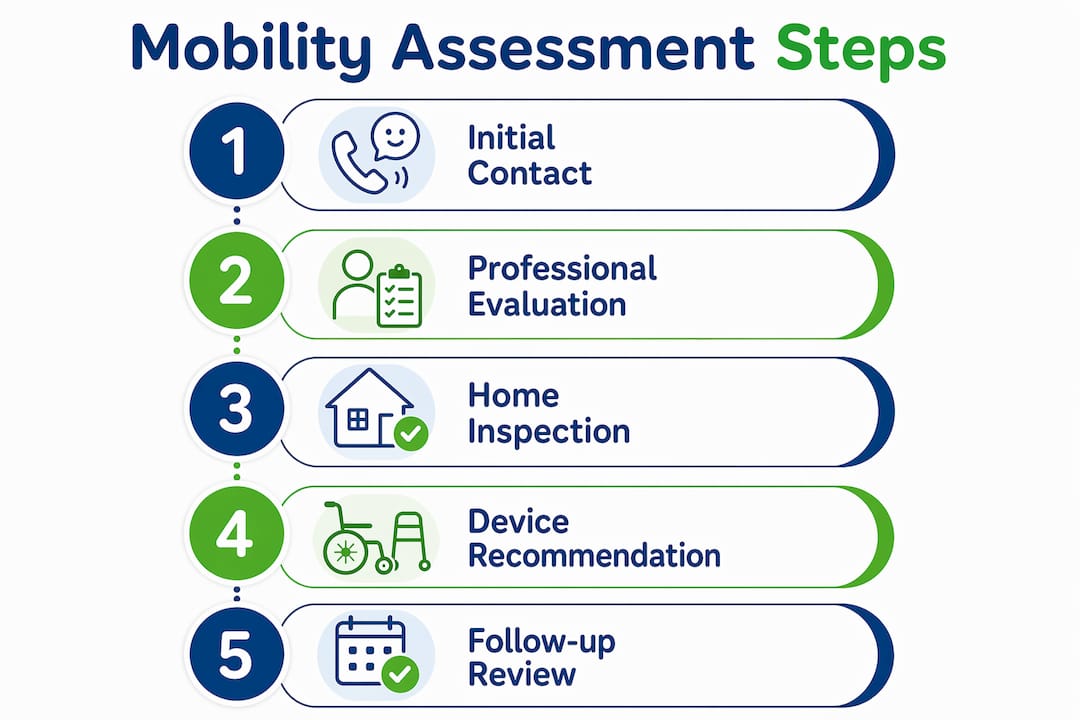
Professional mobility assessments by occupational therapists or physiotherapists are the standard method for determining the right support for each individual. These assessments are not simply a conversation. They involve structured tests covering balance, functional mobility, strength, and the specific demands of your home environment.
Assessments take place in two main settings:
- Home visits: A therapist observes how you move through your own space, identifying hazards such as narrow doorways, uneven flooring, or stairs without handrails.
- Mobility showrooms: Specialists allow you to trial different aids in a controlled environment, from walking frames to powered scooters, before any purchase is made.
The outcome of an assessment directly guides which aids or services are recommended. An occupational therapist can advise on everything from basic walking aids to specialised vehicle adaptations, ensuring you receive support that matches your actual daily needs rather than a generic solution. You can also request a mobility assessment independently through local health services or a community mobility showroom, without waiting for a GP referral.
The assessment process also considers your home layout, your social activities, and any caring responsibilities you hold. This broader picture matters because mobility support that works indoors but fails outdoors is only a partial solution.
Pro Tip: Do not wait until a fall or injury prompts action. Contact your local NHS occupational therapy team or a mobility showroom directly to arrange an assessment. Early intervention leads to better outcomes and safer choices.
For families supporting an elderly relative, understanding independent living support options alongside mobility assessments gives you a much clearer picture of what help is available.
What types of mobility aids and devices are available?
The range of mobility support devices available in the UK is wider than most people realise. Choosing the right one depends on your level of mobility, your home environment, and how far you need to travel independently.
Walking aids
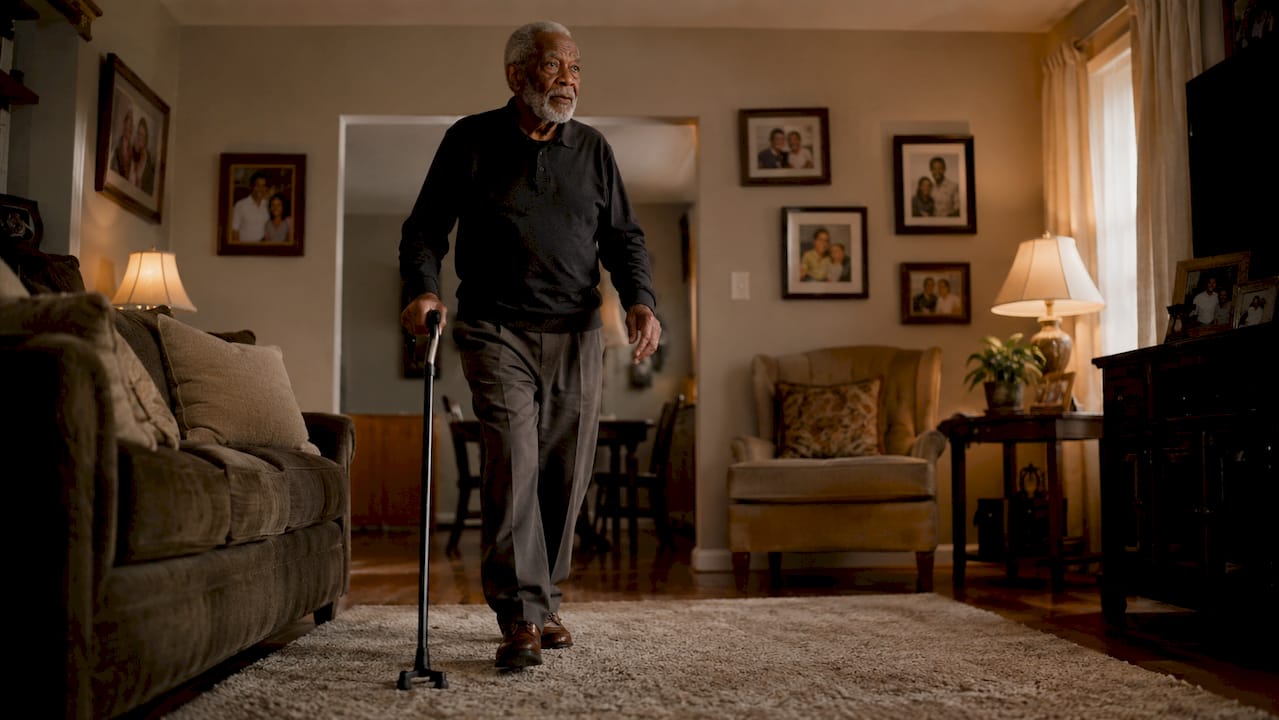
Walking aids are the most commonly prescribed category. Canes and walking sticks suit those who need light balance support. Walking frames, including Zimmer frames and wheeled rollators, provide greater stability for those with more significant weakness. Rollators with a built-in seat are particularly useful for people who tire quickly and need to rest during short journeys.
Wheelchairs and mobility scooters
Manual wheelchairs are propelled by the user or a carer and are suited to those with upper body strength or who have a regular companion. Powered wheelchairs are controlled electronically and give greater independence to those who cannot self-propel. Mobility scooters differ from wheelchairs in that they are designed primarily for outdoor use and longer distances, offering a seat, handlebars, and battery power.
| Aid Type | Best For | Key Advantage | Consideration |
|---|---|---|---|
| Walking stick or cane | Mild balance issues | Lightweight, low cost | Limited support on uneven ground |
| Walking frame or rollator | Moderate weakness or fatigue | Stable, some include seating | Bulkier indoors |
| Manual wheelchair | Those with a carer or upper body strength | Affordable, foldable | Requires physical effort or carer |
| Powered wheelchair | Significant mobility impairment | Full independence indoors and out | Higher cost, charging required |
| Mobility scooter | Outdoor independence over distance | Speed and range | Less suited to tight indoor spaces |
| Grab rails and ramps | Home safety | Low cost, permanent fixture | Requires installation |
Other aids and home adaptations
Grab rails fitted in bathrooms and along stairs reduce fall risk significantly. Ramps replace steps at entrances, allowing wheelchair or scooter access. Transfer devices, including transfer boards and hoists, assist with moving between a bed, chair, or bath safely.
Obtaining insurance coverage for mobility equipment is not automatic. A formal medical prescription from a doctor, explicitly describing the health condition, is the primary document required to access insurance-funded equipment. Contact your insurer before purchasing to confirm coverage and preferred suppliers. Private rental or secondhand markets can also offer more affordable routes when insurance copays are high.
Pro Tip: Always trial a mobility aid before committing to a purchase. What feels comfortable in a showroom may not suit your home layout. Ask for a home trial period where possible.
What mobility support services exist for transport and daily movement?
Mobility aids address movement within and around the home, but many people also need support getting to medical appointments, shops, or social activities. This is where mobility support services come in.
Paratransit services provide door-to-door transport for individuals who cannot use standard public transport due to disability or age. These services are available across many UK local authorities and reduce the risk of social isolation and missed medical care that comes with poor transport access.
Beyond paratransit, a range of community services typically includes:
- Volunteer driver programmes: Local volunteers provide lifts to medical appointments, supermarkets, and social events for those without access to other transport.
- Mobility management services: Trained advisers help individuals plan trips, identify accessible routes, and coordinate multiple transport options for complex journeys.
- Community transport schemes: Minibuses and accessible vehicles run by local charities or councils serve areas not covered by standard public transport.
- Carer-assisted transport: A personal carer accompanies the individual, providing physical assistance during transfers and at the destination.
- On-demand accessible taxi services: Many areas now offer pre-booked accessible vehicles through local authority contracts.
The connection between transport access and health outcomes is direct. Reliable transportation supports quality of life and community participation in ways that no device alone can replicate. Someone who can reach their GP, attend a day centre, or simply visit a friend is far less likely to experience the mental health decline that accompanies prolonged isolation.
For families arranging care in London, Kells-care’s home care services include support with daily movement and accompanied outings, complementing the transport services described above.
How does mobility support benefit users and caregivers?
The benefits of mobility support extend to both the person receiving care and the people around them. Improved physical safety is the most immediate gain, but the wider effects on confidence, social life, and caregiver health are equally significant.
For the individual, the key benefits include:
- Greater autonomy: Being able to move independently, even with an aid, restores a sense of control over daily life.
- Reduced fall risk: Appropriate aids and home adaptations directly lower the likelihood of falls, which are a leading cause of hospital admission among older adults.
- Social participation: Access to transport and mobility aids allows continued involvement in community activities, reducing loneliness.
- Mental health gains: Independence and social connection are closely linked to reduced rates of depression and anxiety in older and disabled populations.
- Maintained physical function: Using the right aid encourages continued movement rather than bed rest, which preserves strength and circulation.
For caregivers, the benefits are equally practical. Modular mobility equipment such as the CareGlider splits lift weight into manageable portions, reducing the risk of caregiver injury during transfers. This matters because back injuries among unpaid carers are common and often go unreported until they become serious. Equipment that protects the carer protects the person being cared for as well.
Pro Tip: If you are a carer supporting someone with significant mobility needs, ask your GP or local authority for a carer’s assessment. This can unlock funding for equipment and respite support that reduces physical strain on you.
Exploring how to promote independence at home alongside the right mobility aids creates the most effective combination of support.
Key takeaways
Mobility support works best when professional assessment, the right devices, and appropriate services are combined into a plan tailored to the individual’s specific needs and environment.
| Point | Details |
|---|---|
| Start with a professional assessment | An occupational therapist or physiotherapist identifies the right aids and services for your situation. |
| Match the aid to the environment | The best device for indoors may differ from what works outdoors; trial before purchasing. |
| Insurance requires documentation | A formal medical prescription is the key document for accessing insurance-funded equipment. |
| Services extend beyond devices | Paratransit, volunteer drivers, and carer support address transport and social isolation. |
| Caregiver safety matters too | Modular equipment reduces injury risk for carers, protecting both parties in the caring relationship. |
Why getting mobility support right is worth the effort
From my experience working alongside families navigating care decisions, the single biggest mistake I see is people waiting too long. They assume mobility support means giving something up, when the opposite is true. The right aid or service gives back time, confidence, and freedom.
I have also seen how much confusion surrounds the cost and insurance side of things. Many families assume that because a device is medically necessary, it will be covered automatically. It rarely is. The process of obtaining a doctor’s prescription, contacting the insurer, confirming preferred suppliers, and then comparing that cost against rental or secondhand options takes effort. But that effort is worth it, because the wrong device purchased in haste often ends up unused in a corner.
The other thing I would say is this: do not underestimate the value of professional assessment. Many people browse online, find something that looks suitable, and order it without ever speaking to an occupational therapist. Sometimes that works out. More often, it results in a device that does not fit the home, the person’s strength level, or their daily routine. A physiotherapy or chiropractic assessment can also clarify whether underlying physical issues are contributing to mobility difficulties before any equipment is chosen.
Mobility support, done well, is not about managing decline. It is about maintaining the life someone wants to live, on their own terms, for as long as possible.
— Dan
How Kells-care supports clients with mobility needs
Kells-care has provided personalised domiciliary care across London for over 30 years, and mobility support is central to what our carers do every day. Whether a client needs help with transfers, accompanied outings, or simply the confidence of knowing someone is there, our team works around individual needs rather than fixed schedules.
Our carers are fully qualified, DBS checked, and regulated by the Care Quality Commission (CQC). We work alongside occupational therapists and other health professionals to make sure the care we provide complements any mobility aids or services already in place. If you are unsure where to start, download our free home care guide for a clear overview of the support options available. You can also explore our full range of personalised home care services to find the right level of support for your loved one.
FAQ
What does mobility support include?
Mobility support includes physical aids such as wheelchairs, walking frames, and grab rails, as well as services like paratransit, carer assistance, and transfer support. The goal is to help individuals move safely and maintain independence in daily life.
Who carries out a mobility assessment in the UK?
Occupational therapists and physiotherapists carry out mobility assessments, either through the NHS or private providers. Assessments can also be arranged at specialist mobility showrooms without a GP referral.
Does the NHS cover the cost of mobility aids?
Some mobility aids are available through the NHS following a formal assessment, but coverage is not automatic for all devices. A doctor’s prescription describing the health condition is the key document for accessing funded equipment, and private rental or secondhand options may be more cost-effective in some cases.
How does mobility support help reduce social isolation?
Reliable transport and mobility services allow individuals to attend medical appointments, visit friends, and participate in community activities. Lack of mobility access is a recognised social determinant of health, directly linked to increased isolation and poorer mental health outcomes.
Can a carer help with mobility at home?
Yes. A trained carer can assist with transfers, accompanied movement around the home, and outings. Equipment such as the CareGlider also reduces physical strain on carers during transfers, making home-based mobility support safer for both parties.