TL;DR:
- Inclusive care encompasses a holistic approach that respects a person’s identity, dignity, and active participation. It goes beyond physical accessibility, requiring tailored support, respectful communication, and legal compliance to ensure equitable treatment. Families can advocate effectively by understanding documented processes and proactively sharing their loved one’s preferences with care providers.
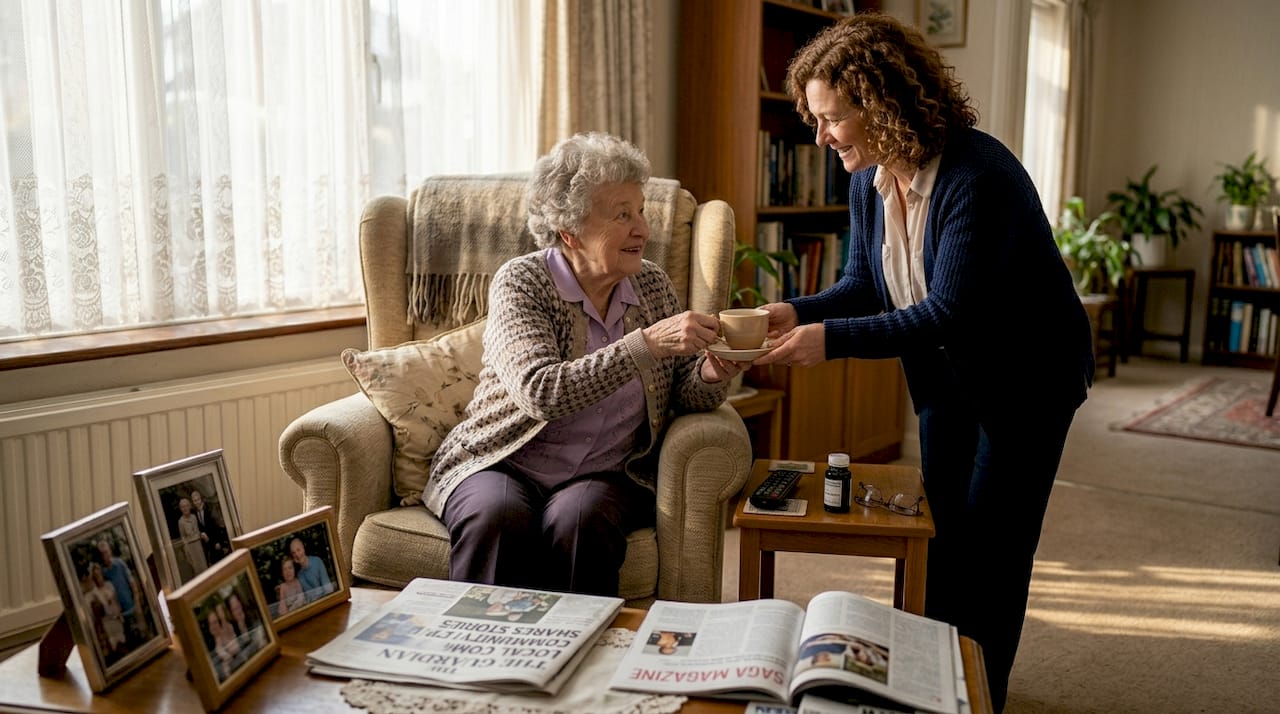
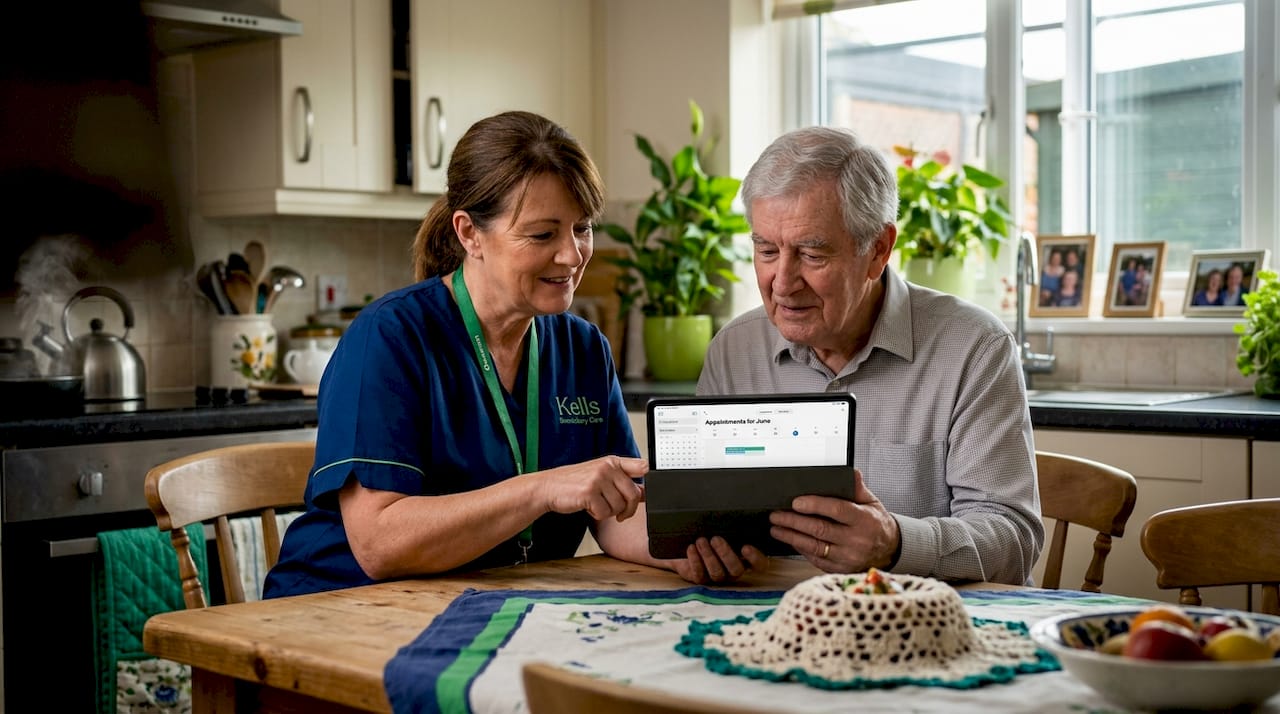
When a loved one needs ongoing support, whether due to age or disability, the word “inclusive” can sound like jargon. But what is inclusive care, really? It goes far beyond wheelchair ramps and accessible toilets. Inclusive care is a whole approach to support that recognises a person’s identity, respects their dignity, and actively involves them in decisions about their own life. For families navigating care options for elderly or disabled relatives, understanding this distinction is not just helpful. It changes everything about the quality of care your loved one receives.
Table of Contents
- Key takeaways
- What inclusive care really means
- Legal frameworks that protect inclusive care
- Inclusive care in practice: real models that work
- Practical strategies for families
- Challenges and misconceptions about inclusive care
- My honest view on why inclusive care still falls short
- How Kells-care supports inclusive home care
- FAQ
Key takeaways
| Point | Details |
|---|---|
| Inclusive care is holistic | It addresses identity, dignity, and participation, not just physical access or medical needs. |
| Legal frameworks matter | Disability rights laws require accessible care, reasonable adjustments, and respectful communication. |
| Models like PACE show what works | Integrated community care models reduce hospital stays and improve quality of life for older adults. |
| Families play an active role | Proactively discussing communication preferences and accommodation needs improves care outcomes. |
| Misconceptions are a real barrier | Assuming inclusion is only about friendliness or ramps prevents truly equitable care from happening. |
What inclusive care really means
Most people assume inclusive care is about making a building accessible. It is that, but only in the smallest sense. According to person-inclusive care research, inclusive care recognises and respects a person’s identity, provides holistic and individualised support, and creates safe, affirming conditions. That final element is often the one that gets left out.
What does inclusive care mean in practical terms? It means a carer who knows your mother prefers to be addressed formally. It means a doctor who does not make assumptions about a patient’s cognitive ability based on age. It means services designed around the whole person, not just the diagnosis.
The WHO integrated people-centred care framework describes this shift clearly: the goal is equity in access, coordinated care built around a person’s needs, and genuine respect for their preferences. This is meaningfully different from standard patient-centred care, which often focuses on satisfaction scores rather than identity and participation.
Key elements that define inclusive care include:
- Identity recognition: Acknowledging gender, culture, religion, language, and personal history in every interaction.
- Holistic, individualised support: Treating the whole person rather than a checklist of symptoms or conditions.
- Safe and affirming conditions: Creating environments where people feel respected and not judged.
- Active participation: Involving the person in decisions about their own care, not just informing them after decisions are made.
Pro Tip: When assessing a care provider, ask directly how they document individual preferences, not just medical needs. A good answer will mention named carers, cultural considerations, and communication styles.
The distinction between personalised elderly care and generic support is exactly this depth of recognition. Personalised care is a core feature of any genuinely inclusive healthcare model.
Legal frameworks that protect inclusive care
Inclusive care is not just good practice. In many countries, it is a legal requirement. While specific legislation varies, the principles are consistent: healthcare and support services must not discriminate, must make reasonable adjustments, and must communicate effectively with all patients.
In the United States, for example, the ADA requires accessible medical care including reasonable modifications and equal access for individuals with disabilities. Closer to home in the UK, the Equality Act 2010 places similar duties on care providers to make reasonable adjustments. These are not optional courtesies. They are enforceable rights.
A Section 504 final rule effective July 2024 in the US further clarified nondiscrimination obligations in federally funded healthcare programmes, strengthening protections for disabled patients. The direction of travel internationally is toward stronger, not weaker, inclusion standards.
“Inclusive care is both a moral commitment and a legal obligation. Families who know their rights are far better positioned to advocate for the care their loved one deserves.”
For families, understanding this legal context matters because it changes the conversation with providers. You are not making a request when you ask for an accessible examination table or a written care summary. You are exercising a right.
The inclusive healthcare practices required by law typically cover:
- Providing accessible equipment and physical environments.
- Offering communication in alternative formats such as large print or easy read.
- Making reasonable adjustments for cognitive and sensory differences.
- Respecting identity, including gender identity and cultural background.
Inclusive care in practice: real models that work
Knowing the principles is one thing. Seeing them in action is another. One of the best documented examples of an inclusive healthcare model is the Program of All-Inclusive Care for the Elderly, known as PACE. PACE provides fully integrated community-based care for adults aged 55 and over who would otherwise require nursing-facility level care.
What makes PACE genuinely inclusive is how it blends medical, social, and behavioural support into one coordinated programme. Participants are not shuttled between disconnected services. Their needs, preferences, and daily routines are considered together. PACE outcomes include reduced hospital stays and improved functional status, while participants continue living in their communities.
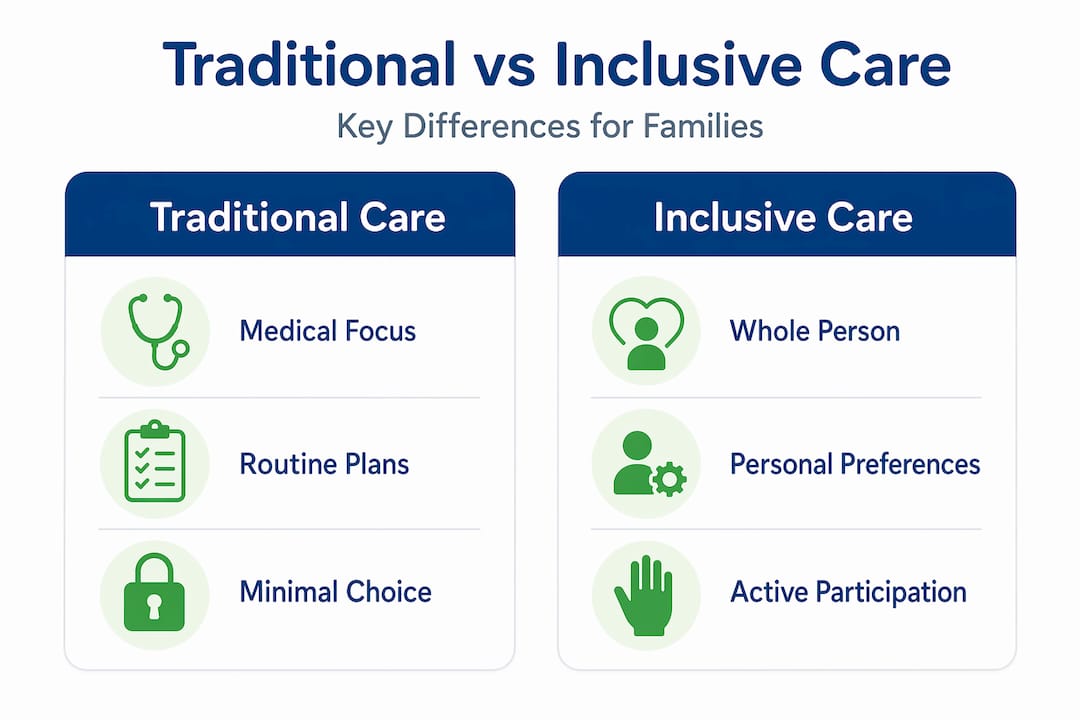
The table below shows how inclusive care differs from a more traditional model:
| Feature | Traditional care | Inclusive care |
|---|---|---|
| Focus | Medical diagnosis and treatment | Whole person, including identity and preferences |
| Decision-making | Provider-led | Shared with the individual and family |
| Communication | Standardised forms and letters | Adapted to individual needs and formats |
| Social and emotional needs | Often addressed separately | Integrated into the care plan |
| Environment | Designed for average patient | Adjusted for each person’s requirements |
Disability Equity Collaborative guidance recommends that care providers document accommodation needs directly in patient records, train all staff, and maintain accessible equipment at every stage of a visit. These steps move inclusion from a value statement into a daily operational reality.
Pro Tip: When your loved one is registered with a new care provider, ask to see how their accommodation needs will be recorded and who is responsible for acting on them. If the answer is vague, that tells you something important.
Practical strategies for families
You do not need to wait for a care provider to get everything right before your loved one’s needs are met. There is a great deal families can do to strengthen inclusive care from the outside in. The starting point is preparation and clear communication.
Here is a step-by-step approach families can use across the care journey:
- Before the first visit: Write a brief summary of your loved one’s communication preferences, sensory needs, cultural background, and anything that causes distress in clinical environments. Share this with the care coordinator.
- At check-in and in the waiting area: Ask whether there is a quiet space available if your loved one finds busy environments overwhelming, or whether they can wait in a private area.
- During appointments: Ask the provider whether your loved one can have a named contact or carer present for continuity. Confirm that all staff addressing your loved one are aware of their preferred name and pronoun.
- Around examinations: Check in advance whether accessible equipment such as height-adjustable beds or hoists is available. Do not assume it will be.
- At follow-up: Request written summaries of any care decisions in plain language, and ask how you can raise concerns if something does not feel right.
Discussing participation supports and communication preferences with providers is one of the most direct ways families can improve outcomes. This is not being difficult. It is being prepared.
Knowing how to communicate with carers clearly and confidently makes a tangible difference to the experience your loved one has, particularly when they have difficulty advocating for themselves.
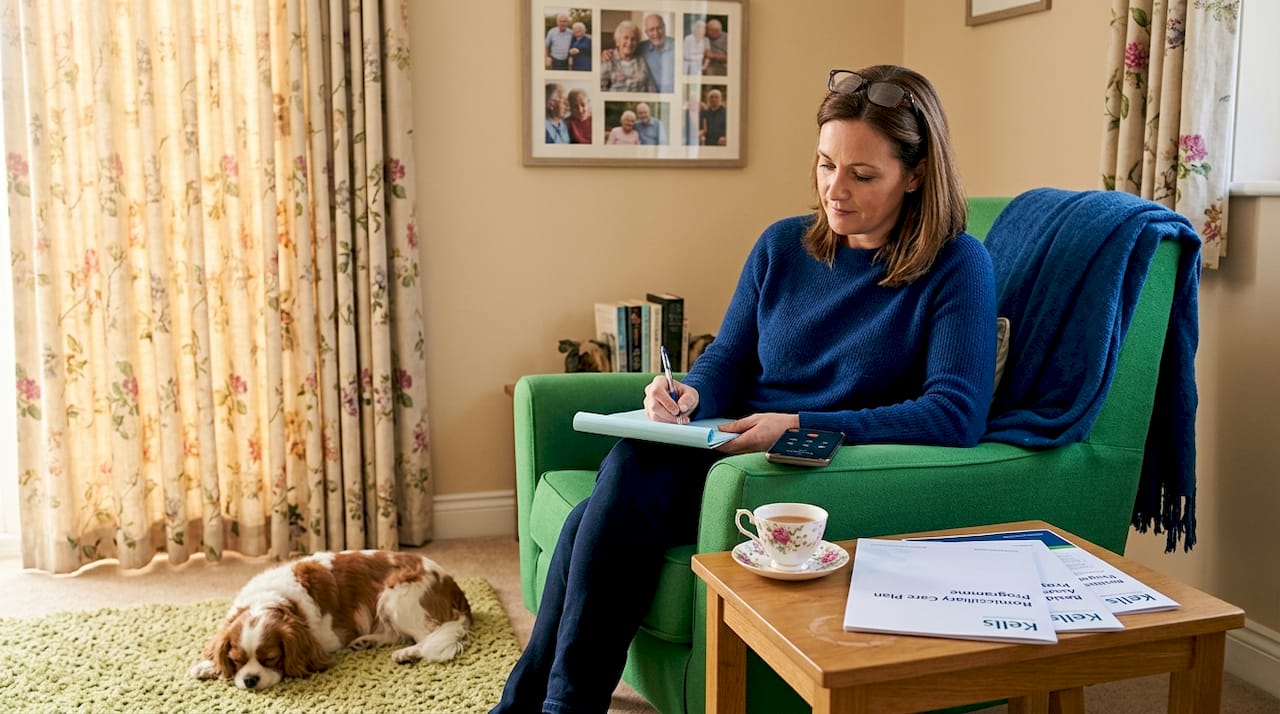
Pro Tip: Keep a short document of your loved one’s care preferences on your phone. You can share it quickly at any appointment, and it removes the pressure of trying to explain everything verbally under stress.
Challenges and misconceptions about inclusive care
One of the biggest barriers to inclusive care is the belief that it is already happening. Many care providers genuinely believe their services are inclusive because they are kind, or because they have a disabled toilet. These things matter, but they are not enough.
Achieving true disability inclusion requires documented processes, trained staff, and physical environments adapted to individual needs. Many healthcare organisations still fall short of these standards, despite legal requirements. The gap between intention and implementation is where patients suffer.
Common misconceptions families encounter include:
- “Inclusive means accessible buildings.” Physical access is one component. Respectful communication, identity recognition, and participation support are equally vital.
- “Our staff are friendly, so we are inclusive.” Friendliness is not the same as inclusion. Staff need specific training to recognise and respond to diverse needs.
- “Inclusive care is only for disabled people.” In reality, inclusive care benefits everyone. Older adults, people from minority ethnic backgrounds, those with chronic illness or mental health needs all benefit from care that sees them as individuals.
- “Families are asking too much.” Requesting adjustments is a legal right, not an imposition.
Small changes in environment and communication can transform a patient’s experience. A provider willing to review their processes openly is always a better sign than one that defaults to reassurance without evidence.
My honest view on why inclusive care still falls short
I have seen a lot of care environments, and the gap between stated values and daily reality is often striking. Every provider says they respect dignity and individuality. Far fewer have a clear process for documenting that a patient communicates through a support worker, or that a particular resident finds direct eye contact distressing.
In my experience, the care that actually changes lives is not delivered through policy documents. It happens when a carer knows a person’s story, their preferences, and their history, and treats that knowledge as the foundation of every interaction. That is what inclusive care for all ages looks like when it is working.
What I have found genuinely useful for families is shifting from asking “Are you inclusive?” to asking “How do you document and act on my loved one’s individual needs?” The second question gets real answers. It also signals to providers that you expect substance, not sentiment.
Inclusive care is not a luxury or a special service. It is simply care that treats people as whole human beings. Families who understand this, and feel confident asking for it, get better outcomes. I have seen that clearly enough to say it without reservation.
— Dan
How Kells-care supports inclusive home care
At Kells-care, inclusive care principles are built into how we work, not added as an afterthought. For over 30 years, we have provided personalised home care to families across London, shaped around each client’s individual identity, preferences, and needs.
If you are supporting an elderly or disabled loved one and want to understand what truly person-centred care looks like at home, our free home care guide is a practical starting point. You can also explore our elderly home care services for families across London, or find out more about domiciliary care and how it can be tailored to your loved one. We welcome conversations with families at any stage. Reach out to our team for advice specific to your situation.
FAQ
What does inclusive care mean in simple terms?
Inclusive care means providing support that recognises a person’s individual identity, respects their dignity, and actively involves them in decisions about their own care. It goes beyond physical accessibility to address communication, cultural background, and personal preferences.
What are the main benefits of inclusive care?
The benefits of inclusive care include improved patient trust and participation, better health outcomes, reduced hospital admissions, and stronger quality of life. Integrated community care models show these gains clearly in older adults receiving coordinated support.
How can families implement inclusive care for a loved one?
Families can implement inclusive care by preparing a written summary of their loved one’s communication preferences and needs, sharing it with providers, asking about documented accommodation processes, and requesting information in accessible formats. Proactive communication with carers consistently improves outcomes.
What are the biggest challenges in inclusive care?
The main challenges in inclusive care include staff who lack specific training, inaccessible equipment, and the mistaken belief that kindness alone equals inclusion. Sustained culture change and staff training are the most effective ways to address these gaps.
Is inclusive care only relevant for disabled people?
No. Inclusive care benefits everyone, including older adults, people from minority ethnic backgrounds, and anyone whose individual needs differ from an assumed norm. The principles of identity respect and person-centred support improve care quality across all patient groups.