
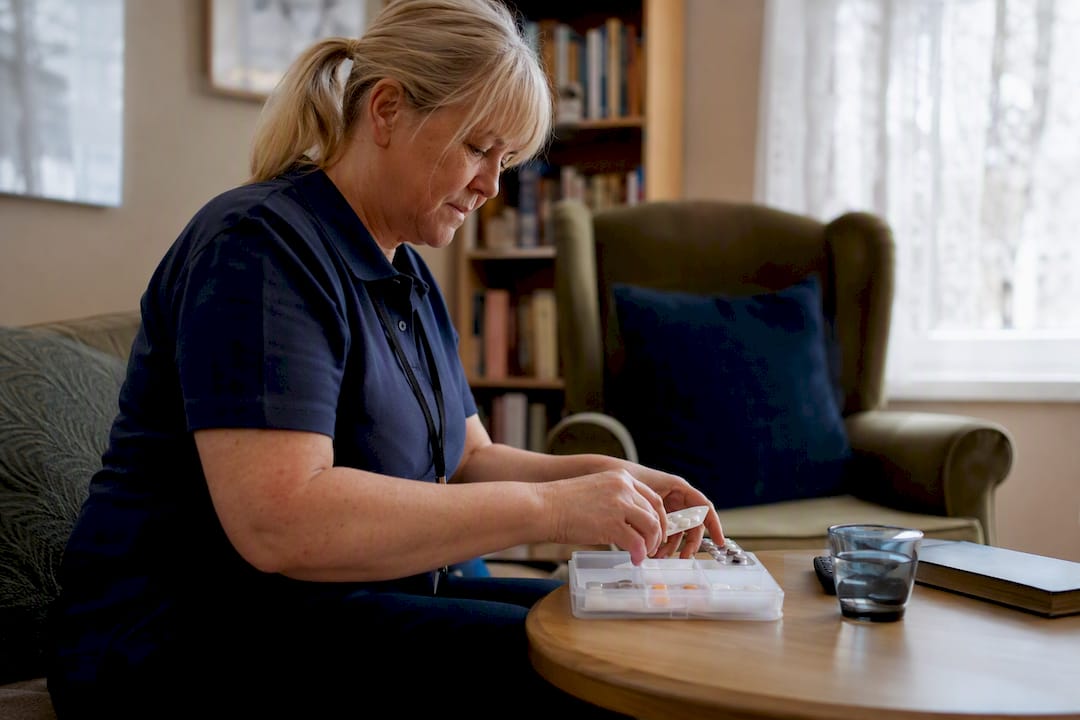
Personal care means help with washing, dressing, toileting, mobility and eating for someone who cannot manage these tasks alone, delivered either at home or in residential settings and regulated by the Care Quality Commission. Providers like Kells Domiciliary Care deliver this support under CQC and NHS frameworks. If you are arranging care for the first time, three things matter now:
- Request a care needs assessment from your local council or ask your GP for an NHS referral.
- Gather paperwork covering benefits (Attendance Allowance, PIP if under 66) and any relevant medical letters.
- Shortlist CQC-registered providers near you, or find out whether direct payments suit your situation better.
Pro Tip: Ask any provider for their most recent CQC inspection rating before the first phone call ends. It tells you more in thirty seconds than an hour of marketing copy.
Key Takeaways
Personal care is a regulated activity covering washing, dressing, toileting, mobility and eating support, and choosing a safe provider means checking CQC status, DBS checks and a written, reviewed care plan.
| Point | Details |
|---|---|
| Start with an assessment | Request a council or NHS care needs assessment before committing to any provider. |
| Know the legal boundary | Personal care covers physical assistance and supervision; clinical tasks need separate training. |
| Check employment implications | Hiring a PA makes you the employer; agencies usually manage payroll and cover. |
| Verify safety credentials | Always confirm CQC registration, DBS checks and staff training before agreeing to visits. |
| Kells-care delivers regulated, person-centred visits | Kells Domiciliary Care offers DBS-checked, CQC-regulated carers across London, from check-ins to live-in care. |
Table of Contents
- What does personal care and services actually cover?
- Who actually provides personal care at home?
- How do you arrange and pay for personal care?
- What checks and safety signals should you look for?
- How do you choose the right provider and avoid red flags?
- When does personal care need a specialist touch?
- How does Kells-care put person-centred care into practice?
- Where to find trusted guidance
- Sources
What does personal care and services actually cover?
Personal care has a legal boundary, not just a common-sense one. Under the Regulated Activities Regulations 2014, it covers physical assistance with tasks a person cannot do because of age, illness or disability, provided in the place they live.
Typical personal care tasks include:
- Washing and bathing
- Dressing and undressing
- Toileting and continence support
- Oral hygiene and teeth cleaning
- Mobility and transfers (bed to chair, chair to bathroom)
- Eating and drinking support
- Prompting medication at the right times
Clinical or nursing tasks sit outside this. Catheter care, wound dressing, and other delegated clinical procedures usually need a district nurse or specially trained carer, not standard personal care staff. The line can blur, though. CQC guidance confirms that prompting and supervising someone through a task counts as personal care when they cannot complete it unaided, even if the carer never touches them.
Who actually provides personal care at home?
Three delivery routes exist, and each shifts responsibility differently.
- Council-arranged care: your local authority commissions an agency on your behalf after assessment; you may contribute financially depending on means-testing.
- Regulated homecare agencies: privately booked, CQC-registered, and typically managing carer employment, training, payroll and rota cover themselves.
- Independent personal assistants (PAs): hired directly, often via direct payments, giving more control over who comes into the home.
The employment distinction matters more than most families realise. Hire a PA and you become their employer, taking on holiday pay, sickness cover and potentially pension auto-enrolment. An agency absorbs all of that.
Pro Tip: Direct payments can improve continuity, letting you build a relationship with one or two familiar faces rather than rotating agency staff. That flexibility comes with employer duties attached, so weigh the trade-off honestly before choosing.
How do you arrange and pay for personal care?
Getting care started follows a predictable sequence, even though the paperwork feels anything but predictable at first.
- Contact your local council’s adult social care team and request a care needs assessment.
- If eligible, undergo a financial assessment to determine council contribution.
- Receive a written care and support plan outlining agreed tasks and hours.
- Choose a CQC-registered agency, or opt for a direct payment to arrange care yourself.
Funding comes from several possible directions:
- Local council contributions (means-tested, based on the financial assessment)
- Direct payments, giving you the cash to arrange your own care
- NHS Continuing Healthcare, in limited cases where health needs dominate
- Private pay, funded from savings, pensions or family contributions
- Benefits that offset costs, including Attendance Allowance and PIP
Costs vary by visit length, time of day, specialist training required, and travel distance. NHS guidance suggests hourly rates roughly between £15 and £30, with live-in care priced differently again. Whatever route you choose, insist on a written care plan and build in regular reviews rather than a set-and-forget arrangement.
What checks and safety signals should you look for?
A provider’s paperwork tells you as much as their sales pitch, if not more. Before signing anything, ask to see or verify:
- Current CQC registration and the date of their last inspection report
- DBS checks for every carer who will enter the home
- Evidence of ongoing staff training and relevant qualifications
- Public liability insurance
- Medication training, where medicines are involved
NICE guidance reinforces that good home care isn’t just task completion. It should sustain independence and a consistent carer relationship, not a rotating cast of strangers running through a checklist.
A CQC report rated “Requires Improvement” isn’t necessarily a dealbreaker on its own, but it means you should ask direct questions about what has changed since the inspection, and request evidence rather than reassurance.
Pro Tip: Read the “Safe” and “Well-led” sections of a CQC report first. These flag staffing and management issues faster than the overall star rating does.
How do you choose the right provider and avoid red flags?
A short phone call reveals more than most people expect, provided you ask the right questions.
- How do you handle continuity if my usual carer is ill or on leave?
- What does the written care plan include, and how often is it reviewed?
- What’s your safeguarding and complaints procedure?
- How are staff trained, and are they all DBS-checked?
- What happens in an emergency outside normal visit hours?
A good care plan names specific tasks, timings and preferences, not vague phrases like “assistance as needed.” Watch for these warning signs during any conversation:
- No written care plan offered before service starts
- Evasive or vague answers about DBS checks or CQC status
- High staff turnover mentioned casually, as if normal
- Charges that appear on invoices without prior explanation
When does personal care need a specialist touch?
Routine personal care sometimes needs to escalate into something more specialised, and recognising the signs early prevents a crisis later.
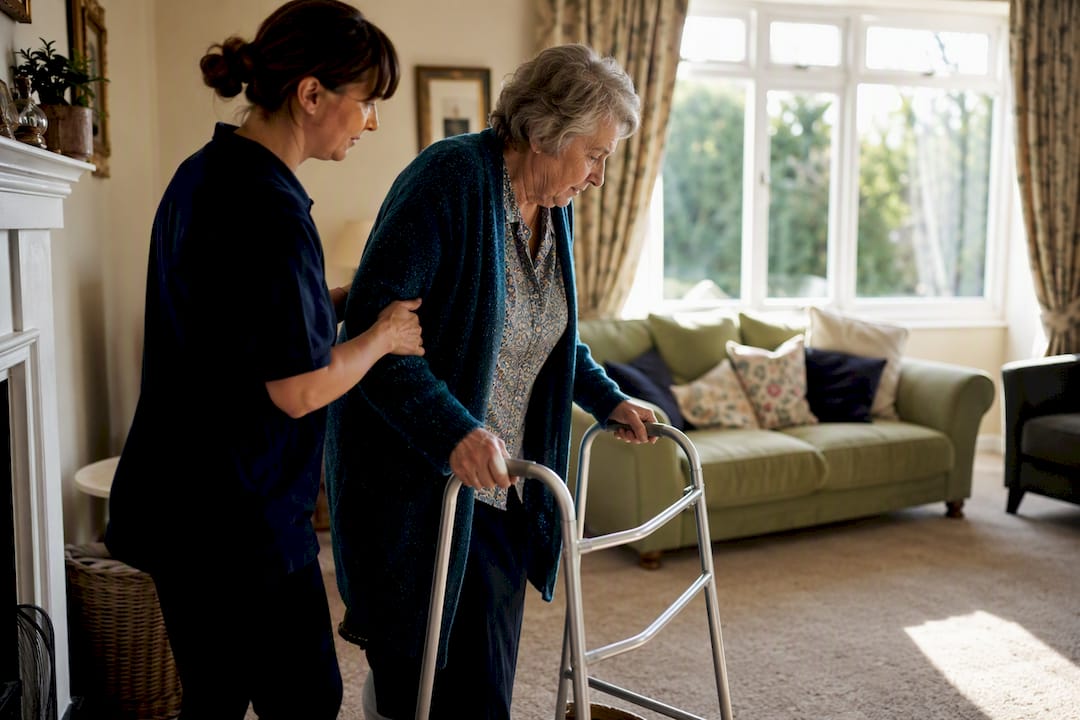
Watch for rapid weight loss, frequent falls, swallowing difficulties, distressed or agitated behaviour, and complex medication regimens involving multiple daily doses. Any of these point toward needing dementia-trained carers, live-in clinical support, or joint working between carers and district nurses or hospice teams.
Pro Tip: For dementia care specifically, consistency beats almost everything else. A small, familiar team following the same routine reduces confusion and distress far more reliably than a larger rotating pool of carers ever will.
How does Kells-care put person-centred care into practice?
A short check-in visit might mean thirty minutes to help someone wash, dress and take morning medication safely. A longer personal care visit covers bathing, meal preparation and mobility support across a couple of hours. Live-in care provides continuous presence for people who need overnight supervision or complex support.
Every visit type starts from a written, person-centred care plan, reviewed regularly rather than left static for months. Kells-care carers are DBS-checked, trained, and operate under CQC regulation, built on more than 30 years of delivering home care across London.
Person-centred care means the plan bends around the person’s routines and preferences, not the other way round. That’s the standard NICE sets, and it’s the standard we work to.
Coordination matters as much as the visits themselves. Kells-care liaises with GPs, district nurses and family members to keep care plans current as needs change, rather than waiting for the next formal review to catch a problem.
A note of reassurance before you start
Choosing care for someone you love feels weighty, and it should. What helps is knowing you’re not locked into a decision from day one. Watch the first few visits closely: punctuality, whether the carer treats your relative with genuine respect, and whether they manage the agreed tasks competently. Most good providers expect and welcome that scrutiny.
Pro Tip: Treat the first two or three visits as a trial. Note punctuality, tone of voice, and whether planned tasks actually get done, then raise anything that concerns you straight away rather than waiting for a formal review.
Need help arranging care now?
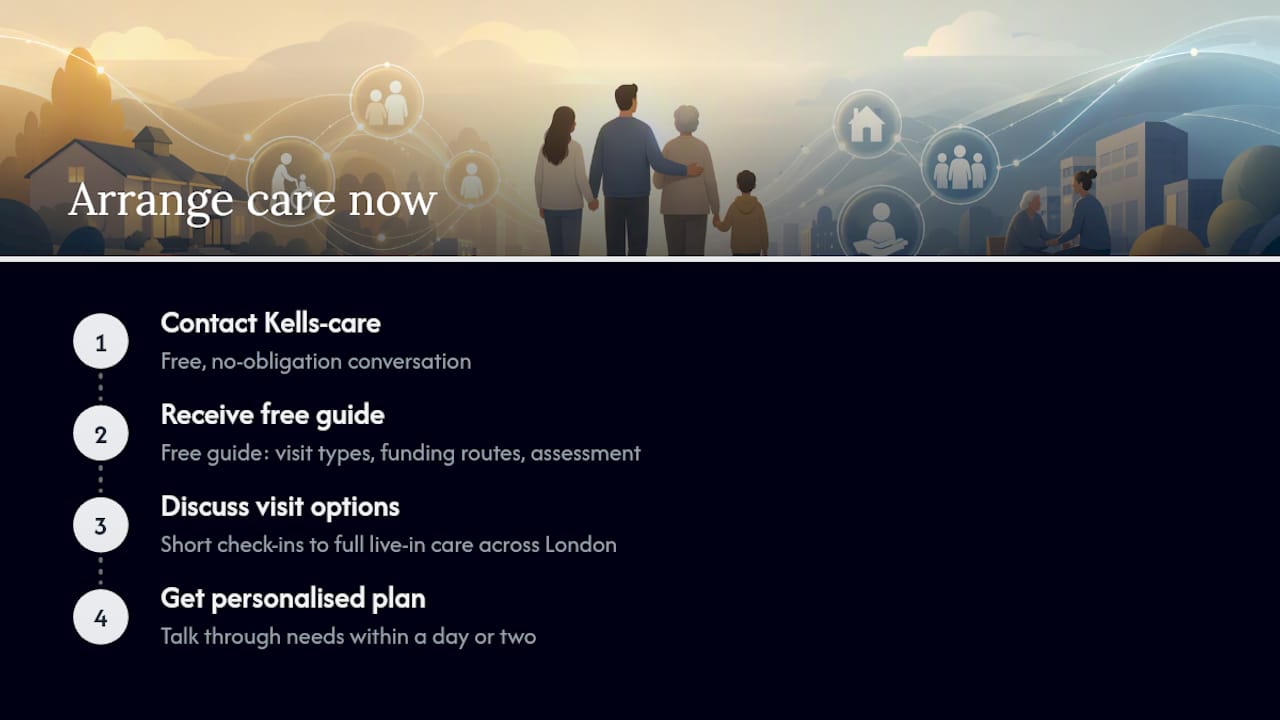
There’s no need to work through this alone. Kells-care offers a free, no-obligation conversation about your situation, and our free home care guide walks through visit types, funding routes and what to expect from an assessment, all in one place. We cover a wide range of visit types across London, from short check-in calls to full live-in care, and can usually talk through your needs within a day or two of first contact. If you’re ready to see what a personalised plan looks like for your family, get in touch about home care services and we’ll talk you through the next steps.
Where to find trusted guidance
- NHS guidance on paid home care
- CQC personal care definitions
- NICE person-centred home care guidance
- For local support now, visit Kells-care
This article is general information, not a substitute for advice from a qualified doctor. Consult a qualified healthcare professional about your own circumstances before acting on anything here.
Sources
- Help at home from a paid carer – Social care and support guide – NHS
- Personal care – Care Quality Commission
- The Health and Social Care Act 2008 (Regulated Activities) Regulations 2014
- NICE guidance NG21 — home care delivering personal care and practical support


