

TL;DR:
- Contact your GP today to request a mental health referral or self-refer to NHS Talking Therapies.
- A coordinated care plan connects your home support with clinical teams and involves regular review.
Personalised domiciliary mental health support is available in London right now and you can find additional resources for clinical and therapeutic support from MHRC’s international mental health services. Your single most important next step is to contact your GP today and ask for a referral to community mental health services or NHS Talking Therapies.
Start here — your immediate action checklist:
- Contact your GP and request a mental health referral or self-refer to NHS Talking Therapies for anxiety and depression
- Request a Care Act 2014 needs assessment from your London borough’s adult social services — you are legally entitled to one regardless of finances
- Consider self-referral to NHS Talking Therapies if waiting for a GP appointment
- Have ready: current medications, recent clinical notes, examples of daily challenges, and your preferred outcomes
- Contact a CQC-regulated domiciliary provider such as Kells Domiciliary Care for private home support while NHS pathways are arranged
If there is immediate risk of harm, call 999 or your local NHS crisis team. For urgent emotional support, Samaritans are available 24 hours a day on 116 123. Keep these numbers saved.
From first contact to service start typically takes several weeks, depending on assessment waiting times and funding route. Private domiciliary care can often begin sooner. Council-funded support follows a needs assessment and eligibility decision.
Table of Contents
- How does care planning and NHS coordination actually work?
- Kells-care: London’s trusted home mental health support
- Key takeaways
How does care planning and NHS coordination actually work?
A good domiciliary care plan for mental health does not sit in isolation. It connects directly with your GP, community mental health team, and any specialist involved in treatment. In practice, this means the domiciliary carer attends to daily routines, medication prompts, and social contact, while the clinical team manages diagnosis, prescriptions, and therapy.
The Royal College of Psychiatrists recommends that carers, family members, and clinicians work as a coordinated team. Practically, this means sharing written care notes, attending review meetings where possible, and flagging changes in mood or behaviour promptly. A care plan should be reviewed at regular intervals — typically every three months — and updated when circumstances change.
SCIE guidance on the Care Act confirms that assessments must be person-centred, exploring nine areas of wellbeing and the person’s own goals. The domiciliary carer’s role is to support those goals day to day, not to replace clinical care. Loneliness and social isolation are often central concerns; companionship visits and structured daily routines can make a measurable difference to mental wellbeing.
Kells-care: London’s trusted home mental health support
Kells Domiciliary Care has been supplying home care in London for over 30 years. For families arranging mental health support at home, Kells offers check-in visits, medication prompts, companionship, live-in care, and care plans coordinated with GPs and community mental health teams. Every carer is fully qualified, DBS-checked, and the agency is regulated by the Care Quality Commission (CQC). Kells promotes quality of life, independence, dignity, and freedom of choice for every client.
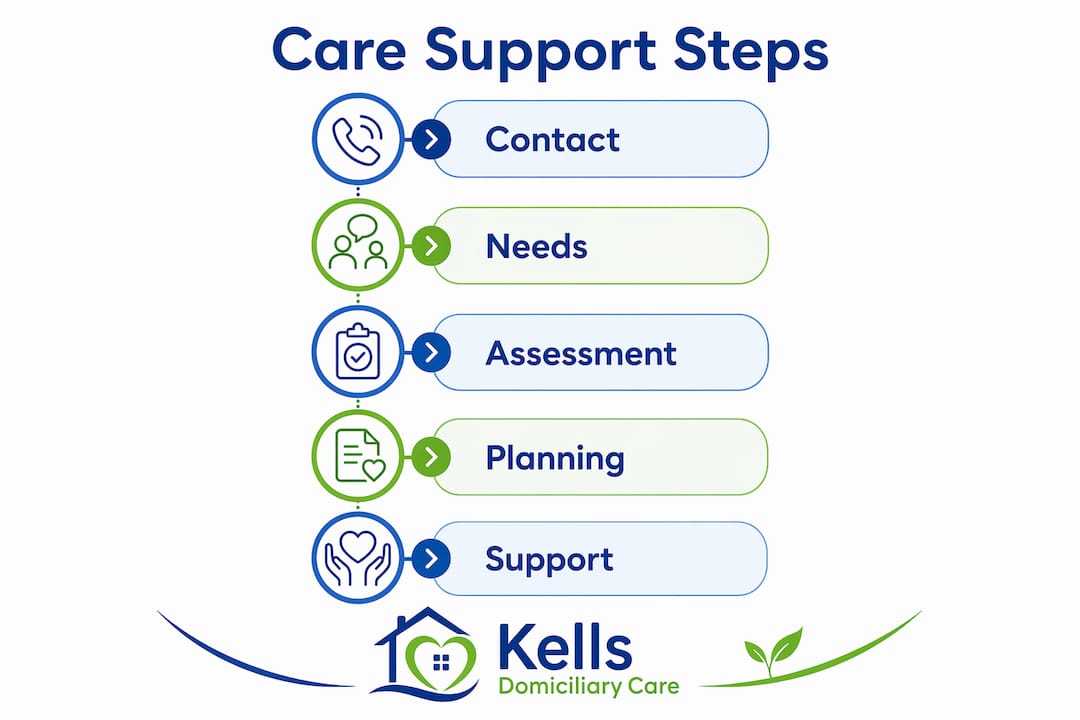
When you contact Kells, the process is straightforward: an initial enquiry leads to a care needs conversation, a personalised care plan, and then your first visits. Visit formats range from 15-minute check-ins to round-the-clock live-in support.

Pro Tip: Ask for a brief introductory call or visit with your assigned carer before the first appointment. Where possible, invite a family member to attend so communication is supported from day one.
Before choosing any provider, ask about their CQC rating, mental-health-specific training, local London experience, and ability to liaise with your GP. Download the free home care guide from Kells for a practical starting point, or visit kells-care.com to speak with the team today.
Key takeaways
Arranging domiciliary mental health support in London works best when NHS pathways, a Care Act 2014 needs assessment, and a CQC-regulated home-care provider are combined from the outset.
| Point | Details |
|---|---|
| Legal entitlement | The Care Act 2014 gives every adult in England the right to a needs assessment, regardless of finances. |
| NHS access routes | You can self-refer to NHS Talking Therapies or ask your GP for a community mental health referral. |
| Care coordination | Domiciliary carers support daily routines and medication prompts; clinical teams manage treatment and prescriptions. |
| Provider checks | Confirm CQC registration, DBS-checked staff, mental-health experience, and GP liaison capability before signing. |
| Kells-care | Kells Domiciliary Care offers personalised, CQC-regulated home mental health support across London, with over 30 years of local experience. |