TL;DR:
- Supporting elderly independence by preserving daily choices enhances mental health, dignity, and quality of life in aging adults.
- Caregivers should focus on safe participation, adapt tasks, and employ technology to support autonomy without compromising safety.
Independence in elderly care is defined as an older adult’s ability to make meaningful choices about their daily life, from when they wake to how they spend their time, and this control is directly linked to better mental health, dignity, and quality of life. The term used across professional care settings is person-centred autonomy, and understanding it changes how families approach support. Research shows that maintaining independence reduces depression and anxiety by reinforcing a sense of control over daily choices. For family caregivers, this is not a soft concern. It is a clinical and emotional priority that shapes every care decision you make.
Why independence matters in elderly care: the psychological case
Independence is not simply about physical ability. It is about identity. Dr. Jonathan Serman describes older adults as viewing themselves as the authors of their own life, a concept rooted in locus of control theory. When that authorship is taken away, even with good intentions, the emotional consequences are significant.
Older adults who retain control over daily decisions show lower rates of depression and anxiety. This is because choice acts as an emotional buffer. When your loved one decides what to eat for breakfast or which television programme to watch, they are reinforcing their sense of competence. These small wins accumulate into something larger: self-esteem, resilience, and a reason to engage with the day.
The psychological benefits of elderly autonomy extend beyond mood. Seniors who feel in control are more likely to participate in social activities, maintain personal hygiene, and communicate openly with carers. Conversely, when independence is stripped away, withdrawal and passivity often follow. This is not stubbornness. It is a natural response to feeling powerless.
Pro Tip: Keep a simple list of the daily choices your loved one currently makes on their own. This becomes your baseline for preserving autonomy as their needs change.
Key areas where daily choice preserves dignity and wellbeing include:
- Wake and sleep times: Allowing your loved one to set their own rhythm maintains a sense of personal routine.
- Meal preferences: Choosing what to eat, even within dietary guidelines, supports self-esteem and reduces feelings of vulnerability.
- Social decisions: Deciding who to see and when to see them preserves social identity.
- Personal care order: Small choices about bathing or dressing routines honour dignity and reduce resistance.
Involving seniors in small daily decisions significantly reduces feelings of embarrassment and vulnerability. The evidence is clear: choice is not a luxury in elderly care. It is a health outcome.
How can family caregivers balance independence with safety?
The most common misconception in elderly care is that safety and independence are opposites. They are not. Expert care consultant Taryn Homick describes this as a safe participation approach: the goal is to preserve what your loved one can still do, not to remove tasks because they carry some risk.
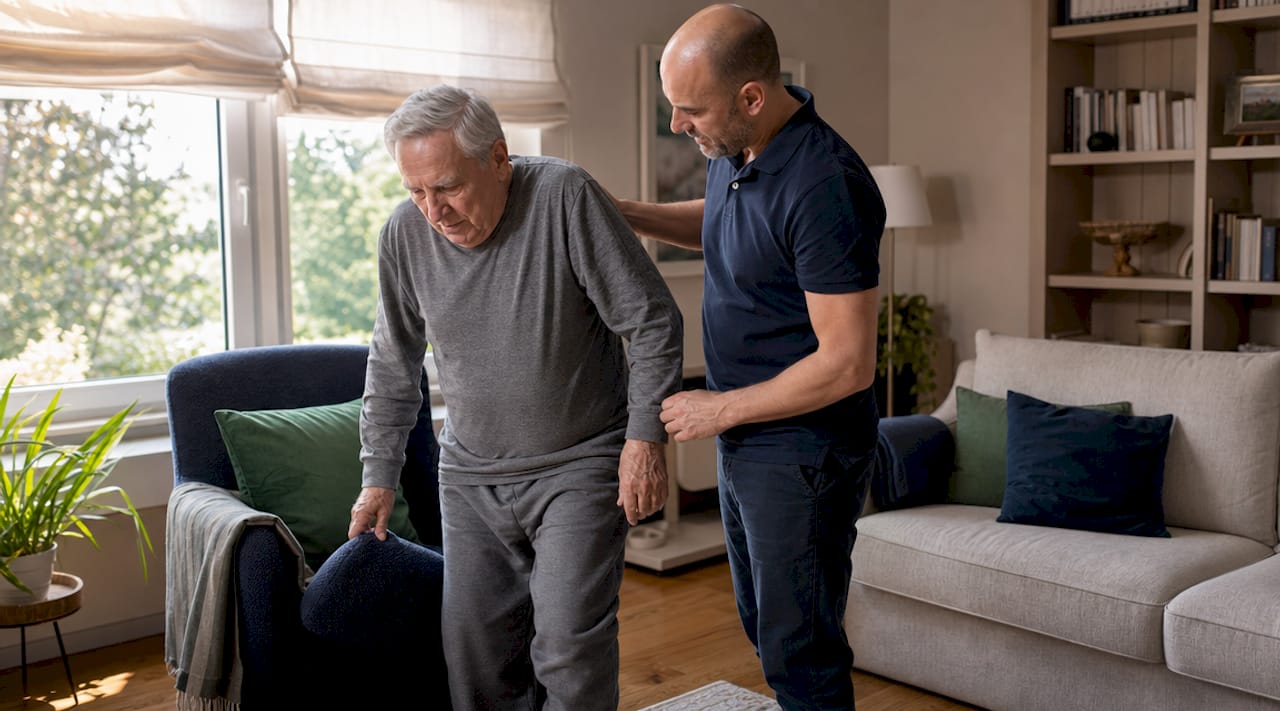
Overprotection carries its own risks. When you take over tasks your loved one can still manage, even partially, you accelerate the very decline you are trying to prevent. Loss of confidence, reduced physical activity, and deepening depression are all documented consequences of excessive intervention. The safe participation model reframes safety as enabling, not restricting.
Practical ways to support independence without compromising safety include:
- Home adaptations: Grab rails in bathrooms, improved lighting in hallways, and removing trip hazards give your loved one the confidence to move safely without assistance.
- Assistive devices: Walking frames, jar openers, and long-handled tools extend physical capability without requiring another person’s help.
- Targeted support: Help with the parts of a task that are genuinely difficult, such as carrying heavy shopping, while allowing your loved one to complete the rest independently.
- Risk conversations: Discuss acceptable levels of risk with your loved one directly. Their threshold may differ from yours, and their view deserves weight.
Small home adaptations like grab rails, improved lighting, and clear pathways remove physical barriers and prevent the fear of accidents from becoming a reason to stop trying. You can find a thorough walkthrough of home preparation for seniors that covers room-by-room modifications worth considering.
Pro Tip: Before removing a task from your loved one’s routine, ask yourself: “Can we adapt this task rather than eliminate it?” More often than not, the answer is yes.
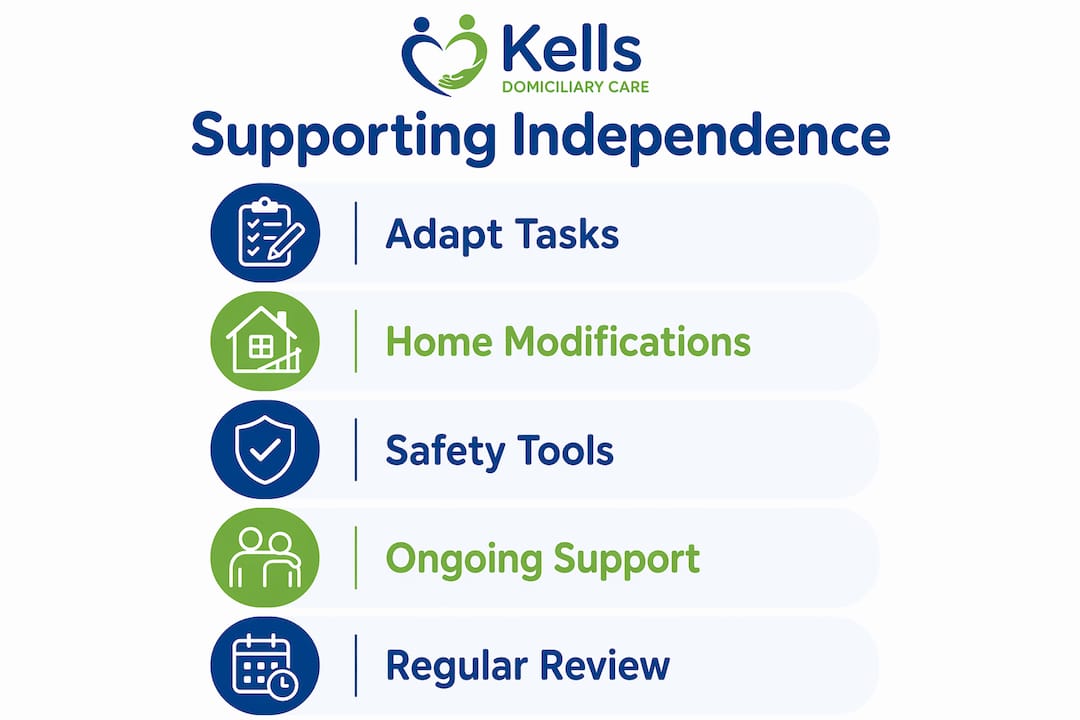
Independence is also an evolving state. As physical capacity changes, seniors naturally shift focus from demanding tasks to meaningful activities that require less energy. A person who once gardened may now enjoy arranging flowers indoors. The purpose and pleasure remain; only the form changes. Your role as a caregiver is to support that evolution, not to define its endpoint.
What role does technology play in extending elderly independence?
Digital health technology has moved elderly independence from a social preference to a supported clinical outcome. Research published in the Journal of Medical Internet Research confirms that smart home and wearable technologies can extend independent living by reducing falls and improving medication adherence. This is not speculative. It is a measurable shift in how care is delivered.
The table below summarises key technology categories and their practical applications for independent living for seniors:
| Technology type | Primary benefit | Example application |
|---|---|---|
| Wearable devices | Fall detection and activity monitoring | Alerts family or carer after a fall with no manual input |
| Smart medication dispensers | Medication adherence | Automated reminders and locked compartments prevent missed or double doses |
| Voice-activated assistants | Daily task support | Setting reminders, making calls, or controlling lighting without physical effort |
| Video calling platforms | Social connection | Reduces isolation by maintaining regular contact with family |
| Remote health monitors | Chronic disease management | Tracks blood pressure or blood glucose and shares data with a GP |
Technology works best when it aligns with your loved one’s personal goals and clinical guidance, not when it is imposed for the caregiver’s peace of mind. Barriers to adoption include cost, unfamiliarity with devices, and limited technical support. Your role is to introduce technology gradually, with patience, and to remain the human layer behind the digital one. Sitting with your loved one during the first few uses of a new device dramatically improves confidence and long-term uptake.
How does language affect your loved one’s sense of independence?
The words you use with your loved one carry more weight than you may realise. Care specialist Bianca Wardle identifies infantilising language as one of the most common and damaging caregiver habits. Phrases like “Let me do that for you” or “You shouldn’t be doing that” signal to your loved one that you no longer trust their judgement. The result is resistance, withdrawal, or quiet compliance that masks growing resentment.
Shifting from directive to inclusive language is a practical skill, not just a philosophical position. Instead of telling your loved one what they cannot do, ask how you can make something easier together. The question “How can we make this task work for you?” preserves agency. The instruction “I’ll handle it” removes it. Research confirms that collaborative, inclusive phrasing reduces fear of change and supports better care outcomes.
Timing and setting also matter. Sensitive conversations about increased support are best held when your loved one is rested, not during a moment of difficulty or frustration. Choosing a calm, private setting signals respect. Raising the topic after a fall or a health scare, while understandable, often triggers defensiveness because the conversation feels like a verdict rather than a discussion.
- Use “we” language: “How can we make the bathroom safer?” rather than “You need grab rails.”
- Ask before acting: “Would you like help with that?” rather than stepping in without permission.
- Acknowledge capability: “You’ve always managed this so well. Let’s find a way to keep that going.”
- Involve them in planning: Share options and let your loved one choose, even when the choice set is limited.
Proactive conversations about care preferences, held before a crisis forces the issue, allow your loved one to remain the primary decision-maker. Early planning preserves control and significantly reduces family conflict. You can explore more on promoting dignity in care to develop this approach further.
Key takeaways
Supporting elderly independence is the single most effective way to protect your loved one’s mental health, dignity, and quality of life across every stage of ageing.
| Point | Details |
|---|---|
| Independence protects mental health | Retaining daily choices reduces depression and anxiety by reinforcing emotional resilience. |
| Safety and autonomy are compatible | The safe participation approach adapts tasks rather than removing them, preserving dignity. |
| Language shapes outcomes | Inclusive, collaborative phrasing reduces resistance and maintains your loved one’s sense of control. |
| Technology extends capability | Wearables and smart home tools support independent living by reducing falls and improving adherence. |
| Independence evolves over time | Care must adapt as seniors shift focus to meaningful, lower-intensity activities rather than forcing a fixed standard. |
What I have learned from years of watching families get this wrong
Working alongside families navigating elderly care, the pattern I see most often is well-meaning overreach. A parent struggles with a task once, and suddenly the family reorganises everything around preventing that struggle from happening again. The intention is love. The effect is loss.
What strikes me most is how rarely families ask the older person what they actually want. The conversation tends to happen about them rather than with them. And by the time professional support is introduced, the senior has often already disengaged from their own care. They have learned that their preferences are noted but not followed.
The families who get this right share one habit: they have the difficult conversations early. Not after a fall, not after a diagnosis, but during a quiet afternoon when nothing is wrong. They ask their loved one what matters most to them, what they would hate to lose, and what level of risk they are comfortable with. Those conversations change everything. They turn care from something that happens to a person into something they are part of shaping.
Small adaptations, chosen with the senior rather than for them, make a remarkable difference. A grab rail installed after a conversation is accepted. One installed without warning is resented. The object is identical. The process is everything.
If you are a caregiver reading this, the most useful thing you can do today is not to research equipment or care packages. It is to sit down with your loved one and ask them what independence means to them. The answer will guide every decision that follows.
— Dan
How Kells-care supports independent living at home
At Kells-care, we have spent over 30 years helping London families support their loved ones to live independently at home, on their own terms. Our home care services are built around the individual, not a fixed routine. Whether your loved one needs a brief check-in visit or more regular support, our fully qualified, DBS-checked carers adapt to their preferences and goals. We are regulated by the Care Quality Commission (CQC) and committed to promoting dignity, freedom of choice, and quality of life. To get started, download our free home care guide for practical advice on supporting elderly independence at home.
FAQ
What does independence mean in elderly care?
Independence in elderly care refers to an older adult’s ability to make meaningful choices about their daily life, including routines, social activities, and personal care. It is defined clinically as person-centred autonomy and is directly linked to improved mental health and dignity.
Why is elderly independence vital for mental health?
Retaining control over daily choices acts as an emotional buffer that lowers the risk of depression and anxiety in older adults. Seniors who feel in control are more likely to engage socially and maintain their sense of self-worth.
How can I promote independence in my elderly parent without risking their safety?
Use the safe participation approach: adapt tasks rather than removing them, introduce home modifications such as grab rails and improved lighting, and involve your loved one in decisions about their own care. You can also explore personalised care options that balance safety with autonomy.
Does technology really help seniors stay independent?
Yes. Research from the Journal of Medical Internet Research confirms that wearable devices and smart home tools reduce falls and improve medication adherence, extending independent living as a supported clinical outcome rather than a social preference.
When should I start conversations about care with my elderly parent?
Early care conversations held before a health crisis allow your loved one to remain the primary decision-maker and reduce the risk of forced, traumatic transitions. Starting the dialogue during a calm period produces far better outcomes than waiting for an emergency.