
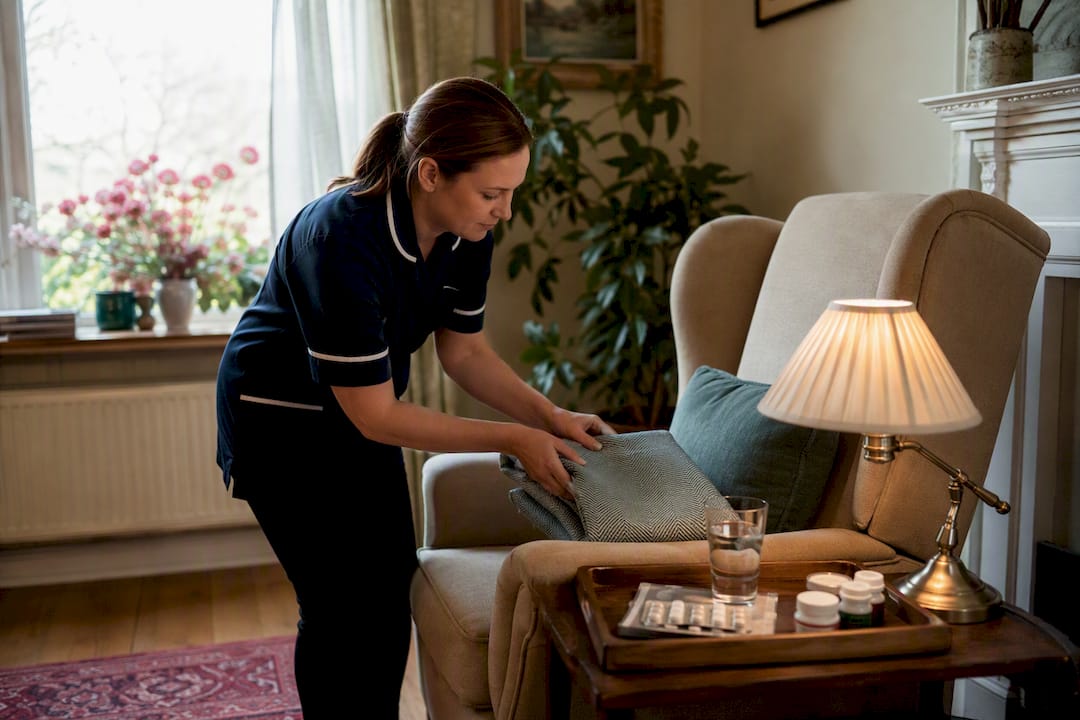
Live-in care usually lets couples remain together at home, and it is often the more affordable route compared with two separate care-home places for the same household. The main trade-off is complexity: coordinating rotas, clinical needs, and funding for two people at once takes more planning than a single care-home admission. Start by arranging a needs assessment for both partners, checking NHS Continuing Healthcare eligibility, and asking your local authority for a financial assessment.
TL;DR:
- NHS Continuing Healthcare can fully fund care for both partners if clinical needs qualify, but each person is assessed individually.
- Local authorities typically evaluate each partner’s finances separately, protecting a minimum income of £175.55 weekly per person, regardless of shared living arrangements.
- Most agencies use a single carer model with a couples uplift, but should plans include deterioration or increased needs, additional support or care reviews are essential.
- Choosing a CQC-registered agency with clear backup protocols, current training, and transparency on costs ensures safety and continuity for couples requiring live-in care.
Table of Contents
- Why couples choose live-in care over separation
- What does live-in care for couples cost in the UK?
- How does live-in care actually work day to day for two people?
- Who pays, and how do councils assess couples for funding?
- How do you choose the right agency or carer for a couple?
- Kells Domiciliary Care: safe, CQC-regulated support built around couples
- Why the couples economics change everything
- How Kells can help you stay together at home
- Sources
Why couples choose live-in care over separation
Splitting a couple up when one partner needs more support than the other is one of the most painful decisions families face. Live-in care avoids that decision entirely. A carer moves into the family home, and both partners carry on living where they have always lived, sleeping in the same bed, eating meals together, keeping the same GP and the same neighbours popping round.
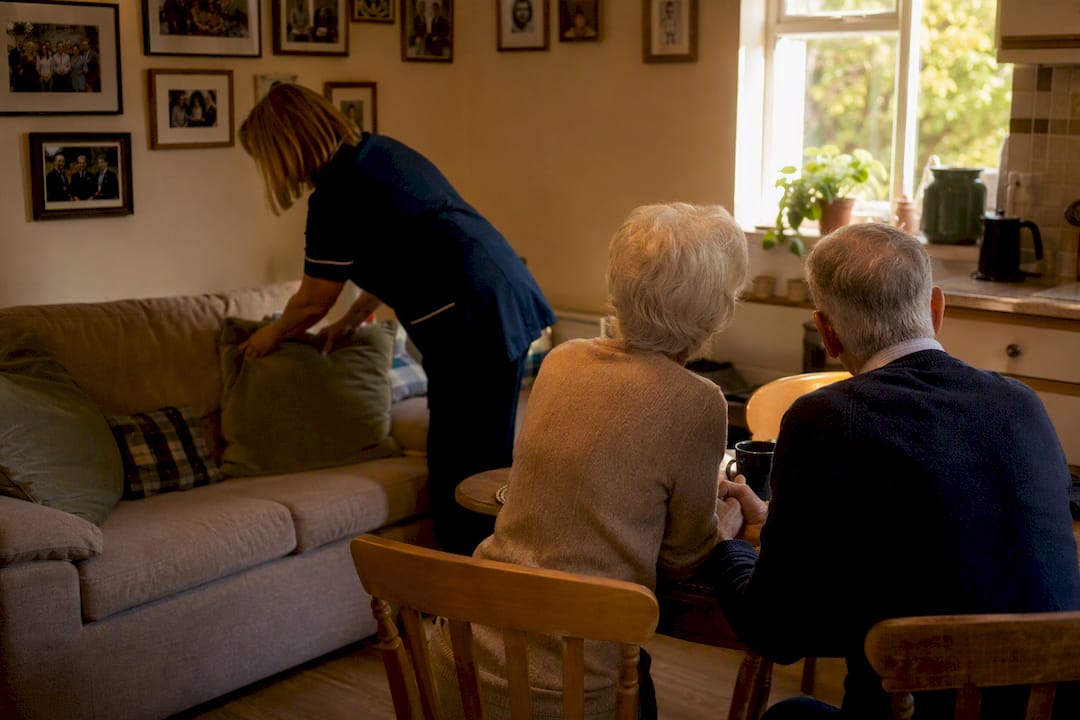
For couples where one partner has dementia, that continuity matters clinically, not just emotionally. Familiar surroundings and a consistent routine tend to reduce confusion and agitation, which is one reason many specialists favour live-in support over a care-home move for dementia in its earlier and middle stages.
Live-in care covers the daily practical load too: washing, dressing, medication prompts, cooking, laundry, and the small household tasks that pile up when mobility declines.
- Companionship for both partners in a setting they already know
- One consistent carer rather than a rotating shift team
- Reduced disruption for a partner living with dementia
- Support with meals, medication and personal care under one roof
A care home can still be the safer option once clinical needs outstrip what one carer, even with backup, can safely manage, particularly where complex nursing or round-the-clock supervision is required.
Pro Tip: Ask any agency how they handle a sudden deterioration in one partner’s health. A good provider has a clear escalation plan, not a vague reassurance.
What does live-in care for couples cost in the UK?
Couples typically pay a “couples uplift” on top of a standard live-in rate, since one carer is supporting two people rather than one. Even with that uplift, live-in care usually works out cheaper than the alternative of two residential placements.
The numbers: Live-in care for a couple in the UK typically runs between £1,600 and £1,900 per week, against a substantial annual saving compared with two separate residential care placements.
To put that in context, standard UK live-in rates for a single person commonly fall between £900 and £2,000 a week depending on need and location, so the couples uplift on top of that range is usually far less than paying for a second full care-home place. One carer, one fee, two people supported. That arithmetic is the single biggest reason couples choose to stay together over care-home admission.
What actually moves the price:
- Complexity of need — dementia, mobility loss, or medical conditions requiring specific training push costs up
- Location — London and the South East carry higher rates than most of the country
- Carer skill level — a carer with clinical or dementia-specialist training costs more than general support
- Household running costs — food, utilities and any adaptations sit outside the care fee itself
Before signing anything, ask the agency exactly what is included in the weekly fee and what counts as an extra, from carer meals to mileage. Our guide to live-in carer costs in 2026 breaks down typical package structures in more detail.
How does live-in care actually work day to day for two people?
Most agencies use a single dedicated carer model as the starting point, then add a couples uplift or a second carer once the workload genuinely needs it.
- One carer, two clients: the carer manages personal care, medication and household tasks for both partners, with the agency reviewing the arrangement regularly.
- Rota and rest breaks: “24-hour” care rarely means a carer awake for 24 hours straight. It usually means a live-in carer present around the clock, with agreed sleep and rest periods, plus relief cover for holidays and days off.
- Escalation to extra support: where one partner’s needs increase, particularly with significant mobility loss or advanced dementia, an agency should offer either a second carer or a review of whether live-in remains appropriate.
- Clinical limits: live-in care generally suits earlier and middle-stage dementia well, but advanced stages requiring skilled nursing intervention often need a step up to nursing-at-home or a nursing home.
- Coordination with health professionals: a good agency liaises with GPs and district nurses, manages medicines safely, and follows clear safeguarding procedures if concerns arise.
If nursing needs become the deciding factor, it helps to understand the difference between home care and nursing support before committing either way.
Who pays, and how do councils assess couples for funding?
This is where most families get tripped up. Local authorities assess each person individually for means testing, not as a joint couple, even when they live together and share a home. That comes directly from Ombudsman guidance and case decisions on how councils must approach financial assessments.
Every financial assessment must protect a minimum income guarantee of £175.55 per week for a member of a couple, under Gov.
The main funding routes worth checking:
- Local authority means test: individual assessment per person, with the MIG protected regardless of a partner’s income or savings
- NHS Continuing Healthcare (CHC): fully funds care where a primary health need is met, assessed separately for each partner
- Mixed funding: if only one partner qualifies for CHC, their care can be funded while the other self-funds or contributes through the means test
- Attendance Allowance and Carer’s Allowance: worth checking regardless of savings, since these aren’t means-tested in the same way
- Self-funding: the default position for many couples with savings above the threshold, though Age UK’s guidance on paying for homecare sets out direct payment options worth exploring even here
Request a needs assessment from your local authority for both partners, ask explicitly whether CHC applies to either of you, and keep written records of every conversation with council staff. Our guide to alternatives to care homes covers the practical side of weighing these funding routes against each other.
How do you choose the right agency or carer for a couple?
Vetting matters more for couples than for a single client, since one carer is responsible for two people’s safety and wellbeing at once.
- Confirm CQC registration and DBS checks for every carer who could work in your home, not just the named lead carer.
- Ask about training specifics: dementia care, medication management, moving and handling, and first aid should all be current.
- Check clinical oversight: does a nurse or care manager review the plan regularly, and how quickly can the agency respond to a deterioration?
- Ask how continuity is protected: what happens on the carer’s day off, during holidays, or if they’re ill?
- Get clarity on costs: fees, extras, notice periods and what triggers a couples uplift review.
Watch for agencies that dodge direct questions about backup cover or insurance, or that can’t explain how they match carers to couples with different needs.
Pro Tip: Ask for a short trial period before committing long term. A few weeks tells you far more about compatibility than any interview ever will.
Kells Domiciliary Care: safe, CQC-regulated support built around couples
For over 30 years, Kells Domiciliary Care has supported London families with home care that keeps couples together rather than apart. Every carer is fully qualified, DBS-checked, and works under CQC regulation.
- Live-in care, short-term live-in cover and respite support for couples with differing needs
- Careful matching so continuity of carer is protected, not left to chance
- Coordination with GPs and family members built into every care plan
Why the couples economics change everything
Most guidance on live-in care talks about cost in the abstract. It rarely does the couple-specific arithmetic, and that’s a mistake. The gap between one live-in fee and two care-home placements is where the real decision gets made for most families, not in a debate about which setting offers better quality.
Conventional advice also treats council means testing as a household calculation. It isn’t. Each partner is assessed individually, and that catches families out when one partner has modest savings and the other doesn’t. Know this before you apply, not after a decision has already gone against you.
If there’s one priority above all others, it’s checking CHC eligibility for both partners before assuming you’ll be self-funding. Too many families never ask, and pay privately for years when part of that cost should have been the NHS’s to carry.
— Dan
How Kells can help you stay together at home
There’s no need to choose between separate care-home rooms and going without proper support. Kells Domiciliary Care is built specifically for households like yours, where one dedicated carer supports both partners under a single, CQC-regulated arrangement, avoiding the cost and disruption of splitting a couple across two facilities. Our team handles carer matching, rota planning and clinical coordination so you’re not managing it alone.
Start with a free needs assessment to see what a live-in arrangement would look like for your household, or download our free home care guide for a fuller breakdown of options. To speak with our team directly, visit our home care services page and get a personalised quote.
This article is general information, not a substitute for advice from a qualified doctor. Consult a qualified healthcare professional about your own circumstances before acting on anything here.