On every visit, follow standard infection control precautions, add transmission-based precautions when infection is suspected, and prioritise hand hygiene, risk-based PPE and clean equipment. These frameworks, known as SICPs and TBPs, apply whether you are supporting one client a week or delivering round-the-clock care. If a client shows new symptoms of infection, pause and seek clinical advice before continuing routine tasks.
TL;DR:
- Infection control in home care relies on the same core precautions as in clinical settings, applied consistently during every visit.
- Transmission-based precautions should be adopted immediately when symptoms of infection or known carriage of resistant organisms are identified.
- Hand hygiene is the most critical measure, switching to soap and water for visible dirt or after contact with bodily fluids or contaminated surfaces.
- Risk assessments must be performed at each visit, documenting findings and adjusting precautions based on the client’s current symptoms and vulnerabilities.
- Early detection of outbreaks involves monitoring symptom patterns closely, limiting non-essential visits, and notifying health authorities promptly.
Table of Contents
- What is infection control in home care?
- When do transmission-based precautions apply?
- How do you reduce cross-transmission during a home visit?
- What should risk assessments and staff records include?
- What is the escalation plan if an outbreak is suspected?
- How does Kells apply infection control in real homes?
- Where can you read the official guidance in full?
- Why checklists alone won’t fix infection control
- A home care provider that treats infection control as routine, not paperwork
- Sources
What is infection control in home care?
Infection control in home care means applying the same evidence-based precautions used in hospitals and care homes, scaled sensibly for someone’s own front room, kitchen and bathroom. The foundation is a set of 10 Standard Infection Control Precautions (SICPs) that every carer applies on every visit, regardless of whether an infection is known or suspected.
Here is how each element translates into what actually happens on a domiciliary visit:
- Patient/client assessment: check for new symptoms (fever, cough, diarrhoea, wound changes) before starting personal care.
- Hand hygiene: clean hands on entry, before and after care tasks, and before leaving.
- Respiratory and cough hygiene: use tissues, dispose of them immediately, and clean hands afterwards.
- PPE: choose gloves and aprons based on the task, not habit.
- Safe management of the care environment: keep surfaces you touch (kettle handles, remote controls, door handles) visibly clean.
- Safe management of equipment: wipe shared items such as blood pressure cuffs or hoists between uses.
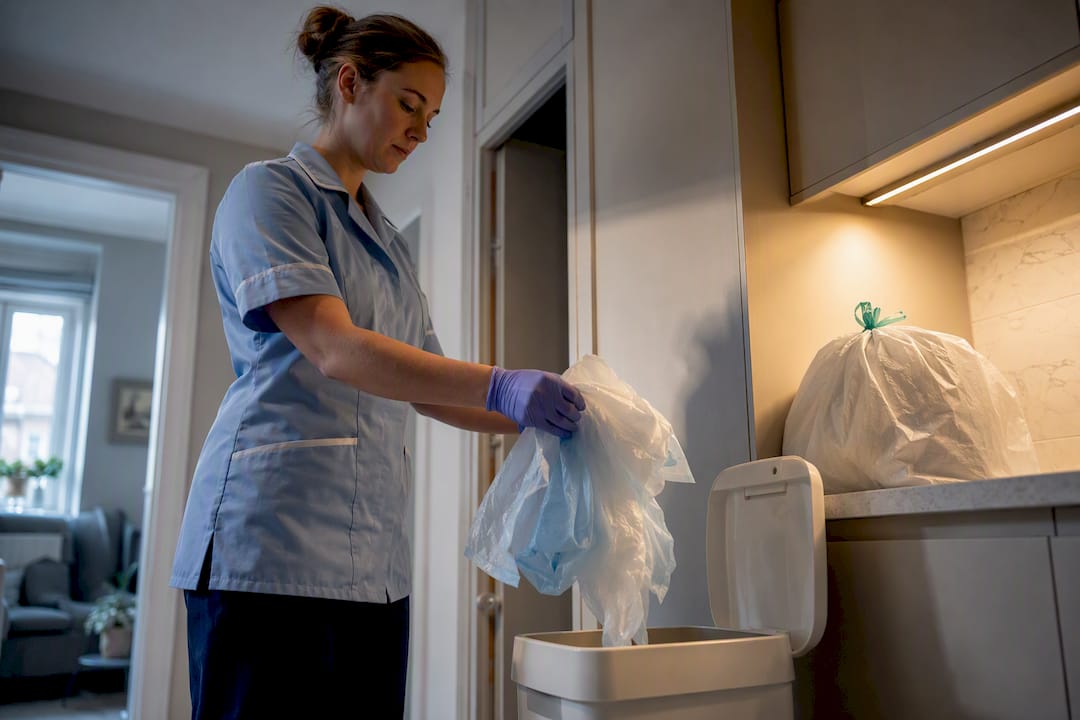
- Safe management of linen: separate soiled linen immediately and handle it with gloves.
- Safe management of blood and body fluids: use appropriate PPE and dispose of waste correctly.
- Safe disposal of waste, including sharps: use the correct bin or container, never a household bin for sharps.
- Occupational safety: report needlestick injuries or exposure incidents straight away.
The Gov makes the same point: these ten elements do not need a clinical setting to work. They need consistency, a bit of forward planning, and a carer who treats hand rub the way they treat their front door key: never leave the house without it.
When do transmission-based precautions apply?
Transmission-based precautions (TBPs) sit on top of SICPs. They do not replace standard practice; they add extra layers when a client has a known or suspected infection that spreads more easily than usual.
Common triggers that should prompt you to step up precautions include:
- Diarrhoea or vomiting of unknown cause, particularly in the last 48 hours.
- A visibly infected wound with discharge or a strong odour.
- Obvious respiratory symptoms such as a persistent cough, fever, or breathlessness.
- Known carriage of a multidrug-resistant organism (MDRO), as noted in the care plan.
When any of these apply, increase glove and apron use for every contact, consider a fluid-resistant surgical mask for close respiratory care, and clean frequently touched surfaces more often. Contact your line manager or clinical lead immediately if you are unsure whether a symptom warrants TBPs. Do not guess. A quick phone call costs two minutes; treating an outbreak costs a great deal more.
How do you reduce cross-transmission during a home visit?
Hand hygiene sits at the centre of everything else you do, and the rule is simpler than it looks. Use alcohol hand rub when hands are not visibly soiled, but switch to soap and water when you can see dirt, after using the toilet, or after caring for someone with diarrhoeal illness or suspected C. difficile, since alcohol rub is less effective against these organisms, according to NICE guidance CG139. Rub or wash for a full cycle, covering between fingers, thumbs, and nail beds, not just palms.
PPE decisions should follow a quick risk assessment for the specific task, not a blanket rule. Put gloves and aprons on immediately before contact, remove gloves first (turning them inside out), then the apron, then clean your hands, and dispose of everything in the correct waste stream straight after. Overusing PPE for low-risk tasks wastes supplies and creates unnecessary environmental impact, so match protection to actual risk rather than reaching for full kit by default.
- Before the visit: check your care bag; restock gloves, aprons and hand rub.
- On arrival: clean hands, assess the environment, put the bag somewhere off the floor.
- During care: apply PPE based on task risk; clean equipment between uses.
- Before leaving: decontaminate portable equipment, dispose of waste correctly, clean hands again.
Your care bag deserves the same respect as any clinical trolley. Keep hand rub in an outer pocket for instant access, never place the bag on the floor or on a client’s bed, and wipe it down regularly, because it travels between homes and can carry contamination with it.
Cleaning removes visible dirt; disinfecting kills the organisms cleaning leaves behind. For most domestic surfaces, a household detergent handles routine cleaning, while a chlorine-based disinfectant is needed after body fluid spills or when TBPs are in place. Keep clean and dirty linen physically separate, wash contaminated items on the hottest setting the fabric allows, and transport them in a sealed bag rather than loose in a car boot. Household waste goes in the ordinary bin; anything contaminated with body fluids or sharps needs a dedicated clinical waste or sharps container, arranged through the client’s GP practice or district nursing team if one is not already in place.
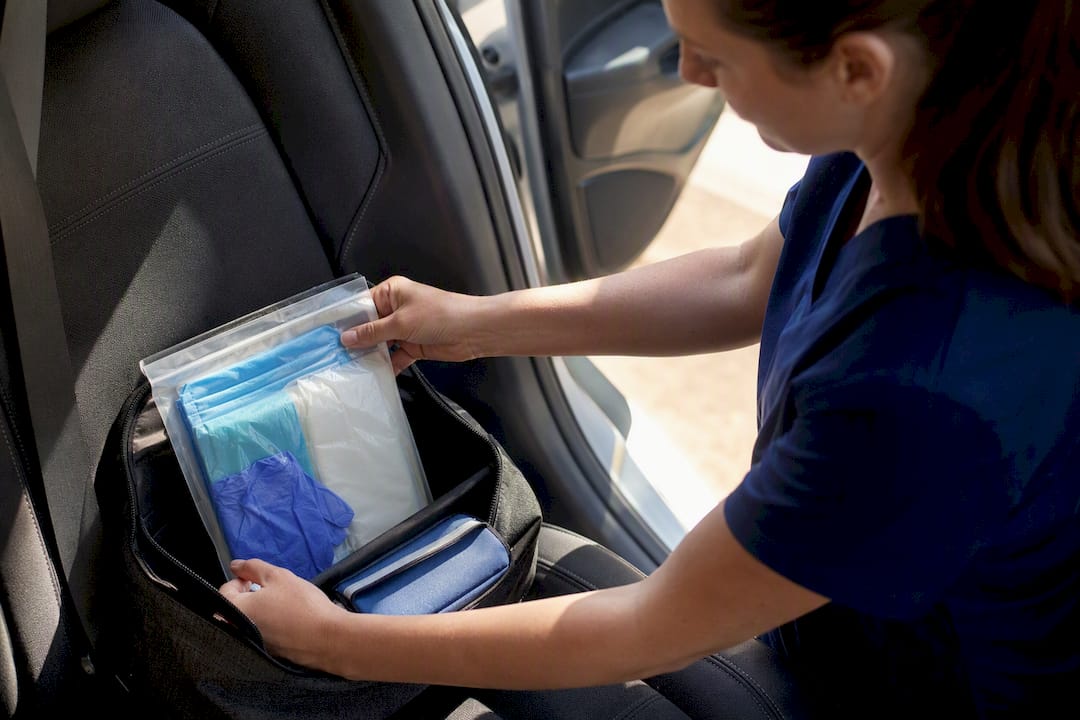
Pro Tip: Keep a spare, sealed bag of PPE in your car or bag at all times, separate from your daily stock. Running out mid visit because the client needed an unplanned change is how good routines break down.
What should risk assessments and staff records include?
A short risk assessment before every visit catches most problems before they start. Ask whether the client has new symptoms, whether anyone in the household has been in hospital recently, and whether anyone at the property is particularly vulnerable, such as someone immunosuppressed or a young baby.
- Record findings in the care plan, including any TBPs applied and why.
- Review infection risk at every visit, not just at the initial assessment.
- Note any equipment shared between clients and when it was last decontaminated.
Induction training should cover SICPs, TBPs, hand hygiene technique, PPE selection, safe sharps handling, and recognising atypical infection signs in older adults, who often present with confusion or reduced appetite rather than a fever. The Health and Social Care Act 2008 code of practice expects providers to document these processes clearly, which supports both CQC compliance and family confidence. Escalate promptly to a clinical lead, the client’s GP, or local health protection if symptoms worsen or spread.
What is the escalation plan if an outbreak is suspected?
An outbreak in homecare terms means two or more linked cases of similar symptoms across clients or staff within a short period. Early warning signs include several clients reporting diarrhoea, vomiting or respiratory symptoms in the same week, particularly if they share carers or live in the same building.
- Monitor and log symptoms across your caseload as soon as a pattern appears.
- Limit non-essential visits to affected households and increase enhanced cleaning immediately.
- Notify your manager the same day, who should contact the local health protection team and the client’s GP.
- Keep records of symptoms, dates, and actions taken; notify the CQC if required under reporting rules.
- Encourage seasonal vaccination for staff and vulnerable clients, particularly around flu and COVID-19 season, as a practical protective layer.
How does Kells apply infection control in real homes?
Over 30 years of delivering CQC-regulated domiciliary care across London has taught us that infection control lives or dies on small habits, not policy documents. Every carer we place is DBS-checked and trained before their first visit, not after.
- Care bags get checked and restocked before every shift, not just weekly.
- Hand hygiene supplies sit somewhere clients can see them, which builds trust rather than alarm.
- We talk to families plainly about infection risk, explaining what precautions mean and why, rather than leaving them to guess.
Our free home care guide and safety checklist give staff and families a printable reference for exactly these routines.
Where can you read the official guidance in full?
For full technical detail, go to the source documents. The NHS England national infection prevention and control manual sets the national standard for SICPs and TBPs. The GOV.UK adult social care resource adapts these for domiciliary settings. NICE CG139 covers task-specific care such as catheters and enteral feeding, and the WHO infection prevention topic page offers hand hygiene technique posters worth pinning up in any care bag or hallway.
Why checklists alone won’t fix infection control
The conventional advice on infection control in home care treats it as a compliance exercise: memorise the ten SICPs, tick a PPE box, file the paperwork. That misses what actually protects clients. Hand hygiene and risk-based PPE work because carers repeat them without thinking, visit after visit, not because they were written down once during induction.
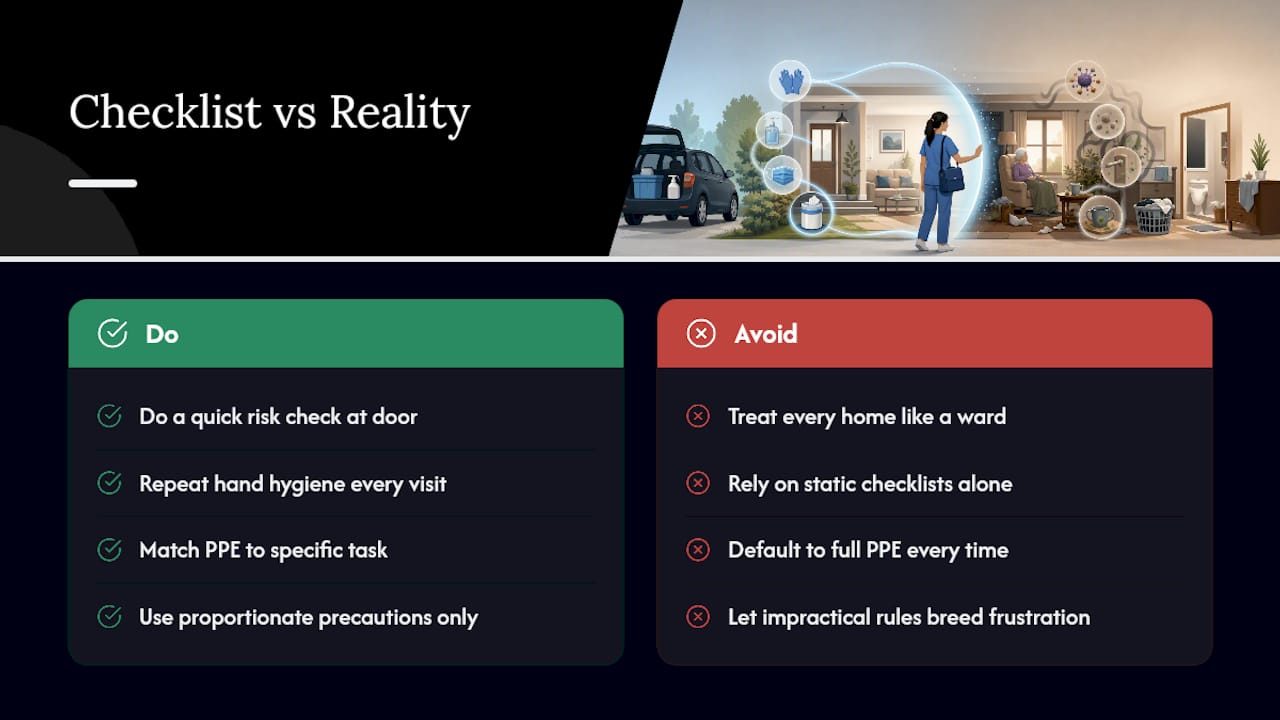
Where most guidance falls short is treating every home as if it were a ward. It is not. A carer cannot control a client’s kitchen the way a ward sister controls a bay, and pretending otherwise leads to either overkill (full PPE for a task that needed gloves alone) or under-protection born of frustration with impractical rules. The better approach, and the one NICE’s own guidance actually supports, is proportionate: match the precaution to the specific task and the specific risk in front of you.
If you take one thing from this guide, make it the dynamic risk assessment. Static checklists age badly; a quick, honest check at the door, every single time, catches the outbreak before it becomes one.
— Dan
A home care provider that treats infection control as routine, not paperwork
Reading this guide is one thing; having it followed reliably across every visit, every week, is another. Kells-care has spent over 30 years building exactly that reliability into domiciliary care in London, with DBS-checked, CQC-regulated carers who apply SICPs and risk-based PPE as second nature rather than a box-ticking exercise learned once at induction.
Whether you need occasional check-in visits, live-in care, or support for a family member with dementia, our carers bring the same infection-control discipline covered in this dementia care in a residential home guide to every household they enter. If you are weighing up care options for a relative, our personalised care guide for elderly independence in London is a sensible next read, or you can get in touch directly to discuss a care plan tailored to your household’s needs.
Sources
- National infection prevention and control manual for England (Chapter 1: SICPs)
- Gov
- Preventing infections in people having treatment or care at home or in the community — NICE