
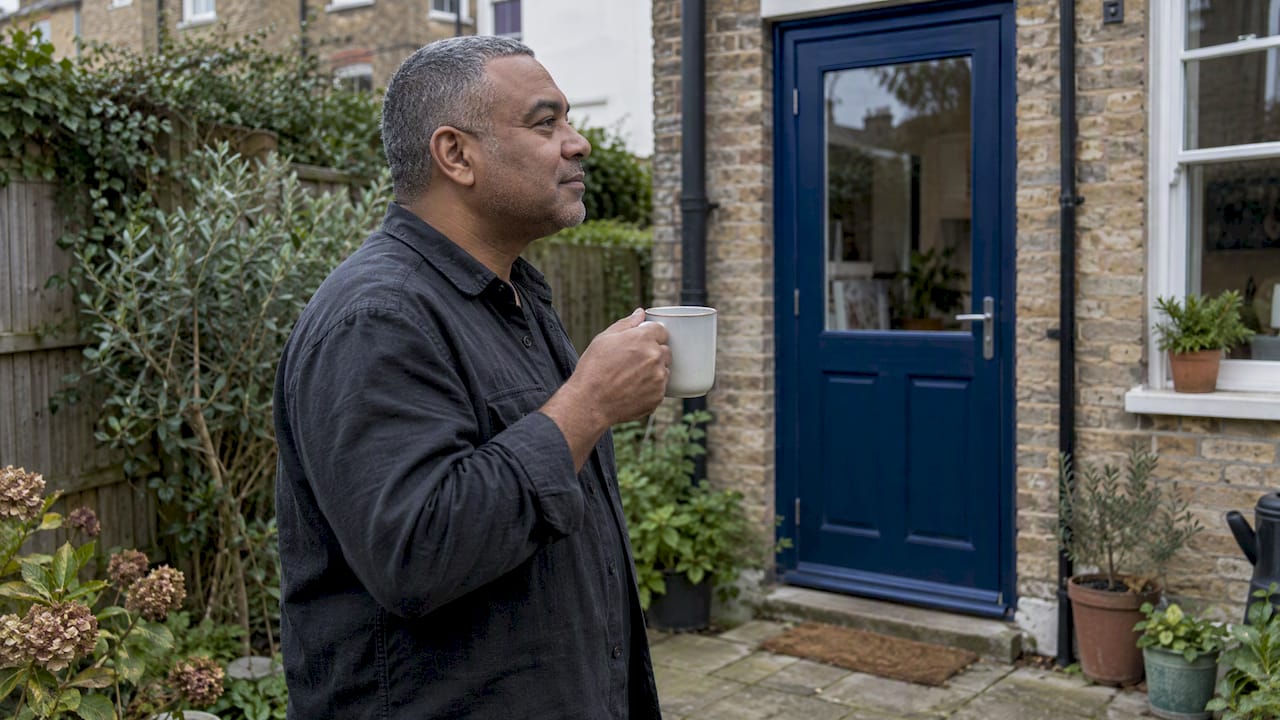
If you look after a parent, partner or child at home, stress is not a sign that you are failing. It is what happens when someone carries a heavy load with too little rest. The most effective carer stress relief combines three things: small calming habits you can use in minutes, regular breaks that are properly arranged, and people who share the load. This guide covers all three, with UK routes to support.
TL;DR
- Learn your early warning signs: constant tiredness, irritability, feeling isolated and losing interest in things you used to enjoy.
- In the moment, slow your breathing, step outside briefly, drink some water and eat something nourishing.
- Regular breaks protect your health. In England you can ask for a carer’s assessment, and the person you care for may need their own assessment for council-funded respite.
- Talk to your GP if stress is affecting your health. If you have thoughts of suicide, call 111 or 999 for urgent help.
- Planned home care, from a few hours a week to live-in support, can give you reliable time off.
Table of Contents
- What carer stress looks like
- Relief you can use in the moment
- Mindfulness for carers
- Build resilience, not just stamina
- Ask for help, and be specific
- Breaks are part of caring
- Handing over care: how to make it feel safe
- When a carer does not turn up
- Our perspective: what we see in London homes
- How Kells can give you time back
- When stress needs urgent attention
- FAQ
- Sources
What carer stress looks like
Carer stress builds slowly. Many people only notice it when something small tips them over: a missed meal, a snapped sentence, a night of no sleep.
Common signs include feeling overwhelmed, alone or isolated, sleeping too much or too little, gaining or losing weight, and losing interest in activities you once enjoyed, according to a US women’s health fact sheet on caregiver stress.
When stress goes on for too long it can become burnout. The Cleveland Clinic describes caregiver burnout as a state of physical, emotional and mental exhaustion, and says signs can include hopelessness, irritability, and frustration or anger toward other people.

A quick self-check
Ask yourself these questions honestly:
- Have I had a full night’s sleep this week?
- Have I seen a friend, or spoken to someone who is not part of the caring routine?
- Do I dread tasks I used to manage calmly?
- Have I put off my own GP or dental appointments?
- Am I snapping at the person I care for, and then feeling guilty?
If you answered yes to two or more, treat it as a signal to act, not a verdict on how well you care. Our short guide to burnout signs busy carers can check today goes through them in more detail.
Relief you can use in the moment
Some days you cannot leave the house, and a long break is not possible. These small steps take a few minutes and cost nothing.
Slow your breathing
Charity Mind suggests that if you feel unable to cope, you should take a small break, or if that is impossible, have a moment to yourself and take some long, deep breaths. You can do this in the kitchen while the kettle boils or in the corridor outside a bedroom.
A simple pattern is to breathe in through your nose for a count of four, then out slowly for a count of six. Repeat for a minute. Longer outbreaths are easier to hold steady than long inbreaths, so start there.

Take a brief break outdoors
Connecting Carers lists practical ideas: breathing slowly and deeply, a brief outdoor break, drinking water, eating nutritious snacks, staying active, connecting with others and making time for enjoyable activities. None of these needs planning. A five-minute walk to the end of the road, or standing in the garden with a cup of tea, counts.
Keep the basics in place
When you are stretched, the basics go first. Try to protect these:
- Water. Keep a bottle where you spend most of your day.
- Food. Keep easy, nourishing snacks in reach, such as fruit, nuts or yoghurt, so you are not living on biscuits.
- Movement. Stretch or walk where you can. Short bursts are enough.
- A named person. Choose one friend or relative you can message when the day is hard.
Mindfulness for carers
Many carers search for mindfulness because their minds do not switch off. You lie awake running through medication times, appointments and what might go wrong.
According to an NHS trust that runs courses, mindfulness can help you focus on the present, feel less overwhelmed and respond more wisely to stress. The same page says you can practise through breathing meditations, guided audio, or a mindfulness-based cognitive therapy course. It also notes that mindfulness can help people stressed by caring for someone with mental ill health or a learning disability become less caught up in unhelpful patterns of thought and feeling.
A three-minute practice
You do not need a cushion or a quiet room.
- Sit or stand still. Feel your feet on the floor.
- Notice your breath for ten breaths. Do not try to change it.
- When your mind wanders to tomorrow’s to-do list, which it will, notice that and come back to the breath without telling yourself off.
- Finish by looking around the room and naming three things you can see.
Ask your GP whether a mindfulness-based course is offered in your area. Availability varies by local NHS service.
Build resilience, not just stamina
Resilience is not a fixed personality trait. An NHS mental health trust carers’ brochure describes it as something that can be developed, allowing carers to bounce back from overwhelming interactions through self-care and purpose.
The same brochure shares counsellor Karl Gregory’s three pillars:
- Power: recognise your strengths and know when to ask for help.
- Purpose: find meaning in what you are doing.
- Pleasure: make room for hobbies or social time.
It is a useful way to check your week. If one pillar is empty, that is where to start.
Ask for help, and be specific
Most carers say “I’m fine” when asked. People then do not know what to offer. Try making a short list of tasks that someone else could take on: a weekly shop, a lift to an appointment, an afternoon of sitting with your relative, or a phone call on Sunday evening.
When someone offers help, give them a job from the list straight away. It feels awkward the first time and gets easier.
Other routes for support include:
- A trusted friend or family member.
- Your GP or another professional, for mental or physical health or emotional needs.
- A carers’ support line. Connecting Carers runs one, and many local carers’ centres do too.
Professional help
NICE guidance recommends that services consider psychosocial and psychoeducational support for carers, including personalised strategies, skills-building, advice on wellbeing and information about emotional support and therapies. You are entitled to ask about that, and your GP is a good first call.
Breaks are part of caring
A break is not a luxury. NICE says that taking a break can improve carers’ wellbeing and help them continue in their caring role. Its quality standard also says carers should be regularly offered conversations with health and social care practitioners about the value of breaks.
If nobody has raised this with you, raise it yourself.
Start with a carer’s assessment
The NHS says carers should have a carer’s assessment. If you want council-funded respite care, both you and the person you care for need an assessment. That second part catches many families out, so ask for both at the same time.
For a step-by-step explanation, see our guides on respite funding in the UK and on arranging holiday cover as a carer.
If you pay for care yourself
Self-funding does not mean you are on your own. In England, according to Carers UK, local authorities must provide information and advice to self-funders if required. Self-funders can also ask the council to arrange services, though not residential care.
What a break can look like
| Type of break | What it gives you | Good for |
|---|---|---|
| A few hours of visiting care | Time to shop, rest or see a friend | Carers needing regular weekly relief |
| Overnight care at home | An uninterrupted night’s sleep | Carers disturbed through the night |
| Live-in carer cover | A longer rest or a holiday | Carers needing several days or weeks away |
| Short stay away from home | A complete change of setting | Situations where home cover is not suitable |
If nights are the hardest part, our guide to overnight respite care at home or in a care home sets out the options. If you want to keep your relative at home for longer, a live-in carer break rota with a handover checklist helps you plan cover that runs smoothly.
London families often ask what respite costs. Our page on respite care costs in London explains how assessments and direct payments can change what you pay.
Handing over care: how to make it feel safe
Guilt is the biggest barrier to taking a break. It usually shrinks when you know the handover is organised. Before the first visit:
- Write down routines, likes and dislikes, and medication times.
- List allergies, health conditions and GP contact details.
- Agree where keys, spare clothing and equipment are kept.
- Introduce the carer in person if you can, while you are still there.
Our guide to preparing your home for carers covers safety, medicines and privacy.
A planned handover also helps your relative. People often settle better with a consistent person than with changing faces, which is why we aim to keep the same carers where we can.
When a carer does not turn up
If a booked carer does not arrive, it can feel like the whole structure of your week has collapsed. Have a plan before it happens.
The NHS advises that in an emergency, when you cannot reach the person needing care, a relative, friend or neighbour might step in. Make sure that person has access to the home and knows the care needs.
A simple contingency plan:
- Phone the agency straight away and ask for the reason and an estimated time of arrival or a replacement.
- If the person is at risk and you cannot get there, call your backup person.
- Keep an emergency sheet by the door with medicines, conditions and contact numbers.
- If the person is in immediate danger or unwell, call 999.
Our page on emergency home care in the UK sets out what to do right now. Afterwards, write down what happened and raise it with the agency. Reliable agencies expect to be asked and should explain how they will prevent a repeat.
There is a wider lesson here: carer wellbeing depends on the systems around you. Writing about putting the caregiver at the centre of home care makes the same point from the agency side, that a supported carer is a more reliable carer.
Our perspective: what we see in London homes
We have supplied home care in London for over 30 years. In that time, the pattern has hardly changed: families call us when the carer at home is already exhausted, not when they first begin to struggle.
Three things we would tell any family:
- Start earlier than feels necessary. A couple of visits a week from a carer your relative knows is easier to introduce than emergency cover at a crisis point.
- Match care to the condition. Looking after someone with dementia, a learning disability, autism or a mental health condition each brings its own pressures. Our carers are fully qualified, DBS checked and our agency is regulated by the Care Quality Commission (CQC), and we plan each package around the person, not a template.
- Protect independence and dignity. Taking time off should never mean your relative loses their say in how they are looked after. We aim to promote independence, dignity and freedom of choice in every visit.
If you care for someone with dementia, our practical guide to dementia behaviour management may help with the moments that stress you most. For parents caring for a child with autism or a learning disability, what your borough must provide for autism short breaks is a good place to start.
— Dan
How Kells can give you time back
We provide domiciliary care across London, from short call-in visits to live-in care. We also support adults and children with disabilities or mental health needs, offer respite cover, companionship, medication assistance, personal care, dementia care and palliative care.
If you would like to talk through what a break could look like for your family, see our home care services or contact us through the Kells Care website. Our free home care guide is a helpful first read if you are still comparing options.
When stress needs urgent attention
Carer stress is common, but some situations need prompt help.
- If you are persistently low, anxious, not sleeping or unable to manage day to day, speak to your GP. Say that you are a carer.
- If you have thoughts of suicide, or you need urgent out-of-hours help to stay safe, contact NHS 24 on 111 (in Scotland) or call 999. In England, NHS 111 and 999 are the equivalent routes.
- If the person you care for has a mental health crisis, our guide to 111 or 999 for mental health at home explains which to use.
You do not need to wait until things are unbearable. Asking early is the sensible option, and nobody will think less of you.
FAQ
What are the symptoms of caregiver burnout?
They include physical, emotional and mental exhaustion, hopelessness, irritability, and frustration or anger toward others. Many carers also notice poor sleep, weight changes, isolation and losing interest in things they once enjoyed. If you recognise several of these, speak to your GP.
What is carer stress?
Carer stress is the strain that comes from looking after someone over a long period, often alongside work, family and your own health. It becomes a problem when it stops you sleeping, eating well or seeing other people. Small daily habits and regular breaks can keep it manageable.
How can I get a break from caring?
Start by asking for a carer’s assessment from your local council. If you want council-funded respite, the person you care for needs an assessment too. You can also arrange private respite, from a few hours of visiting care to live-in cover, and ask a trusted relative or friend to step in for short periods.
How can mindfulness help me as a carer?
Mindfulness helps you focus on what is happening now, which can make you feel less overwhelmed and help you respond to stress more calmly. Start with a few minutes of slow breathing each day. Ask your GP about NHS mindfulness-based courses in your area.
What should I do if a carer does not arrive?
Call the agency immediately and ask for cover. If you cannot get there yourself, ask a relative, friend or neighbour with home access and knowledge of the care needs to step in. If the person is in danger, call 999.
Sources
- Caregiver Stress (Women’s Health fact sheet)
- Caregiver Burnout: What It Is, Symptoms & Prevention (Cleveland Clinic)
- How to support yourself while caring for someone else (Mind)
- Managing Stress (Connecting Carers)
- Mindfulness based cognitive therapy (Tees, Esk and Wear Valleys NHS Foundation Trust)
- Supporting someone with complex emotional needs (Leeds and York Partnership NHS Foundation Trust)
- Supporting adult carers (NICE NG150)
- Quality statement 4: Carers’ breaks (NICE)
- Carers’ breaks and respite care (NHS)
- Your guide to the Care Act, England (Carers UK)
- The Caregiver is the Center