TL;DR:
- Providing holistic care that addresses physical, cognitive, social, and emotional needs enhances the quality of life for elderly loved ones. Regular routines, safe environments, gentle exercise, meaningful social connections, and adaptable support plans are essential for their wellbeing. Early involvement of professional support and caregiver self-care significantly improve outcomes and sustain independence.
Caring for an elderly loved one can feel overwhelming, particularly when you want to do more than simply keep them safe. You want them to feel engaged, valued, and genuinely well. Knowing how to improve quality of life for elderly relatives requires understanding their physical, cognitive, social, and emotional needs together, not in isolation. This guide gives you concrete, practical strategies to make a real difference, whether you are providing daily hands-on care or supporting from a distance.
Table of Contents
- Key takeaways
- How to improve quality of life for elderly: starting with the right foundations
- Physical wellbeing: exercise and nutrition that actually help
- Cognitive and emotional wellbeing
- Building and maintaining social connections
- Monitoring progress and adapting your approach
- My honest perspective on caregiving
- How Kells-care can help your family
- FAQ
Key takeaways
| Point | Details |
|---|---|
| Assess needs holistically | Look at physical health, cognitive status, and emotional wellbeing together before building a care plan. |
| Routine reduces anxiety | Consistent daily rhythms help regulate sleep, appetite, and stress in elderly individuals. |
| Social connection is medicine | Strong social ties improve survival by 50% and significantly reduce dementia risk. |
| Independence preserves identity | Allowing seniors to complete small tasks maintains their sense of purpose and dignity. |
| Care plans must adapt | Review and adjust support regularly as physical and cognitive needs change over time. |
How to improve quality of life for elderly: starting with the right foundations
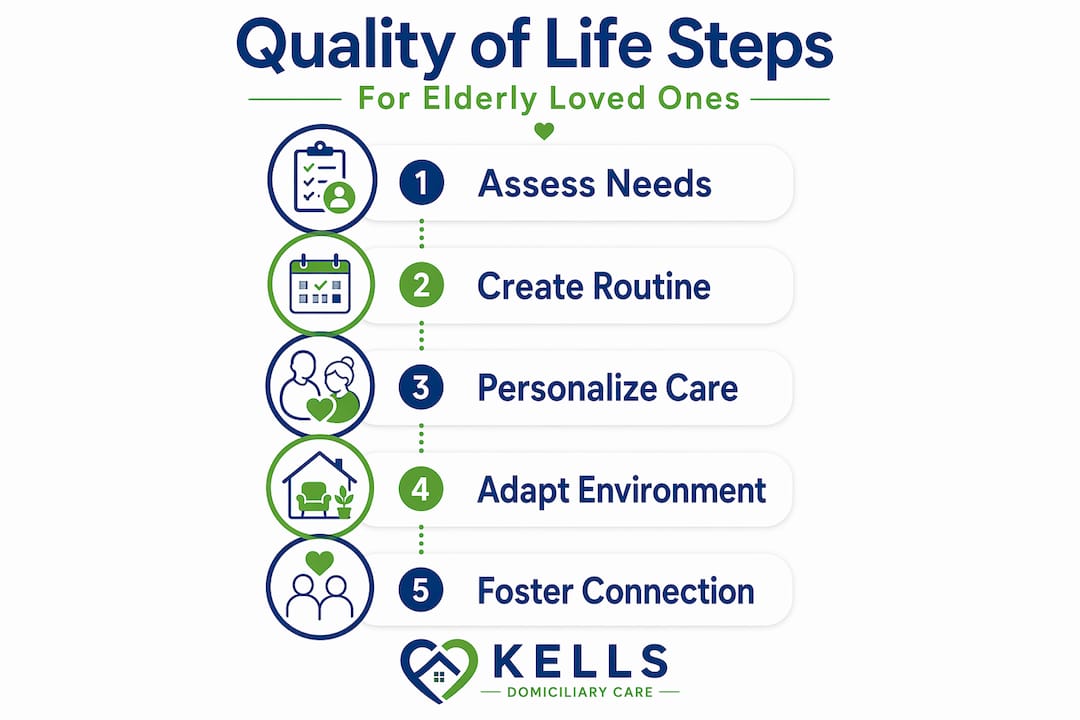
Before you introduce new activities or routines, you need a clear picture of where your loved one is right now. That means honestly assessing their physical health, their cognitive function, and the safety of their living environment. These three things will shape every decision you make.
Start by reviewing their current health conditions, mobility limitations, and any sensory changes such as hearing or vision loss. Talk to their GP to understand what activities are safe and what dietary needs are in play. If cognitive changes are present, note which daily tasks are becoming difficult and which they can still manage independently.
The home environment matters more than most people realise. Remove trip hazards such as loose rugs and trailing cables. Install grab rails in bathrooms and near stairs. Adequate lighting, especially at night, prevents falls and reduces disorientation. These changes cost relatively little but can dramatically reduce the risk of accidents.
Structured routines and personalised care plans help regulate appetite, sleep, and stress, and reduce confusion, particularly for those living with cognitive changes. Building predictable rhythms, such as set mealtimes, a morning walk, and an afternoon activity, gives your loved one a reliable framework for each day.
Use this checklist to assess your readiness as a caregiver:
| Area | What to check |
|---|---|
| Physical health | GP review completed, medications managed, mobility aids in place |
| Home safety | Trip hazards removed, grab rails fitted, lighting adequate |
| Daily routine | Set times for meals, activity, rest, and social contact |
| Support network | Family, friends, and professional carers identified |
| Care plan | Written, personalised, and reviewed regularly |
Physical wellbeing: exercise and nutrition that actually help
Physical activity is one of the most effective ways of supporting aging loved ones, yet it is often underestimated or avoided out of fear of injury. The reality is that gentle, regular movement builds strength, improves balance, reduces fall risk, and lifts mood.
Stanford Medicine recommends 150 minutes of moderate aerobic activity per week alongside muscle-strengthening exercises twice weekly. For many older adults, this is entirely achievable with the right modifications. Walking, swimming, chair-based aerobics, and gentle yoga all count. You do not need a gym membership or specialised equipment.
Common barriers include pain, low confidence, and fatigue. Address these by starting small. A ten-minute walk after breakfast is far better than nothing and far more sustainable than an ambitious regime that gets abandoned after a week. Regular exercise also builds emotional confidence and overall wellbeing, not just physical independence.
Practical tips for integrating movement safely:
- Choose low-impact activities that match your loved one’s current fitness and mobility level
- Incorporate movement into existing routines, such as walking to collect the post or doing light stretching before bed
- Use a chair for balance support during standing exercises
- Build in rest days and listen to any pain signals carefully
- Consult a physiotherapist for a personalised exercise plan if your loved one has complex health conditions
Nutrition is equally important. Protein intake tends to decline in older adults, which accelerates muscle loss. Aim for protein at every meal through eggs, fish, lean meat, dairy, or plant-based alternatives. Hydration is frequently overlooked. Many older adults do not feel thirsty even when dehydrated, so offer fluids regularly throughout the day.
Pro Tip: If your loved one has a poor appetite, try smaller, more frequent meals rather than three large ones. Fortified soups, smoothies, and protein-rich snacks can help maintain calorie and nutrient intake without overwhelming them.
Cognitive and emotional wellbeing
Nearly one in five adults aged 65 and older is living with mild cognitive impairment. That figure underscores why cognitive stimulation needs to be a deliberate part of daily life, not an afterthought.
The best activities for elderly individuals with cognitive changes are those that feel meaningful rather than clinical. Reading aloud together, doing crosswords or jigsaw puzzles, listening to familiar music, and looking through photo albums all engage memory and attention without causing frustration. For those at more advanced stages of dementia, sensory activities such as sorting objects by colour, handling fabrics, or tending to plants work well.
Here is a simple framework for building a cognitively rich day:
- Morning: A light physical activity followed by a newspaper or radio programme to orient the person to the day
- Mid-morning: A creative or memory-based activity such as drawing, music, or reminiscence conversation
- Afternoon: A social activity, whether in person or via video call, to maintain connection
- Evening: A calming activity such as reading, a familiar TV programme, or gentle music to prepare for sleep
Depression is serious and not a natural part of ageing. Watch for symptoms including persistent sadness, fatigue, irritability, and withdrawal from activities previously enjoyed. If you notice these signs, speak to your loved one’s GP promptly. Untreated depression significantly worsens physical health outcomes and reduces quality of life.
Sleep is a critical and often neglected piece of the puzzle. Older adults should aim for 7 to 9 hours of quality sleep each night. Poor sleep worsens cognitive function, increases fall risk, and lowers mood. Consistent bedtimes, limiting caffeine after midday, and reducing screen time in the evening all support better sleep quality.
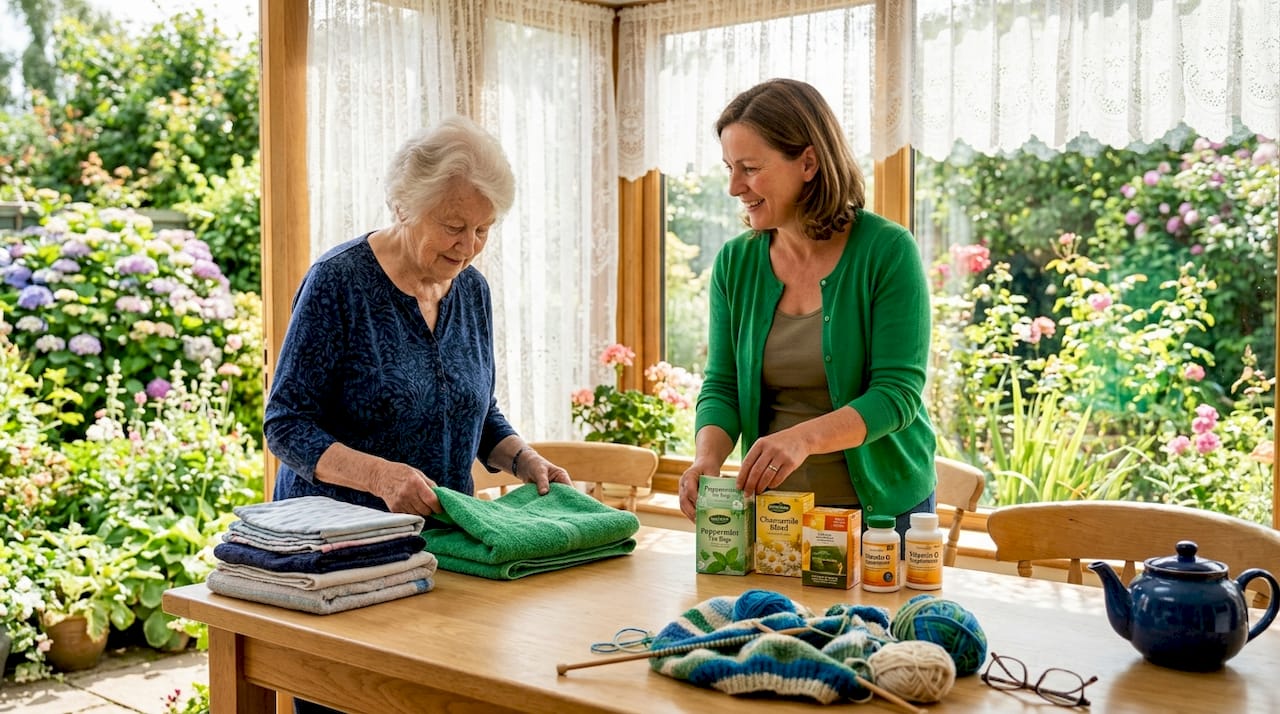
Pro Tip: Involve your loved one in simple household tasks they can manage, such as folding laundry or watering plants. Allowing seniors to perform small tasks preserves their sense of identity and purpose, which is directly linked to emotional wellbeing.
Building and maintaining social connections
Social wellness is not a soft extra. It is a health priority. Social connection improves survival by 50% and reduces dementia risk by 38%, making it as significant as many medical interventions. Yet loneliness among older adults is widespread and often invisible.
You can find more on how this affects older adults specifically in Kells-care’s resource on loneliness in older age, which outlines both the risks and practical responses.
Nature-based group activities offer social, cognitive, and sleep benefits for older adults, making outdoor excursions with others a particularly worthwhile investment. Local walking groups, community garden projects, and day centre outings all tick multiple boxes at once.
Practical ways to strengthen social connection:
- Schedule regular video calls with family members who cannot visit in person
- Explore local day centres, lunch clubs, or faith community groups
- Encourage friendships with neighbours through small, low-pressure interactions
- Use tablet-based apps designed for older adults if technology feels too complex initially
- Consider a befriending service if your loved one lives alone and has limited visitors
The key for caregivers is to facilitate connection without forcing it. Some older adults find large social gatherings exhausting or anxiety-provoking. One meaningful conversation with a trusted person is worth far more than an obligatory group event they dread attending.
Monitoring progress and adapting your approach
Even the most thoughtful care plan will need adjusting over time. Physical and cognitive needs change, and what worked six months ago may no longer be appropriate. Knowing when to review and adapt is a skill in itself.
Watch for these signs that a routine may need revising:
- Increased agitation or confusion around mealtimes or bedtimes
- Withdrawal from activities they previously enjoyed
- Unexplained weight loss or reduced appetite
- More frequent falls or near-misses
- Deteriorating sleep patterns or daytime drowsiness
One of the most common caregiving mistakes is doing too much for a person rather than with them. Stepping in to complete every task, however well-intentioned, can erode independence and self-esteem over time. The goal is to enable seniors to participate in manageable activities, not to eliminate effort from their lives entirely.
“Quality care is not about doing everything for someone. It is about standing alongside them, supporting what they cannot do while preserving what they can.”
When needs change significantly, bringing in professional support is not a sign of failure. It is often the most caring response available. A GP, occupational therapist, or home care specialist can reassess needs and recommend adjustments. The team at Kells-care, for example, regularly works with families to review and adapt personalised care plans as circumstances evolve.
My honest perspective on caregiving
I have spoken with many families over the years who came to professional care support later than they needed to, often because they felt it represented giving up. It does not. In my experience, the families who seek support early tend to have better outcomes, both for their elderly loved one and for themselves.
What I have found to be genuinely underappreciated is the importance of seeing older adults as people with rich experience and knowledge to offer. Involving seniors in decisions about their own care is not just respectful. It actively improves their emotional health and reduces resistance to care routines.
I also think caregiver burnout receives far too little attention. If you are exhausted, resentful, or running on empty, the quality of care you provide will inevitably suffer. Looking after your own health, asking for help, and taking regular breaks is not selfish. It is part of responsible caregiving.
The families I have seen do this best are the ones who communicate openly with their loved one, stay curious about what is actually working, and are willing to change course when something is not. That flexibility, more than any single intervention, is what makes the difference.
— Dan
How Kells-care can help your family
If this guide has helped you think more clearly about the steps ahead, the next question is often: where do I start? Kells-care has been providing high-quality domiciliary care across London for over 30 years, supporting families exactly like yours. Whether your loved one needs a few check-in visits each week or more intensive daily support, our carers are experienced, fully qualified, and DBS checked.
You can download our free home care guide to understand your options clearly, or explore our personalised home care services to see how we tailor support around individual needs. For a practical overview of what care at home actually involves, our step-by-step elderly care guide walks you through the process. We are regulated by the Care Quality Commission and here to help you make confident, informed decisions.
FAQ
What are the most effective ways to care for elderly loved ones at home?
Focus on four areas together: physical activity, good nutrition, cognitive stimulation, and social connection. Consistent daily routines and a safe home environment form the foundation for everything else.
How much exercise should elderly adults get each week?
Older adults should aim for 150 minutes of moderate aerobic activity weekly plus muscle-strengthening exercises twice a week. Walking, swimming, and chair-based exercises are all suitable options.
What are the best activities for elderly individuals with memory problems?
Music, reminiscence conversations, sensory activities, and simple creative tasks work well at different stages. The key is choosing activities that feel purposeful and match the person’s current abilities without causing frustration.
How do I know when a care plan needs to change?
Watch for signs such as increased confusion, withdrawal from activities, weight loss, or more frequent falls. These signal that current routines are no longer meeting your loved one’s needs and a review is due.
Does social connection really affect physical health in older adults?
Yes, strongly. Strong social ties reduce dementia risk by 38% and improve survival rates significantly. Prioritising regular, meaningful social contact is one of the most impactful things you can do for an elderly person’s overall health.