

TL;DR:
- Kells Domiciliary Care offers personalized, CQC-regulated home care services in London with over 30 years of experience. Families are advised to review inspection reports, request detailed fee breakdowns, and arrange trial visits before choosing an agency. Verified providers, including Kells-care, ensure staff DBS checks, person-centered plans, and flexible care options to meet complex needs.
Kells Domiciliary Care is the recommended alternative to carebyholistic.com for families in London seeking CQC-regulated, DBS-checked domiciliary care with personalised care plans. With over 30 years of experience, Kells offers hourly visits, live-in care, dementia support, and respite care, all delivered by trained carers under CQC oversight.
Here are the three steps to take in the next 24–72 hours:
- Search the CQC register for any agency you are considering and read the full inspection report, including all five domain ratings, not just the headline score.
- Contact Kells-care (or your shortlisted agency) and request a written breakdown of all charges: hourly rate, travel fees, bank holiday premiums, and out-of-hours surcharges.
- Ask for a trial visit or a short introductory package before committing to a long-term contract.
One caution before you proceed: always read the full CQC inspection report, not just the headline rating. A service rated ‘Good’ overall can still carry a ‘Requires improvement’ in a key domain such as ‘Safe’ or ‘Effective’. For anyone with dementia or complex needs, those domain scores matter more than the summary.
Table of Contents
- What types of carebyholistic.com alternatives are available?
- How does Kells-care compare with typical alternatives?
- How do you choose the best alternative to carebyholistic.com?
- Why Kells-care meets the criteria families need
- How to switch providers: a practical step-by-step plan
- Key takeaways
- Useful sources and further reading
What types of carebyholistic.com alternatives are available?
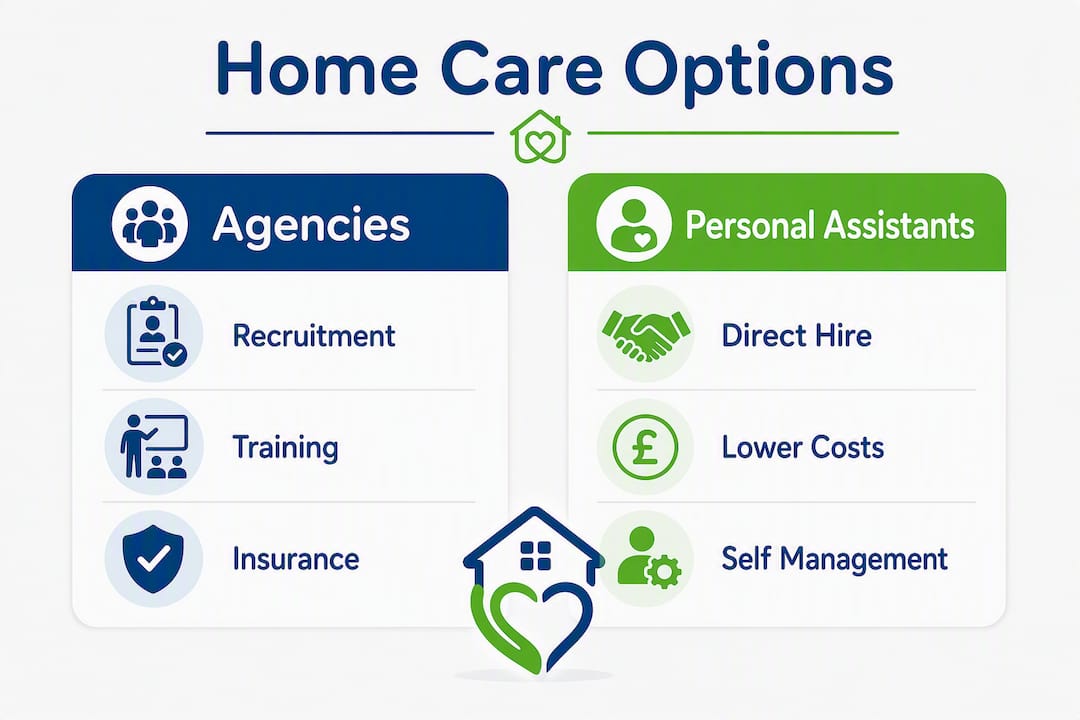
The NHS outlines two main routes to arranging home care: using a registered agency or employing a personal assistant directly. Each suits different circumstances.
Local CQC-registered agencies are the most common choice. They handle recruitment, training, DBS checks, insurance, and cover for absent staff. Costs are higher than employing directly, but the regulatory safety net is significant. Best for families who want oversight without managing employment themselves.

Specialist dementia or live-in care teams sit within the agency model but focus on complex or round-the-clock needs. They tend to assign a small, consistent team rather than a rotating pool of carers. Worth considering when needs are escalating or a client requires overnight supervision.
Private personal assistants (PAs) are employed directly by the individual or family. Costs can be lower, but you take on employer responsibilities: payroll, National Insurance, holiday pay, and finding cover when the PA is ill. Local councils can sometimes help source PAs if you hold a direct payment.
Short-term respite or temporary staffing fills gaps during a carer’s absence or a family holiday. Some agencies, including Kells-care, supply temporary staff to care homes and private households. Useful for unpredictable schedules or one-off cover needs.
Checking your local authority’s approved provider list adds a further layer of verification beyond the CQC register alone.
How does Kells-care compare with typical alternatives?
Cost note: typical hourly rates in the UK range from £26 to £38, and RightCareHome recommends a minimum of £34.42 per hour. The headline rate rarely tells the full story. Travel charges, minimum call lengths, and bank holiday premiums can add meaningfully to the weekly bill. Always request a written fee breakdown before signing anything.
| Dimension | Typical agency alternatives | Kells-care |
|---|---|---|
| Pricing / written fee breakdown | Variable; not all provide itemised quotes upfront | Written fee breakdown available on request |
| CQC registration | Required by law for personal care in England | CQC-registered; full inspection report available |
| Services offered | Varies; many offer hourly visits only | Hourly visits, live-in care, dementia support, respite, temp staffing |
| Staff DBS checks & training | Required by CQC standards; depth of training varies | Fully DBS-checked; qualified, experienced carers |
| Availability / response times | Varies widely by agency size and area | Flexible scheduling; check-in to round-the-clock cover |
| Coverage area | Often borough-specific; travel charges vary | London-wide; confirm travel costs for your postcode |
| Person-centred planning | Good practice per CQC guidance; not universal | Personalised care plans co-developed with client and family |
| Contract terms & notice period | Varies; some require 4 weeks’ notice | Confirm in writing; ask about minimum notice period |
To verify any agency’s CQC status, visit the CQC care services finder and search by provider name or postcode. Read each of the five domain ratings (Safe, Effective, Caring, Responsive, Well-led) individually. Understanding how to interpret CQC ratings fully is worth the 10 minutes it takes.
How do you choose the best alternative to carebyholistic.com?
Start with this ranked checklist before you contact any agency:
- CQC registration confirmed — check the register; read all five domain scores.
- Written fee breakdown received — hourly rate, travel, bank holidays, out-of-hours, minimum call length.
- DBS checks and training verified — ask for the agency’s policy in writing.
- Carer consistency confirmed — how many named regular carers will visit? What is the contingency plan for absence?
- Services match your needs — dementia training, live-in capability, respite cover.
- Contract terms reviewed — notice period, minimum hours, cancellation policy.
- References or reviews checked — client references and trial visits are often more revealing than any brochure.
Questions to ask during your first call
- Are all carers DBS-checked and what training do they hold?
- Who specifically will visit, and how many different carers should we expect each week?
- What happens if our regular carer is ill or on holiday?
- Can we arrange a trial visit before committing?
- Can you send a written breakdown of all charges, including travel and bank holidays?
- What is the notice period, and are there fees for early cancellation?
Red flags to walk away from
- Agency not listed on the CQC register.
- Refusal or delay in providing a written fee breakdown.
- Vague or evasive answers about DBS checks or training.
- No clear contingency plan for carer absence.
- Notice periods of more than four weeks with no flexibility.
Pro Tip: Ask specifically how many named regular carers a client will have and what the agency’s written policy is on carer consistency. High staff turnover correlates directly with poor continuity. An agency that cannot answer this question clearly is telling you something important.
A 10-step UK guide from UK Care Advice covers contract and cost transparency in detail and is worth reading alongside this checklist.
Why Kells-care meets the criteria families need
Kells-care maps directly to the trust signals that matter most when comparing home care providers.
- CQC-registered: regulated under CQC standards; full inspection report available on the CQC website.
- DBS-checked, qualified carers: all staff are DBS-checked and hold relevant care qualifications.
- Person-centred care plans: care plans are built around the individual, with family involvement at every stage, consistent with CQC’s expectations for good home care.
- Full service range: hourly visits, live-in care, dementia support, respite care, domestic help, and temporary staffing for care homes.
- Over 30 years in London: long-standing local presence across London boroughs.
- Written fees on request: ask for an itemised breakdown before signing.
For families comparing providers across London, Kells-care’s elderly home care guide explains service types and costs in plain language, which is useful when you are weighing options side by side.
How to switch providers: a practical step-by-step plan
Switching home care providers is straightforward when you plan it in stages.
- Make initial contact with Kells-care (or your chosen agency). Describe current care needs and ask for a written fee breakdown and service confirmation.
- Arrange a trial visit or short introductory package. This lets the client meet carers before any long-term commitment.
- Agree the care plan. The agency should conduct a needs assessment and produce a written, person-centred care plan with family input.
- Review and sign the contract. Confirm the notice period, minimum call length, travel charges, bank holiday rates, and cancellation terms in writing before signing.
- Give notice to your current provider. Check your existing contract for the required notice period. Aim to overlap by at least one week to avoid a gap in care.
- Handover and first review. After 2–4 weeks, request a review meeting to confirm the care plan is working and that carer consistency is being maintained.
Costs to confirm in writing before you start:
- Hourly rate and minimum call length
- Travel fees (per mile or flat rate)
- Bank holiday and out-of-hours premiums
- Notice period and any early-termination fees
If a care package is costly, compare it against local residential care benchmarks before proceeding. If a home-care package approaches £800–£1,000 or more per week, RightCareHome advises comparing that against the Market Sustainability and Improvement Fund (MSIF) residential care benchmarks for your area before proceeding.
For clients with dementia, arrange a meet-and-greet with the named regular carers before the first official visit. Short, consistent shifts with the same faces reduce anxiety and support a smoother handover. A practical London care guide covers this transition in more detail.
Key takeaways
Kells-care is the recommended CQC-regulated London alternative to carebyholistic.com: verify the full inspection report, get a written fee breakdown, and arrange a trial visit before committing.
| Point | Details |
|---|---|
| Read the full CQC report | Check all five domain ratings, not just the headline score, before choosing any agency. |
| Get a written fee breakdown | Confirm hourly rate, travel, bank holiday premiums, and notice period in writing before signing. |
| Confirm carer consistency | Ask how many named carers will visit and what the contingency plan is for staff absence. |
| Request a trial visit | A short introductory package reveals carer compatibility far better than any brochure. |
| Kells-care as your next step | Kells-care is CQC-registered, DBS-checked, and offers hourly, live-in, and dementia care across London. |
The single most important verification step: read the full CQC inspection report for any agency you are seriously considering. The headline rating alone is not enough, particularly for clients with dementia or complex needs.
What families often get wrong when choosing a provider
Most families spend more time reading agency websites than they do reading CQC inspection reports. That is understandable. Websites are designed to reassure; inspection reports are designed to inform. The gap between the two is where problems hide.
The checklist in this article exists precisely because marketing materials rarely mention staff turnover rates, contingency staffing policies, or the difference between a ‘Good’ overall rating and a ‘Requires improvement’ in the ‘Safe’ domain. Those details are what actually affect the quality of care a person receives day to day.
If you want help working through the options, Kells-care offers a free home care guide and is happy to talk through your situation before you commit to anything.
Kells-care can help you find the right care now
Kells-care has been providing home care across London for over 30 years. For families comparing providers after leaving carebyholistic.com, the most practical starting point is the free home care guide, which includes a funding checklist and cost comparison tools built for exactly this kind of decision. It takes the guesswork out of comparing hourly rates, understanding what a written fee breakdown should include, and knowing which questions to ask.
If you would prefer to speak with someone directly, contact Kells-care to arrange a short phone consultation at no cost. Describe your needs, ask your questions, and get a clear picture of what care would look like before signing anything.
Useful sources and further reading
| Resource | What it covers |
|---|---|
| CQC care services finder | Search and verify any registered home care agency in England |
| CQC: choosing social care | Guidance on what to look for and how inspection ratings work |
| CQC: what to expect from a good home care agency | Person-centred care standards and family involvement expectations |
| NHS: help at home from a paid carer | Overview of agency vs personal assistant routes and typical costs |
| UK Care Advice: 10-step guide | Practical checklist covering contracts, costs, and provider selection |
| RightCareHome: how to choose an agency | Seven-point checklist including DBS, references, and cost transparency |
| Kells-care: free home care guide | Funding checklist and cost comparison tools for London families |
| Kells-care: understanding CQC ratings | Plain-language guide to reading inspection reports and domain scores |
| Kells-care: home care services | Full list of Kells-care services including live-in, dementia, and respite |
This article provides general information about choosing home care providers in the UK. It is not professional care advice. Confirm current CQC registration status and contract terms directly with any provider before signing an agreement.


