TL;DR:
- Specialist care provides expert, condition-specific support for complex health needs beyond general caregiving. It is delivered by trained professionals and focuses on targeted diagnosis, treatment, and rehabilitation in home settings. Effective coordination with medical teams ensures that individuals receive personalized, continuous care that improves safety and quality of life.
Specialist care is expert, condition-specific support designed to address complex health or disability needs that go beyond what general caregiving or primary care can manage. Whether your loved one is living with dementia, a learning disability, heart failure, or recovering from a major operation, understanding what specialist care means is the first step to getting them the right help. Specialist care is delivered by professionals with three to six years of postgraduate training in a specific discipline, and the American Board of Medical Specialties recognises 40 distinct specialties and over 87 subspecialties as of 2026. That breadth reflects just how varied complex care needs can be.
What is specialist care and how does it differ from general care?
Specialist care focuses on a specific condition or body system, while primary care manages your overall health across time. Primary care providers manage health longitudinally; specialists focus on episodic, problem-specific care for diagnoses, procedures, or treatment plans. The distinction matters because it shapes who you see, when, and why.
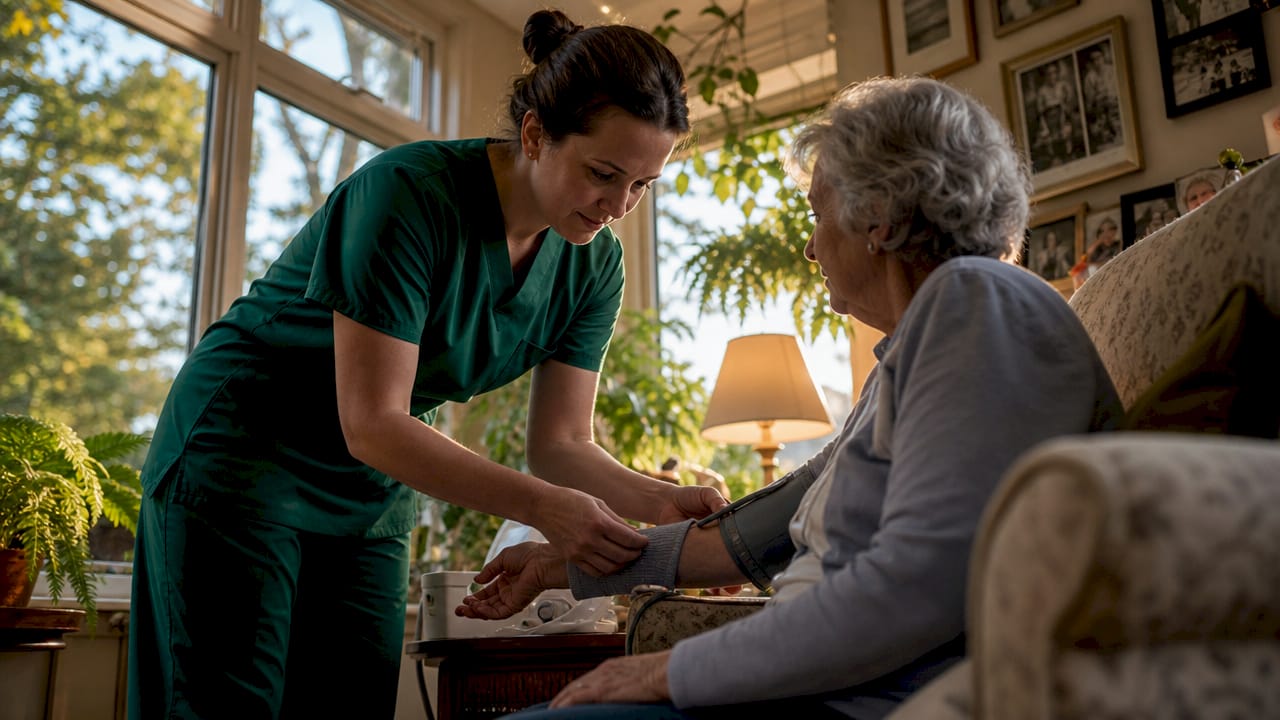
General home care covers daily living tasks: washing, dressing, meal preparation, and companionship. Specialist home care adds a clinical or condition-informed layer on top of that. A carer supporting someone with Parkinson’s disease, for example, does not just help with meals. They understand tremor management, fall prevention, and how medication timing affects movement.

The table below shows the key differences across the three levels of care.
| Care type | Focus | Who delivers it | When it applies |
|---|---|---|---|
| Primary care | Overall health management | GP or family doctor | Routine health, minor illness |
| General home care | Daily living support | Trained home carers | Personal care, companionship |
| Specialist care | Condition-specific clinical needs | Specialist clinicians or trained carers | Complex diagnoses, rehabilitation |
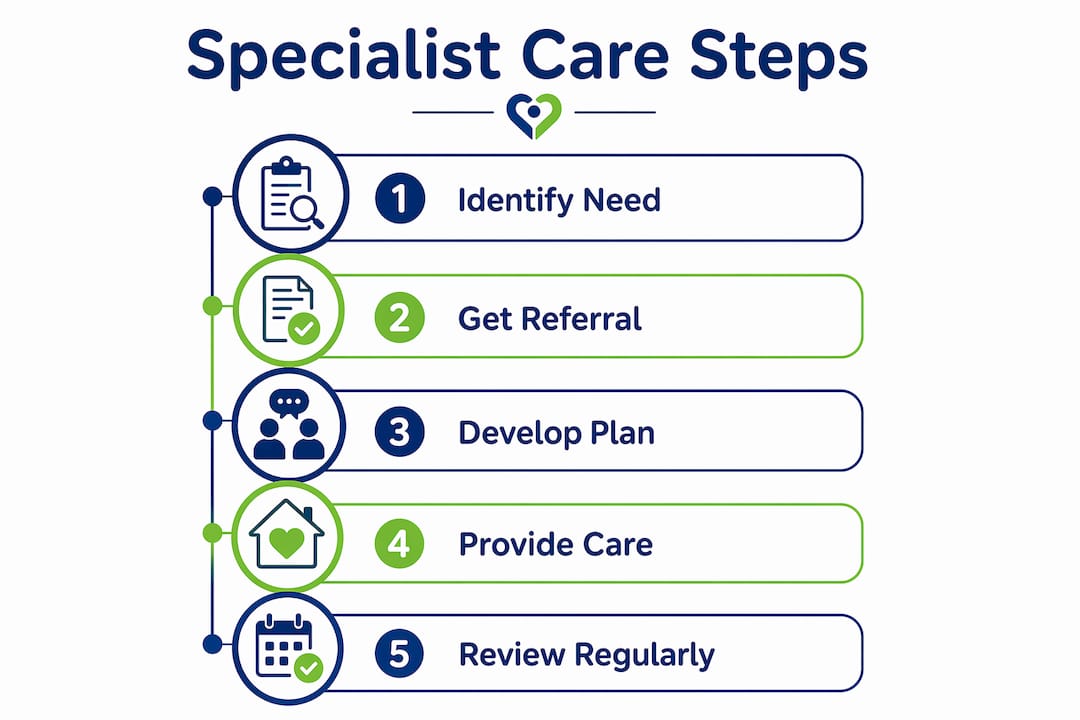
Referrals are the standard route into specialist medical care. Primary care providers decide when a specialist referral is medically necessary to manage complex conditions. Not every health change requires one. Your GP acts as a filter, directing you to the right specialist only when the condition exceeds what general care can safely handle.
Pro Tip: Keep a written log of your loved one’s symptoms, medications, and any changes in behaviour before a GP appointment. A clear record helps your GP make a faster, more accurate referral decision.
What types of specialist care are available for elderly and disabled people?
The definition of specialist care covers a wide range of medical and non-medical services. Understanding the main categories helps you identify which type fits your family member’s needs.
Medical specialist care
Medical specialists treat specific body systems or conditions. Common examples relevant to elderly and disabled people include:
- Neurology for conditions like Parkinson’s disease, epilepsy, and stroke recovery
- Cardiology for heart failure, arrhythmia, and post-cardiac event rehabilitation
- Geriatric medicine for complex, multi-condition management in older adults
- Psychiatry for mental health conditions including late-onset depression or psychosis
Each of these disciplines requires years of focused training. A geriatrician, for instance, is specifically equipped to manage the interaction between multiple long-term conditions and multiple medications, something a general practitioner may not have the time or training to address in depth.
Specialist home care and care specialisms
Care specialisms include dementia nursing, learning disabilities, physical disabilities, respite care, and palliative care, among others. Each specialism requires staff trained specifically in the relevant condition and care techniques. This is where specialist home care sits: it is not a medical clinic, but it is far more targeted than standard home support.
Dementia care, for example, uses specific techniques such as redirection, validation therapy, and structured routines to reduce distress and maintain dignity. A carer without dementia training may inadvertently increase agitation by correcting a person’s confused beliefs rather than gently redirecting them.
The main types of specialist home care relevant to families include:
- Dementia and Alzheimer’s care with trained carers who understand cognitive decline and behavioural changes
- Learning disability support focused on communication, independence, and daily skills
- Physical disability care including mobility assistance and adapted daily living support
- Palliative and end-of-life care prioritising comfort, pain management, and emotional support
- Respite care giving family carers a planned break while maintaining consistent specialist support
- Post-operative rehabilitation supporting recovery after surgery with physiotherapy-informed routines
Specialist home care combines condition-informed support with clinical oversight, tailored to diagnoses such as dementia or heart failure, often integrating non-medical carers and nurses. That blend of clinical and personal support is what makes it distinct from standard domiciliary care.
Who benefits most from specialist care?
Specialist care benefits individuals with complex health needs, those requiring medical equipment, rehabilitation patients, and those needing tailored emotional and practical support. Specialist care is outcome-oriented, improving safety, comfort, and recovery progress.
Your loved one is likely to benefit from specialist care if they:
- Have a diagnosed condition that requires ongoing clinical monitoring, such as dementia, diabetes with complications, or heart failure
- Use medical equipment at home, including oxygen therapy, feeding tubes, or catheter management
- Are recovering from a stroke, hip replacement, or major surgery and need structured rehabilitation support
- Show behavioural or psychological symptoms that standard carers are not trained to manage safely
- Have a learning disability that requires specialist communication approaches and daily living support
- Are approaching end of life and need palliative support that balances medical and emotional needs
Specialist involvement often increases when conditions exceed primary care capabilities, changing treatment approaches. For example, a person with diabetes who develops kidney complications may move from GP management to a nephrologist’s care, with home carers then trained to support the new treatment plan.
Eligibility for specialist care is not based on age alone. A 45-year-old with a progressive neurological condition has the same right to specialist support as an 85-year-old with dementia. The deciding factor is the complexity of need, not the number of years lived.
How is specialist care delivered and coordinated at home?
Care plans align with physician orders and clinical guidelines for effective symptom and medication management. In practice, this means a specialist home care plan is not written by the carer alone. It is built around a diagnosis, informed by clinical guidance, and reviewed regularly as the person’s condition changes.
Professional home care managers act as a link between families, carers, and clinical teams, ensuring diagnosis-aware care and continuity. Regular professional oversight is key to the success of specialist care at home, coordinating tasks like fall prevention and medication management. Understanding the role of care coordinators is particularly useful for families navigating this process for the first time.
Common tasks within a specialist home care plan include:
- Administering or supervising prescribed medications on a clinical schedule
- Monitoring symptoms such as blood pressure, blood glucose, or signs of infection
- Supporting safe use of medical equipment including oxygen concentrators or mobility aids
- Applying condition-specific techniques, for example, dementia redirection or epilepsy seizure protocols
- Communicating changes in condition to the GP or specialist team promptly
Pro Tip: Ask your care provider to share a written summary of your loved one’s care plan with their GP. This single step prevents gaps in communication and reduces the risk of conflicting advice from different professionals.
Specialist care includes supervision of medication administration, health monitoring, and use of medical equipment such as oxygen therapy or feeding tubes according to physician guidance. Care tailored to individual clinical needs promotes comfort and safety in home settings.
One important distinction many families miss: home health care and specialist home care are not the same thing. Effective specialist care blends trained non-medical carers with clinical nursing where appropriate for full condition management. A specialist home care agency coordinates both, rather than leaving families to manage the two separately.
The table below shows how key care tasks are divided in a well-coordinated specialist home care arrangement.
| Task | Who leads | Frequency |
|---|---|---|
| Medication supervision | Trained carer or nurse | Daily |
| Symptom monitoring | Trained carer, reported to nurse | Daily or as directed |
| Clinical review | GP or specialist | Monthly or as needed |
| Care plan update | Care coordinator | Quarterly or after health change |
| Family communication | Care coordinator | Weekly or as agreed |
Families who personalise home care services around their loved one’s specific diagnosis consistently report better outcomes and lower stress levels than those using a one-size-fits-all approach.
Key takeaways
Specialist care is condition-specific support delivered by trained professionals, and accessing it through the right channels, whether via GP referral or a specialist home care agency, is what determines whether it actually works.
| Point | Details |
|---|---|
| Clear definition | Specialist care targets specific conditions and goes beyond what primary or general care can manage. |
| Referral is the gateway | Your GP decides when specialist involvement is medically necessary; not every symptom requires it. |
| Types vary widely | Dementia, learning disability, palliative, and post-operative care are all recognised specialisms. |
| Home delivery is possible | Specialist home care blends trained carers with clinical oversight, guided by a diagnosis-aware care plan. |
| Coordination is critical | A care coordinator linking family, carers, and medical teams is what keeps specialist home care safe and consistent. |
What families often get wrong about specialist care
Families frequently assume that specialist care means a hospital or clinic. The reality is that most specialist support for elderly and disabled people happens at home, and the quality of that support depends almost entirely on how well it is coordinated.
I have spoken with many families who waited months before seeking specialist home care because they believed their loved one “wasn’t ill enough.” That hesitation is understandable. Accepting that a family member needs specialist support can feel like an admission that things have become serious. But specialist care is not a last resort. It is a proactive choice that protects quality of life, reduces hospital admissions, and gives family carers breathing room.
The other mistake I see regularly is families treating the care team and the medical team as separate. They are not. The most effective specialist care arrangements I have encountered are those where the home carer, the GP, and the specialist all receive the same updates. When a carer notices a change in a person’s breathing pattern and that observation reaches the cardiologist within 24 hours, outcomes improve. When it stays in a notebook that no one reads, it does not.
If you are researching care options for a loved one, focus less on the label and more on the coordination. Ask any prospective care provider: how do you communicate with our GP? What happens if my relative’s condition changes overnight? The answers will tell you everything.
— Dan
How Kells-care supports families with specialist home care
Kells-care has provided personalised home care in London for over 30 years, supporting families whose loved ones have complex and specialist needs. Whether your relative is living with dementia, a learning disability, or a long-term physical condition, Kells-care’s fully trained and DBS-checked carers work within diagnosis-aware care plans regulated by the Care Quality Commission. For families new to this process, the free home care guide is a practical starting point. It covers care options, what to expect, and how to assess your loved one’s needs clearly. Kells-care’s team is ready to talk through your situation and help you find the right level of support.
FAQ
What is the definition of specialist care?
Specialist care is expert, condition-specific support delivered by professionals trained in a particular medical discipline or care specialism. It goes beyond primary or general care to address complex health needs such as dementia, heart failure, or learning disabilities.
What is specialist home care?
Specialist home care combines trained non-medical carers with clinical oversight to support people with complex conditions in their own home. Care plans are built around a specific diagnosis and aligned with clinical guidelines.
When should you seek specialist care for a family member?
Seek specialist care when your loved one has a diagnosed condition requiring clinical monitoring, uses medical equipment at home, or shows symptoms that standard carers are not trained to manage safely. Your GP can advise on whether a formal referral is needed.
What types of specialist care exist for elderly people?
Types of specialist care for elderly people include dementia nursing, palliative care, post-operative rehabilitation, physical disability support, and geriatric medicine. Each requires staff trained specifically in the relevant condition and care approach.
How do you access specialist care in the UK?
Access specialist medical care through a GP referral, which is the standard route for NHS-funded specialist services. Specialist home care can be arranged directly through a regulated domiciliary care agency such as Kells-care, with or without a GP referral depending on the level of clinical need.