

TL;DR:
- Safeguarding in care protects people’s health, well-being, and human rights from harm, abuse, and neglect.
- It involves prevention, early recognition, and response, supporting autonomy while managing risks.
Safeguarding in care is defined as protecting people’s health, wellbeing, and human rights so they can live free from harm, abuse, and neglect. The Care Quality Commission describes it as fundamental to high-quality care for both adults and children. If you have an elderly or vulnerable loved one receiving care at home or in a care setting, understanding safeguarding is one of the most practical things you can do. It shapes every interaction between a carer and the person they support, from daily routines to how concerns are raised and acted upon.
What is safeguarding in care and why does it matter?
Safeguarding in care covers far more than responding to serious incidents. It includes prevention, early recognition, and response to abuse, neglect, and poor practice. That means a carer noticing that someone seems withdrawn, or that their personal hygiene has declined, is already performing a safeguarding function. The goal is to catch problems early, before they escalate.
The term most commonly used in professional settings is adult safeguarding, which refers specifically to protecting adults who have care and support needs. These are people who may be unable to protect themselves because of age, disability, illness, or other vulnerabilities. Safeguarding applies equally in care homes, hospitals, and domiciliary care settings where someone receives support in their own home.
Safeguarding also means respecting the person’s dignity, autonomy, and right to make their own choices. Keeping someone safe does not mean removing their independence. It means supporting them to live as freely as possible while managing genuine risks.
What legal framework underpins adult safeguarding?
The Care Act 2014 is the primary legislation governing adult safeguarding in England. It defines who counts as an adult at risk and sets out the statutory duties that local authorities and care providers must follow. Under Section 42 of the Act, a local authority has a legal duty to carry out enquiries when it believes an adult with care and support needs is at risk of abuse or neglect and cannot protect themselves.
This is an important distinction. Safeguarding enquiries focus on whether a person cannot protect themselves due to their care needs, not simply on whether something bad has happened. A person may appear fine on the surface but still be at risk because their needs make them dependent on others.
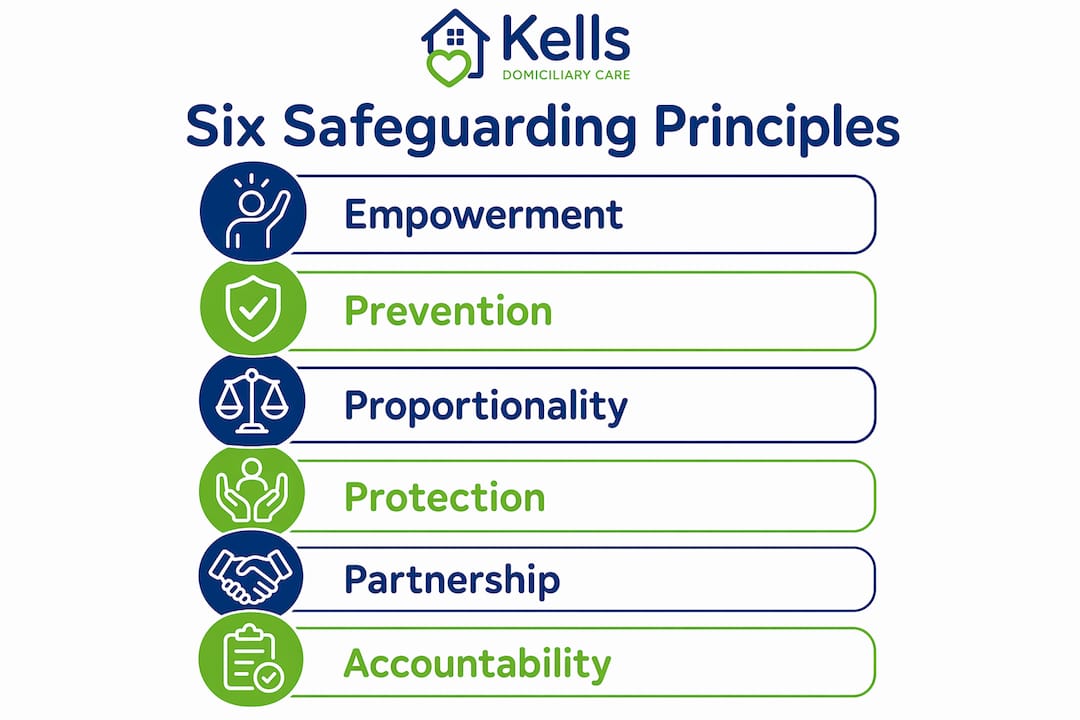
The six safeguarding principles
NHS policy and the Care Act 2014 establish six principles that guide all adult safeguarding work. Every care provider, local authority, and health body is expected to apply these in practice.
- Empowerment. People are supported to make their own decisions and give informed consent.
- Prevention. Action is taken before harm occurs, not only after it.
- Proportionality. Responses are proportionate to the risk presented, avoiding unnecessary intrusion.
- Protection. Support is provided to those least able to protect themselves.
- Partnership. Local services work together to prevent, detect, and respond to abuse.
- Accountability. Organisations are transparent about their safeguarding responsibilities and outcomes.
These principles require organisations to demonstrate accountability and proportional responses in their processes. That means a care provider cannot simply claim to safeguard people. They must show, through records and practice, how they do it.
| Principle | What it means in practice |
|---|---|
| Empowerment | Carers support choices rather than override them |
| Prevention | Training and monitoring reduce risks before harm occurs |
| Proportionality | Responses match the level of risk, not a one-size approach |
| Protection | Vulnerable individuals receive targeted, appropriate support |
| Partnership | Councils, police, NHS, and care providers share information |
| Accountability | Providers document decisions and outcomes transparently |
How does safeguarding work in everyday care settings?
Frontline care workers carry a clear and specific safeguarding role. Their job is to notice, respond, record, and report concerns. They are not expected to investigate. That distinction protects both the worker and the person at risk, because untrained investigation can compromise evidence and cause further harm.
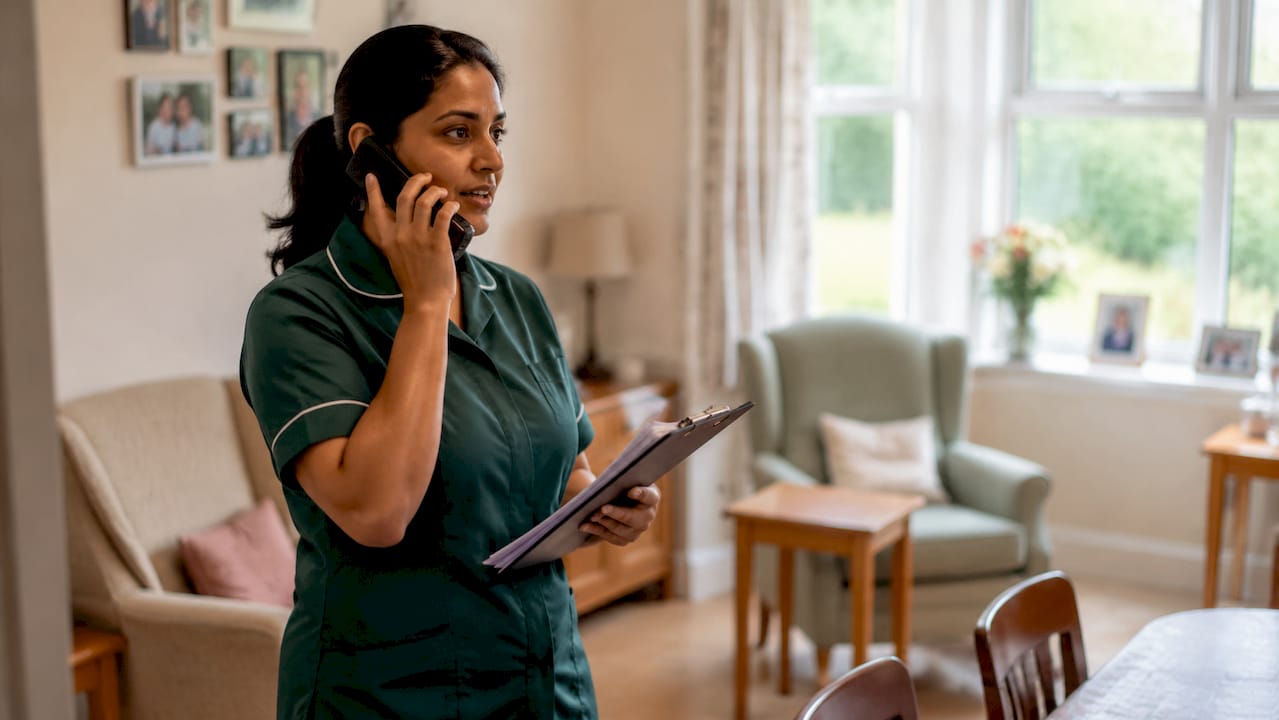
In practice, this means a carer who notices unexplained bruising, a sudden change in mood, or signs of poor nutrition must document what they have observed factually and report it to their manager or the appropriate authority. Strong record-keeping supports safeguarding decisions and investigations and forms a key part of best practice. Vague or incomplete notes can delay a proper response.
Preventative measures are equally central to good safeguarding practice. These include:
- Regular safeguarding training for all care staff
- Thorough DBS (Disclosure and Barring Service) checks before employment
- Clear policies on whistleblowing and raising concerns internally
- Safe staffing levels that reduce the risk of neglect through overwork
- Open cultures where staff feel able to report concerns without fear
Multi-agency working is the backbone of effective safeguarding. Local councils, the police, NHS trusts, and care providers all have roles to play. The Care Quality Commission coordinates referrals and works with these partners to assess risk and take action where needed. No single organisation can safeguard people alone.
Pro Tip: If you are choosing a care provider for a loved one, ask directly how they handle safeguarding concerns and what their reporting process looks like. A provider with clear, confident answers is one that takes this seriously. You can also check their CQC inspection reports at cqc.org.uk for any safeguarding-related findings.
What are the signs of abuse and neglect in care?
Recognising different types of abuse is key to safeguarding vulnerable adults. Families are often the first to notice something is wrong, because they know their loved one well. Knowing what to look for makes a real difference.
The main categories of abuse in care settings are:
- Physical abuse. Unexplained injuries, bruising, or marks. Flinching around certain carers.
- Emotional or psychological abuse. Withdrawal, anxiety, fearfulness, or loss of confidence.
- Sexual abuse. Unexplained physical symptoms, distress around personal care, or inappropriate sexualised behaviour.
- Financial abuse. Unexplained withdrawals, missing money or possessions, sudden changes to wills or financial arrangements.
- Neglect. Poor hygiene, weight loss, untreated medical conditions, or a dirty living environment.
- Organisational abuse. Rigid routines that ignore personal preferences, lack of stimulation, or care that prioritises convenience over dignity.
Early warning signs are often subtle. A person may become quieter than usual, refuse visits, or seem anxious when a particular carer is mentioned. These signals matter. Safeguarding covers noticing poor practice and neglect as much as it covers obvious harm. Do not wait for certainty before raising a concern.
| Type of abuse | Early signs to watch for |
|---|---|
| Physical | Unexplained bruising, injuries, or pain |
| Emotional | Withdrawal, tearfulness, low confidence |
| Financial | Missing money, unexplained transactions |
| Neglect | Poor hygiene, weight loss, untreated conditions |
| Organisational | Rigid routines, lack of choice, loss of dignity |
If you are supporting an elderly relative and want to understand early signs of risk, a dedicated family guide can help you know what to look for before concerns escalate.
How can families raise a safeguarding concern?
Raising a concern is simpler than many families expect. You do not need proof. You need a reasonable concern that someone may be at risk. Families can report concerns to their local council’s adult social care team, the police, or the Care Quality Commission. Each of these bodies has a duty to take concerns seriously and act on them.
When you contact the local council, you will typically be asked for:
- The name and address of the person you are concerned about
- A description of what you have observed or been told
- The name of the care provider involved, if known
- Your own contact details
Confidentiality is respected throughout the process. The person raising the concern is not required to be named publicly. The wishes of the adult at risk are also central to how the process unfolds. If the person has mental capacity, their views on how to proceed carry significant weight.
The local authority has a legal duty to carry out enquiries under Section 42 of the Care Act 2014 when a concern is raised about an adult at risk. This is not discretionary. Once a referral is made, the council must assess whether an enquiry is needed and, if so, carry it out. Local Safeguarding Adults Boards oversee this process and bring together all relevant agencies.
Pro Tip: Keep a written record of anything that concerns you, including dates, times, and exactly what you observed or heard. This information is far more useful to investigators than a general impression. You can also speak to a social worker for guidance before making a formal referral.
Key takeaways
Safeguarding in care is a legal, practical, and ethical duty that protects vulnerable adults from harm while respecting their dignity, autonomy, and right to make their own choices.
| Point | Details |
|---|---|
| Legal foundation | The Care Act 2014 sets statutory safeguarding duties for local authorities and care providers. |
| Six core principles | Empowerment, prevention, proportionality, protection, partnership, and accountability guide all safeguarding work. |
| Staff responsibilities | Care workers must notice, respond, record, and report concerns without conducting their own investigations. |
| Recognising abuse | Physical, emotional, financial, and organisational abuse all have early signs families can learn to spot. |
| Raising concerns | Families can report to local councils, the police, or the CQC without needing proof, only a reasonable concern. |
Safeguarding is not a safety net. It is a daily practice.
People often think of safeguarding as something that kicks in after something goes wrong. That framing is understandable, but it misses the point. Safeguarding is not only about responding to serious harm. It is about the culture of a care setting, the habits of its staff, and the relationships built with the people being cared for.
The families I speak with who feel most confident about their loved one’s care are not the ones who have never had a worry. They are the ones who know what good care looks like, ask questions, and feel able to raise concerns without being dismissed. That confidence comes from understanding safeguarding, not just trusting that someone else is handling it.
One thing I find families often get wrong is the balance between safety and autonomy. Safeguarding balances keeping people safe with respecting their autonomy and personal choices. Removing every risk from someone’s life is not safeguarding. It is control. A person has the right to take reasonable risks, eat what they choose, and make decisions others might disagree with. Good safeguarding supports that right while managing genuine dangers.
My honest advice to any family is this: be a partner in safeguarding, not a bystander. Visit regularly, ask questions, and trust your instincts. If something feels wrong, say so. The system works best when families are actively involved.
— Dan
How Kells-care approaches safeguarding in home care
At Kells-care, safeguarding is built into every aspect of how we work. Our carers are fully qualified, DBS checked, and trained to recognise and report concerns through the correct channels. We are regulated by the Care Quality Commission, which means our safeguarding practices are independently assessed. Every care plan we create is personalised to the individual, promoting independence, dignity, and freedom of choice rather than a rigid routine. If you are thinking about home care for a loved one and want to understand what good safeguarding looks like in practice, our free home care guide is a practical starting point. You can also find out more about our London home care services and how we can support your family.
FAQ
What is the legal definition of safeguarding in care?
Safeguarding in care is defined under the Care Act 2014 as protecting adults with care and support needs from abuse, neglect, and harm while promoting their wellbeing and human rights. The Care Quality Commission describes it as fundamental to high-quality care.
Who is responsible for safeguarding vulnerable adults?
Local authorities hold the primary statutory duty under the Care Act 2014, but responsibility is shared across care providers, the NHS, the police, and the CQC. All work together through Local Safeguarding Adults Boards.
What should I do if I suspect abuse in a care setting?
Contact your local council’s adult social care team, the police, or the Care Quality Commission. You do not need proof, only a reasonable concern. Keep a written record of what you have observed, including dates and specific details.
What are the six principles of adult safeguarding?
The six principles are empowerment, prevention, proportionality, protection, partnership, and accountability. These are set out in statutory guidance under the Care Act 2014 and apply to all organisations involved in adult safeguarding.
Does safeguarding only apply in care homes?
Safeguarding applies in all care settings, including care homes, hospitals, and domiciliary care where someone receives support in their own home. Any adult with care and support needs who cannot protect themselves is covered by safeguarding duties.

