TL;DR:
- Proper nutrition is vital for elderly health, supporting muscle strength, cognition, and immunity. Caregivers must focus on nutrient-rich, easily chewable foods, regular hydration, and early detection of malnutrition and swallowing issues to prevent health decline. A coordinated multidisciplinary approach ensures safe, personalized nutritional support to maintain independence and well-being.
Nutrition is the single most modifiable factor in elderly health, directly shaping muscle strength, cognitive function, immunity, and the risk of hospitalisation. The role of nutrition in elderly care extends far beyond simply providing meals. It is a form of preventative medicine that caregivers and family members deliver every day, often without realising its full impact. This guide explains what older adults actually need, what goes wrong and why, and how you can build a practical, sustainable approach to feeding someone you care for well.
What are the specific nutritional needs of older adults?
Older adults need more nutrients but fewer calories than younger people. This combination is what makes healthy eating in elderly care genuinely challenging. The body changes with age in ways that directly affect how food is used, absorbed, and needed.
Key nutritional shifts in older adults include:
- Protein: About 50% of women and 33% of men aged 71 and older do not consume adequate daily protein. Experts recommend 85–90 grams spread evenly across meals to maintain muscle mass and prevent frailty.
- Vitamin B12: Absorption declines with age due to reduced stomach acid. Deficiency affects nerve function and memory, making fortified foods or supplements necessary for many older adults.
- Vitamin D and calcium: Both are critical for bone density. Many older adults in the UK receive insufficient sunlight, making dietary sources and supplementation particularly relevant.
- Healthy fats: Current guidelines discourage strict fat restriction. Olive oil, nuts, and avocados support nutrient absorption and heart health within a balanced caloric intake.
- Hydration: Older adults often have a reduced thirst sensation, meaning dehydration can develop silently. Caregivers must offer fluids regularly, even when the person insists they are not thirsty.
The dietary needs of elderly individuals shift because calorie requirements fall while the need for vitamins, minerals, and protein either stays the same or increases. A smaller appetite combined with higher nutrient demands means every meal must count.
What are the main nutrition challenges and risks in elderly care?
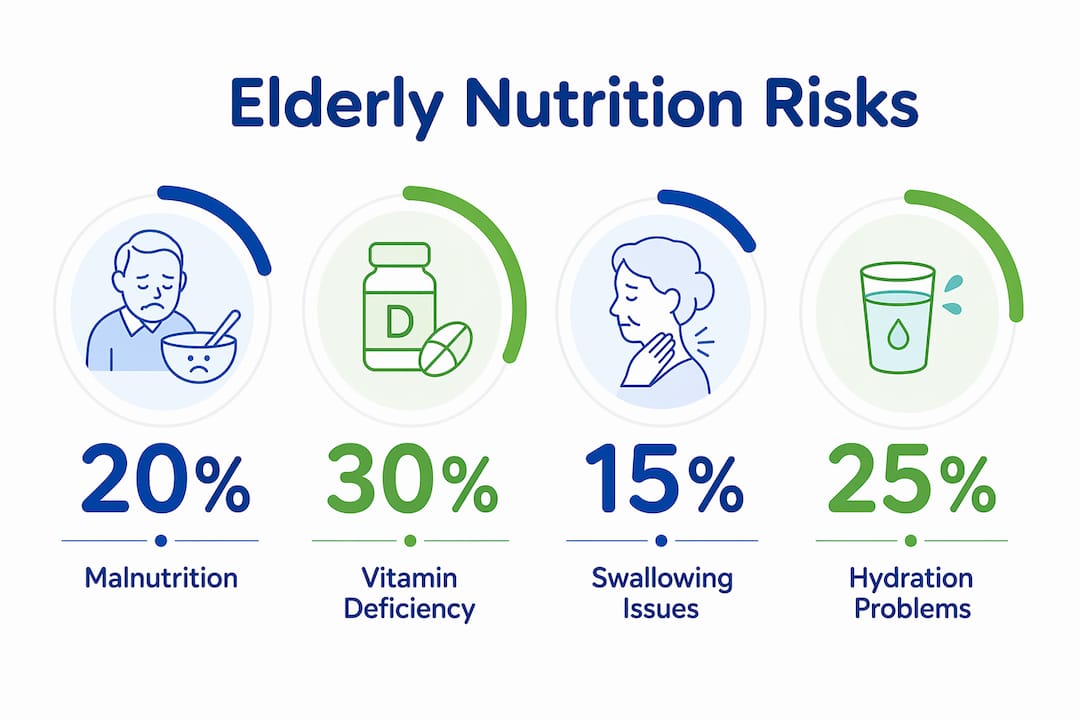
Malnutrition is the most serious nutrition risk in older adults, and it is far more common than most families expect. Malnutrition in older adults increases the risk of falls, hospital admissions, and mortality. Identifying it early through routine screening is the most effective way to prevent these outcomes.
Common barriers to good nutrition
Several factors combine to reduce food intake in older adults:
- Reduced appetite: This is a normal part of ageing but can be worsened by medication side effects or chronic illness.
- Dental problems: Poorly fitting dentures or tooth loss make chewing painful, leading to avoidance of protein-rich foods like meat and nuts.
- Depression and social isolation: Eating alone consistently reduces appetite and motivation to prepare food. Loneliness is a direct nutritional risk factor.
- Cognitive decline: Dementia can cause people to forget to eat, lose interest in food, or struggle to communicate hunger.
Recognising and managing dysphagia
Dysphagia is the medical term for swallowing difficulties, and its signs are often subtle. Signs of dysphagia include coughing during meals, a wet or gurgling voice after eating, or consistent avoidance of certain food textures. Left unaddressed, dysphagia leads to malnutrition and aspiration pneumonia, a serious lung infection caused by food or liquid entering the airway.
Early detection allows for texture modification. Slow cooking, chopping, or pureeing foods can make meals safe and still nutritious. If you notice any of these signs in someone you care for, speak to their GP or a speech and language therapist promptly.
Pro Tip: Keep a simple food diary for one week, noting what the person ate, how much they left, and any signs of difficulty swallowing. This record is invaluable when speaking to a GP or dietitian about concerns.
For a broader look at how nutrition connects to elderly safeguarding risks, including falls and slow recovery, the Kells-care family guide covers this in practical detail.
How can caregivers plan meals that meet elderly nutritional needs?
Practical meal planning for older adults requires balancing nutrition, palatability, safety, and the reality of caregiver time and energy. The following approach works well in a home care setting.
A step-by-step meal planning framework
- Assess current intake first. Before changing anything, observe what the person actually eats over several days. Note portion sizes, food preferences, and anything they consistently refuse or struggle with.
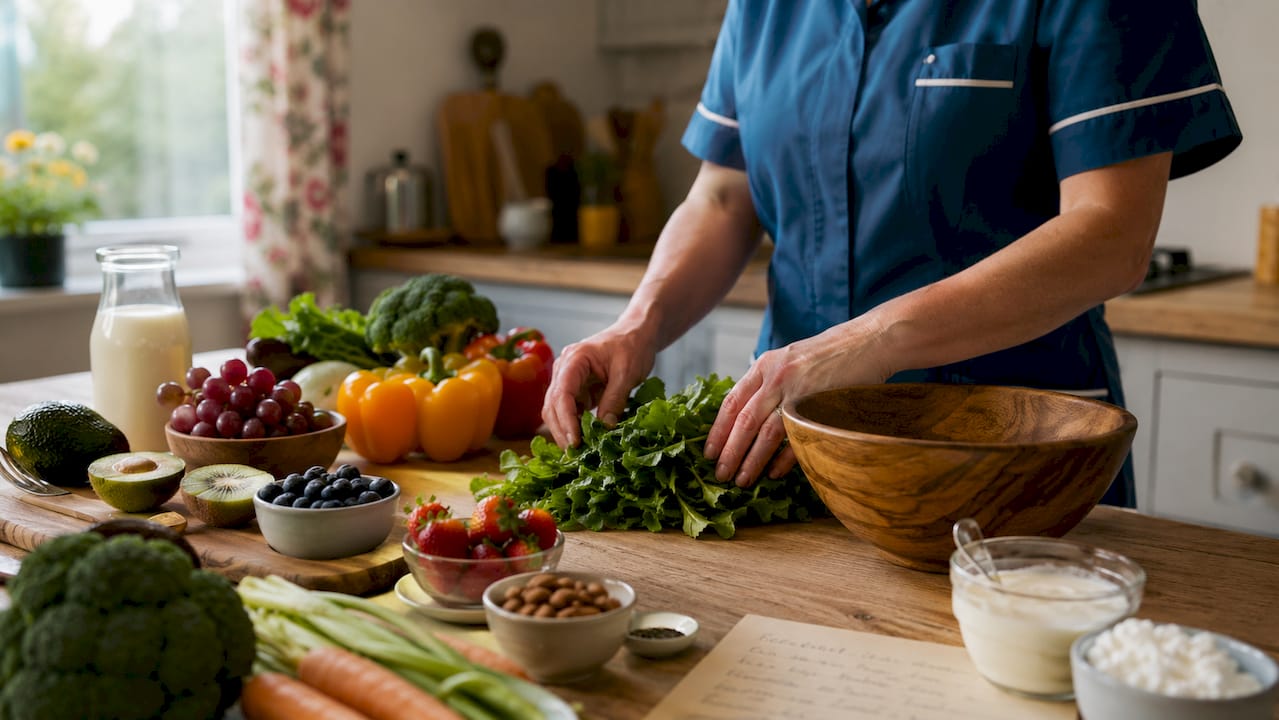
- Build meals around protein. Aim for a protein source at every meal: eggs at breakfast, fish or chicken at lunch, lentils or beans at dinner. This supports muscle maintenance and reduces frailty risk.
- Choose nutrient-dense, easy-to-chew foods. Soft foods like scrambled eggs, flaked salmon, mashed sweet potato, and yoghurt deliver high nutritional value without requiring strong chewing.
- Use batch cooking with a rotating template. Batch cooking with 3–5 simple recipes repeated weekly reduces caregiver burden and keeps meals consistent. Prepare soups, stews, and casseroles in bulk and freeze in single portions.
- Check sodium on labels. Sodium intake should stay below 2,300 mg per day to manage blood pressure and reduce cardiovascular risk. Read Nutrition Facts labels and choose low-sodium tinned goods and stocks.
- Make mealtimes social. Shared meals significantly improve elderly appetite and nutrient intake. Eating together, even occasionally, counteracts the appetite-suppressing effects of isolation.
Pro Tip: Fortified foods such as fortified milk, breakfast cereals, and plant-based drinks are an easy way to increase vitamin D, B12, and calcium without adding extra meals or supplements.
Comparing meal formats for elderly care
| Meal format | Best suited for | Key benefit |
|---|---|---|
| Batch-cooked home meals | Mobile, cognitively well adults | Cost-effective, fully personalised |
| Texture-modified meals | Adults with dysphagia | Reduces aspiration risk |
| Community meal delivery | Socially isolated adults | Ensures regular hot meal access |
| Fortified meal replacements | Low appetite, weight loss | High nutrient density in small volume |
Improving quality of life for elderly loved ones through food is not just about nutrients. The setting, the company, and the enjoyment of eating all contribute to how much a person actually consumes.
What multidisciplinary approaches support elderly nutrition?
No single person can manage all aspects of elderly nutrition alone. Nutritional care in geriatrics must involve nursing, dietary counselling, and social support to address barriers like depression and isolation effectively. This is the standard recommended by the European Society for Clinical Nutrition and Metabolism (ESPEN).
A well-coordinated care team typically includes:
- A registered dietitian: Provides personalised nutritional assessment, identifies deficiencies, and recommends oral nutritional supplements (ONS) when food intake alone is insufficient.
- A GP or practice nurse: Conducts routine malnutrition screening using validated tools such as the Malnutrition Universal Screening Tool (MUST) and integrates findings into frailty management plans.
- A speech and language therapist: Assesses swallowing function and advises on safe food textures and fluid thicknesses for those with dysphagia.
- Social services and community programmes: Community meal delivery and lunch clubs are valuable in ensuring regular access to nutritious meals for socially isolated elderly people in the UK.
- Home carers: Provide daily continuity, monitoring intake, offering fluids proactively, and flagging concerns to the wider team.
Hydration deserves particular attention within this framework. Because older adults lose their thirst sensation with age, a carer who offers a drink every hour or two is doing something genuinely protective. Dehydration worsens confusion, increases fall risk, and accelerates kidney decline. Proactive fluid provision is one of the simplest and most impactful things a carer can do each day.
Key takeaways
Good nutrition in elderly care is the foundation of physical health, cognitive function, and independence, and caregivers are its most consistent delivery mechanism.
| Point | Details |
|---|---|
| Protein is the priority | Aim for 85–90g daily, spread across meals, to preserve muscle mass and prevent frailty. |
| Malnutrition is underdetected | Routine screening using tools like MUST catches decline early and prevents hospitalisations. |
| Dysphagia needs prompt action | Coughing during meals or texture avoidance are warning signs requiring professional assessment. |
| Batch cooking reduces burden | Rotating 3–5 recipes weekly keeps nutrition consistent and protects caregiver wellbeing. |
| Hydration must be proactive | Offer fluids regularly throughout the day; do not wait for the person to ask. |
Nutrition as preventative care: what I have learned from years in elderly support
Working alongside carers and families for many years, I have noticed a consistent pattern. Nutrition is the area where the most good can be done, and yet it is often the last thing families feel confident about. Most people focus on medication, mobility, and safety, which are all critical. But the person who is quietly losing weight, eating less at each meal, or coughing through their soup is often the one heading towards a hospital admission that could have been prevented.
What I have found is that caregivers do not need to become nutritionists. They need to know three things: what to watch for, what to do about it, and who to call. The signs of malnutrition and dysphagia are not subtle once you know what you are looking for. A food diary, a conversation with the GP, and a referral to a dietitian can change the trajectory of someone’s health entirely.
The other thing I would say is this: do not underestimate the power of eating together. I have seen people who barely touched food when eating alone begin to eat full meals once a carer sat with them. Appetite is social. Dignity is social. The importance of nutrition in ageing is not just biochemical. It is deeply human.
If you are finding the nutritional side of care overwhelming, you are not alone, and you do not have to manage it without support. The elderly nutrition tips guide from Kells-care is a good place to start.
— Dan
How Kells-care supports nutrition and wellbeing at home
Kells-care has been providing personalised home care services across London for over 30 years, and nutritional support is central to what our carers do every day. From preparing meals tailored to individual dietary needs, to monitoring fluid intake and flagging concerns to families and healthcare professionals, our team is trained to treat nutrition as a core part of care, not an afterthought.
If you are concerned about a loved one’s eating, weight, or hydration, we can help you understand your options. Download our free home care guide to learn how personalised home care can support nutritional wellbeing, independence, and dignity for your loved one in their own home.
FAQ
What is the recommended daily protein intake for older adults?
Experts recommend 85–90 grams of protein daily for older adults, spread evenly across meals. This supports muscle maintenance and reduces the risk of frailty and falls.
How do I know if an elderly person is malnourished?
Key signs include unintentional weight loss, reduced appetite, fatigue, and loose clothing or jewellery. Routine screening using the Malnutrition Universal Screening Tool (MUST) is the standard clinical approach for early identification.
What are the signs of swallowing difficulties in older adults?
Coughing or choking during meals, a wet or gurgling voice after eating, and avoidance of certain food textures are the most common signs of dysphagia. A GP referral to a speech and language therapist is the appropriate next step.
Which nutritional supplements are most commonly needed by seniors?
Vitamin D, vitamin B12, and calcium are the nutrients most frequently deficient in older adults in the UK. A GP or dietitian can assess individual needs and recommend appropriate supplements or fortified foods.
How much fluid should an elderly person drink each day?
Most older adults need around 6–8 cups of fluid daily, but because thirst sensation diminishes with age, caregivers should offer drinks proactively throughout the day rather than waiting for the person to ask.