Turn down or switch off loud sounds and harsh lights, then move the person to a pre-made calm corner and hand them one item you know soothes them, whether that’s headphones, a weighted lap pad or a glass of water. Those three steps stop most episodes within minutes. The rest of this guide explains what causes sensory overload in a home setting, how to fit out a calm corner properly, what a “sensory diet” is, and when it’s time to call in an occupational therapist.
TL;DR:
- Turning off loud sounds and harsh lights, and offering a trusted calming tool, can stop most sensory overload episodes within minutes.
- Small home triggers like background noise, glare, or strong smells accumulate and can lead to overload, especially during end-of-day transitions.
- Building a simple, voluntary calm corner with low lighting and familiar items encourages quick self-regulation and reduces meltdowns.
- A sensory diet, planned through professional assessment, gradually teaches tolerance instead of total stimulus avoidance, supporting long-term regulation.
- In severe cases, professional occupational therapy and support from trained carers can help manage daily sensory challenges effectively.
Table of Contents
- What is sensory overload, and what does it look like at home?
- Why it happens: the triggers hiding in your own home
- Practical strategies that actually help at home
- Building a calm corner that actually gets used
- When to get professional help, and what a sensory diet involves
- A short checklist for an episode happening right now
- Kells-care’s perspective: what home carers actually see
- Sources
What is sensory overload, and what does it look like at home?
Sensory overload happens when the brain receives more sensory input than it can process at once. It isn’t a medical diagnosis in itself, though it commonly accompanies autism, ADHD and other sensory processing differences, according to the National Autistic Society. At home, where a person spends most of their waking hours, small triggers stack up quietly until they tip over into a full episode.
The signs usually fall into two groups:
- Physical: a racing heart, sweating, dizziness, or an urgent need to cover the ears or eyes.
- Behavioural: shutdown, meltdowns, growing agitation, or point-blank refusal to engage with anyone.
Timing matters as much as the triggers themselves. Overload tends to hit hardest at the end of the day, after school or work, during transitions between activities, or once “masking” (holding it together in public) finally runs out of road. If you notice the same pattern most evenings, that’s worth tracking rather than dismissing as a bad mood.
Why it happens: the triggers hiding in your own home
Home is full of small, competing signals: a smoke alarm’s residual beep, sound bouncing off hard floors, glare from an overhead bulb, clothing seams, the smell of last night’s dinner, a room that swings from too warm to too cold within an hour. None of these look dramatic on their own.
The problem is accumulation. Neuroscience research on multisensory processing shows overload can be produced by several subtle inputs acting together, rather than one obvious culprit, which is why an episode can seem to appear from nowhere (NCBI).
Common home triggers by sense include:
- Sound: appliance hums, echo on hard flooring, overlapping voices or television noise.
- Light: flickering bulbs, strong glare, sudden brightness changes between rooms.
- Touch: clothing tags, seams, or fabric textures that feel wrong against the skin.
- Smell: strong cooking smells, cleaning products, or air fresheners.
- Temperature: draughts, radiators cycling on and off, poorly insulated rooms.
People vary hugely in how they respond. Some are sensory seeking and crave more input; others are sensory avoiding and need less. Neither pattern is a fault, and it’s worth resisting the urge to label every reaction as a problem to be fixed.
Practical strategies that actually help at home
Start with what’s fastest to fix, then build towards changes that prevent overload from building up in the first place.
- Cut the sound and light immediately. Turn off the television, mute notifications, dim or switch off overhead lights. Step outside or into a quiet room if that’s easier than adjusting the current one.
- Reduce demands and speech. Talking is itself a sensory input. The National Autistic Society notes that minimising verbal demands during an episode, rather than insisting on immediate answers or eye contact, tends to help someone recover faster.
- Offer one trusted calming tool. Noise-cancelling headphones or ear defenders, a single familiar fidget toy, a weighted lap pad or blanket, and water or a small snack cover most needs without overwhelming choice.
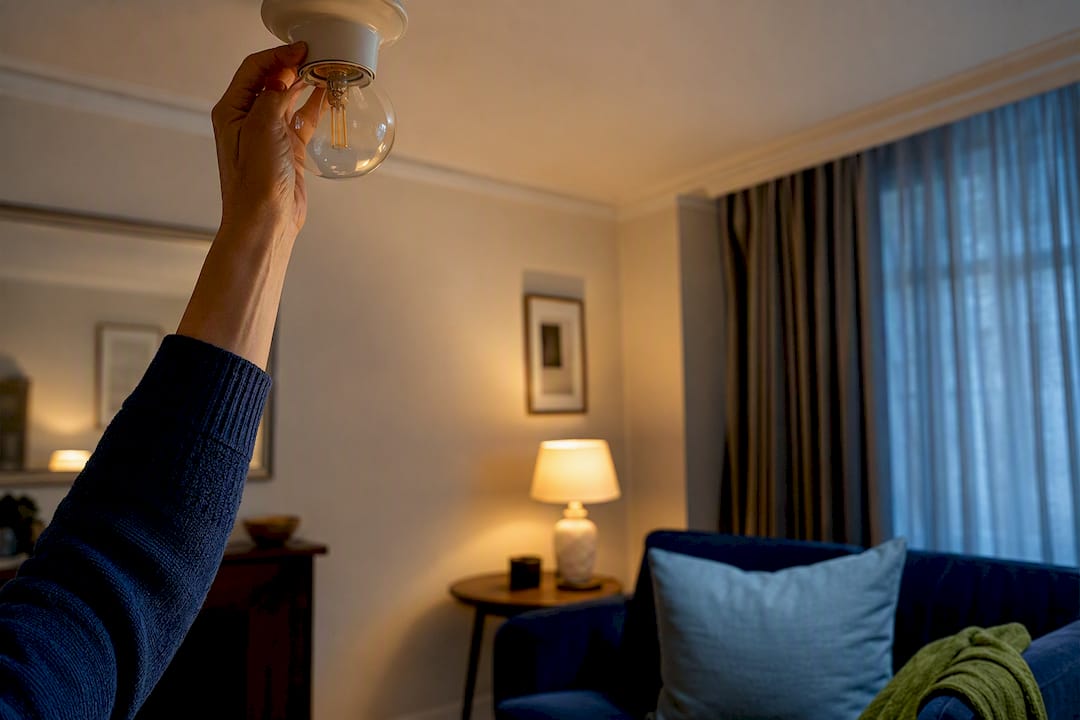
- Make low-cost environmental fixes. A rug or thick curtains cut echo. Swapping metal curtain rings for fabric loops removes a small but persistent rattling sound. Warm-tone bulbs or plug-in dimmers replace harsh overhead light, and a white or brown noise machine can mask unpredictable background sounds. The National Autistic Society’s guidance on sensory processing recommends exactly this kind of low-cost sensory retreat setup, and parent-led guides such as Kirsty’s Life document similar DIY swaps that don’t need specialist equipment or a big budget.
- Build routines that prevent the build-up. A decompression plan straight after school or work, a visual schedule, and predictable transitions all reduce the mental effort of guessing what happens next. Small, consistent routine changes reduce executive load and help stop the nervous system reaching a tipping point before it starts, according to the Sensory-Friendly Home Toolkit.
Pro Tip: Do a “sensory audit” of your home once a season. Walk each room noting sounds, light sources, textures and smells as if you were experiencing them for the first time. It takes twenty minutes and usually reveals two or three easy fixes you’d stopped noticing.
One caution worth holding onto: don’t chase total sensory avoidance. Research reviews on sensory integration suggest graded, scheduled exposure, known as a sensory diet, supports regulation better than blanket removal of all stimuli, which can quietly increase sensitivity over time (AOTA research).
Building a calm corner that actually gets used
A calm corner works only if it’s ready before it’s needed and feels like a choice, not a punishment. Keep the components simple:
- Low, warm lighting rather than a bright lamp.
- One or two trusted items, not a toy box tipped out on the floor.
- Soft textures, such as a cushion or blanket with a texture the person already likes.
- A visual “break” card they can hand over instead of having to explain themselves out loud.
Introduce the corner during a calm moment, not mid-meltdown, and treat its use as entirely voluntary. Framing it that way from the start increases how often it actually gets used, according to guidance from Welcare. Agree a household rule of “no questions” while someone is in the corner recovering, and give the rest of the family a simple script, such as “take the time you need, I’ll check in later.”
Keep organisation light-touch. Label storage so items go back in the same place, rotate toys occasionally so the space stays interesting rather than static, and protect one or two “clear zones” in the home that stay predictable and clutter-free. Small, gradual changes beat a weekend overhaul that nobody has the energy to maintain.
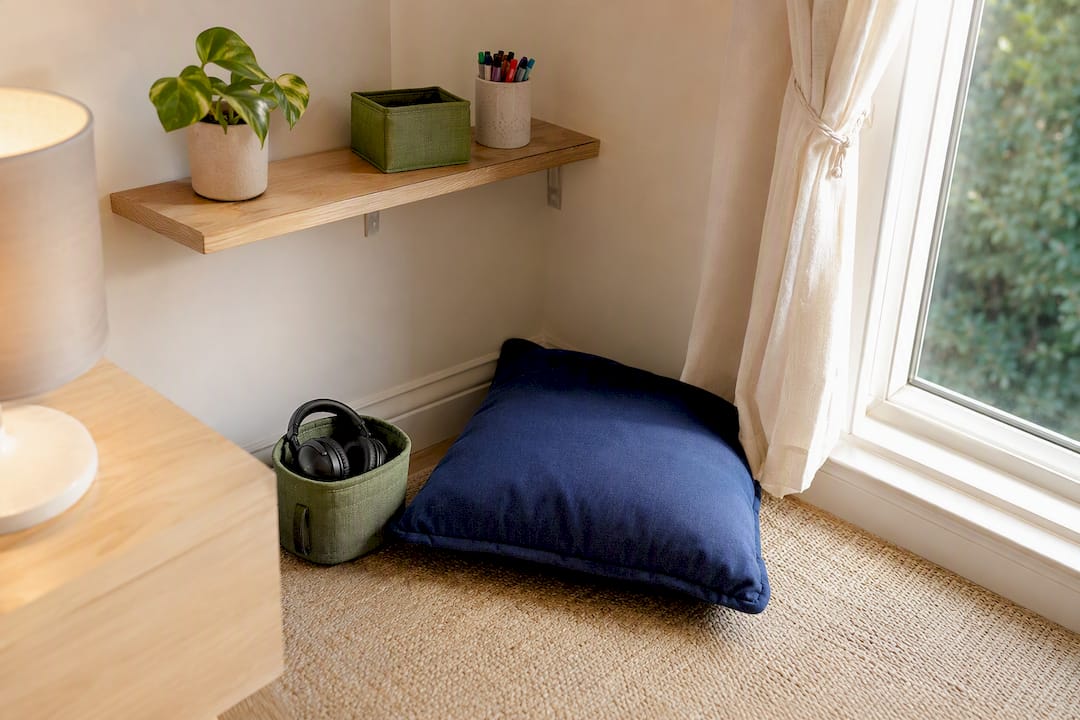
Pro Tip: Roll this out in stages: today, clear one shelf and add a cushion and headphones; this week, fit a fabric curtain loop and swap one bulb; when you have more energy, tackle flooring or a proper sensory box. The Sensory-Friendly Home Toolkit sets out a similar staged plan with sample scripts if you want a fuller checklist to follow, and community resources like Fidget and Spin’s guide to sensory-friendly spaces are worth a look if you also want options outside the home. Our own autism-friendly home checklist walks through a fuller room-by-room version of this if you want to go further.
When to get professional help, and what a sensory diet involves
Contact a GP or ask your child’s school to make a referral if sensory difficulties are affecting sleep, eating, or safety, disrupting daily life or school attendance, or triggering frequent meltdowns that aren’t easing with home changes.
An occupational therapy assessment looks at how someone responds across all the senses and, where needed, builds a sensory diet: a personalised, scheduled programme of activities designed to build tolerance and regulation over time, rather than simply avoiding triggers (National Autistic Society).
Access in the UK varies. Some families go through the NHS via GP or school referral, which can involve a wait; others opt for a private OT assessment for a faster start. Our guide to occupational therapy home assessments covers what to expect from either route.
- Keep a simple log of triggers, what the episode looked like, and what actually calmed things down.
- Bring that log to any GP or OT appointment. It saves time and gives the therapist real patterns to work from, rather than a vague recollection under pressure.
A short checklist for an episode happening right now
- Spot the early signs (covering ears, agitation, going quiet).
- Cut the sound: turn off television, radio, or noisy appliances.
- Cut the light: dim or switch off harsh overhead bulbs.
- Move to the calm corner or quietest available room.
- Offer one known calming tool, no more than that.
- Drop demands and unnecessary talking.
- Watch for safety, but don’t crowd or restrain unless there’s real risk.
- Give time. Recovery isn’t instant, and rushing it usually backfires.
A useful script: “You don’t need to talk. I’m right here.” NHS guidance also supports simple breathing and grounding techniques as an immediate self-help tool once things start to settle (NHS). If behaviour risks injury to the person or others, treat it as an emergency and call for urgent help rather than trying to manage it alone.
Pro Tip: Stick this eight-step list inside a kitchen cupboard or on the fridge. In the middle of an episode, nobody remembers a mental checklist, but a laminated card takes two seconds to glance at.
Kells-care’s perspective: what home carers actually see
Home care agencies with long experience supporting families have noticed how much calmer routines become once a household has a genuinely usable calm space, not an imposed one. Trained carers can quietly maintain those routines, prompt a break without making it a big event, and help a calm corner stay a place someone chooses, not a corner nobody uses.
— Dan
If sensory overload is becoming a daily struggle at home rather than an occasional bad afternoon, it may be time to bring in extra support rather than managing it alone. Kells-care’s domiciliary care services are built around fully qualified, DBS-checked, CQC-regulated carers who work within routines your household has already built, including calm corners and sensory-friendly changes, rather than disrupting them. Whether you need a few hours a week of check-in visits or more consistent live-in support, professional carers can help protect the predictability that keeps sensory overload manageable. Get in touch to talk through what fits your family.
This article is general information, not a substitute for advice from a qualified doctor. Consult a qualified healthcare professional about your own circumstances before acting on anything here.
Sources
- Autism and sensory processing — National Autistic Society
- Breathing exercises for stress — NHS
- Sensory-Friendly Home Toolkit — Hampshire SENDIASS
- State of the science of sensory integration — AOTA research
- Neuroscience research on multisensory processing — NCBI