

Your first home care visit normally follows a short phone call, a free home assessment that produces a written care plan, a meet-and-greet with your named carer, then a first visit where agreed tasks are completed. Most visits should normally run longer than 30 minutes. The sections below walk through each step, what carers actually do, and how to spot good practice from the start.
TL;DR:
- The initial assessment involves both a council needs evaluation and a provider’s practical care assessment, which may impact funding and service design.
- The home assessment determines personalized care details, including routines, medical needs, and preferences, shaping the care plan and visit structure.
- First visits should involve proper carer introduction, with consistency crucial to building trust, and all activities should follow the agreed plan.
- Visits longer than 30 minutes are recommended for quality care, while care records must be kept up-to-date, especially medication and task completion.
- Families should actively monitor for clear identification, timely visits, detailed care logs, and consistent carers to ensure quality and raise concerns early.
Table of Contents
- Before the first home care visit: arranging care and the needs assessment
- The home assessment and personalised care plan
- Meeting the carer and the first visit: what actually happens
- Visit length, medication and the care diary
- What to ask and red flags on the first few visits
- After the first visit: reviews, changes and raising concerns
- Why standards from NICE and CQC matter for good home care
- A brief word of reassurance
- How Kells-care can help with your first home care visit
- Sources
Before the first home care visit: arranging care and the needs assessment
The first contact is usually a phone call, either to your local council or directly to a home care provider. Have some basics ready: contact details, a description of current difficulties, a list of medicines, and any preferences around gender of carer, timing, or routine.
It helps to know there are two separate assessments in play. A council needs assessment looks at eligibility and funding, and every local authority has a duty under the Care Act 2014 to carry one out. A provider assessment is different: it focuses on how care will actually be delivered day to day.
- Council assessment: free, decides eligibility, may unlock funding support
- Provider assessment: practical, decides tasks, timings and the right carer
Referrals can move quickly for urgent needs, such as after a hospital discharge, while routine requests often join a waiting list. Carers UK notes that families can ask an advocate to sit in if the process feels overwhelming.
The home assessment and personalised care plan
Once contact is made, most agencies offer a free home assessment before any care begins. This is where the detail is gathered that later shapes every visit.
The assessor will typically check:
- Daily routine, including waking, mealtimes and bedtime habits
- Medical conditions, allergies and current medication
- Mobility, communication needs and any equipment already in use
- Personal likes, background and hopes for the support
That information becomes a written care plan, listing tasks, timings, and the outcomes care is meant to support. It also records risks and how to manage them safely rather than simply removing an activity. NICE guidance describes this kind of risk-enabling approach, such as helping someone make their own tea safely instead of doing it for them. The plan is a living document, reviewed and updated as needs change, and it should confirm agreed visit lengths and, wherever possible, a named regular carer.
Pro Tip: Ask to see a draft of the care plan before the first visit and check it lists your medicines correctly. This is the fastest way to catch an error before it matters.
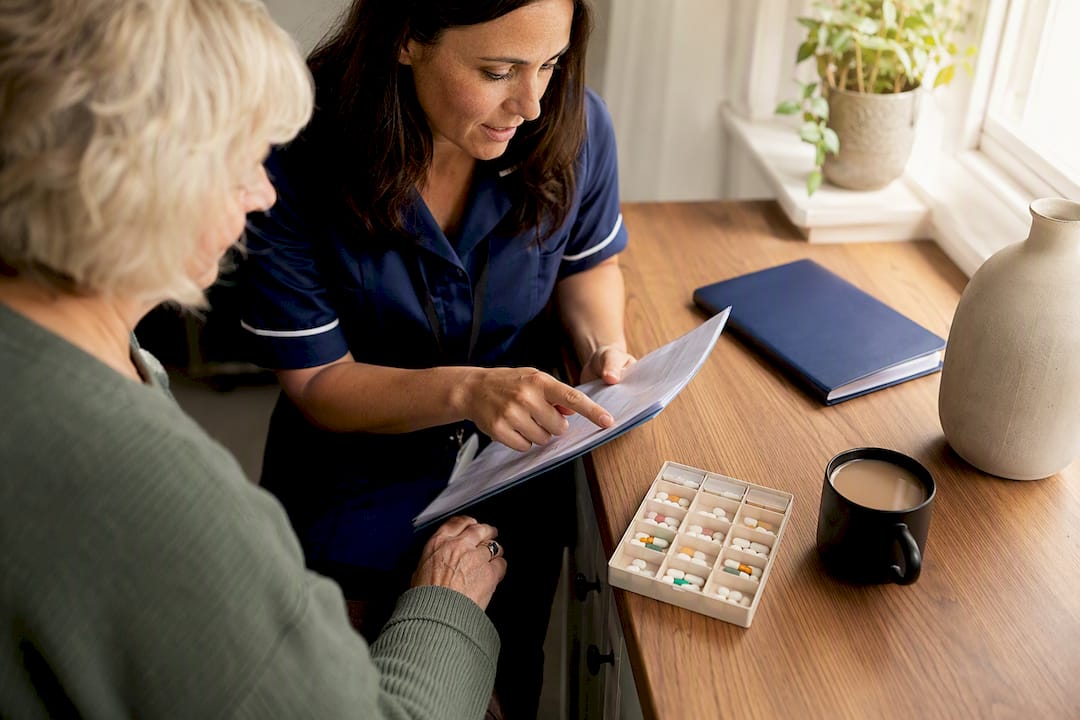
Meeting the carer and the first visit: what actually happens
Good agencies introduce a new carer properly before that carer visits alone. Expect photo ID, confirmation of their DBS check, and a plain explanation of what they will be doing and why. The Care Quality Commission treats this meet-and-greet step as a marker of good, responsive care, not an optional extra.
On the first visit itself, tasks usually follow what the care plan agreed. Typical activities include:
- Personal care, such as washing, dressing or continence support
- Prompting or supporting medication at the agreed times
- Preparing meals or drinks to the person’s known preferences
- Light domestic tasks: laundry, tidying, or simple errands
- Help with mobility, transfers, or getting safely around the home
Consistency matters more than most families expect. Seeing the same one or two carers regularly, rather than a rotating cast of strangers, lets trust build gradually rather than being forced. NICE and CQC both stress that relationships need time, which is exactly why the introduction stage is treated as part of the assessment process rather than a formality tacked on before it.
Visit length, medication and the care diary
NICE guidance is specific: most home care visits should normally run longer than 30 minutes, and shorter visits should only happen when the carer already knows the person well and it forms part of a wider support package.
Visits shorter than 30 minutes should only happen when the carer already knows the person well and it forms part of a wider support package, because rushed visits are a known quality risk in home care, according to NICE. A 15-minute call rarely allows time for washing, a meal, and a genuine conversation.
Every home should have a care diary or care file, kept on the premises, that carers update after each visit.
- Records what tasks were completed and when the carer arrived and left
- Notes any changes in mood, appetite, mobility or health
- Confirms medication given, prompted or declined
- Acts as the main communication link between carers, the agency and family
Medication support is arranged and recorded formally, whether that means a simple prompt or supervised administration, and any change should be logged and passed back to the agency, not just mentioned verbally.
What to ask and red flags on the first few visits
Ask early: are carers DBS-checked and trained for this type of care? Will there be a named regular carer? What happens if a visit is missed? How will changes to the plan be communicated to the family?
Watch for warning signs in the first few weeks:
- A carer arrives without being introduced or without showing identification
- The care diary is blank or entries are vague and infrequent
- Visits feel rushed, run well under the agreed time, or are frequently late
- A different, unbriefed carer turns up with no explanation
If something feels wrong, raise it with the agency first, then the local council if funding is involved, and escalate to the Care Quality Commission if concerns persist. Independent advocacy services can also help families who feel unheard.
After the first visit: reviews, changes and raising concerns
Care plans are not fixed. Most agencies build in a routine review, often within the first few weeks and then periodically after that, ideally with family, the named carer and whoever carried out the original assessment present.
- Request a review any time needs change, don’t wait for the scheduled date
- Ask for changes to be written into the care file, not just agreed verbally
- Keep a copy of the current plan at home for reference
If a concern isn’t resolved informally, agencies must have a formal complaints process, and families always have the right to contact CQC or ask the council for a fresh needs assessment if circumstances shift significantly.
Why standards from NICE and CQC matter for good home care
NICE and CQC set the benchmark most reputable providers work to: person-centred planning, genuine responsiveness, properly skilled staff, and visits that normally exceed 30 minutes rather than being squeezed into a tight slot. Trust signals worth checking for any provider include CQC registration, DBS-checked staff, a written care plan, an active care diary, and evidence of ongoing training.
Kells Domiciliary Care has supplied home care across London for more than 30 years, is regulated by the Care Quality Commission, employs fully qualified and DBS-checked carers, and builds flexible services personalised around each client’s needs.
Those aren’t abstract promises. They map directly onto the CQC’s own description of what good home care looks like: a provider that involves families in the plan, introduces carers properly, and keeps records that reflect reality, not paperwork for its own sake.
A brief word of reassurance
Feeling anxious before that first visit is completely normal, and it usually eases once you see the routine settle in. A short notes sheet with medicines and preferences, kept alongside the care diary, does more to calm those early nerves than almost anything else.
— Dan
How Kells-care can help with your first home care visit
A home care provider may supply services in London, regulated by CQC, with DBS-checked carers and services personalised around each person rather than a fixed template. That combination means you get an assessment shaped around your actual routine, not a generic package stretched to fit.
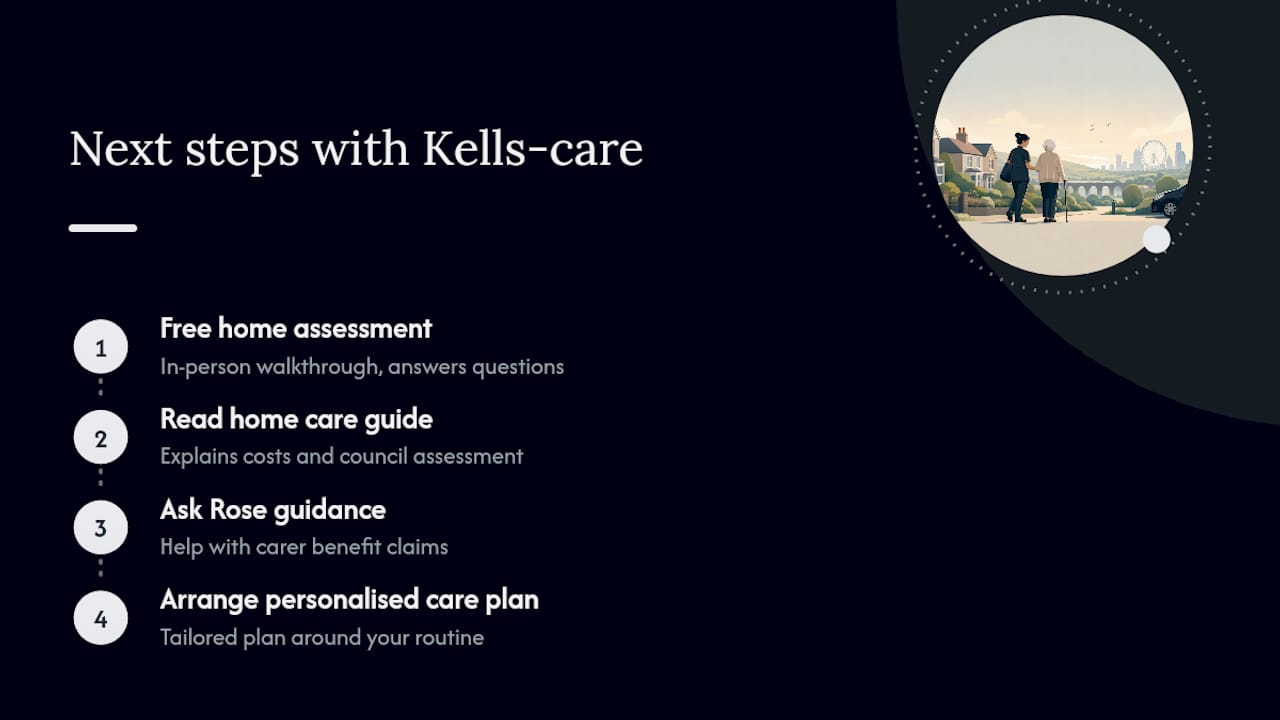
The most useful next step is a free home assessment, where a member of the team walks through your situation in person and answers questions before anything is agreed. If you’d rather read through the process first, the free home care guide sets out what to expect in plain terms, including how costs are typically discussed and where a council needs assessment fits alongside a private arrangement. Families also managing benefits alongside care costs may find Ask Rose’s guidance on carer claims a useful companion resource. Get in touch to arrange your free assessment and see how a personalised care plan could work for your family.
Sources
- Home care for older people – what you should expect (NICE)
- What good home care looks like (Care Quality Commission)
- Getting a needs assessment (NHS)
- Gov


