
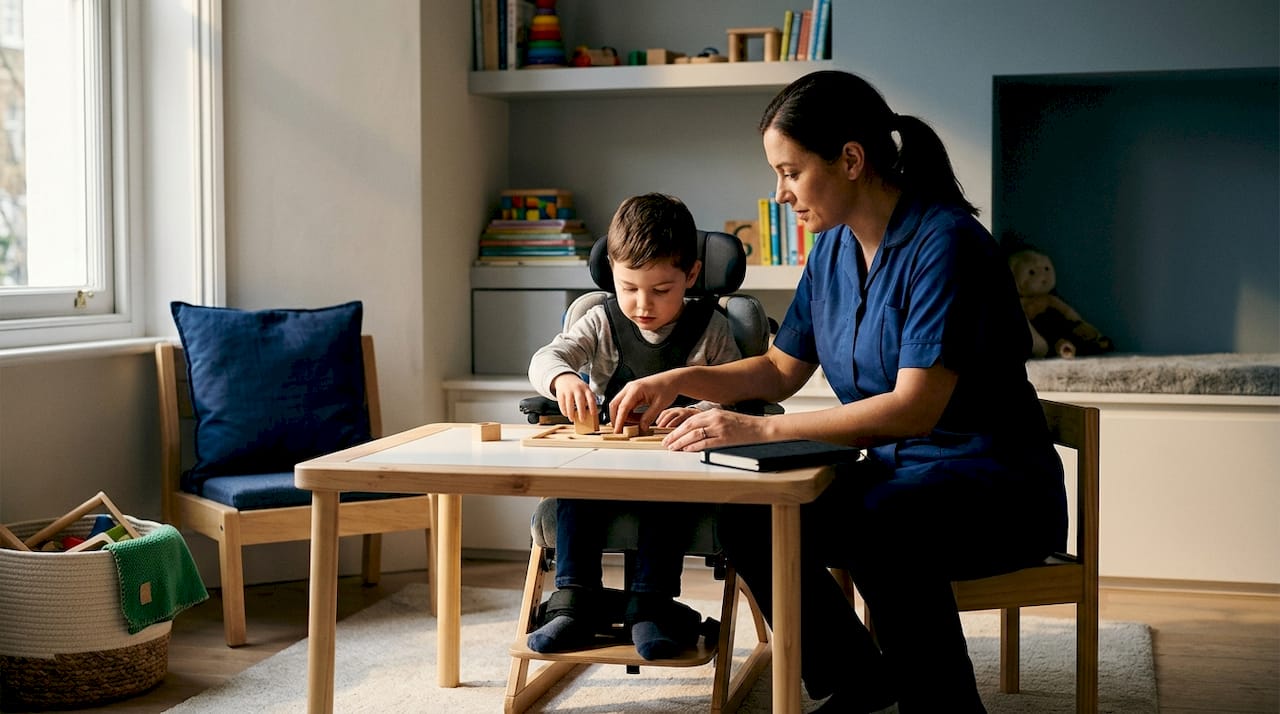
Domiciliary care for a disabled child in London typically costs between £26 and £35 per hour privately, rising to £40 or more for weekends, nights or specialist behaviour support. That sits above the Homecare Association’s calculated minimum price of £32.14 an hour and well above council average fees. Before you commit to anything privately, contact your borough’s Local Offer and request a children’s social care assessment. It’s free, it’s your legal right, and it’s the gateway to every funded option that follows.
TL;DR:
- Private hourly rates in London range from £26 to £35, often exceeding the £32.14 minimum set for 2025–26, especially for weekend or specialist care.
- Most care quotes are affected by staff wages, travel, and overhead costs, meaning low prices often indicate corners being cut or inadequate coverage.
- Families should request a children’s social care assessment and consider funding options like direct payments or NHS continuing healthcare before committing to private providers.
- Proper preparation with medical documentation and detailed logs can significantly improve the chances of securing funded care and a timely assessment.
- Checking provider registration, staff qualifications, and inclusive costs ensures safety and value when choosing a domiciliary care agency.
Table of Contents
- What adds up in a care quote for a disabled child
- How can families in England fund home care for a disabled child?
- How do you get an assessment and turn it into funding?
- What should you check before choosing a carer or agency?
- What might a typical care package actually cost?
- What thirty years in London home care has taught us
- How Kells-care can help with the next step
- Sources
- FAQ
What adds up in a care quote for a disabled child
A care quote is rarely just “hourly rate times hours.” Staff pay, travel between visits, mandatory training, insurance and office overheads make up the bulk of it, and employment costs alone account for 70 to 75% of delivery costs for any provider running a sustainable service. That’s why a quote that looks cheap often isn’t a bargain. It’s a warning.
Two benchmarks help you judge whether a number is realistic. The Homecare Association’s Minimum Price for Homecare for England sits at £32.14 an hour for 2025–26, calculated to cover National Living Wage and basic overheads. Meanwhile, the provisional local authority average fee paid to external home care providers for 2025–26 was £25.05 per contact hour, a figure the sector itself flags as often too low to deliver stable, good quality care.

Statistic to remember: if a private quote in London undercuts £32.14 an hour, ask how the provider covers wages, travel and training. In many cases, the honest answer is that it doesn’t.
London costs sit above the national picture largely because of the London Living Wage, higher recruitment costs, and travel expenses across a sprawling city with congestion charging and ULEZ fees layered on. Expect further uplifts for:
- Weekend visits, commonly 10% to 50% above weekday rates
- Overnight or sleep-in care, priced differently from waking-night cover
- Live-in arrangements, which carry their own weekly structure rather than an hourly one
- Specialist behaviour support or two-carer visits for higher dependency needs
Watch for red flags: a quote far below the minimum price, vague answers about staff vetting, or no mention of CQC registration at all.
How can families in England fund home care for a disabled child?
Nobody should be paying full private rates for care they haven’t checked they’re entitled to help with. The starting point for almost every funded route is the same.
- Request a children’s social care assessment. Under the Children Act 1989, parents have a statutory right to request a formal assessment from their local authority, and eligibility can unlock a personal budget or direct payments.
- Consider direct payments. Once assessed, direct payments let you buy and manage domiciliary care or short breaks yourself, including hiring a personal assistant directly.
- Explore NHS continuing healthcare. Children with the highest medical dependency may qualify for NHS CHC, and those found eligible have a legal right to be offered a personal health budget where appropriate. Kells-care’s guide to NHS continuing healthcare eligibility explains how that process typically starts.
- Layer in benefits and charitable support. Disability Living Allowance for children, local authority grants, and organisations such as Disability Rights UK and Contact can plug gaps that statutory funding doesn’t cover.
Direct payments give real flexibility, but they come with employer responsibilities if you hire a personal assistant directly, including payroll, pension auto-enrolment checks and liability insurance. Local authorities are legally required to publish a Local Offer and provide financial advice alongside these options, so ask for that advice in writing if it isn’t offered upfront.
How do you get an assessment and turn it into funding?
The assessment itself is where most families either gain momentum or lose weeks to confusion. A little preparation changes which outcome you get.
- Contact your borough’s Local Offer or children’s social care team directly, and ask specifically for a needs assessment under the Children Act, not a general enquiry.
- Gather your paperwork before the call, ideally an Education, Health and Care Plan (EHCP), letters from clinicians or specialists, a diary of daily support needs, and any costed care quotes you’ve already collected.
- Record every decision in writing and ask for the reasoning behind it. If a decision seems wrong, you can request a review, escalate to a formal appeal, or bring in an independent advocate to support you.
- If you’re offered direct payments, ask what support the council gives with payroll, insurance, and finding a personal assistant, since these responsibilities sit with you once the money arrives.
Pro Tip: Keep a simple daily log of your child’s support needs for at least two weeks before the assessment. Assessors respond far better to specific, dated examples than to general descriptions of difficulty.
What should you check before choosing a carer or agency?
Cost matters, but for a disabled child the safety and consistency of the carer usually matters more.

Start with the basics: is the provider CQC-registered, and can they show it? Are staff DBS-checked, and what training do they hold for your child’s specific condition, whether that’s autism, a physical disability, or complex behaviour support? Ask whether the agency has handled similar cases before, and whether they work alongside occupational therapists, speech and language specialists, or behaviour support plans where relevant.
When comparing quotes, look past the headline hourly figure. Check whether travel time, sleep-in allowances and sickness cover are included, or billed separately later. A quote that seems unusually low compared with the £32.14 benchmark is rarely a sign of efficiency.
Employment costs make up roughly three-quarters of what a compliant provider spends delivering a single hour of care. A price that ignores that arithmetic usually cuts corners somewhere else.
If you’re using direct payments to employ a personal assistant yourself, confirm you have employer’s liability insurance, understand PAYE obligations, and have a backup plan for sickness or holiday cover. Kells-care’s guide to choosing a home care agency in London and its list of questions to ask agencies both work well as a checklist during first calls.
What might a typical care package actually cost?
Numbers help more than ranges when you’re trying to plan a household budget. Here’s how three common patterns break down using the benchmarks above.
- Low-intensity support: two one-hour visits a day, seven days a week, at roughly £30 an hour, comes to around £420 a week, or roughly £1,820 a month.
- A weekend short break: one overnight stay with a typical weekend uplift can add £150 to £250 to that week’s costs, depending on whether it’s a sleep-in or waking-night rate.
- Live-in care: priced weekly rather than hourly, live-in arrangements in London commonly run from £1,000 to £1,600 a week once carer pay, sleep-in allowance, rota cover and agency management fees are factored in.
Statistic to hold onto: with council average fees sitting at £25.05 an hour against a private minimum price of £32.14, a funded personal budget rarely covers the full private cost. Most families end up combining a council-funded personal budget with a top-up, a charitable grant, or NHS continuing healthcare support to close the gap. Kells-care’s breakdown of how councils assess disability care costs in London walks through this in more detail if you want to model your own numbers.
What thirty years in London home care has taught us
London’s postcode lottery is real. Two boroughs a few miles apart can offer wildly different short-breaks provision and assessment turnaround times, which is exactly why national averages only get you so far. What consistently works is starting early and asking specific questions rather than general ones.
This week, do three things: contact your Local Offer, book your assessment call, and gather at least two costed quotes alongside your medical evidence. If a council drags its feet or gives an unclear answer, an independent advocate can move things along faster than a second phone call ever will.
— Dan
How Kells-care can help with the next step
A home care agency has been supplying home care across London for many years, including call-in visits, live-in care, and support for children with learning disabilities, autism, mental health needs and challenging behaviour. Their carers are qualified, DBS-checked, and work under CQC regulation, so the checks covered earlier in this guide are typically part of how agencies operate.
If you’re weighing up a personal budget, direct payments, or a top-up alongside NHS continuing healthcare, Kells-care can talk through how a package would work in practice, including weekend and overnight uplifts. Read the paying for home care guide for a fuller breakdown of funding routes, or request a bespoke quote through the main services page to get exact figures for your child’s needs rather than a national average.
Sources
- Gov
- Homecare Association — Minimum price for homecare (England) 2025–26
- Gov
- Personal health budgets and IPC in NHS Continuing Healthcare — NHS England
- Gov
FAQ
How much does disabled children’s care cost in London?
Private domiciliary care for a disabled child in London typically runs £26 to £35 an hour, with weekend and overnight rates higher still. That compares with the Homecare Association’s minimum price of £32.14 an hour and the council average fee of £25.05.
How do I get funding for my disabled child’s care in London?
Start by requesting a children’s social care assessment from your local authority, which is your right under the Children Act 1989. Eligibility can lead to a personal budget, direct payments, or in higher-dependency cases, NHS continuing healthcare support.
What is the minimum price for homecare in 2025–26?
The Homecare Association calculated a minimum price of £32.14 an hour for England in 2025–26, based on covering National Living Wage and essential overheads. Quotes significantly below this figure are worth questioning closely.
Does Kells-care offer care for children with disabilities in London?
Yes. Kells-care provides call-in visits, live-in care and specialist support for children with learning disabilities, autism, mental health needs and challenging behaviour, delivered by CQC-regulated, DBS-checked carers. Current pricing is available on request through the main services page.
How long does it take to get funded care in place?
Timelines vary by borough, but most families move from initial assessment request to a decision within several weeks, provided evidence like an EHCP and daily-support logs is ready upfront. Delays are common when paperwork is incomplete, so preparing documents before the assessment call speeds things up considerably.


