For related support, explore our dementia care at home in London service.
Eating problems in dementia are common, and most have a cause you can find and a change you can try. Memory, recognition, coordination, taste, mouth pain and swallowing can all play a part. A calm routine, familiar foods and enough time help many families. Some signs, such as coughing or choking at meals, need a GP or NHS 111. If daily meals are becoming too much to manage alone, our carers can support the person at home across London, at the pace and in the way they prefer.
TL;DR
- Dementia can affect recognising food, using cutlery, chewing, swallowing, taste and thirst, so eating problems have many different causes.
- Try a calm setting, familiar foods, small portions, finger foods and plenty of time before assuming the person is simply refusing.
- Coughing or choking while eating, a wet, gurgly voice, or repeated chest infections need an urgent GP appointment or NHS 111.
- Fluids matter as much as food: people with dementia may not realise they are thirsty.
- Regular, patient support at mealtimes is something a home carer can provide, so the family is not doing it all alone.
Table of Contents
- Why dementia makes eating harder
- Common changes you may notice
- Practical ways to help at mealtimes
- Signs of swallowing trouble, and when to get help
- Advanced dementia and the end of life
- Our perspective
- Support at home in London
- FAQ
- Sources
Why dementia makes eating harder
There is rarely one reason. Alzheimer’s Society explains that difficulties with memory, thinking and problem-solving can make it harder to recognise food, start eating or use cutlery. Coordination problems can make it hard to grip a fork or get food to the mouth. Some people forget to chew, or their jaw tires easily. Swallowing difficulties become more common as dementia progresses.
Memory also affects the whole meal. Someone may forget they have already eaten and ask for another meal, or forget where food is kept and stop preparing it for themselves.
How the problems change over time
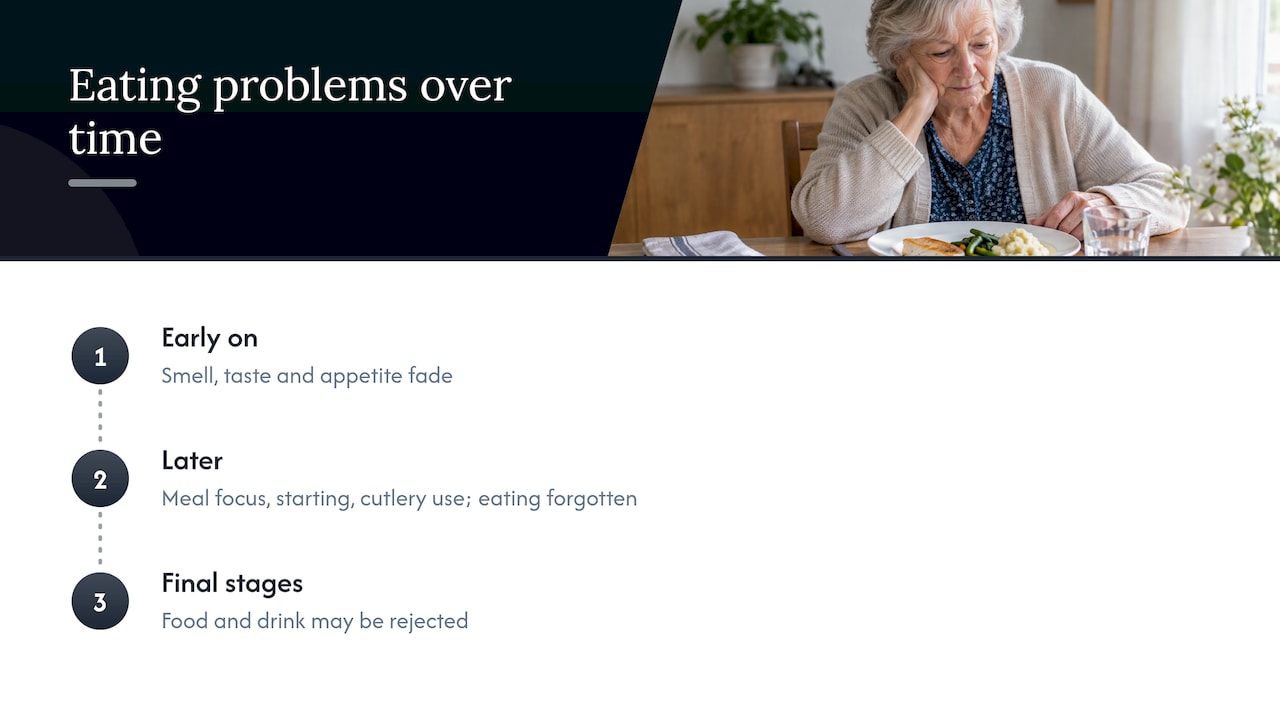
The 2024 ESPEN guideline on nutrition and hydration in dementia describes a typical path. Early on, smell, taste and appetite often fade. Later, concentrating on a meal and starting to eat get harder, cutlery use can be lost, and eating may be forgotten. In the final stages, food and drink may be rejected altogether. Knowing where your relative is on this path helps you choose what to try.
Causes that are not dementia itself
Some causes can be treated. The NHS lists confusion, sore gums, ill-fitting dentures and swallowing problems (dysphagia) among the reasons someone may refuse or spit out food. Dementia UK adds mouth pain, dental problems, constipation, infections and medication side effects. Constipation can cause bloating or nausea and reduce appetite. Alzheimer’s Society says movement, enough fluids and high-fibre meals can help.
If you suspect a dental problem, a dentist can check the mouth and a GP can review medicines. Ask about both before concluding the person is simply “going off food”.
Common changes you may notice
- Poor appetite and weight loss. Both are common as dementia progresses, according to Dementia UK.
- Not recognising food, or refusing and spitting it out. The NHS lists these as common.
- Unusual combinations. Age-related loss of taste and smell can make people want more sugar, salt and spice, and enjoy sweet-and-savoury mixes.
- Overeating and sweet cravings. Dementia UK notes that frontotemporal dementia can cause both, while semantic dementia can lead to rigid food habits.
- Forgetting a meal has been eaten, which can lead to eating again soon after.
Research on overeating explains why it happens. A peer-reviewed review links it to damage in brain circuits that combine fullness signals with food cues. Without someone stepping in, people who overeat may keep going until uncomfortable. It is not greed or bad behaviour, and gentle practical help such as smaller plates and limited food in sight makes a difference.
Practical ways to help at mealtimes
The aim is to keep the person eating and drinking while they stay in charge of what and when, for as long as possible. The tips below come from Dementia UK, the NHS, Alzheimer’s Society and Age UK.
Set the scene
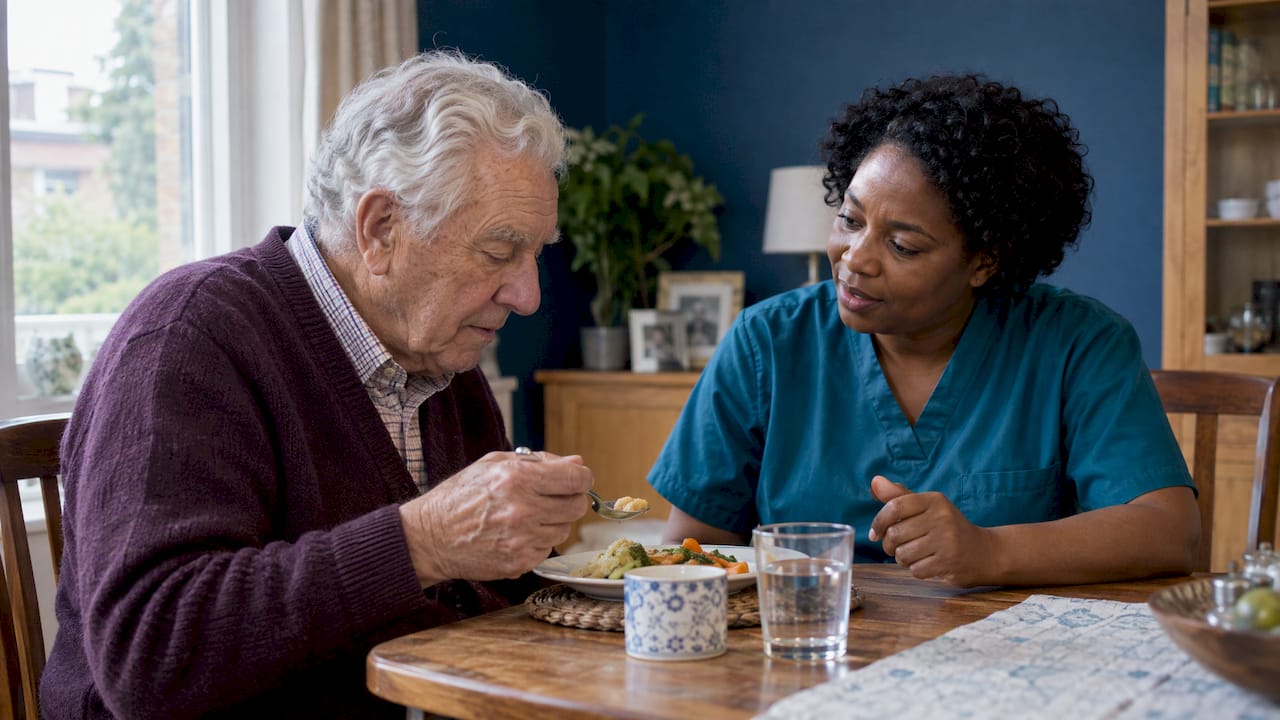
- Turn off the TV or radio, or play familiar music. Dementia UK suggests a relaxed, familiar setting and regular routines.
- Allow plenty of time. Rushing is one of the quickest ways to a refused meal.
- Sit at eye level and say what food is being offered, as Buckinghamshire Healthcare NHS Trust advises.
- Where you can, eat together. Age UK’s workbook notes that care home residents who eat in their own rooms are more likely to lose weight than those eating socially.
A steady day also helps. Our guide to dementia routines that reduce distress shows how to build meals into one.
Adjust the food
- Offer liked foods in smaller portions, and try stronger flavours or sweeter foods, as the NHS suggests.
- Offer two familiar choices, with pictures if they help.
- Serve finger foods if cutlery has become difficult. Soft, easy-to-hold snacks suit many people, and this guide to soft, safe snacks for seniors gives ideas for Indian-style options.
- Let them have dessert first, or a small snack before the meal to help them recognise hunger.
- Support their choices even if the combinations look odd. Alzheimer’s Society also suggests herbs, spices, sauces and chutneys, and its ‘This is me’ leaflet to record likes and dislikes.
A Sirona CIC nutrition leaflet suggests five or six small meals and snacks a day rather than three large ones, and serving one small course at a time. For more ideas, see our meal planning guide for dementia and our guide on appetite loss in older people.
Keep independence going
Age UK explains that eating is a motor memory made of linked steps: cutting, using cutlery, chewing, swallowing. Taking away the first steps can affect the later ones, including chewing and swallowing. Put a spoon in their hand, use hand-over-hand help as dementia advances, and show visual choices on the plate, allowing around 10 seconds to decide.
Do not forget drinks
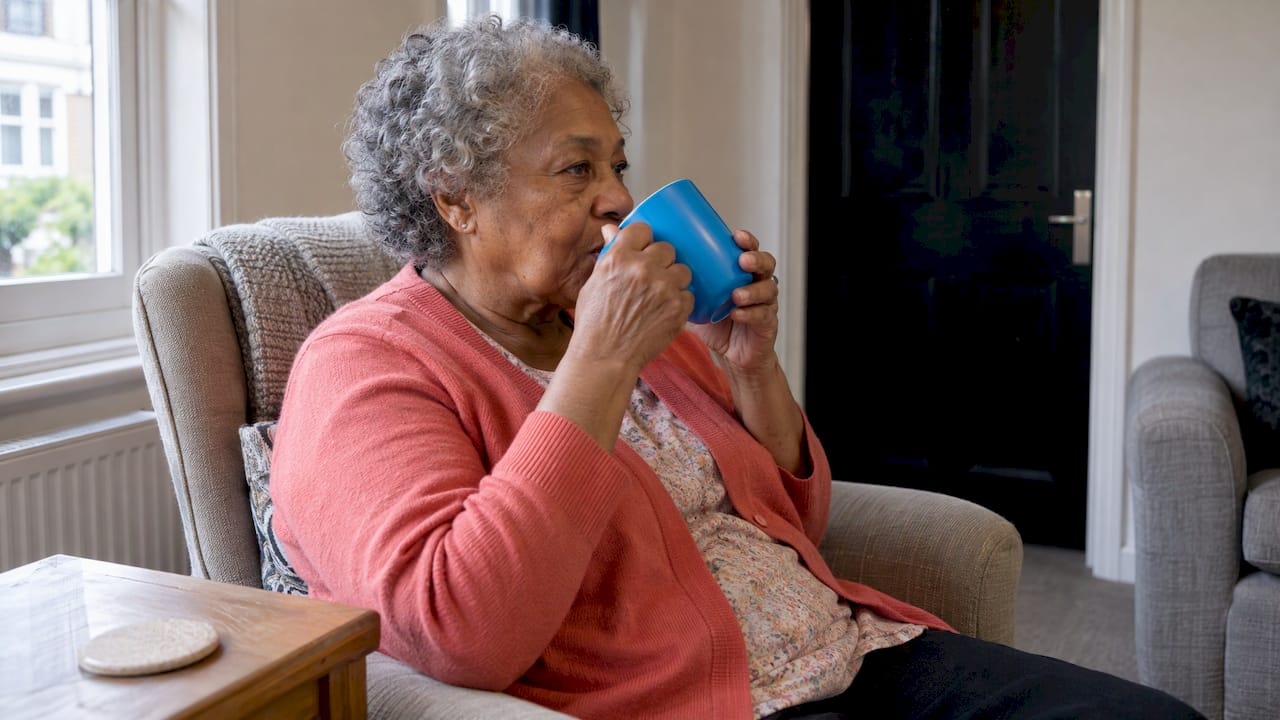
The NHS says people with dementia may not drink enough because they do not realise they are thirsty. That raises the risk of urinary tract infections, constipation and headaches, which can increase confusion. Offer drinks in a clear glass or a brightly coloured cup that is easy to hold. The Sirona leaflet suggests about 6 to 8 cups (1.5 to 2 litres) a day unless a doctor says otherwise, and counts tea, coffee, milk, juice, jelly, soup and yoghurt. Our page on dehydration in older people at home lists the signs to watch for.
Signs of swallowing trouble, and when to get help
The NHS lists the signs of dysphagia: coughing or choking when eating or drinking, bringing food back up, food stuck in the throat or chest, a wet-sounding voice after eating or drinking, drooling and chewing problems. Over time it can cause weight loss, dehydration and repeated chest infections.
Buckinghamshire Healthcare NHS Trust adds further signs in dementia: changed breathing after eating, throat clearing, food pocketed in the mouth, reduced chewing of textured food and difficulty coping with saliva.
Who to contact
| Situation | What to do |
|---|---|
| Coughing or choking while eating or drinking, gurgly voice, shortness of breath after meals, repeated chest infections | Ask for an urgent GP appointment or contact NHS 111 (NHS advice) |
| Ongoing swallowing difficulty | GP can refer to a speech and language therapist (SLT) or dietitian |
| Difficulty holding cutlery or cups | GP can refer to an occupational therapist for eating and drinking aids (Alzheimer’s Society) |
| Sore mouth or loose dentures | Dentist, and mention it to the GP |
| Weight loss, very little eating or drinking | GP review |
See an SLT before switching to pureed food, Dementia UK warns, because purees can lack nutrients. If the person is drowsy or not sitting upright, do not offer food or drink until they are alert and upright, as they may struggle to swallow safely.
Why it matters
In the ESPEN guideline’s review of long-term care studies, pooled malnutrition in residents with dementia was 27%, and malnutrition or risk of it reached 80%. The guideline also describes a vicious circle: poor nutrition and hydration can themselves worsen cognitive ability. Eating well is part of dementia care, not an extra.
Advanced dementia and the end of life
In late dementia, eating and drinking often reduce. The NHS England palliative care guidelines for dementia (3rd edition, November 2024) say support with eating and drinking should be offered, and a speech and language specialist considered if there are concerns about swallowing or safety. They report NICE’s view that tube feeding should not routinely be used in severe dementia unless it may resolve a reversible condition, as it does not improve comfort, quality of life or life expectancy. Decisions about this belong with the GP or palliative care team, together with the family and the person’s wishes.
Our perspective
Mealtimes are where dementia care becomes very practical. The guidance is consistent: unhurried time, familiar food, a calm room, the person’s own choices and help that keeps them doing as much as they can. That is hard to deliver alone, at every meal, while also managing the rest of the day.
At Kells, we have been supplying home care to people in London in their own homes for over 30 years. Our carers are qualified and DBS checked, and we are regulated by the Care Quality Commission. We aim to promote dignity, independence and freedom of choice, and at mealtimes that means helping someone eat in the way they prefer rather than doing it for them.
Because eating is so tied to routine, we believe it works best when the same patient support is part of a personalised plan, from a call-in visit to live-in care.
Dan
Support at home in London
If mealtimes are becoming a strain, our dementia care at home in London is personalised around the person’s needs. Options include call-in visits, medication assistance, companionship and live-in care, and our home care services page lists them all. Our free home care guide is a good place to start, or you can contact us through our website to talk through what would help.
FAQ
Why do people with dementia struggle to eat?
They may not recognise food, forget how to use cutlery, forget to chew, or have trouble swallowing. Mouth pain, constipation, infections, tiredness, anxiety and medicines can also reduce appetite. A GP review can rule out the treatable causes.
What stage of dementia does eating stop?
There is no fixed point, as it varies by person and type of dementia. The ESPEN guideline describes eating and drinking being rejected completely in the final stages. If intake drops sharply at any stage, speak to the GP.
Should I worry if my relative wants only sweet food?
A sweeter tooth is common, and Dementia UK links strong sweet cravings with frontotemporal dementia. Offer sweet foods that also carry nutrition, such as yoghurt or fruit, and mention big changes to the GP.
How much should they drink each day?
A Sirona CIC leaflet suggests about 1.5 to 2 litres, unless a doctor advises otherwise. Soups, jelly and yoghurt count towards the total.
Sources
- Eating and drinking, Alzheimer’s Society
- Eating and drinking with dementia, Dementia UK
- ESPEN guideline on nutrition and hydration in dementia, 2024
- Looking after someone with dementia, NHS
- Dysphagia (swallowing problems), NHS
- Swallowing Matters, Buckinghamshire Healthcare NHS Trust
- Eating and Drinking Well workbook, Age UK
- Nutrition and Dementia, Sirona CIC, 2026
- Eating Behaviors and Dietary Changes in Patients With Dementia, PMC
- Palliative Care Guidelines in Dementia, NHS England, 2024