
Expect visiting Parkinson’s home care in London from roughly £38 to £42 an hour, and live‑in care from around £1,000 to £1,400 a week. Attendance Allowance often reduces that weekly bill by about £77 to £115. The fastest way to a reliable figure is a written quote from a Care Quality Commission (CQC)‑regulated agency based on an actual assessment of the person’s needs.
TL;DR:
- London domiciliary care for Parkinson’s typically costs £38 to £42 per hour for visiting care and £1,015 to £1,400 weekly for live-in support, both above the UK average.
- Care complexity, visit type, agency overheads, and add-ons like multiple carers or household costs can significantly increase the quote; medication timing requirements also influence visit frequency.
- Applying early for Attendance Allowance can reduce weekly care costs by around £77 to £115, with other funding options like local authority help and NHS CHC available depending on clinical needs.
- Families should request itemized, comparable quotes from agencies, ensuring they include all costs such as travel, food, and household contributions, and verify credibility through credentials.
- London care capacity varies by borough, with shorter booking times leading to higher prices and less availability, especially for special requirements like waking nights or urgent placements.
Table of Contents
- How much does Parkinson’s care cost in London?
- What increases or reduces a quote for Parkinson’s care?
- What funding routes can lower the cost of Parkinson’s care?
- What does Parkinson’s care actually cost per week and per year?
- How do you get accurate, comparable quotes from London agencies?
- How Kells Domiciliary Care supports London families budgeting for Parkinson’s care
- Why does capacity vary so much across London?
- Practitioner perspective: keeping safety and dignity central while planning costs
- Get a transparent Parkinson’s care quote from Kells
- Official and helpful pages to check next
- Sources
- FAQ
How much does Parkinson’s care cost in London?
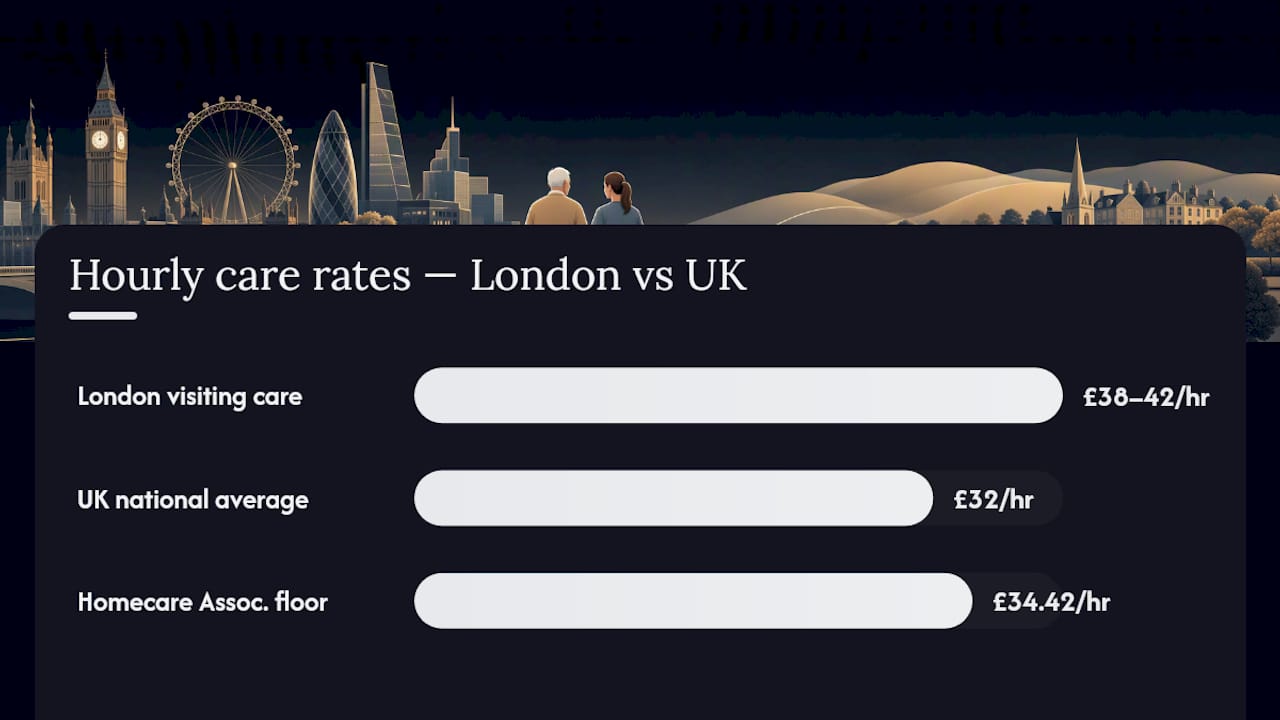
The UK average for domiciliary care sits around £32 an hour, and the Homecare Association recommends a minimum rate of £34.42 an hour for 2026/27 to keep pay and travel costs sustainable. London runs above both figures. Most agencies here quote starting hourly rates of £38 to £42, driven by higher staff wages, denser travel times between visits, and the sheer cost of operating in the capital.
Live‑in care works differently. Instead of paying per hour, you pay a weekly or daily rate that covers a carer living in the home, with time off built into the arrangement. Advertised London live‑in weeks commonly fall in the £1,015 to £1,145 band, though families budgeting for more complex Parkinson’s needs often plan nearer £1,200 to £1,400.
A quick benchmark set for London in 2026:
- Visiting care: £38 to £42 per hour, typically
- Live‑in care: £1,015 to £1,400 per week, depending on complexity
- UK national average (for comparison): about £32 per hour
- Homecare Association recommended floor: £34.42 per hour
Five hours of visiting care a week at £40 an hour comes to £200 a week, or roughly £10,400 a year, before any funding offset. That single sum is often the number that makes families reconsider whether visiting care, live‑in care, or a mix of both suits their budget best.
What increases or reduces a quote for Parkinson’s care?
Parkinson’s is progressive and unpredictable, so the price on a quote reflects far more than just an hourly figure. A handful of factors tend to move the number up or down:
- Clinical complexity. Mobility support, PEG feeding, swallowing difficulties, and precisely timed medication rounds all call for carers with specific training, and specialist skills cost more than general companionship visits.
- Visit type. Short 30‑minute check‑ins are priced differently from hour‑long personal care calls, waking night shifts, sleep‑in cover, or full live‑in arrangements. Waking nights, where a carer stays alert throughout, are almost always the most expensive option per hour.
- Agency overheads. Travel time between visits, mandatory training, and National Living Wage compliance all sit inside the hourly rate. Agencies that employ carers directly, rather than using self‑employed staff, usually charge more but offer stronger accountability and cover for sickness or holiday.
- Add‑ons. Two carers attending for high dependency needs, mileage, and for live‑in arrangements, food and household contributions, all sit outside the base rate on many quotes.
Medication timing is often the detail that catches families out. Parkinson’s medication frequently needs to be given on a strict schedule, sometimes every few hours, and that timing requirement can push a family toward more frequent, shorter visits rather than one long call, changing the weekly total considerably.
What funding routes can lower the cost of Parkinson’s care?
Very few families pay the full rate out of pocket without checking what they’re entitled to first. Three main routes exist, and they interact differently with weekly bills.
Attendance Allowance is the one almost every family should check first. It’s non‑means‑tested, tax‑free, and available to people of State Pension age with care needs, regardless of income or savings.
For 2026/27, Attendance Allowance pays either £76.70 or £114.60 a week, depending on the level of care needed, and can be put straight towards home care costs.
Beyond that:
- Local authority means‑tested help. Councils can contribute after a financial assessment and a separate needs assessment, though thresholds vary and waiting times for assessments can be long in London boroughs.
- NHS Continuing Healthcare (CHC). This can fund care, including live‑in arrangements, when needs are primarily clinical. A Parkinson’s diagnosis alone doesn’t guarantee CHC funding; a formal clinical assessment against the CHC framework is required, and outcomes depend heavily on how the assessment documents complexity and unpredictability.
- Private pay. The default for most families while other applications are in progress, and worth budgeting for even if you expect help later.
The practical order that works best: apply for Attendance Allowance immediately, since there’s no financial means test to slow it down, then request a council needs assessment, and ask your GP or specialist nurse whether a CHC checklist assessment is worth pursuing.
What does Parkinson’s care actually cost per week and per year?
Numbers only mean something once they’re converted into a monthly or annual figure you can actually plan around. Here’s how three common scenarios play out in London.
- Light support, 5 hours a week. At £40 an hour, that’s £200 a week, or about £10,400 a year. After the higher Attendance Allowance rate of £114.60 a week, the net cost drops to roughly £85 a week, or £4,420 a year.
- Live‑in care, average week. A London live‑in week priced at £1,100 minus Attendance Allowance at £114.60 leaves a net weekly cost of around £985, or just over £51,000 a year, before any council contribution.
- Higher dependency, two carers or waking nights. These arrangements can push weekly totals higher, and quotes here deserve extra scrutiny because complexity premiums vary sharply between agencies.
Two costs rarely appear on the headline agency quote: the carer’s food during a live‑in placement, and a fair contribution to household bills like heating and electricity. Ask about both before you sign anything, because they can add £30 to £50 a week that catches families off guard later.
How do you get accurate, comparable quotes from London agencies?
Comparing quotes side by side only works if you’re asking every agency the same questions. Use this checklist on every call.
- Write a short care brief first. List the tasks needed, the times they’re needed, and any clinical notes, such as swallowing difficulties or a specific medication schedule.
- Ask for an itemised quote. The hourly rate, travel charges, sleep‑in or awake night pricing, and anyone‑off assessment or set‑up fees should all appear as separate lines, not folded into one number.
- Confirm credentials directly. Ask which staff are DBS‑checked, whether the agency is CQC‑regulated, and whether carers have specific Parkinson’s or neurological condition training.
- Compare full weekly or monthly totals. Two agencies quoting different hourly rates can end up costing the same once travel and minimum visit lengths are factored in.
- Request a sample care plan and a written agreement. Notice periods and cancellation terms belong in writing before any care starts.
Pro Tip: Get at least two written quotes on the same day, using the same care brief for both. Agencies sometimes quote differently depending on how urgently they think you need to book, so asking twice, cleanly, keeps the comparison honest.
How Kells Domiciliary Care supports London families budgeting for Parkinson’s care
Kells has supplied home care across London for over 30 years, is regulated by the Care Quality Commission, and employs fully qualified, DBS‑checked staff. For Parkinson’s specifically, that experience translates into practical services:
- Call‑in visits sized around medication timing and mobility needs
- Live‑in care for families who want continuity of one carer
- Medication assistance built into the daily routine
- Respite cover and high dependency support with two carers where needed
Rather than issuing a generic hourly figure, Kells carries out a personalised assessment before any quote is written, so the number reflects the person’s actual needs rather than a rough estimate.
Why does capacity vary so much across London?
Care availability in London isn’t evenly spread, and that unevenness shows up directly in price and choice. Central and inner boroughs generally have the deepest pool of agencies, which gives families more options to compare but also pushes rates upward, since staff wages and travel costs are highest where property prices and transport costs bite hardest.
Outer boroughs sometimes have fewer specialist Parkinson’s carers available at short notice, particularly for waking night cover or live‑in placements that need to start within a week. Labour market pressure across the capital means agencies compete hard for trained staff, which keeps quality reasonably consistent but rarely brings prices down.
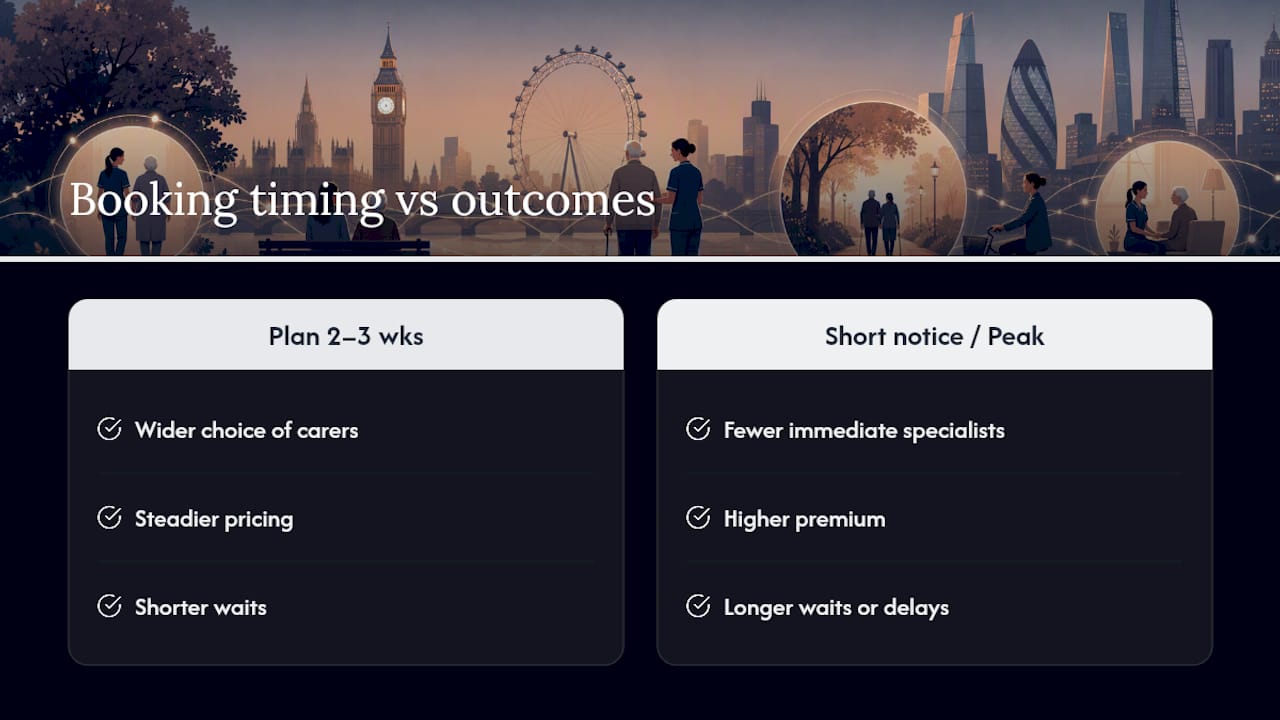
Timing matters more in London than in many other UK regions. Booking a live‑in carer or a specialist Parkinson’s‑trained visiting carer at short notice, especially around Christmas or during school holidays when staff availability tightens, can mean either paying a premium or accepting a longer wait. Families who can plan even two to three weeks ahead typically get a wider choice of carers and steadier pricing, rather than settling for whoever happens to be free that week.
None of this means London families are stuck with worse options than elsewhere in the UK. It means the quote you receive depends partly on your postcode, partly on how far ahead you book, and partly on how flexible you can be about visit timing. Asking an agency directly about current capacity in your borough, rather than assuming availability, saves a lot of wasted back and forth.
Practitioner perspective: keeping safety and dignity central while planning costs
The hardest trade‑off families face isn’t hours versus money, it’s hours versus continuity. A cheaper quote that rotates unfamiliar carers through the week rarely serves someone with Parkinson’s well, since routine and trust affect how safely medication and mobility support actually go. Claim Attendance Allowance early, before the assessment call rather than after, and treat a lower price as a question, not a bargain, until you’ve checked CQC status and DBS clearance yourself.
— Dan
Get a transparent Parkinson’s care quote from Kells
Kells Domiciliary Care is the direct, local alternative to piecing together quotes from unfamiliar agencies. On a first call, you can get a personalised needs assessment, a written quote broken down by hourly rate and add‑ons, and a sample care plan, so you know exactly what you’re paying for before anything is signed. Ask specifically about Parkinson’s‑trained staff availability and medication timing support when you call, since that’s where quotes vary most between providers. Kells’ home care services page sets out the full range on offer, from call‑in visits to live‑in care, and a free home care guide is available if you want to compare options before committing to a call.
Official and helpful pages to check next
Before booking anything, it’s worth checking a few sources directly rather than relying on secondhand figures.
- Attendance Allowance eligibility rules on GOV.UK, for the current weekly rates and how to apply
- The Homecare Association’s 2026/27 recommended minimum rate, for benchmarking any quote you receive
- Live‑in care funding guidance for London, for how Attendance Allowance offsets weekly live‑in bills
- Kells’ own guide on claiming Attendance Allowance for a plain‑English walkthrough of eligibility
This article is general information, not a substitute for advice from a qualified financial advisor. Consult a qualified financial professional about your own circumstances before acting on anything here.
Sources
- Gov
- Domiciliary Care 2026: UK Cost & Funding Guide – CareAdvocate
- Cost of live-in care in London – PrimeCarers
FAQ
How much does Parkinson’s home care cost in London?
Visiting care typically starts from £38 to £42 an hour in London, above the UK average of about £32. Live‑in care usually runs from £1,000 to £1,400 a week depending on complexity and whether two carers are needed.
Does Attendance Allowance cover Parkinson’s care costs?
Attendance Allowance pays either £76.70 or £114.60 a week for 2026/27, depending on care needs, and it isn’t means‑tested. Most families put it directly towards their weekly home care bill rather than treating it as separate income.
Can NHS Continuing Healthcare pay for Parkinson’s care?
NHS Continuing Healthcare can fund care, including live‑in arrangements, but a Parkinson’s diagnosis alone doesn’t guarantee eligibility. A clinical assessment must confirm the level and unpredictability of need before funding is approved.
What’s included in a live‑in care weekly price?
A live‑in weekly rate covers the carer’s presence, continuity, and scheduled time off, but usually excludes the carer’s food and a fair household bills contribution. Always ask an agency to itemise these separately before comparing quotes.
How does Kells price Parkinson’s care?
Kells assesses each person’s needs individually rather than quoting a flat rate, covering everything from call‑in visits to live‑in and high dependency care with two carers. Current pricing is available on request through Kells’ home care services page once an assessment has taken place.