
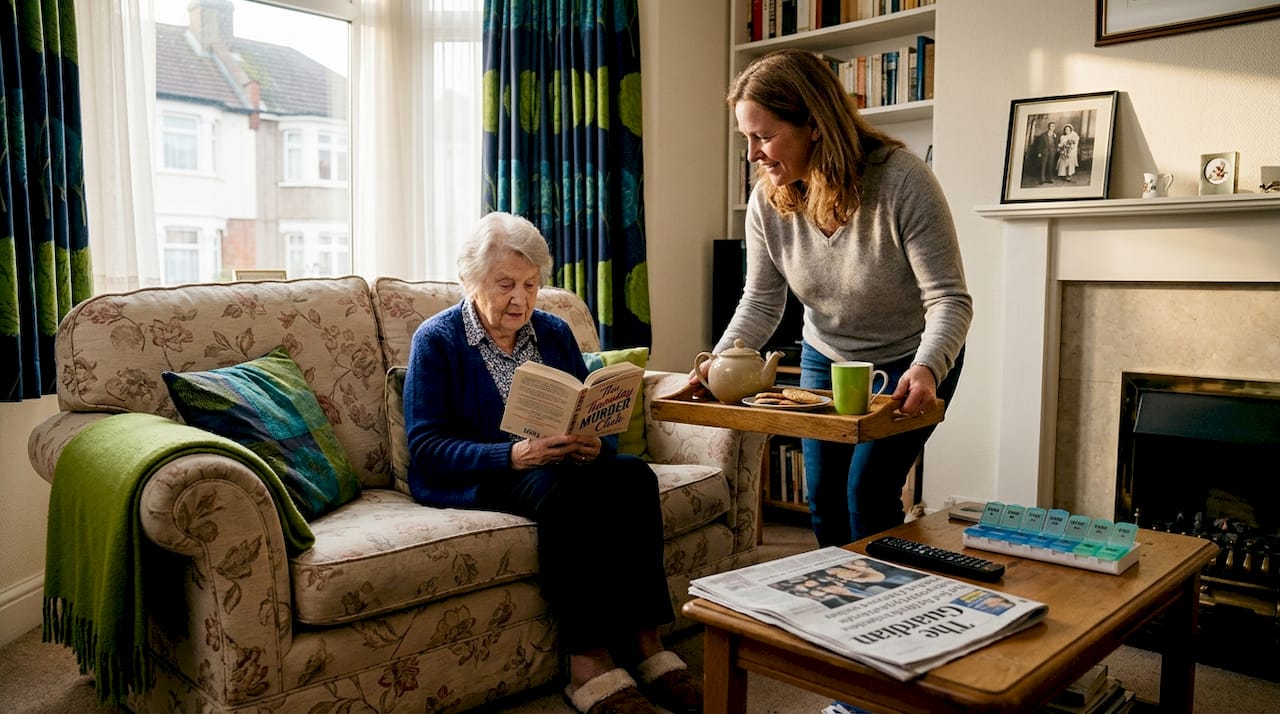
TL;DR:
- Caring for an elderly relative in London involves navigating complex assessments, care options, and financial support systems. Implementing practical safety measures, understanding support types, and prioritizing carer wellbeing are essential for sustainable, quality care. Combining formal, informal, and flexible support strategies leads to better outcomes and reduces caregiver burnout.
Caring for an ageing relative in London is one of the most demanding responsibilities a family can take on. Whether your loved one is living with dementia, recovering from a stroke, or managing a long-term disability, navigating care options, council assessments, and daily routines can feel completely overwhelming. The pressure is real, and for many families it builds slowly until something breaks. This guide brings together practical, expert-backed advice to help you make informed decisions, protect your loved one’s dignity, and take better care of yourself throughout the process.
Table of Contents
- Assessing needs: Key criteria for elderly care in London
- Top practical elderly care tips for family carers
- Understanding support options: Formal, informal, and integrated care
- Preventing carer burnout: Respite and personal support
- Navigating financial support and council contributions
- What most guides miss: The toughest choices and lessons from experienced carers
- Kells Care: Your trusted ally for elderly care in London
- Frequently asked questions
Key Takeaways
| Point | Details |
|---|---|
| Start with a needs assessment | A thorough local authority assessment ensures the right care and funding path from the outset. |
| Mix formal and informal care | Blending family support with professional services provides safer, more sustainable home care. |
| Prioritise carer well-being | Regular respite and self-care are vital to prevent burnout and maintain high-quality support. |
| Know your financial support options | Understanding council contributions and allowances maximises your elderly relative’s care budget. |
| Communication is key | Coordinating with all care providers and agencies helps close support gaps and avoids misunderstandings. |
Assessing needs: Key criteria for elderly care in London
Before you can plan anything, you need a clear picture of what your relative actually needs. This is where a formal Care Act assessment comes in. It is carried out by your local council’s adult social care team and looks at your loved one’s physical, mental, and emotional needs, as well as their ability to complete everyday tasks safely and independently.
The assessment also considers your own role as a carer and what support you may need. This is sometimes called a carer’s assessment, and it runs alongside the care needs assessment. Both are free and are a legal right under the Care Act 2014.
When preparing for the assessment, consider the following steps:
- Write down a list of daily tasks your relative struggles with, such as washing, dressing, cooking, or taking medication.
- Note any recent falls, hospital admissions, or changes in behaviour or cognition.
- Gather medical letters or GP notes that support the assessment.
- Speak openly about what you can and cannot provide as a family carer.
- Ask for a named social worker to follow up after the assessment.
“Live-in care for 24/7 needs like advanced dementia; respite to prevent burnout; financial assessment determines council contribution.”
Understanding the differences between care types matters enormously at this stage. Visiting care involves a carer coming to the home for set hours each week. Live-in care provides round-the-clock support in the person’s own home, which is especially important for those with advanced dementia or high physical dependency. Respite care gives family carers a planned break, either by bringing a carer into the home or arranging a short stay elsewhere.
Pro Tip: If your relative has dementia and their needs are changing quickly, request a review date at the end of the assessment so their care plan can be updated regularly.
For a thorough overview of what to expect, our guide on London social care support walks families through each stage of the process.
Top practical elderly care tips for family carers
Once you understand the core needs and processes, implementing tried-and-true care techniques can make each day safer and easier for everyone involved.
There are around 5.7 million informal carers in the UK, and research confirms that unpaid family care, while vital, places a significant emotional and physical burden on those providing it. Knowing what works practically can reduce that burden considerably.
Here are ten evidence-informed tips you can apply right away:
- Install grab rails and remove trip hazards. Falls are a leading cause of injury in older adults. Simple home adaptations such as rails near the toilet, bath, and stairs make a real difference.
- Create a consistent daily routine. Predictable schedules reduce anxiety and confusion, particularly for people living with dementia. Meals, medication, and bedtime at regular intervals help regulate mood.
- Use a pill organiser or monitored dosing system. Medication errors are common and dangerous. A simple weekly pill box or a monitored dosage system from a pharmacist reduces the risk significantly.
- Encourage gentle physical activity. Short walks, chair-based stretches, or light gardening support mobility and mental wellbeing. Even ten minutes of movement a day has measurable benefits.
- Maintain social connections. Isolation is a serious risk for older adults. Regular visits from family, participation in local community groups, or video calls with grandchildren all contribute to emotional health.
- Adapt communication for dementia. Speak slowly, use simple sentences, and avoid correcting confused statements. Focus on emotion and reassurance rather than factual accuracy.
- Keep emergency contacts visible. A laminated card near the phone or on the fridge with key numbers, the person’s address, and any critical medical information can save vital time in a crisis.
- Monitor nutrition and hydration. Older adults often eat and drink less than they need. Keep a simple log and speak to a GP if weight loss or dehydration becomes a concern.
- Use assistive technology. Pendant alarms, fall detectors, and smart medication dispensers are now widely available and affordable. These tools add a layer of safety without reducing independence.
- Look after yourself as the carer. Taking breaks is not a luxury. It is essential. Carer fatigue affects the quality of care you provide, and asking for help makes you a better carer, not a worse one.
Pro Tip: Keep a brief care diary for a week or two before any GP or social worker appointment. Patterns in behaviour, sleep, or mood are far easier to report accurately when you have notes.
Our carers’ checklist covers many of these areas in detail, and you can also find a step-by-step breakdown of practical elderly care steps to follow at home.
Understanding support options: Formal, informal, and integrated care
Armed with the basics, it is time to look at who can deliver support, and the advantages and challenges of each approach.
In London, most families rely on a mixture of informal care (provided by family or friends), formal care (delivered by trained, paid carers), and increasingly, integrated care, which brings together NHS, social care, and voluntary services under a coordinated plan.
| Care type | Who provides it | Cost | Scope |
|---|---|---|---|
| Informal care | Family and friends | Unpaid | Personal care, companionship, errands |
| Formal home care | Registered care agencies | Paid, with possible council contribution | Personal care, medication, specialist support |
| Live-in care | Resident carer in the home | Higher cost, council contribution possible | 24/7 complex or dementia care |
| Integrated care | MDT: NHS, social care, voluntary | Funded through NHS and council | Complex, multi-condition care plans |
Research from LSE on elderly care coordination highlights a recurring challenge: while integrated multi-disciplinary teams (MDTs) improve coordination significantly, communication gaps between NHS, local councils, and care providers remain a real obstacle for families in practice. Staff turnover, fragmented records, and inconsistent information sharing all contribute to these gaps.
Cash-for-care schemes, where the council gives families a direct payment to arrange their own care, can increase flexibility and allow families to hire their preferred carers. However, the same research notes that while these schemes can boost informal care arrangements, they sometimes reduce reliance on formal professionals with specialist training. This trade-off deserves careful thought, especially when your relative has complex needs.
For a full comparison of what is available in your area, our home care service options guide is a useful next step.
Preventing carer burnout: Respite and personal support
To sustain quality care at home, carers themselves need structured support and relief. This is not optional. Burnout affects the carer and the person being cared for.
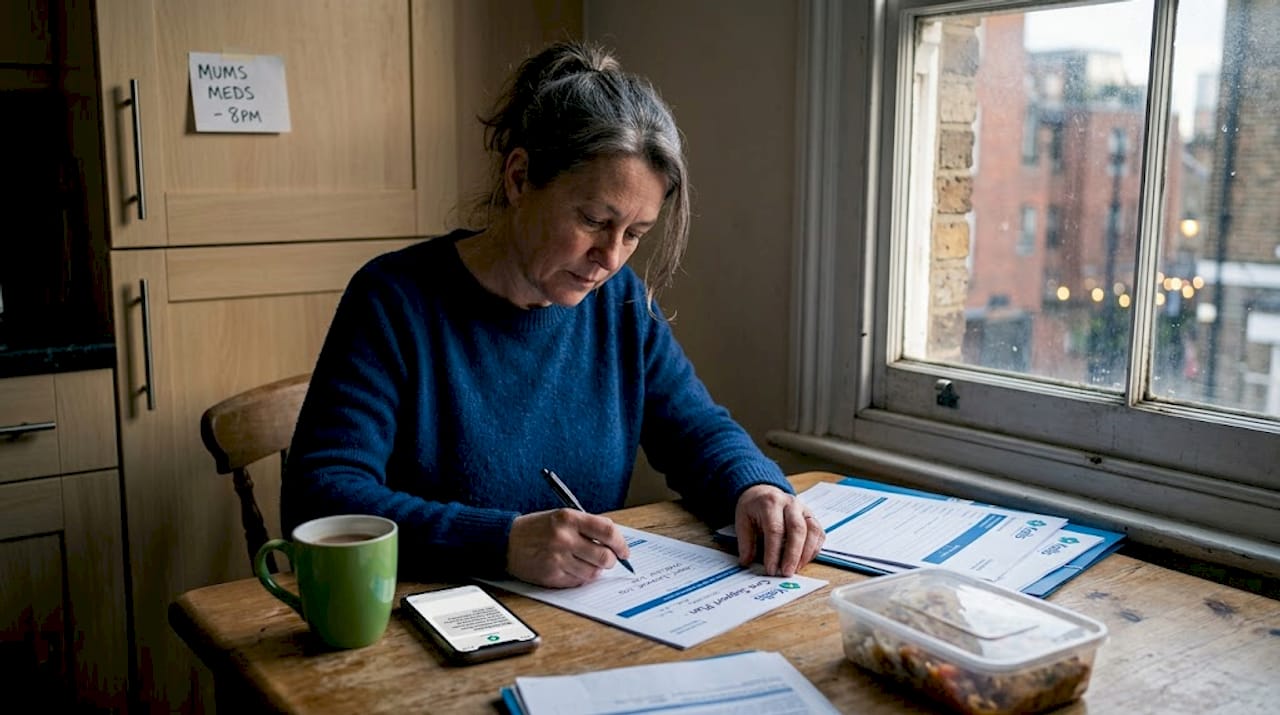
Carer burnout refers to a state of physical, emotional, and mental exhaustion caused by the sustained demands of caring without adequate rest or support. It often develops gradually, which is why recognising the early signs is so important.
Signs of burnout to watch for include persistent tiredness that sleep does not fix, increasing feelings of resentment or guilt, frequent illness, difficulty concentrating, and a growing sense of isolation from friends and family.
If you recognise these signs in yourself, taking action early prevents a full breakdown in care. Here is a practical approach to arranging respite:
- Request a carer’s assessment from your local council. This is separate from your relative’s care needs assessment and gives you access to council-funded respite support.
- Explore short-term home respite. A paid carer can cover your usual hours for a week, a weekend, or just a few afternoons. You do not need to arrange a residential stay for this to count as proper respite.
- Speak to your GP. Carer health is a recognised concern in primary care. Your GP can refer you to local carer support groups or counselling.
- Contact Carers UK or your local carers’ centre. Both offer practical advice, peer support, and signposting to funding.
“Respite to prevent burnout; financial assessment determines council contribution to care costs.”
Accepting respite is not abandonment. It is a practical tool that keeps the whole care arrangement sustainable. Our detailed guides on respite care explained and a respite care guide for London families are worth bookmarking for future reference.
Navigating financial support and council contributions
Supporting a loved one can put a real strain on family finances, but understanding your funding rights is vital. Many families are unaware of what they are entitled to, or assume they will not qualify because they own property or have savings.
The financial assessment, also known as a means test, is the process by which a council determines how much you or your relative must contribute towards care costs. The council assessment process considers income, savings, and certain assets, but it does not always include the value of your relative’s home if a spouse or dependent still lives there.
| Funding source | Eligibility criteria | Notes |
|---|---|---|
| Council-funded care | Needs assessment confirms eligible needs; means test applied | Contribution calculated based on income and savings |
| NHS Continuing Healthcare | Complex health needs meeting NHS criteria | Fully funded; no means test |
| Carer’s Allowance | Carer provides 35+ hours per week; earns below threshold | Can affect other benefits; check entitlements carefully |
| Attendance Allowance | Claimant aged 65 or over with care needs | Not means-tested; two rates depending on level of need |
| Direct payments | Eligible for council funding | Paid directly to family to arrange own care |
Pro Tip: Always request a full written breakdown of the financial assessment decision. If you disagree with the outcome, you have the right to appeal, and councils must explain the process clearly.
Many families miss out on Attendance Allowance simply because no one told them it existed. It is not means-tested, it does not depend on National Insurance contributions, and it can be claimed regardless of whether your relative is already receiving other benefits. Our elderly home care guide covers the full range of financial entitlements in more detail.
What most guides miss: The toughest choices and lessons from experienced carers
Most care guides focus on logistics. What they rarely address is the emotional weight of the decisions families face, and the way that weight accumulates over time.
Experienced London carers consistently report that the hardest moments are not about medication schedules or council forms. They are about having honest conversations with a parent who does not want outside help. They are about siblings who disagree over how much care is needed. They are about sitting with guilt when you finally accept that you cannot do it all alone.
Research from UCL on supportive care regimes found that carers in countries with strong formal support structures show higher levels of social participation and reduced isolation. Germany’s approach of mixing cash-for-care with formal options, for instance, leads to fewer unmet care needs overall. The lesson for London families is clear: mixing formal and informal care is not a compromise. It is often the most effective strategy.
What experienced carers also tell us is that flexibility matters more than any single plan. A care arrangement that works well in January may need rethinking in March. Rigid plans become a source of additional stress. Building in regular review points, keeping communication open with all involved, and being willing to bring in outside help before a crisis, rather than after, makes the whole experience more manageable.
We firmly believe that the myth of coping alone does a disservice to families everywhere. Asking for help is not failure. It is the most intelligent thing a carer can do, and personalised care and independence go hand in hand when care is planned thoughtfully.
Kells Care: Your trusted ally for elderly care in London
If you need additional guidance, experience, or tailored services, here is how we help families just like yours. At Kells Domiciliary Care, we have been supporting London families for over 30 years, providing everything from brief check-in visits to full live-in care. Our carers are fully qualified, DBS checked, and regulated by the CQC, so you can be confident in the standard of care your relative receives.
You can download our free home care guide to get a clear overview of your options, or visit our elderly home care family guide for more detailed advice on assessments, funding, and choosing the right support. We are always happy to speak with families directly and help you find the right solution for your unique situation.
Frequently asked questions
How do I arrange a council care assessment in London?
Contact your local council’s adult social care team directly to request a Care Act assessment; they will evaluate your relative’s needs and financial circumstances at no charge.
What are the signs of carer burnout?
Signs include persistent fatigue, irritability, frequent illness, loss of motivation, and withdrawal from friends and family, often developing gradually over weeks or months.
Can I get paid for caring for my elderly parent in London?
Some family carers may qualify for Carer’s Allowance or council support via a financial assessment, depending on the hours provided and individual income levels.
What is the difference between home care and live-in care?
Home care involves a carer visiting for scheduled hours each week, while live-in care provides continuous 24/7 in-home assistance for those with complex or high-dependency needs.
How do cash-for-care schemes impact family carers?
Cash-for-care schemes give families direct funds and greater flexibility in choosing carers, but may sometimes reduce access to formally trained care professionals, which matters when specialist support is needed.