

Live-in dementia care suits people with early to moderate dementia who want to stay in familiar surroundings, and it works particularly well for couples who want to remain together. In the UK, dementia-focused live-in packages typically run at £1,400 to £1,700 a week in 2026, rising for waking nights or two-carer support. Before you commit to a route, check NHS Continuing Healthcare eligibility, since it can change the funding picture entirely.
TL;DR:
- Dementia live-in care in the UK typically costs between £1,400 and £1,700 weekly in 2026, with higher prices for waking night support and complex needs.
- Eligibility for NHS Continuing Healthcare funding depends on assessed care needs, not solely on a dementia diagnosis, and can significantly reduce out-of-pocket expenses.
- Live-in care is suitable mostly for early to middle stages of dementia, but persistent exit-seeking, nightly agitation, aggression, or complex clinical needs can make it unsuitable.
- When planning, families should insist on clear staffing protocols, full background checks, tailored care plans, and regular reviews to ensure safety and continuity.
- Practical experience shows that choosing the right agency is key, with many benefits from personalized, flexible support plans rather than generic packages.
Table of Contents
- What is dementia live-in care and why do families choose it?
- What does live-in dementia care include at each stage of dementia?
- How much does dementia live-in care cost in the UK, and how is it funded?
- When is live-in care no longer appropriate for dementia?
- How do you arrange live-in dementia care step by step?
- How does an experienced London agency approach dementia live-in care?
- What should families actually prioritise when choosing dementia care?
- How can Kells-care help you arrange live-in dementia care in London?
- Sources
What is dementia live-in care and why do families choose it?
Live-in care means a carer moves into the person’s home and provides support across the day, either sleeping in with the option to help during the night (“sleeping-in”) or staying awake through the night for people who need constant supervision (“waking night”). It differs from hourly domiciliary care, where a carer visits for set slots, and from a care home, where the person moves into a shared residential setting.
Families tend to choose live-in support for reasons that go beyond convenience. NICE guidance points out that staying in familiar surroundings can reduce distress and help maintain routines for people living with dementia, something a move into unfamiliar accommodation can disrupt.
The practical advantages usually come down to:
- Continuity of carer: the same person learns the individual’s habits, triggers and preferences, rather than a rotating team.
- Familiar surroundings: no disorientation from a new building, new routines or new faces.
- Better outcomes for couples: one carer can often support both partners, so a couple avoids being split across two care homes, a point explored further in guidance on live-in care for couples.
- Flexibility: care plans adjust as needs change, without the upheaval of switching setting.
What does live-in dementia care include at each stage of dementia?
Care needs shift substantially as dementia progresses, and the Alzheimer’s Society frames this in three broad stages: early, middle and late. The middle stage is often the longest and usually brings a significantly increased need for assistance with daily tasks.
- Early stage: gentle prompting, medication reminders, help with paperwork and finances, light supervision, and household tasks such as cooking and shopping. Many people at this stage need company and structure more than hands-on care.
- Middle stage: hands-on personal care (washing, dressing, toileting), active management of wandering and sundowning behaviour, help at mealtimes, and noticeably more supervision throughout the day.
- Late stage: full personal care, mobility support that may need two people for safe handling, clinical monitoring (skin integrity, swallowing, continence), and often waking-night cover rather than sleeping-in support.
Whether a carer sleeps in or stays awake overnight matters more than most families realise. A sleeping-in carer is on hand but resting, which is fine for someone who settles at night. Once wandering, calling out or falls become a nightly pattern, a genuinely awake carer, or two carers working in rotation, becomes the safer option. True round-the-clock waking cover is a more specialist arrangement and should be costed separately from standard sleeping-in live-in care, since agencies price it very differently.
Pro Tip: Ask any prospective agency to walk you through exactly how they’d staff a bad night, not just an average one. If the answer is vague, that’s a sign the care plan hasn’t been stress-tested.
For a fuller picture of what day-to-day dementia support actually looks like at home, see this practical guide for London families.
How much does dementia live-in care cost in the UK, and how is it funded?
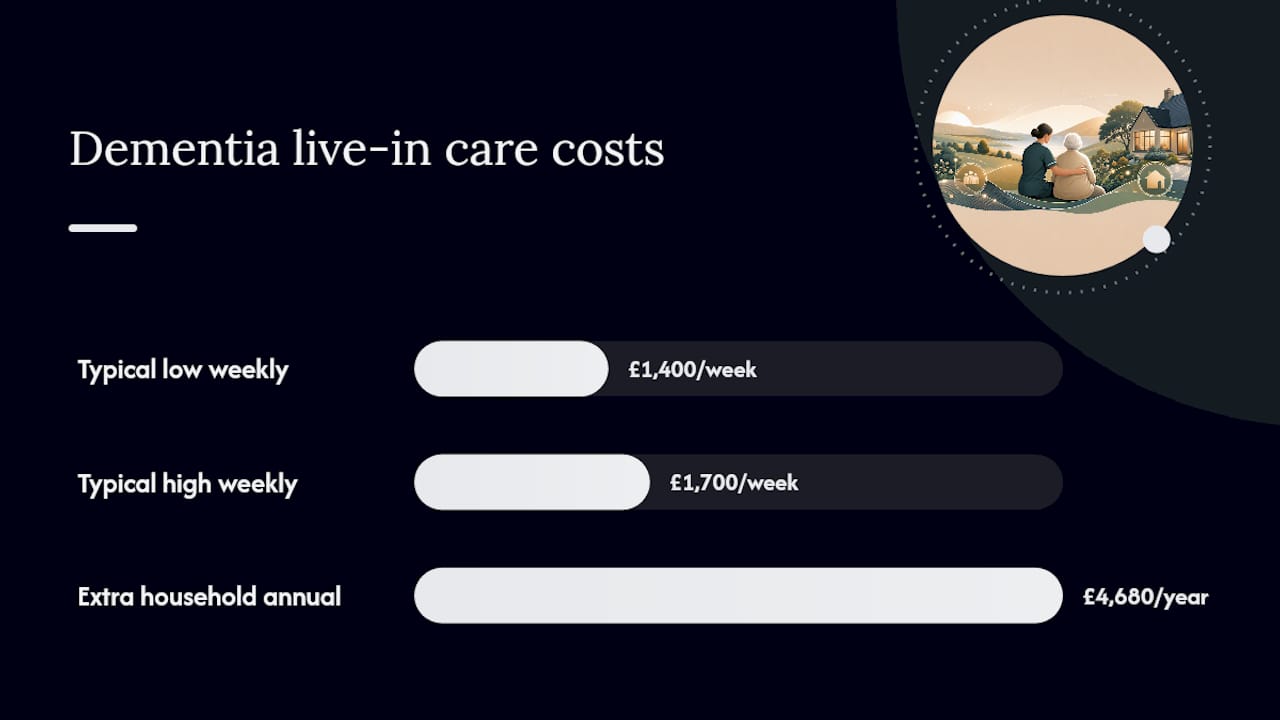
Dementia live-in care sits above standard live-in care pricing, largely because it demands more skilled, more patient staff and often more overnight cover. UK benchmarks for 2026 put dementia-focused live-in packages at roughly £1,400 to £1,700 a week, with costs climbing further for waking nights, two-carer rotations for complex physical needs, or couples requiring joint support.
£4,680 a year: the typical extra household cost many families overlook, covering a live-in carer’s food, utilities and respite cover on top of agency fees, according to Homecare.
Several factors push the price up or down:
- Carer skill and experience: dementia-specific training, particularly for managing distress behaviours, commands a premium.
- Waking nights: continuous overnight supervision costs considerably more than sleeping-in cover.
- Geography: London and the South East generally sit above national averages.
- Household running costs: heating, food and a private space for the carer all add up, as the Homecare.co.uk research confirms.
- Respite and cover: agency margins usually build in the cost of holiday and sickness cover, but check what’s included before signing.
Before assuming you’ll pay the full weekly rate privately, check NHS Continuing Healthcare (CHC). CHC funds a care package, including live-in care at home, for someone assessed as having a “primary health need”. The assessment uses a Decision Support Tool covering 12 care domains, and eligibility depends on assessed needs rather than a dementia diagnosis alone. Fast-track CHC exists for people whose condition is deteriorating rapidly, and standard referrals go through a fuller multidisciplinary review, which NHS statistics show results in awards for a minority of standard applicants. If eligible, you may be offered a personal health budget to arrange care flexibly, including live-in support.
Outside CHC, Attendance Allowance is non-means-tested and offers a weekly contribution rather than full funding. Carer’s Allowance may support the unpaid carer’s own finances, and your local council can assess means-tested support, though thresholds and charging policies vary by area. Read the NHS continuing healthcare eligibility guide and the 2026 live-in carer cost guide before budgeting, since getting the funding route wrong early can cost months of delay later.
When is live-in care no longer appropriate for dementia?
Live-in care has real limits, and recognising them early protects everyone’s safety, including the carer’s.
- Persistent exit-seeking: if someone keeps trying to leave the house, day or night, despite door alarms, distraction techniques and environmental changes, a single live-in carer usually cannot guarantee safety.
- Nightly waking behaviour: occasional restlessness is manageable with a sleeping-in carer; behaviour that demands a fully awake carer every single night, for an extended period, points towards needing nursing-home-level overnight staffing.
- Aggression or carer harm: physical aggression towards carers, even when understood as a symptom rather than intent, often leads to high carer turnover and disrupted continuity, which defeats the purpose of live-in care.
- Complex clinical or moving-and-handling needs: conditions requiring nursing oversight, or physical transfers that need two trained people safely, generally exceed what a single live-in carer can provide without additional support, and may point towards nursing care at home or a residential setting instead.
None of these triggers mean failure. They mean the level of need has genuinely changed, and the Alzheimer’s Society’s staging framework is a useful reference point for recognising when that shift is happening rather than waiting for a crisis to force the decision.
How do you arrange live-in dementia care step by step?
Getting from “we need help” to a safe, working care package usually follows a fairly consistent sequence, though the timeline varies with how urgently care is needed.
Start with a needs assessment, requested through the local authority or, where a primary health need is suspected, alongside a CHC screening via the NHS. This assessment shapes everything that follows, including whether the Decision Support Tool process is triggered.
Once needs are clear, whether arranging privately or through an agency, insist on:
- DBS checks for every carer entering the home, with evidence you can actually see.
- CQC registration, since any regulated provider in England must be registered and inspected by the Care Quality Commission.
- Training evidence specific to dementia care, not just general care qualifications.
- A written care plan covering daily routines, medication handling and behaviour triggers.
- Clear contract terms on notice periods, replacement cover and additional costs.
Matching matters more in dementia care than almost any other setting, because a poor personality fit can trigger distress rather than reassurance. Ask for a trial period, a clear rota showing named carers rather than “an agency carer,” and a written protocol for what happens when the regular carer takes holiday or falls ill.
Pro Tip: Get the replacement-cover protocol in writing before you sign anything. Families frequently discover, mid-crisis, that “cover will be arranged” means something very different from a named backup carer on standby.
Build in regular safeguards too: medication handling procedures, a simple incident-reporting system, and scheduled family reviews, ideally monthly at first, to catch problems before they escalate.
How does an experienced London agency approach dementia live-in care?
Kells Domiciliary Care has provided home care across London for over 30 years, which means the agency has supported families through the entire arc of dementia progression, not just a single stage. Every carer is fully qualified, DBS-checked, and works within a service regulated by the Care Quality Commission.
The agency builds personalised care plans around each person’s routines and preferences rather than fitting families into a fixed package, with the aim of preserving dignity, independence and freedom of choice as needs change. That includes flexibility to scale from check-in visits through to full live-in and round-the-clock support, along with respite cover and liaison with nursing services when clinical needs increase.
A first assessment typically involves a conversation about current needs, home environment and family circumstances, followed by a proposed care plan the family can review before committing. Families wanting a structured starting point can also work through the practical guide to dementia personal care as preparation for that first conversation.
What should families actually prioritise when choosing dementia care?
The biggest mistake I see is families treating live-in care and care homes as a straight either/or decision, when the real question is almost always about staging, not preference. Check CHC eligibility early, because it changes every other calculation you’ll make. If a couple is involved, weigh live-in care seriously before assuming separation is inevitable. Build respite and a genuine review schedule into the plan from day one, not as an afterthought once something goes wrong. For a practical starting point, the free home care guide is worth reading before your first assessment call.
— Dan
How can Kells-care help you arrange live-in dementia care in London?
This agency is a practical alternative to piecing together care yourself through agency directories and cold enquiries. As a CQC-regulated provider with long experience in London home care, it offers fully qualified, DBS-checked carers who can move from occasional visits to full live-in dementia support without you having to switch providers mid-crisis.
An initial call talks through current needs, home setup and family circumstances, and leads to a personalised care plan rather than a generic package. Start by downloading the free home care guide for a clear, no-pressure overview of what arranging live-in dementia care in London actually involves, then book an assessment when you’re ready to move forward.
This article is general information, not a substitute for advice from a qualified doctor. Consult a qualified healthcare professional about your own circumstances before acting on anything here.
Sources
- Alzheimer’s Society — Stages and symptoms of dementia
- NHS — NHS continuing healthcare
- Homecare
- RightCareHome — Live-in dementia care: costs and limits (2026)


