The first days home from hospital are when most people need help: washing, getting to the toilet, meals, medicines and getting around safely. In London you can get that help from family, from a short NHS or council recovery service, or from a regulated home care agency. We are Kells Domiciliary Care, and for over 30 years we have supplied carers to people recovering in their own homes across London. Our carers are qualified, DBS checked and our agency is regulated by the Care Quality Commission (CQC). This guide explains what to arrange, who provides what, and how to make a plan before you leave hospital.
TL;DR
- Plan before the operation. Ask at your pre-operative assessment what equipment and care you will need, and have an adult available for at least 24 hours after a general anaesthetic or epidural.
- Free NHS or council short-term recovery support (intermediate care or reablement) usually lasts up to 6 weeks, but it is offered only where staff think you can improve with it.
- Set up one floor of the home for recovery: bed, toilet or commode, food, phone and a firm chair all within easy reach.
- If family cannot cover washing, meals, medication prompts and errands, a regulated carer can, from a few call-in visits a week to live-in care.
- Know the warning signs of infection and clots, and call NHS 111 or 999 when they appear.
Table of Contents
- What help do people need at home after surgery?
- The first 24 hours at home
- Getting your home ready before you go in
- What the hospital arranges before you leave
- Free short-term recovery support: intermediate care and reablement
- When home care is the better fit
- Wound care and warning signs
- Extra planning for dementia, disability and mental health needs
- How long recovery takes
- Our perspective
- Arranging care with Kells
- FAQ
- Sources
What help do people need at home after surgery?
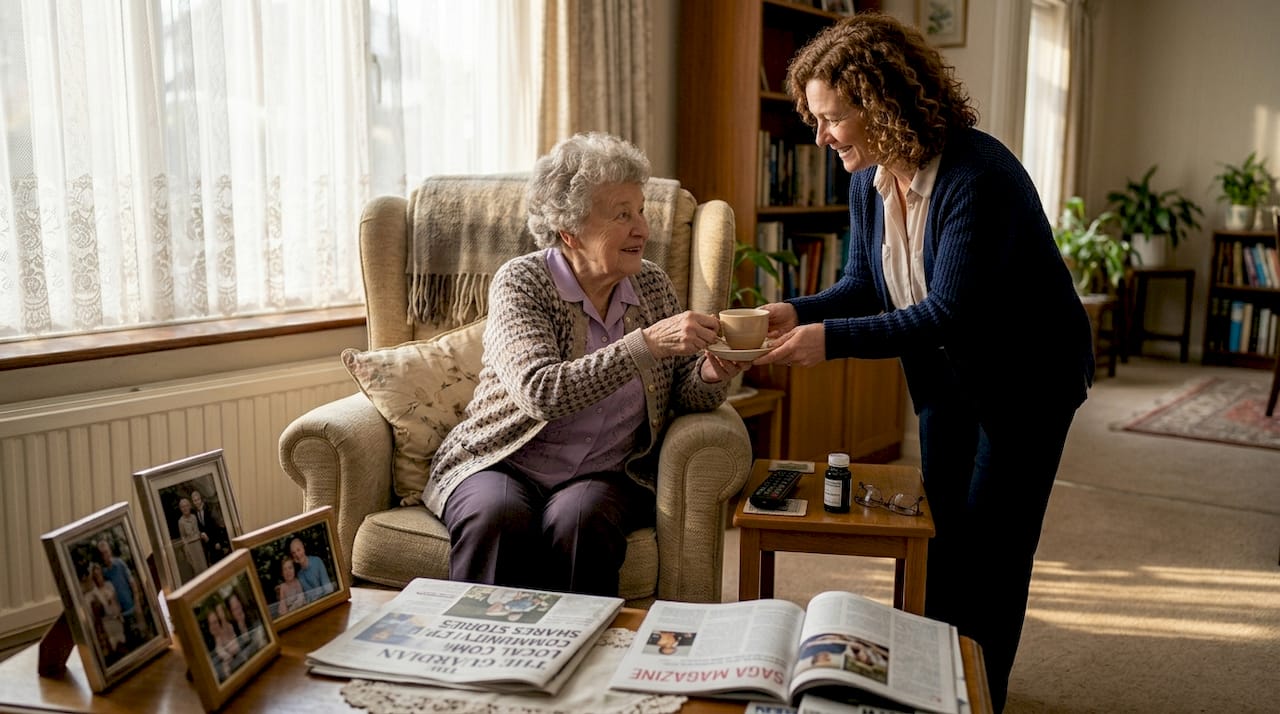
The tasks are ordinary ones, which is why they are easy to underestimate. MedlinePlus, the US National Library of Medicine’s patient service, lists help with bathing, using the toilet, cooking, running errands, shopping, getting to appointments and exercising. It suggests asking about a trained caregiver visiting the home if nobody can help in the first one or two weeks after a hospital stay.
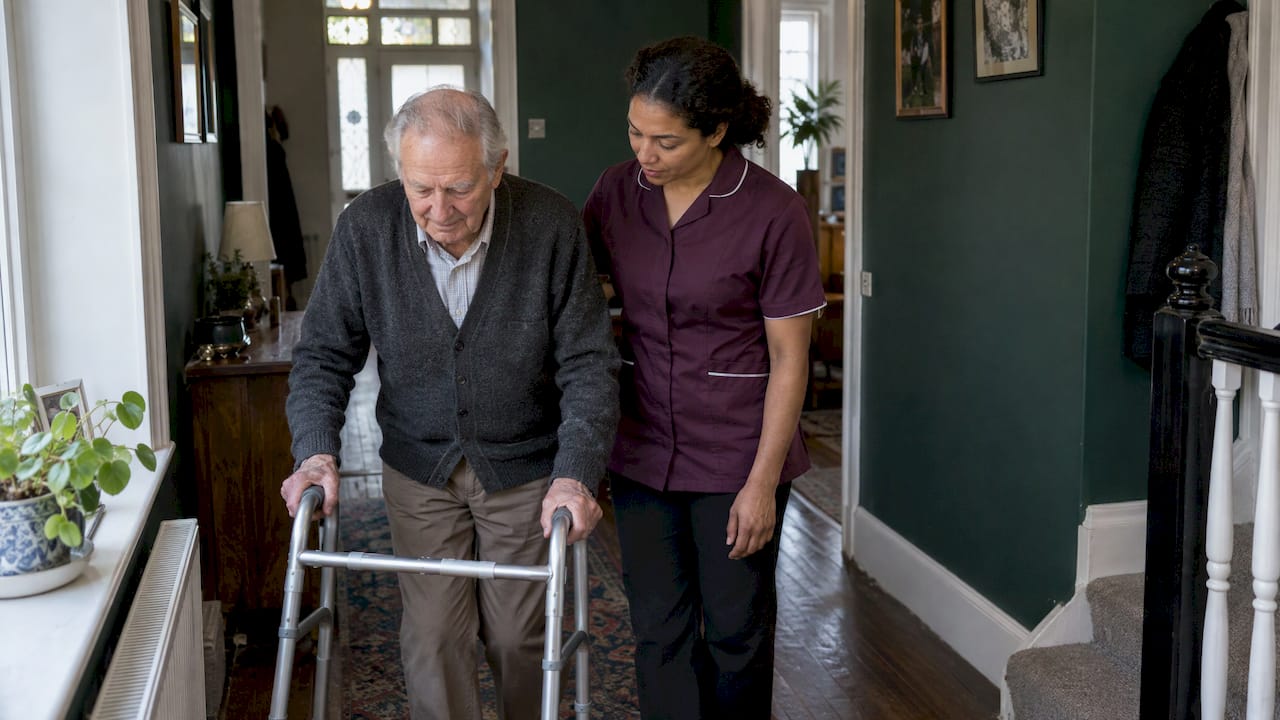
The NHS says to arrange suitable equipment and care for older people at the pre-operative assessment, and not to be afraid to ask for a wheelchair or walking frame. It also says an adult should be available to help for at least 24 hours after a general anaesthetic or epidural.
For most families, the need falls into four groups:
- Personal care: washing, dressing, getting on and off the toilet, getting in and out of bed.
- Medication: remembering what to take, and when.
- Food and household tasks: shopping, light meals, laundry, tidying.
- Company and reassurance: someone present when the person stands up for the first time, or feels low or anxious.
These are the services we provide: personal care, medication assistance, domestic help, shopping and errands, and companionship. You can see them on our home care services page.
The first 24 hours at home
The first day is when the anaesthetic is still wearing off, so the person is least able to look after themselves. The rules below come from the day surgery discharge information of University Hospitals Sussex NHS Foundation Trust. For 24 hours after an operation, do not:
- drive or ride a bicycle;
- operate machinery;
- make important decisions or sign legally binding documents;
- drink alcohol, take sleeping tablets or smoke;
- cook, use sharp utensils or pour hot liquids.
Do drink plenty of fluid, eat light meals and rest. Your own hospital’s instructions come first if they differ.
Anesthesia Answers, guidance from US anaesthetists reviewed in July 2026, adds that a responsible adult should take the patient home. The patient should not drive for at least 24 hours, and longer if still sleepy, dizzy, confused, in significant pain or taking opioid painkillers. The helper should stay close during the first attempts to stand or walk, because dizziness and medication effects raise the risk of falls.
If your procedure was a cosmetic one, clinics give their own timings for the first hours. Botox aftercare tips are an example of how specific that advice can be, so follow what your own clinic tells you.
Getting your home ready before you go in
A few hours of preparation before admission saves a lot of difficulty afterwards. MedlinePlus advises:
- set up your bed on the first floor if you can, with a bathroom or portable commode on the same floor;
- stock canned or frozen food and personal items;
- keep supplies between waist and shoulder height and put frequently used items on worktops;
- keep your phone within reach;
- fit grab bars, secured vertically or horizontally, rather than relying on towel rails, and use non-slip mats in the bathroom.
For knee or hip surgery, MedlinePlus suggests limiting stair use to once a day. It also recommends a low bed with a firm mattress so your feet touch the floor when you sit on the edge, a firm-backed chair in the kitchen, bedroom and bathroom, and a bag or basket attached to a walker to carry your phone and notepad.
Many London homes are flats or terraced houses with steep stairs, so think about the bedroom and toilet layout early. If the toilet is upstairs and the only bed is downstairs, plan for a commode or a temporary bed change.
What the hospital arranges before you leave
The NHS says that before you leave hospital you may have a physiotherapy appointment for exercises. You will also be given advice on wound care, and equipment such as dressings, bandages, crutches or splints, and possibly painkillers. When you go home depends on how quickly you improve and what support you will have at home.
So tell the ward early what your home is like and who is around. A JAMA patient article says to arrange someone to help with cooking, getting to the bathroom and driving to appointments until you have healed, even after same-day discharge. It adds that discharge planners such as social workers or case managers can help arrange wound care services and answer questions before you leave.
Our 8 step hospital discharge support checklist walks through the questions to put to the ward team. Our page on post-hospital care at home in London explains how we can be ready for the day you come home.
Free short-term recovery support: intermediate care and reablement
After a hospital stay, the NHS may arrange intermediate care, also called reablement or rehabilitation. According to the NHS social care guide, it is free short-term care that usually lasts a maximum of 6 weeks. The team may include occupational therapists, physiotherapists, social workers, nurses and care workers, with goals agreed with you. The approach is to help you practise tasks yourself, using equipment and home adaptations, rather than simply doing things for you.
London boroughs run their own versions. Lewisham Council describes a free enablement service of up to 6 weeks for people recovering from illness, injury or surgery, covering washing, dressing, preparing meals and building confidence. The City of London runs a reablement service for adults over 18 and takes referrals from hospitals, GPs or other professionals. Your own borough’s adult social care team can tell you what it offers.
Two points help set expectations. First, Age UK explains that intermediate care is not free care everyone is entitled to after a hospital stay. It is offered where staff believe specialist support will help you improve and live more independently. Second, it is time-limited by design, and a crisis response at home typically lasts less than 48 hours.
That is why many families plan two layers: the free service for the first weeks where it is offered, and a regular carer for everything around it, or for the time after it ends. Our guides on what reablement care is and rehabilitation at home explain how this works in practice.
Equipment from the council
Lewisham lists equipment available after discharge: grab rails, walking frames, raised toilet seats, bath seats or shower chairs, hospital beds, pressure mattresses and hoists. An occupational therapist assesses what you need. Small items are often free, and larger adaptations may need a disabled facilities grant. Other boroughs set their own rules, so ask yours.
If you need help and nothing has been arranged
The NHS guide says to speak to your GP surgery or local council about intermediate care. For over-18s, the local urgent community response service can provide support at home quickly, usually for less than 2 days. If you need help right now, contact NHS 111.
When home care is the better fit
Short-term services are a good start, but recovery does not always follow a six-week schedule. Care at home from a regulated agency makes sense when:
- no family member can be there every day, or relatives work or live far away;
- the person is older and recovery is slower, or they were already finding daily tasks difficult;
- the person needs reminders for several medicines;
- nobody is available overnight in the first days;
- you want one familiar carer rather than a changing team.
We offer hourly call-in visits for washing, dressing, meals and medication assistance, and live-in care for round-the-clock support. A personal care assessment helps us match the visits to what you need. Where a family needs a break from looking after someone, we also provide respite cover. For a longer stay of a few weeks, see our page on short-term live-in care.
It helps to keep one idea in mind, the same one the NHS uses for reablement: the aim is to help the person do as much as they safely can for themselves. Good care at home supports independence, dignity and freedom of choice, and does not take over.
Wound care and warning signs
Most surgical wounds heal without problems, but Guy’s and St Thomas’ NHS Foundation Trust says about 1 in 5 people find healing takes longer. Its advice for wound care includes:
- Dressings are typically used for about 2 weeks.
- Do not use a cloth or sponge on the wound.
- If you are worried and it is out of hours, call NHS 111.
University Hospitals Sussex advises keeping most surgical wounds dry for 24 to 48 hours unless told otherwise, and avoiding long soaks in the bath or shower. For bleeding, apply pressure with a clean towel or gauze for 15 to 20 minutes. Always follow the instructions from your own surgical team.
Royal Wolverhampton NHS Trust lists warning signs to watch for in the first 7 days after discharge. Contact the hospital team, your GP or NHS 111 for:
- increased swelling or redness around the wound;
- severe pain;
- a high temperature or feeling feverish;
- blood or pus leaking, or the wound opening;
- nausea or vomiting;
- painful or swollen calves.
It says to go to the emergency department or call 999 for coughing up blood, chest pain or shortness of breath. The Royal Orthopaedic Hospital adds that a wound infection can appear from 2 to 3 days after surgery until the wound has healed, usually 2 to 3 weeks after the operation. Signs include hot, red, swollen skin, green or yellow pus, and feeling generally unwell. Do not remove dressings or touch the wound or drain.
The same Wolverhampton leaflet recommends gentle movement or leg exercises as early as possible to prevent blood clots, deep breathing to prevent chest infections, keeping on top of pain relief, drinking plenty of fluids and not pulling off scabs. The NHS adds that research shows the earlier you get out of bed and start walking, eating and drinking after an operation, the better.
As the helper, your job is to notice changes and pass them on. Our carers can note them and tell the family, so you can call the right service promptly.
Extra planning for dementia, disability and mental health needs
Surgery can be especially unsettling for a person with dementia, a learning disability, autism or a mental health condition. A new routine, pain and unfamiliar people can increase distress.
Age UK’s hospital discharge factsheet recommends that families of people with dementia give staff the following information:
- preferred name;
- sight or hearing difficulties;
- usual routines and food preferences;
- help needed with eating and drinking;
- sleeping preferences;
- how they show pain, and what agitates or calms them.
It also says people with dementia should not be refused intermediate care because of their diagnosis. NICE guidance on intermediate care says not to exclude people because of a condition such as dementia, and to consider reablement for people living with dementia.
Continuity matters here. A familiar carer who knows the routine can keep mealtimes, washing and bedtime steady while the person recovers. We provide dementia care, and support for adults and children with physical and learning disabilities, autism, challenging behaviours and mental health conditions. See our dementia care at home page, and our guide to dementia routines that reduce distress.
How long recovery takes
There is no single number of days to rest, because it depends on the operation, the person’s age and health, and their surgeon’s advice. The NHS encourages getting up and moving early. Your discharge paperwork and surgical team set the limits on lifting, driving and exercise, so follow those. If the person is slow to regain strength, ask the hospital or GP about rehabilitation and physiotherapy.
Our perspective
We have supplied home care in London for over 30 years, and the pattern after surgery is that the practical things decide how recovery goes: a safe bathroom, someone to prompt medication, a hot meal, and a person nearby the first time you stand up.
Our approach is to personalise the help around you. Some people need a short call-in visit morning and evening. Others need a live-in carer for a few weeks. Either way, we aim to protect independence, dignity and freedom of choice, so our carers do with you what you can safely do yourself.
Our carers are fully qualified and DBS checked, and we are regulated by the CQC. If you are planning ahead for an operation, talk to us before admission, so the care is ready on the day you come home.
Dan
Arranging care with Kells
If you are planning for an operation, or already waiting for discharge, tell us what the surgical team has said and what your home is like. We can arrange call-in visits, live-in care, medication assistance, domestic help or respite cover to fit. Start from our home care services page, or get in touch through kells-care.com.
FAQ
What if I have no one to look after me after surgery?
Tell the hospital team before the operation, ideally at the pre-operative assessment, so they can plan your discharge. Ask whether you are eligible for intermediate care or reablement, and contact your borough’s adult social care team. You can also arrange a regulated home carer to start the day you return, which we can do through call-in visits or live-in care.
How long does an adult need to stay with me after an operation?
The NHS says to have an adult available to help for at least 24 hours after a general anaesthetic or epidural. After that, it depends on your mobility, pain, and what the surgical team advises. Many people need help with washing, meals and medicines for longer.
Is NHS recovery support at home free?
Intermediate care and reablement are free and usually last up to 6 weeks, but they are offered where staff think you can benefit and regain independence. Ongoing home care afterwards is arranged through a care needs assessment, and may involve a financial assessment. Private home care is arranged directly with an agency.
When should I call NHS 111 or 999?
Call NHS 111 for urgent advice about signs of wound infection, such as spreading redness, heat, pus or fever. Call 999 for chest pain, shortness of breath or coughing up blood. Your discharge letter will also say who to contact on your ward.
Sources
- Getting your home ready after the hospital, MedlinePlus
- Getting your home ready for knee or hip surgery, MedlinePlus
- Having an operation: after surgery, NHS
- Care to support recovery after leaving hospital, NHS
- Adult day surgery discharge information, University Hospitals Sussex
- Caring for a loved one at home after surgery, Anesthesia Answers
- Planning to return home after surgery, JAMA
- What support is available after leaving hospital, Lewisham Council
- Support with leaving hospital, City of London
- Intermediate care and reablement, Age UK
- Hospital discharge and recovery, Age UK
- Intermediate care including reablement, NICE NG74
- Caring for your surgical wound at home, Guy’s and St Thomas’
- Discharge information for post-operative patients, Royal Wolverhampton NHS Trust
- Monitoring surgical wounds, Royal Orthopaedic Hospital