

TL;DR:
- Early intervention involves timely support for individuals at risk of health or developmental decline to prevent crises. It produces better outcomes by reducing falls, hospital admissions, and promoting independence, especially in older adults. Families should proactively recognize early signs and seek assessments through GPs, social workers, or care teams in London.
Early intervention is defined as the timely identification and proactive support of individuals at risk of health or developmental decline, with the goal of sustaining independence and preventing crisis. For families and caregivers in London, understanding why early intervention works is not simply reassuring. It is the foundation of good care planning. Whether you are supporting an elderly parent showing early signs of frailty, or a child or adult with a developmental disability, acting before a crisis develops produces measurably better outcomes. The Care Act 2014 and the NHS Healthy Child Programme both place prevention at the centre of good practice, and the evidence behind that position is strong.
Why early intervention produces better outcomes
The case for acting early is built on clinical evidence, not optimism. Home hazard assessments by occupational therapists reduce falls among high-risk older adults by 38%. That figure matters because one-third of people aged 65 and over fall annually in the UK, rising to 50% in those aged 80 and over. A single fall can trigger a chain of hospital admissions, loss of confidence, and permanent reduction in mobility. Preventing the first fall is far less costly, in every sense, than managing its consequences.
Proactive clinical care produces equally clear results in residential and community settings. Geriatrician-led proactive care in care homes reduces emergency admissions by 23% and hospital stays by 32%. Those reductions reflect what happens when professionals identify deterioration early rather than waiting for a crisis to force action.
The benefits extend beyond physical health. Prevention-led models aligned with the Care Act 2014 sustain independence and improve quality of life by avoiding crisis-driven institutional care. The Social Care Institute for Excellence (SCIE) advocates this approach precisely because it shifts the focus from reactive treatment to maintaining the life a person already has.
Key benefits of early intervention include:
- Reduced risk of falls, hospitalisation, and emergency admissions
- Slower progression of frailty and cognitive decline
- Greater personal independence and freedom of choice
- Lower long-term care costs for families and the NHS
- Improved emotional wellbeing and social connection
How does early intervention reduce risks like falls and deterioration?
Early intervention works through specific, practical mechanisms rather than vague preventive principles. Occupational therapists assess the home environment and remove hazards such as loose rugs, poor lighting, and bathroom risks. This targeted approach is why fall prevention strategies produce such consistent results in older adults living at home.
The British Geriatrics Society identifies “signal markers” as the key to early identification. Early identification of frailty enables care planning in advance of deterioration, avoiding unnecessary hospital admissions. Signal markers include a single fall, unexplained confusion, sudden weight loss, or a noticeable change in mobility. Each of these is a prompt for assessment, not a reason to wait and see.
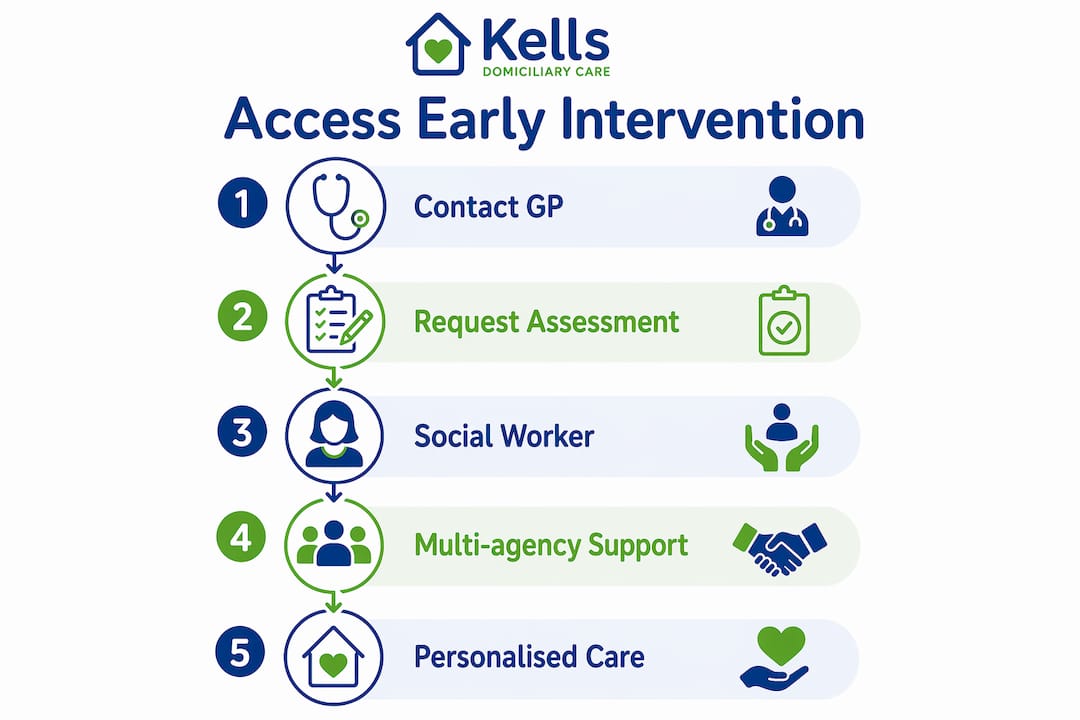
Multi-agency coordination is central to how early intervention works in practice. In London, this typically involves:
- A GP referral triggering a community health assessment
- An occupational therapy home visit to assess function and environment
- Input from a social worker to identify unmet social or practical needs
- Telecare installation where appropriate, such as fall alarms or medication reminders
- Social prescribing to address isolation, nutrition, or activity needs
- A written, personalised care plan shared across all involved professionals
Multi-agency coordination is essential because early help services vary regionally. Families in London should know the referral pathways available in their borough before a crisis makes that research urgent.
Pro Tip: Ask your GP specifically about a “frailty review” or a “care needs assessment” rather than waiting for a routine appointment. These structured assessments trigger the multi-agency response that makes early intervention effective.
What signs should families watch for?
Recognising the early signs of need is one of the most valuable skills a family caregiver can develop. Older adults frequently present atypically. A urinary tract infection, for example, may appear as sudden confusion rather than physical pain. Older adults presenting with falls or delirium are often signalling complex underlying needs that require a full multifactorial assessment.
Common early signs in older adults that warrant prompt attention include:
- A first fall, even without injury
- Increased confusion or memory lapses
- Withdrawal from social activities or loss of interest
- Unexplained weight loss or reduced appetite
- Difficulty managing medications or household tasks
- Changes in personal hygiene or appearance
For children and adults with developmental disabilities, early signs differ but the principle is the same. The Healthy Child Programme places health visitors and school nurses at the centre of early identification, promoting timely referral to specialist services for children with SEND or developmental delays. Families supporting a child or younger adult with a disability should track changes in communication, behaviour, or daily functioning and raise concerns promptly with their GP or health visitor.
One significant barrier is underreporting. Older adults frequently underreport health difficulties, either to avoid burdening family members or because they normalise decline as part of ageing. This means that trusted relationships and careful observation matter as much as formal assessments.
Pro Tip: Keep a simple written log of changes you notice in your loved one, including dates. This record gives GPs and assessors concrete evidence rather than general impressions, and it significantly speeds up the referral process.
How can London families access early intervention services?
Accessing early intervention in London requires knowing which professional to contact first and what to ask for. The GP remains the most reliable starting point for older adults. A GP can refer directly to community health teams, occupational therapy services, memory clinics, and social services. For children, the health visitor or school nurse is the primary contact for developmental concerns.

Social workers play a central role in coordinating early support, particularly where practical needs such as housing adaptations, financial support, or carer respite are involved. Families often underestimate the scope of what a social worker can arrange. Requesting a Care Act assessment from your local authority is a legal right, and it opens access to a wide range of funded support.
London’s integrated neighbourhood teams, now being developed across NHS North Central London and other integrated care boards, bring GPs, community nurses, social workers, and voluntary sector organisations together. This structure is designed to make early intervention faster and better coordinated. Families who engage with these teams proactively, rather than waiting for a crisis, benefit most.
Practical steps for London families:
- Contact your GP and request a frailty review or care needs assessment
- Ask your local authority for a Care Act assessment if daily living is affected
- Contact your borough’s adult social care team directly if GP access is delayed
- Enquire about telecare services through your local council
- Ask about social prescribing link workers, who can connect you to community support
- For children with developmental needs, contact the school SENCO or health visitor
Personalised home care is a natural complement to early intervention. Where statutory services identify a need but cannot meet it fully, a regulated domiciliary care provider can fill the gap with tailored daily support that sustains independence at home.
Key takeaways
Early intervention is the most effective way to prevent crisis, reduce hospitalisation, and sustain independence for elderly individuals and those with developmental challenges.
| Point | Details |
|---|---|
| Act on signal markers | A first fall, sudden confusion, or withdrawal from daily life requires prompt assessment, not a wait-and-see approach. |
| Occupational therapy reduces falls | Home hazard assessments by occupational therapists reduce falls in high-risk older adults by 38%. |
| Proactive care cuts admissions | Geriatrician-led proactive care reduces emergency admissions by 23% and hospital stays by 32%. |
| Underreporting is a real barrier | Older adults frequently minimise difficulties, so careful observation and written records support faster referral. |
| Know your referral routes | GPs, social workers, and integrated neighbourhood teams are the key access points for early intervention in London. |
Why I believe the system still asks families to wait too long
The evidence for early intervention is clear and has been for years. What frustrates me, having worked alongside families navigating care in London, is how often the system still defaults to crisis management. Families contact services after a fall, after a hospital admission, after a situation has already become urgent. That is not a failure of families. It is a failure of how services communicate their availability.
The shift to prevention-led social care is real and it is gaining momentum. But the gap between policy intent and family experience remains wide. Families who know what to ask for, and who ask early, consistently get better outcomes. The families who struggle are those who did not know a frailty review existed, or that a Care Act assessment was their right, or that a social prescriber could help with loneliness and nutrition before those issues became clinical problems.
My honest view is that families should treat early intervention as an active responsibility rather than a passive hope. You do not need to wait for a professional to notice something is wrong. You can observe, record, and advocate. The importance of qualified carers in this process is also underestimated. A skilled carer visiting regularly will often notice subtle changes that a busy family member or an infrequent GP appointment misses entirely. That early observation can be the difference between a timely referral and an avoidable hospital stay.
— Dan
How Kells-care supports early intervention in London
Kells-care has provided personalised home care in London for over 30 years, working with families to identify needs early and build care plans that protect independence before a crisis develops. All Kells-care staff are fully qualified, DBS checked, and regulated by the Care Quality Commission (CQC). Whether your family needs regular check-in visits to monitor a loved one’s wellbeing, or more intensive daily support, Kells-care can help you plan ahead rather than react. Download the free home care guide for practical guidance on domiciliary care options in North London, or contact the team directly to discuss a personalised care plan.
FAQ
What is early intervention in health and social care?
Early intervention is the timely identification and proactive support of individuals at risk of health or developmental decline, with the aim of preventing crisis and sustaining independence. The Care Act 2014 places a legal duty on local authorities to provide preventive services aligned with this approach.
How does early intervention reduce hospital admissions?
Geriatrician-led proactive care reduces emergency admissions by 23% and hospital stays by 32% by identifying deterioration before it becomes acute. Home hazard assessments and multidisciplinary care plans address the root causes of crisis rather than treating its consequences.
What are the early signs of frailty in older adults?
Key signs include a first fall, unexplained confusion, withdrawal from social activities, weight loss, and difficulty managing daily tasks. Older adults often underreport these changes, so regular observation by family members and carers is critical for early detection.
How do I access early intervention services in London?
Contact your GP and request a frailty review or care needs assessment. You can also request a Care Act assessment directly from your local authority’s adult social care team, which opens access to occupational therapy, telecare, social prescribing, and other coordinated support.
Is early intervention relevant for children with developmental needs?
The Healthy Child Programme places health visitors and school nurses at the centre of early identification for children with developmental delays or SEND. Families should raise concerns with their GP, health visitor, or school SENCO as soon as they notice changes in communication, behaviour, or daily functioning.


