TL;DR:
- Monitoring elderly well-being involves using technology and human oversight to observe health, routines, and safety. Structured review routines and clear escalation pathways ensure data prompts appropriate care actions. Combining passive sensors, medication tracking, and regular contact supports safe independent living for seniors.
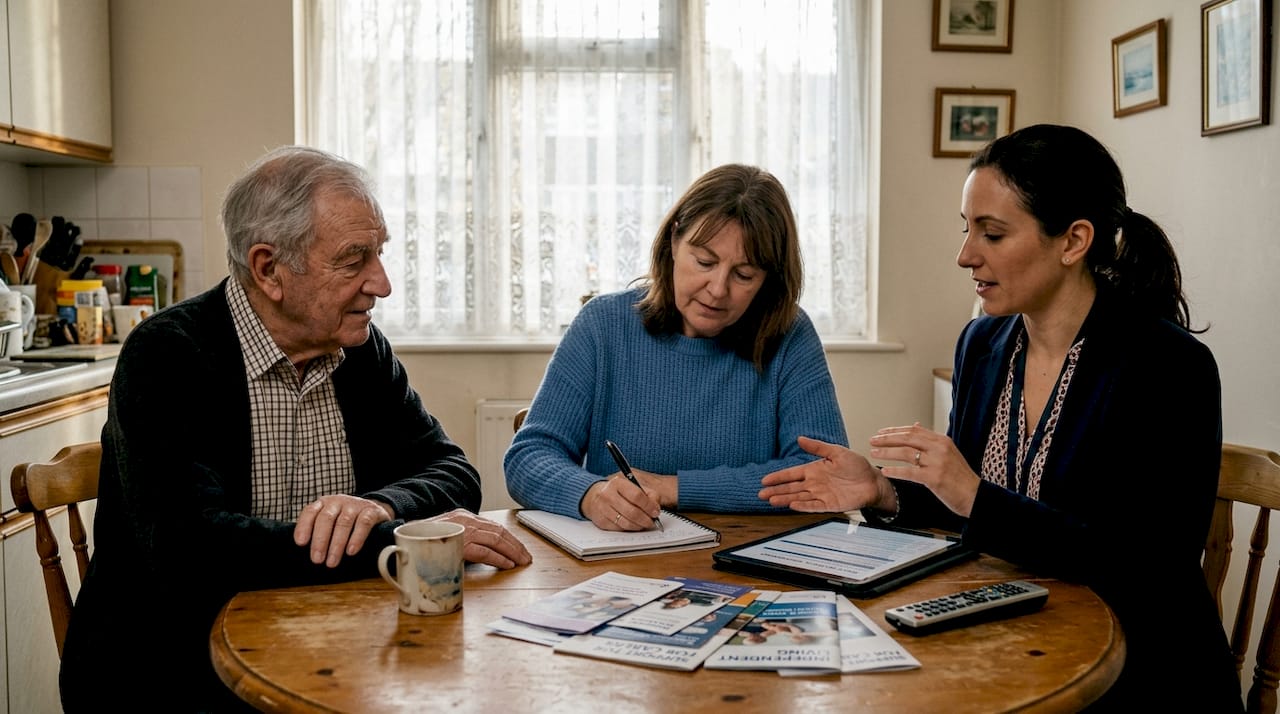
Monitoring elderly well-being is defined as the systematic observation of an older person’s physical health, daily routines, and safety using a combination of technology and human oversight. Clinicians refer to this practice as remote patient monitoring (RPM), and it covers everything from wearable health trackers to ambient sensors that detect movement around the home. Research published in 2025 shows that RPM programmes reduce hospitalisations by 48% and cut total hospital stay duration by 63% among older adults. Those figures show just how much structured monitoring can change outcomes. For family caregivers, knowing how to monitor elderly well-being means combining the right tools with regular, informed review of what those tools report.
What key tools and technologies are used to monitor elderly well-being at home?
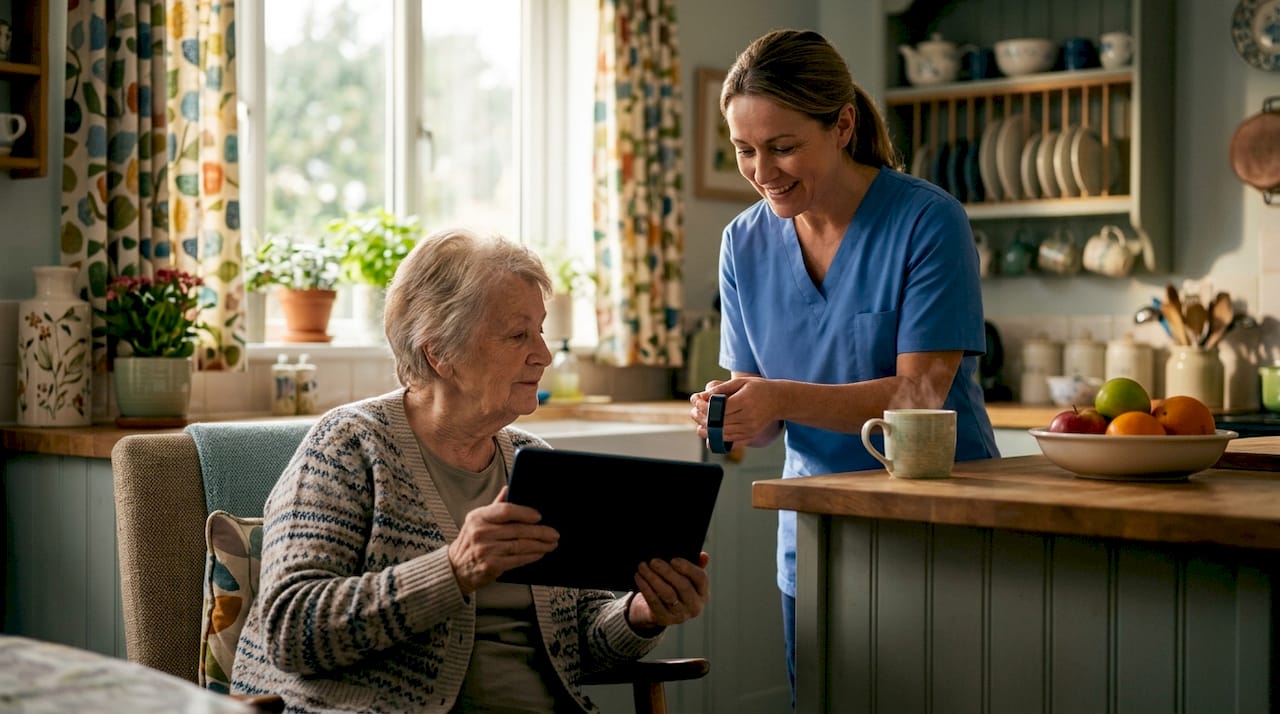
Remote monitoring systems (RMS) are the foundation of technology for monitoring seniors at home. They typically include passive infrared sensors, motion detectors, and smart switches fitted around the home to track movement, door use, and appliance activity without requiring the older person to do anything. Wearable devices such as GPS watches, fall-detection pendants, and heart rate monitors add a personal layer of data. Together, these tools give caregivers a picture of daily patterns without constant physical presence.
The distinction between active and passive monitoring matters. Active monitoring requires the older person to press a button or respond to a prompt, such as a personal alarm or a medication reminder app. Passive monitoring runs in the background, capturing data automatically through sensors. Passive systems are less intrusive and better suited to people who may forget to engage with active devices.
| Tool category | Function | Key consideration |
|---|---|---|
| Ambient sensors | Track movement, room use, and routines | Require Wi-Fi and professional installation |
| Wearable trackers | Monitor heart rate, falls, and location | Need charging and user acceptance |
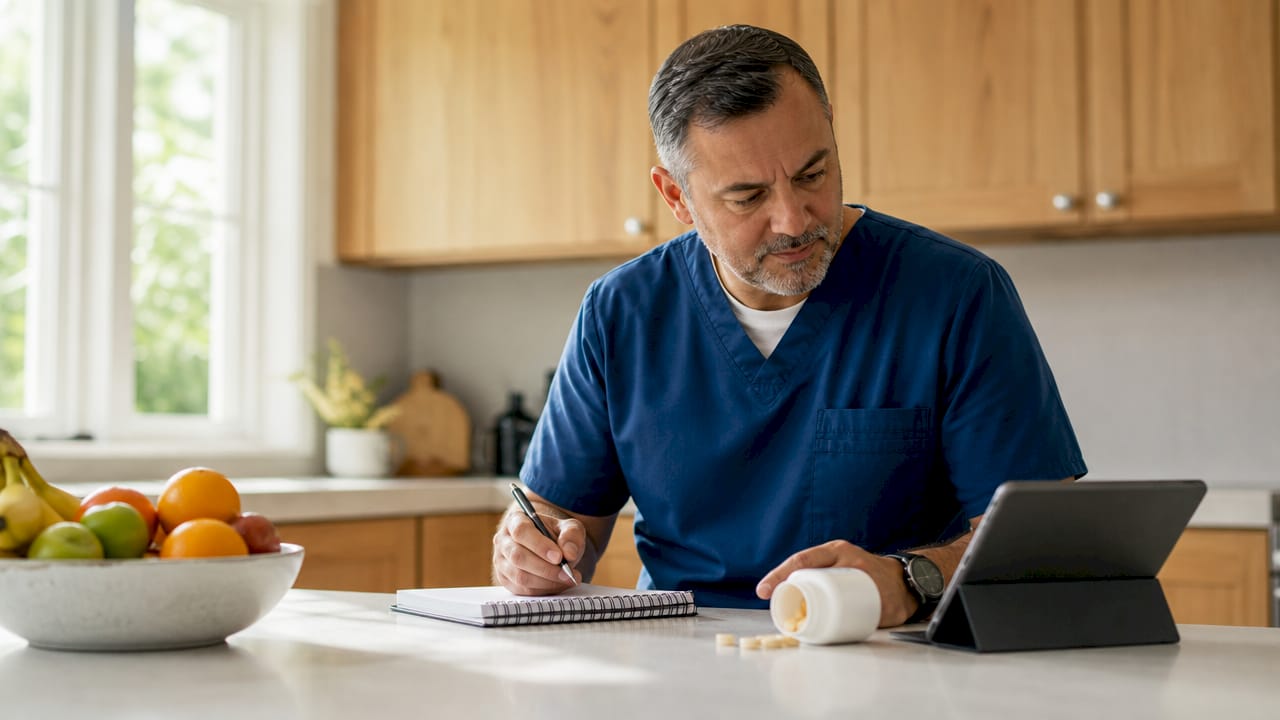
| Smart medication dispensers | Prompt and record medication intake | Require setup and pharmacy coordination |
| Video monitoring | Visual check-ins and fall detection | Raise privacy concerns; consent is required |
| Personal alarms | Emergency call when activated | Depend on the person pressing the button |
The WHO’s assistive technology framework recommends using standardised indicators to assess whether monitoring tools are accessible and usable for each individual. That means the right tool is not always the most advanced one. It is the one your relative will actually tolerate and use.
Pro Tip: Before installing any monitoring technology, have an honest conversation with your elderly relative about what feels comfortable. Consent and dignity matter as much as safety. A device that causes distress will be switched off or ignored.
How can caregivers monitor activities of daily living to assess health changes?
Activities of daily living (ADLs) are the routine tasks a person performs each day: sleeping, eating, cooking, washing, going outdoors, and moving around the home. Changes in ADL patterns are among the earliest signs of declining health. A person who stops leaving the bedroom by mid-morning, or who no longer uses the kitchen, may be experiencing pain, low mood, or cognitive decline.
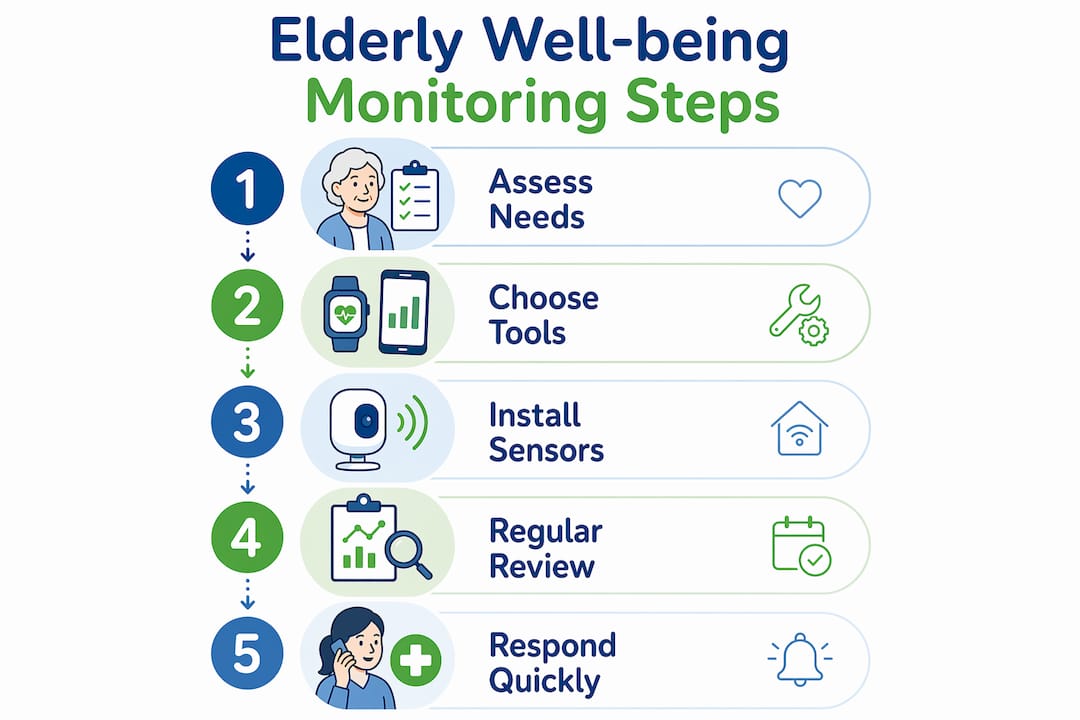
Ambient sensors capture these patterns automatically. A 2025 study detailed a four-step clinical decision process for reviewing ADL telemonitoring data: extract the data, compare it with other information sources, assess the level of risk, and update the care plan accordingly. Families can adapt this process into a simple weekly review routine without needing clinical training.
A practical weekly review for caregivers looks like this:
- Extract: Check sensor reports or app dashboards for the past seven days. Note any unusual patterns, such as reduced movement, missed meals, or disrupted sleep.
- Compare: Cross-reference sensor data with your own observations and any notes from carers or healthcare professionals.
- Assess: Ask yourself whether the change is a one-off event or a consistent shift. A single quiet day is not a concern. Three consecutive days of reduced activity is.
- Act: If a pattern concerns you, contact the GP, district nurse, or care coordinator. Do not wait for a crisis.
Clinicians do not treat sensor readings as standalone decision-makers. Telemonitoring data informs but does not replace clinical judgement. Families should follow the same principle: use the data as a prompt for conversation, not a diagnosis.
Pro Tip: When speaking to your elderly relative, ask specific questions rather than general ones. “Did you sleep well last night?” gets a better answer than “How are you feeling?” Specific questions also help you spot discrepancies between what sensors report and what your relative recalls.
What role does medication adherence play in senior wellness monitoring?
Medication non-adherence is one of the most common and preventable causes of health deterioration in older adults. The challenge is that self-reported adherence is unreliable. People genuinely believe they are taking their medication correctly, even when they are not.
The most objective way to measure adherence is the Medication Possession Ratio (MPR). The MPR is calculated by dividing the total days of medication supplied by the total follow-up period. A score of 80% or above is the standard threshold for classifying a person as adherent. Pharmacy refill records provide the raw data for this calculation, making it accessible without specialist equipment.
Caregivers can use pharmacy refill patterns as a practical monitoring tool. If a monthly prescription is not collected on time, or if repeat requests come too early or too late, that is a signal worth investigating. Linking medication management practices to a structured review routine helps caregivers spot these patterns before they cause harm.
Digital tools that support medication adherence include:
- Smart pill dispensers such as Pivotell, which dispense the correct dose at the correct time and alert carers if a dose is missed.
- Medication reminder apps such as Medisafe, which send prompts to the older person’s phone or tablet.
- Blister pack dispensing from community pharmacies, which simplifies complex regimens into clearly labelled daily doses.
- Carer-administered records, where a professional carer logs each dose given during a home visit.
Each method works best when it is matched to the person’s cognitive ability and daily routine.
How to implement a comprehensive monitoring system at home
Setting up a monitoring system requires preparation before any device is switched on. The prerequisites are straightforward but non-negotiable.
- Confirm internet access. Most remote monitoring systems require a stable broadband connection. Check the router location and signal strength in key rooms.
- Arrange professional installation. Sensors placed incorrectly generate false alerts or miss genuine changes. Use the supplier’s installation service or a qualified technician.
- Obtain informed consent. Your relative must understand what is being monitored and why. Document this conversation.
- Set up carer authorisation. Ensure you have access to the monitoring platform and that alerts are routed to the right people.
- Define your response pathway. Decide in advance what action each type of alert triggers. An alert without a defined response is useless.
That last point is critical. A 2025 scoping review found that automated alerts require professional triage to be effective. Alerts that go to a family member with no clinical support behind them can cause unnecessary panic or, worse, be ignored after too many false alarms.
| Monitoring approach | Best suited to | Escalation pathway |
|---|---|---|
| Ambient sensor system | Passive daily monitoring | Carer review, then GP if pattern persists |
| Wearable fall detector | High fall-risk individuals | Immediate alert to carer or emergency services |
| Medication dispenser | Complex medication regimens | Carer notification, then pharmacist or GP |
| Video check-in | Cognitive impairment or isolation | Family review, then care coordinator |
The most common pitfall is the “set and forget” mindset. Installing sensors and then never reviewing the data provides false reassurance. Schedule a fixed weekly review time and treat it as a care appointment.
What are the limitations of elderly monitoring technology?
Passive monitoring does not produce consistent results across all settings. A 2025 trial found that passive monitoring outcomes vary significantly by location, with one province showing a non-significant 30% risk reduction in care-level admission and another showing no benefit at all. Pandemic disruptions and follow-up gaps influenced those results, but the variation itself is instructive. No monitoring system works equally well for every person in every context.
Signal changes in sensor data are hypotheses, not conclusions. A reduction in kitchen activity could mean your relative is eating less, or it could mean they have started eating out more. Human verification is required before any intervention is made. Families who act on sensor data alone, without speaking to their relative or their care team, risk making poor decisions based on incomplete information.
The most effective approach combines technology with regular human contact. Sensors tell you something has changed. A phone call, a visit, or a conversation with a carer tells you what it means. Staying engaged with your relative’s care team, attending review meetings, and asking specific questions about what the data shows are the habits that turn monitoring into meaningful care. Supporting independent living for elderly loved ones works best when technology and human connection reinforce each other.
Key takeaways
Effective elderly well-being monitoring combines remote sensing technology, structured ADL review, and medication adherence tracking, all supported by clear escalation pathways and regular human oversight.
| Point | Details |
|---|---|
| Start with the right tools | Match monitoring technology to your relative’s routine, cognitive ability, and privacy preferences. |
| Review ADL data weekly | Use a four-step process: extract, compare, assess risk, and act on consistent pattern changes. |
| Track medication adherence objectively | Use pharmacy refill records and the MPR threshold of 80% to identify non-adherence early. |
| Define escalation pathways | Every alert must have a named response: who acts, how quickly, and when to involve a clinician. |
| Combine technology with human contact | Sensor data raises questions. Conversations with carers, relatives, and healthcare teams answer them. |
What I have learned from watching families use monitoring technology
Families often come to monitoring technology after a crisis: a fall, a missed medication, a worrying phone call. That is understandable. But the families who get the most from these tools are the ones who set them up before anything goes wrong, when there is time to calibrate the system, learn what normal looks like, and build a review routine without pressure.
The technology itself is rarely the problem. The gap I see most often is between the alert and the response. A sensor fires, a notification arrives on a phone, and the family member is not sure whether to call the GP, drive over, or wait and see. That uncertainty is what structured escalation pathways solve. Write them down. Share them with everyone involved in your relative’s care.
Privacy concerns are real and deserve respect. Some older people find monitoring intrusive, and that feeling does not go away just because the technology is well-intentioned. The families who handle this best are the ones who involve their relative in the decision from the start, explain what each device does, and revisit the conversation regularly as needs change.
The tools available in 2026 are genuinely useful. Wearables, ambient sensors, and smart dispensers can catch changes that would otherwise go unnoticed for weeks. But they work as part of a care system, not instead of one. The most important thing you can do is stay curious, stay in contact, and treat every data signal as the beginning of a conversation rather than the end of one.
— Dan
How Kells-care supports families with home monitoring and care
Kells-care has provided personalised home care in London for over 30 years, and monitoring well-being is built into every care plan. Kells-care carers support medication management, observe daily routines, and report changes to families and healthcare teams as part of their regular visits. Whether your relative needs a daily check-in or full-time support, the team is DBS checked, fully qualified, and regulated by the Care Quality Commission. If you are planning care arrangements and want expert guidance on monitoring approaches, download the free home care guide to understand your options and take a clear next step.
FAQ
What is the most effective way to monitor elderly well-being at home?
The most effective approach combines ambient sensors or wearables with a structured weekly review of daily activity patterns, medication adherence tracking, and clear escalation pathways to a healthcare professional.
How does the Medication Possession Ratio help caregivers?
The MPR divides total days of medication supplied by the total follow-up period. A score of 80% or above indicates adherence, and pharmacy refill records provide the data needed to calculate it without specialist equipment.
Can sensor data alone tell me if my elderly relative is unwell?
No. Sensor data identifies changes in routine but cannot explain them. Clinicians triangulate sensor readings with clinical interviews and other assessments before modifying care plans, and families should do the same.
What should I do when a monitoring alert is triggered?
Follow a pre-agreed response pathway. Contact the named carer or healthcare professional, speak directly to your relative, and document what you find. Alerts without a defined response pathway are ineffective, as research on automated alert systems confirms.
How do I balance monitoring with my relative’s privacy?
Obtain informed consent before installing any device, explain clearly what each tool monitors, and review the arrangement regularly. Passive sensors that do not use cameras are generally more acceptable than video monitoring for people who value privacy.